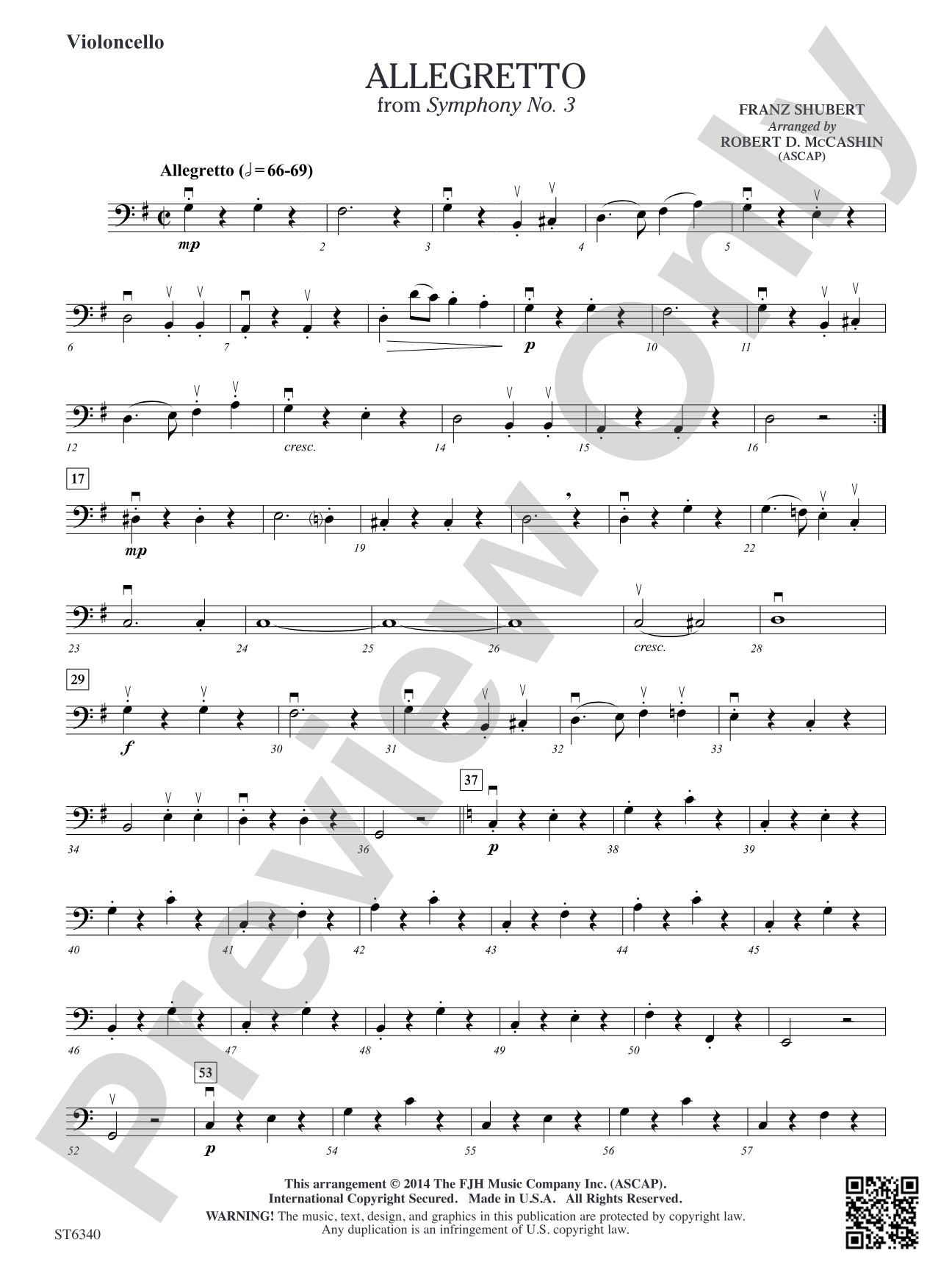
Allegretto from Symphony No 3: Violoncello Sheet Music Preview

Allegretto from Symphony No 3: Violoncello

By Franz Schubert / arr. Robert D. McCashin

Grade: 3

Item: 98-PC-DST6340_VC1

Digital Download
$7.00
Description
This light-hearted and cheerful movement from Schubert's Symphony No. 3 is orchestrated in a manner extraordinarily true to the original. Highlighting the entire form of the original movement, this arrangement is a wonderful way to expose your string students to this wonderful music without the need of the winds!

Don't just read it, hear it, play along with it, and watch your students grow with it. In MakeMusic Cloud, Allegretto from Symphony No 3: Violoncello comes alive with professional accompaniment, adjustable tempo, and built-in practice tools that turn solo practice into real progress.

Sample Audio
0:00
0:00
Sample Video
Additional Details
Series: FJH String Orchestra
Publisher: The FJH Music Company, Inc.
SKU: 98-PC-DST6340_VC1

More about this title

About the Composer: Franz Schubert

Franz Schubert (1797-1828) was an Austrian composer whose output spanned symphonies, chamber music, lieder, and sacred works despite his short life. His nine symphonies trace a remarkable journey from Classical forms toward the expanded harmonic language of Romanticism, and his gift for melody ranks among the finest in Western music.

Schubert's symphonies remain essential to the orchestral repertoire, and his willingness to favor lyricism and structural clarity over virtuosic display makes his work particularly rewarding for student orchestras. The accessibility of his symphonic ideas, combined with their genuine depth, has made him a cornerstone of music education for generations.

Why we love this

This arrangement captures Schubert's gift for memorable melody and transparent orchestration without sacrificing the integrity of the original movement. McCashin's scoring keeps the essential character of the work intact while making it performable by string players still developing their facility, creating an opportunity for your ensemble to experience genuine masterwork literature at their level.

What to expect

This movement radiates an unhurried warmth and gentle humor. The orchestration floats rather than drives, creating an intimate quality that feels like overhearing a friendly conversation between violin choirs. There's nothing heavy here: just the pleasure of a well-crafted melody shared across the ensemble.

Who it's for

String orchestra directors working with Grade 3 ensembles who want to introduce students to the Classical symphony without waiting until advanced levels. This works equally well for students transitioning from method books into concert repertoire and for community orchestras seeking repertoire that balances musicality with accessibility.

How to get the most out of it

  • Maintain the cheerful, conversational tone by avoiding excessive weight on the downbeats; Schubert's orchestration here invites lightness and clarity rather than drama.
  • Balance the dialogue between first and second violins carefully. This movement thrives when both parts are heard as equal partners in the musical conversation.
  • Shape each phrase with gentle direction rather than sudden dynamic shifts. The natural breathing and phrasing of Schubert's melody will guide your interpretation.

How to use it

Program this as the centerpiece of a concert focused on Classical masterworks, pairing it with other arranged symphonic movements or overtures at a similar level. It also serves beautifully as a spring or early-season concert selection, building student confidence with repertoire that sounds far more advanced than the technical demands require.

Skills your students will build

  • Phrasing and musical direction at the ensemble level
  • Balance between violin sections in Classical textures
  • Sustaining tone quality across longer melodic lines
  • Stylistic interpretation of Classical chamber orchestration

You May Also Like