
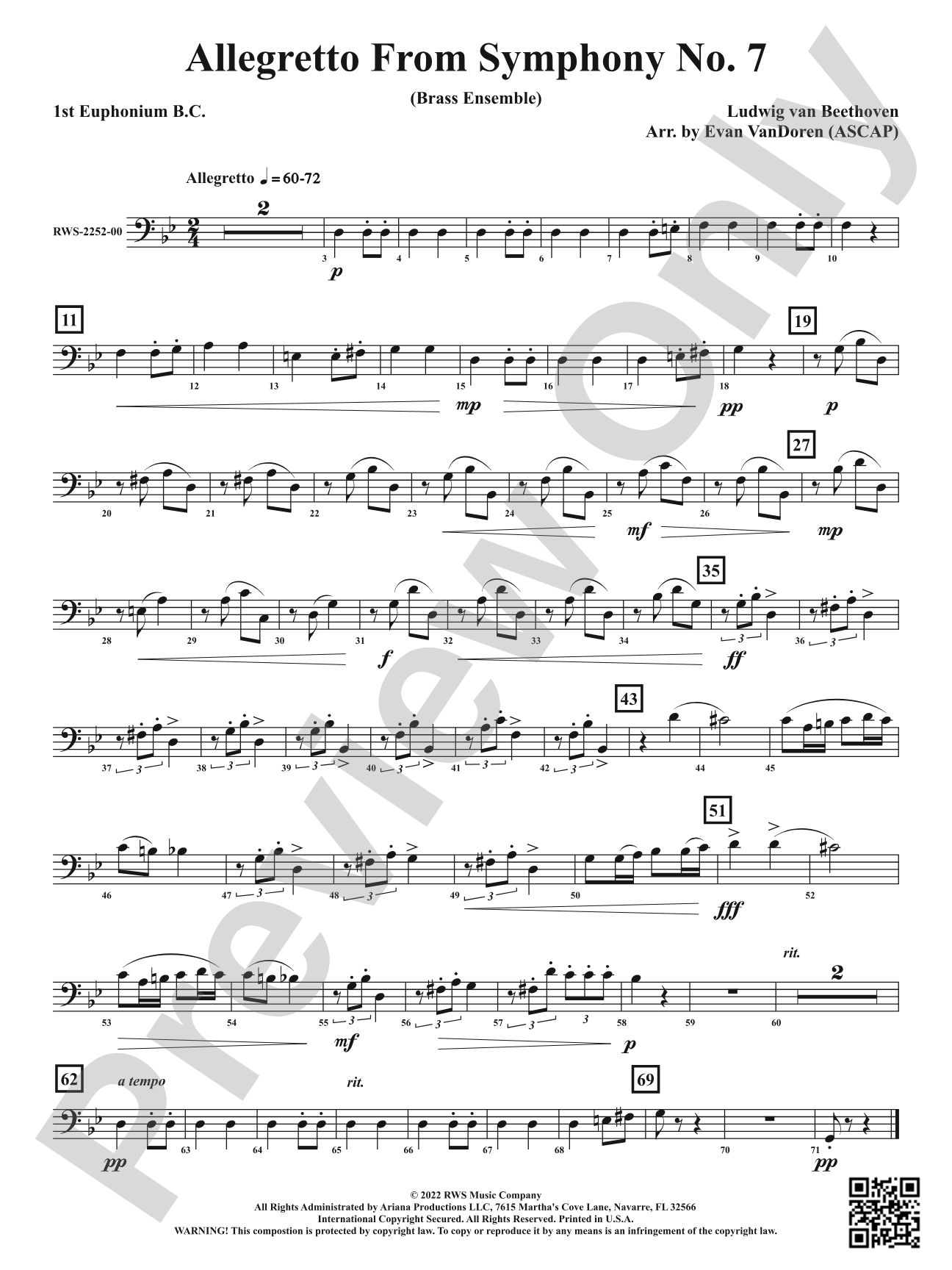

Allegretto from Symphony No. 7 - Brass Ensemble: Baritone B.C.
Brass Ensemble
By Ludwig van Beethoven / arr. Evan VanDoren
Grade: 4
Item: 98-PC-RWS2252_BBC1
$3.99
Pickup currently not available
Description
Beethoven's 7th Symphony stands among a litany of colossal works by the now immortal composer that has more than withstood the test of time. Evan VanDoren artfully crafts this arrangement of the works' second movement, "Allegretto" into a brooding, slow-building brass arrangement that culminates with one of the greatest climaxes in all of music. Program this work for your brass ensemble today!
Original Item#: RWS-2252-00


Original Item#: RWS-2252-00
Allegretto from Symphony No. 7 - Brass Ensemble: Baritone B.C. isn't in MakeMusic Cloud just yet...but it could be. Let us know you'd like to see it, and you'll help shape what comes next. In the meantime, start a free trial and dive into thousands of interactive titles your students can play along with today.
Request This Title
Tell us you want it.
Start Your Free Trial
Explore everything that's ready to play right now.
Sample Audio
1
Audio File
--:--
0:00
0:00
Sample Video
No sample videos found.
Additional Details
Series:
RWS - Festival Ensemble
Publisher:
RWS Music Company
SKU:
98-PC-RWS2252_BBC1
More about this title
About the Composer: Ludwig van Beethoven
Ludwig van Beethoven (1770-1827) fundamentally transformed classical music by expanding the symphony into a vehicle for profound emotional expression and structural innovation. His nine symphonies remain touchstones of the repertoire, each exploring new expressive terrain while maintaining rigorous formal architecture. For brass ensembles and conductors, Beethoven's work offers endless pedagogical richness: his orchestrations reveal how to balance sonority across registers, how to build climax through layered instrumental density, and how to sustain listener engagement across extended formal designs.
Why we love this
VanDoren's transcription captures the meditative power of Beethoven's Allegretto while exploiting the rich harmonic and coloristic possibilities of the brass ensemble. The arrangement respects the original's architectural integrity while allowing brass players to feel the weight and responsibility of carrying one of music's most noble melodies. This is a work that rewards careful ensemble listening and patient musical building.
What to expect
The Allegretto opens with solemn, processional gravity, inviting the listener into intimate reflection. As the arrangement unfolds, harmonic momentum builds beneath a noble melodic line until the culminating climax arrives with the force of collective affirmation. The effect is both meditative and monumental.
Who it's for
Brass ensemble conductors seeking repertoire that balances concert appeal with legitimate musical substance will find this arrangement indispensable. Intermediate to advanced brass ensembles ready to tackle a work of serious artistic scope will grow significantly from the demands of ensemble unity and dynamic control this piece requires.
How to get the most out of it
- Shape the opening sonorities as a unified whole. The Allegretto's power comes from the homogeneity of texture, so balance inner parts as carefully as the melody line and maintain consistent dynamic control across all voices.
- Prepare the climactic passage with marked dynamic precision. Work the crescendos section by section in rehearsal, ensuring that each instrumental group enters with absolute clarity about its role in the building intensity.
- Attend to the harmonic progression beneath the surface melody. Understanding the underlying voice-leading will help your ensemble breathe together and anticipate the moments where the arrangement shifts direction.
- Allow space for the arrangement to breathe at structural cadences. This work unfolds gradually; resist the urge to rush the reflective passages, which prepare the listener emotionally for the powerful conclusion.
How to use it
Position this as a centerpiece of a concert exploring Beethoven's legacy or as a standalone statement piece that elevates an entire program. Pair it with contrasting works (faster, lighter fare) to showcase the dynamic range of your ensemble, or program it as a closing number where its climactic arc provides natural concert resolution.
Skills your students will build
- Sustaining unified dynamic control across an extended form
- Voice-leading awareness within harmonic progressions
- Building and managing large-scale crescendos with multiple instrumental entries
- Balancing melodic prominence with inner harmonic independence
- Responding to architectural form and structural transitions