
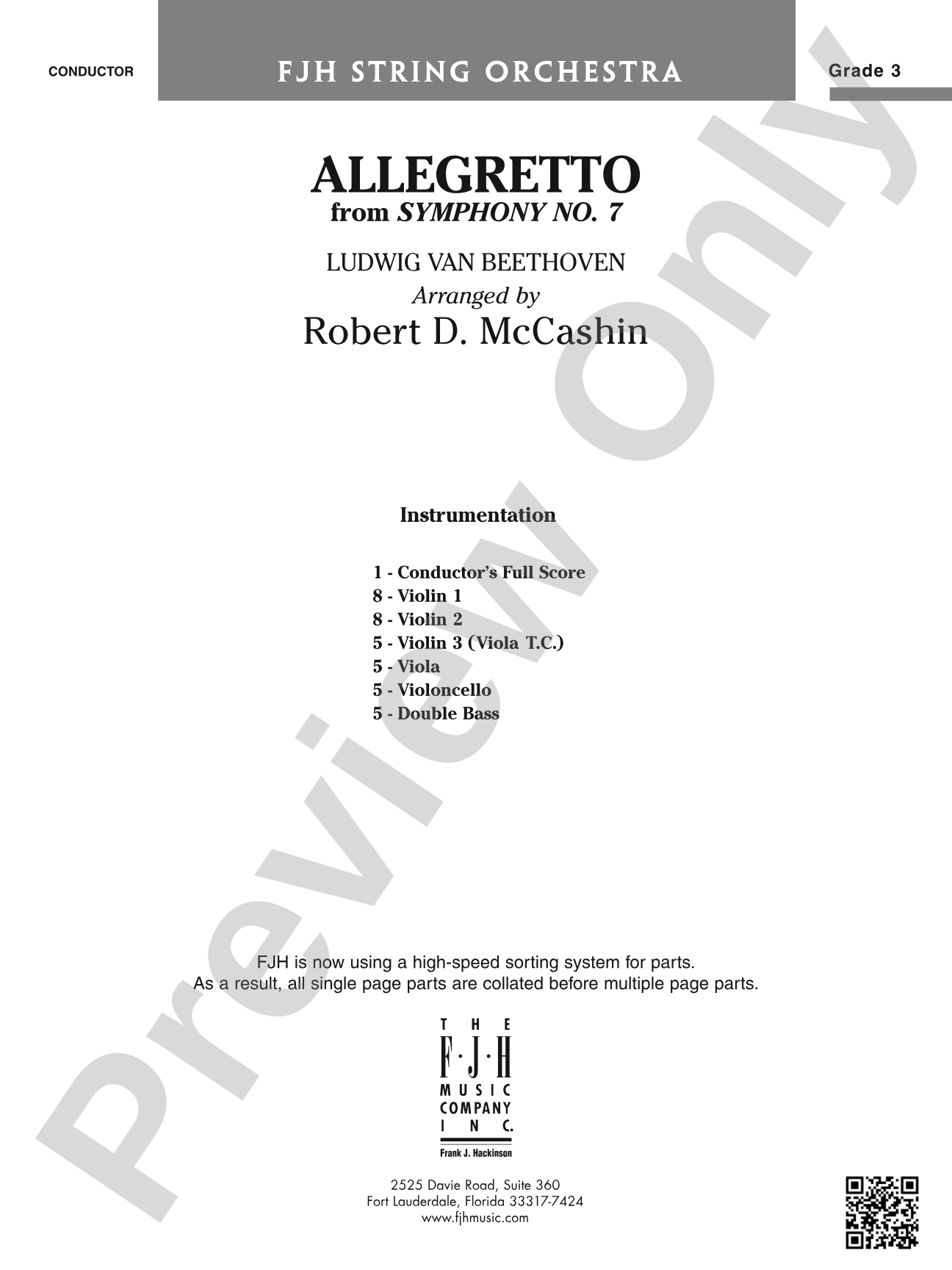
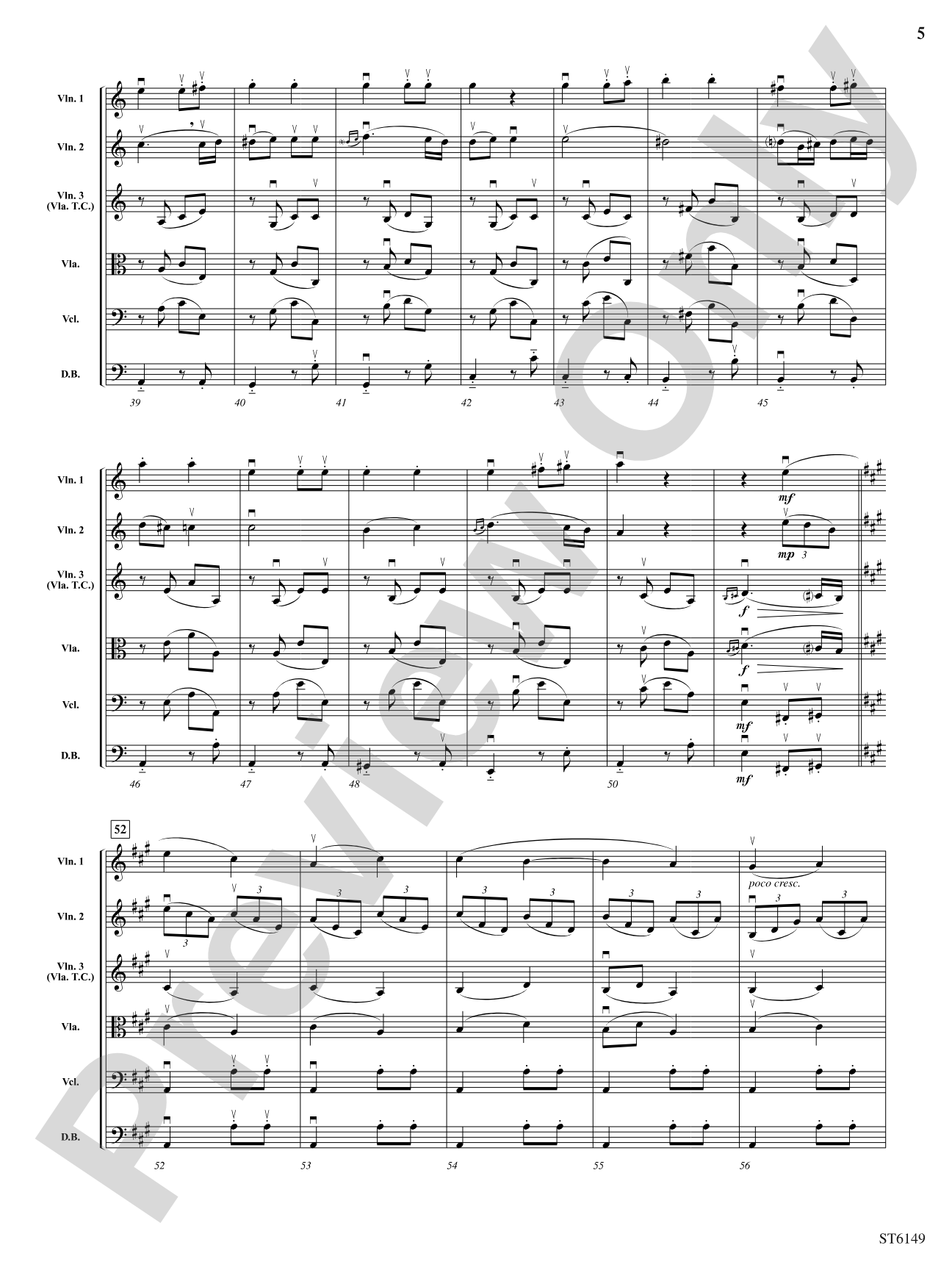
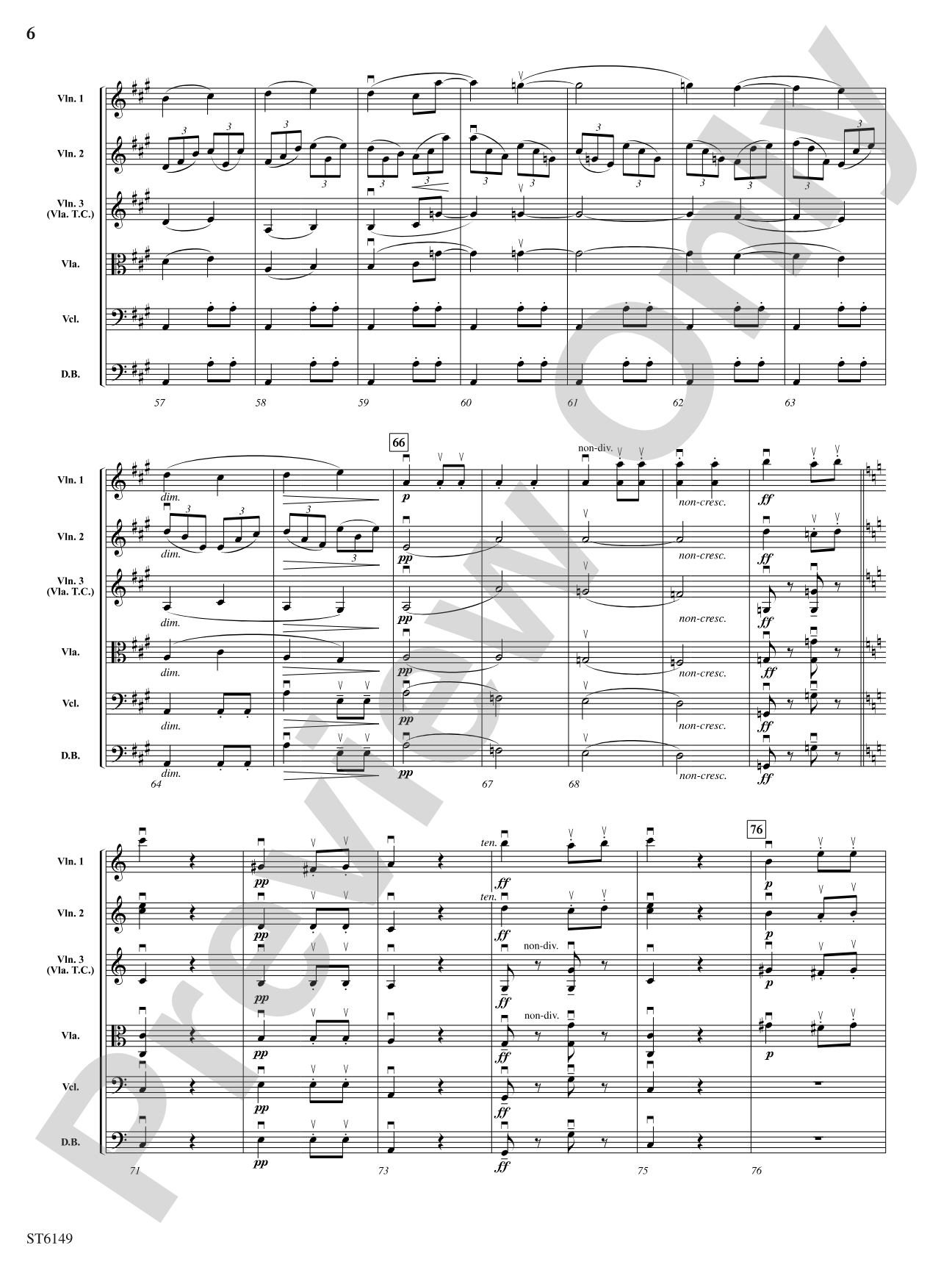
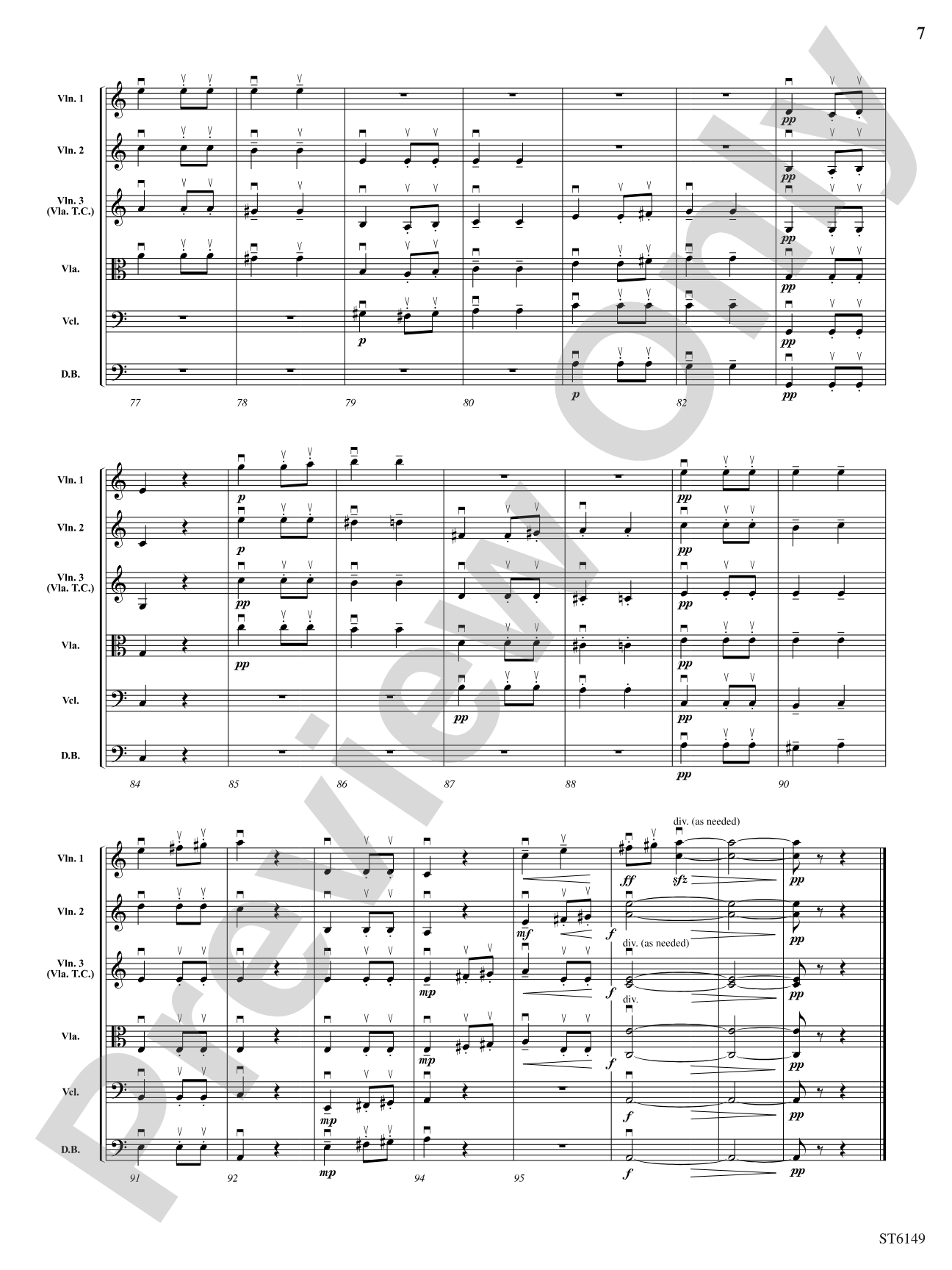

Allegretto (from Beethoven's Symphony No. 7): String Orchestra Conductor Score & Parts
from Beethoven's Symphony No. 7
By Ludwig van Beethoven / arr. Robert D. McCashin
Grade: 3
Item: 98-DST6149
$75.00
Pickup currently not available
Buy Extra Parts (Digital PDF Download)
Parts Added to Cart!
Description
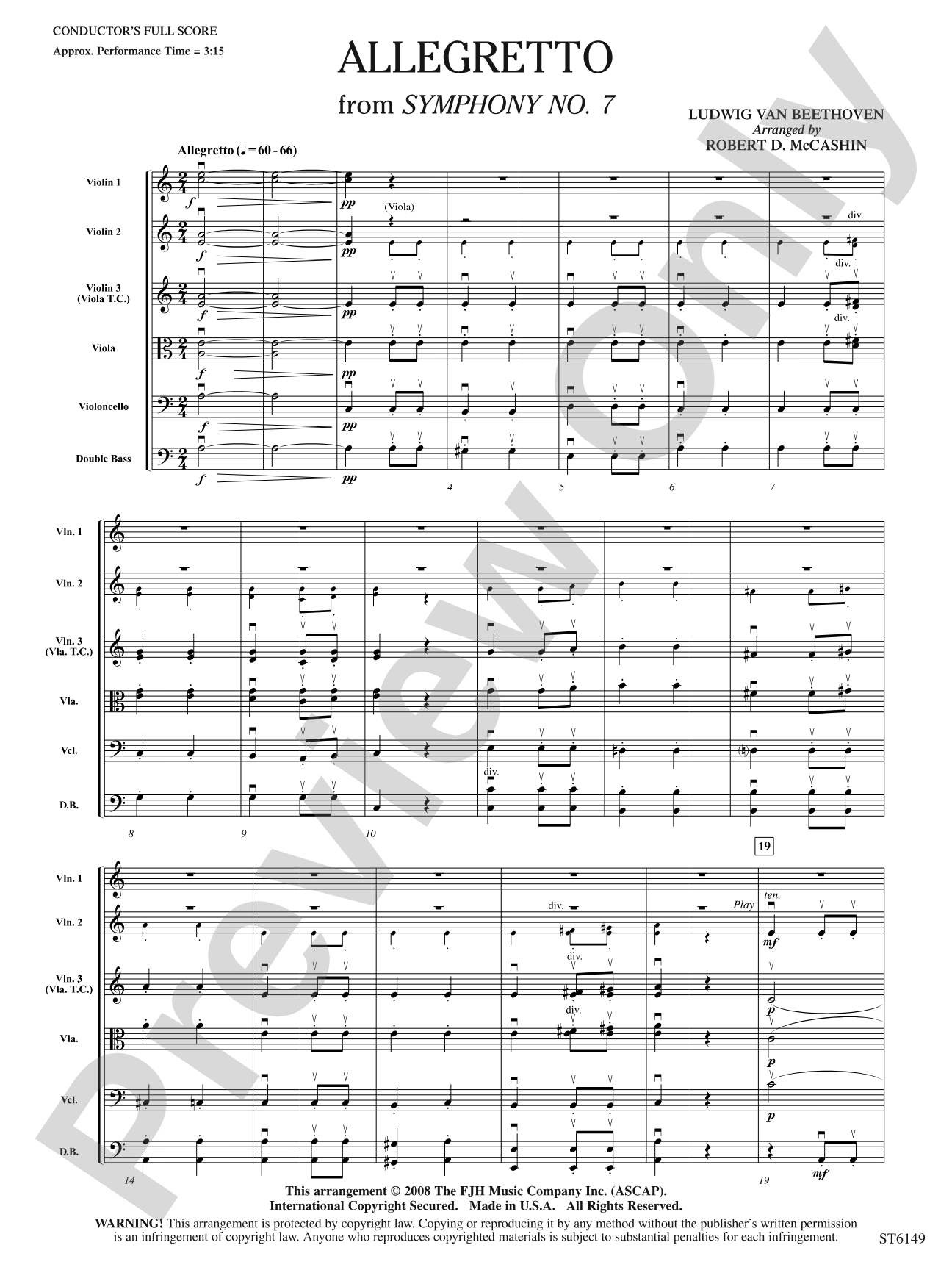
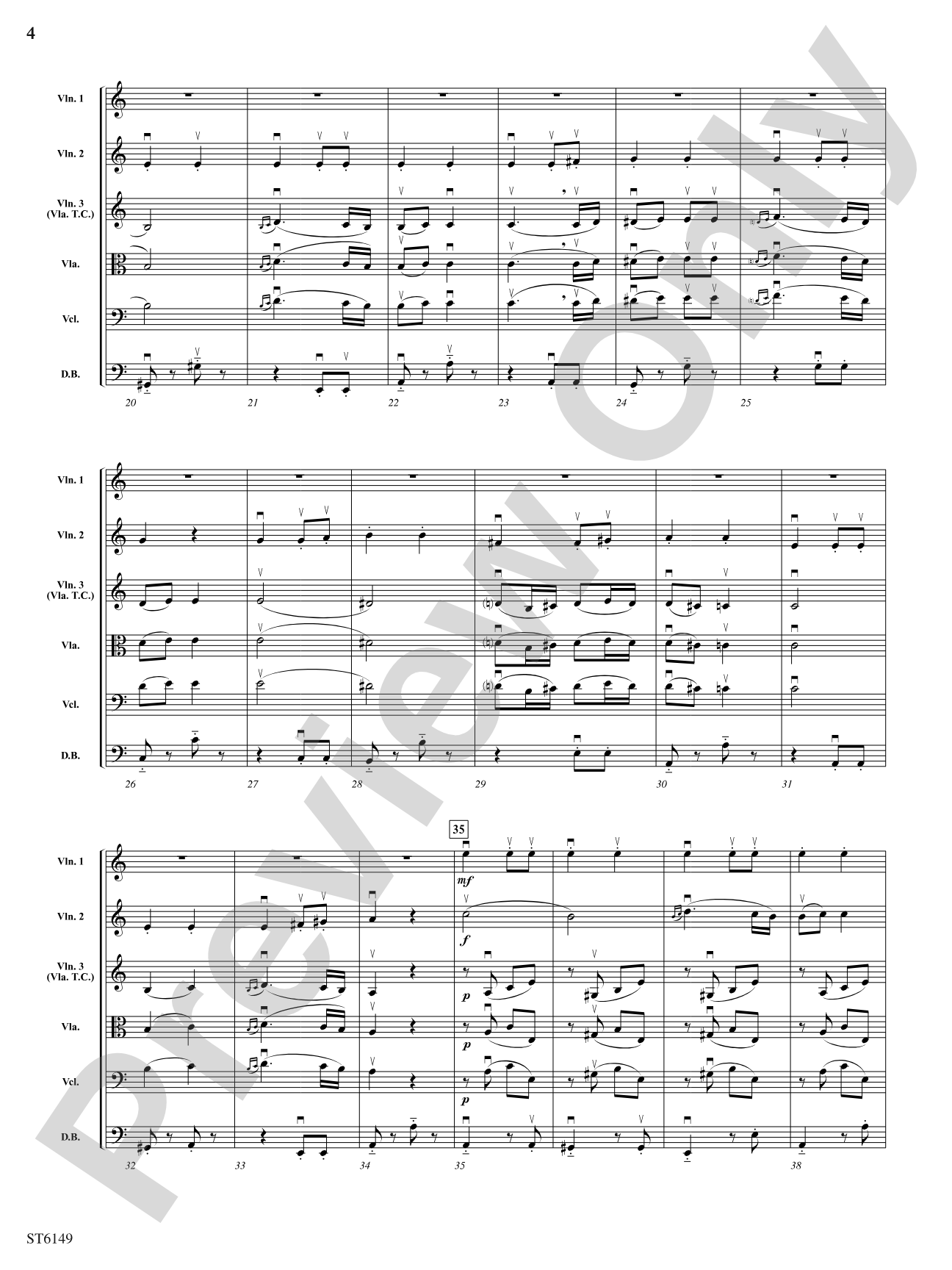
The second movement of Beethoven's Symphony No. 7 stands on its own and is often performed that way given its enormous popularity with performers and audiences. However, unlike most arrangements of this movement, this thoughtful version goes a step further by including some of the developmental material from the movement in addition to the main theme. This gives students a better picture of the movement and remains more faithful to the original. Excellent writing!


Allegretto (from Beethoven's Symphony No. 7): String Orchestra Conductor Score & Parts isn't in MakeMusic Cloud just yet...but it could be. Let us know you'd like to see it, and you'll help shape what comes next. In the meantime, start a free trial and dive into thousands of interactive titles your students can play along with today.
Request This Title
Tell us you want it.
Start Your Free Trial
Explore everything that's ready to play right now.
Sample Audio
1
Audio File
--:--
0:00
0:00
Sample Video
No sample videos found.
Additional Details
Series:
FJH String Orchestra
Publisher:
The FJH Music Company, Inc.
SKU:
98-DST6149
More about this title
About the Composer: Ludwig van Beethoven
Ludwig van Beethoven (1770-1827) transformed the symphony from a conventional form into a vehicle for profound human expression and structural innovation. His nine symphonies remain cornerstones of the orchestral repertoire, each expanding the possibilities of what the genre could communicate and accomplish musically.
Why we love this
McCashin's arrangement respects the movement's architecture by weaving in developmental sections alongside the famous theme, giving your students a more complete understanding of how Beethoven thinks musically rather than just the headline melody. At Grade 3, this remains accessible without sacrificing the work's harmonic and structural sophistication. String orchestras at this level rarely get to engage with canonical masterworks at this depth.
What to expect
The Allegretto unfolds as a meditation on a simple, affecting melody that Beethoven gently turns over and examines from multiple angles. The movement carries a quiet dignity and reflective quality, with moments of gentle elaboration that feel conversational rather than showy.
Who it's for
String orchestras at the Grade 3 level, particularly those preparing for festival performances or seeking substantial masterwork repertoire that challenges musicianship without requiring advanced technical facility. This arrangement suits ensembles ready to move beyond simplified transcriptions and engage with genuine compositional complexity.
How to get the most out of it
- Shape the main theme with a singing bow stroke; Beethoven wrote this line to breathe like a vocal melody, and the accompaniment figures should sit naturally beneath it rather than dominate.
- Balance the developmental passages carefully so that thematic fragments remain audible as they pass between sections; this helps audiences hear the musical argument Beethoven is making.
- Attend to the dynamic markings as architectural guideposts; they frame the movement's emotional arc and keep performances from sounding uniform across its length.
- Work the rhythmic precision of the accompaniment patterns early in rehearsal so that students can focus on phrasing and expression once the notes are secure.
How to use it
Program this as a concert centerpiece or festival entry that demonstrates your ensemble's musicianship and ability to handle canonical literature with intelligence. It pairs effectively with lighter contemporary pieces or as the substantive anchor in a mixed-repertoire concert.
Skills your students will build
- Recognizing and executing developmental techniques within a single movement
- Balancing transparent texture with clear voice leading in string writing
- Sustaining long phrase lines with shape and direction
- Listening critically to orchestral balance across divisi sections