
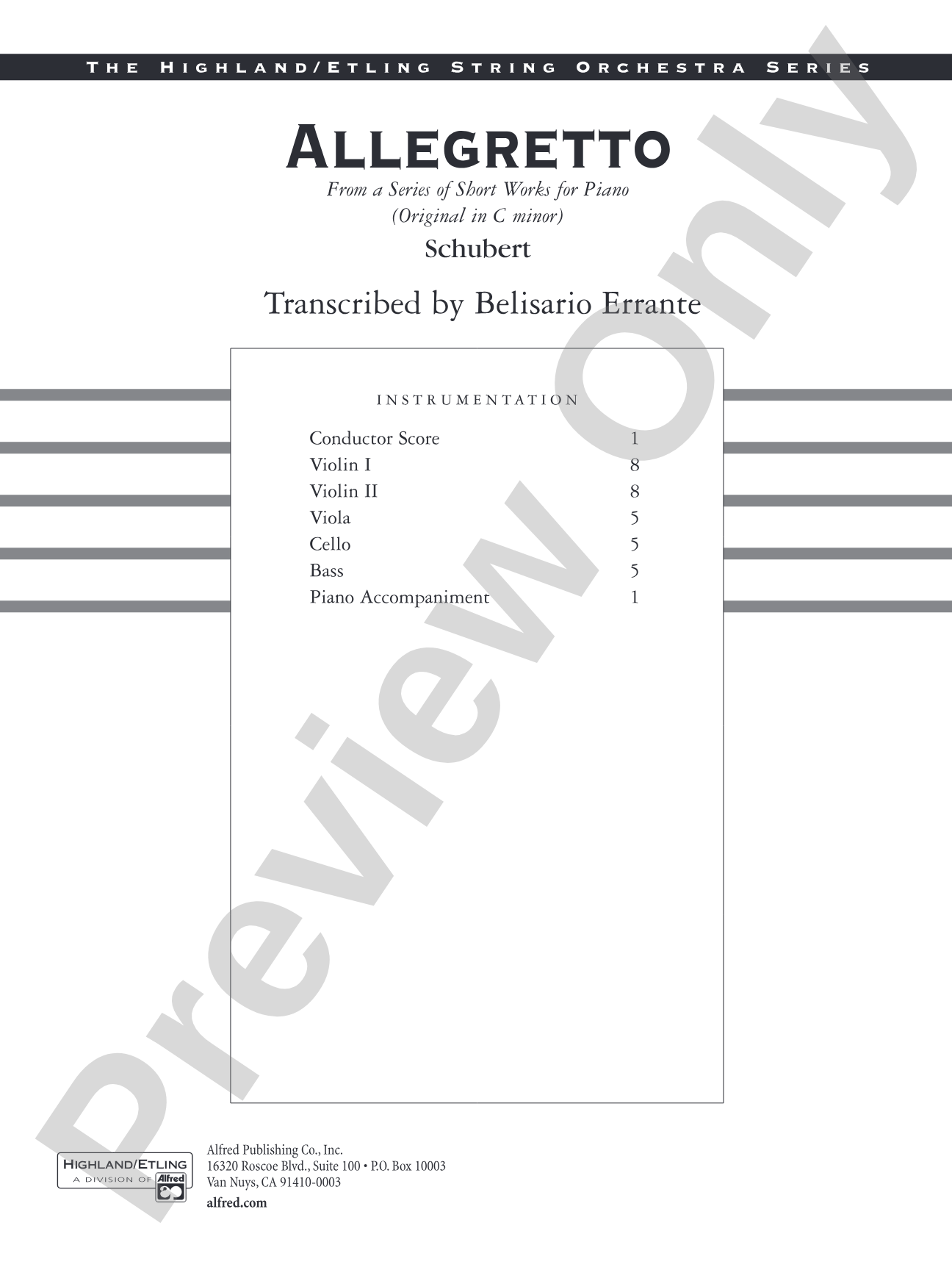
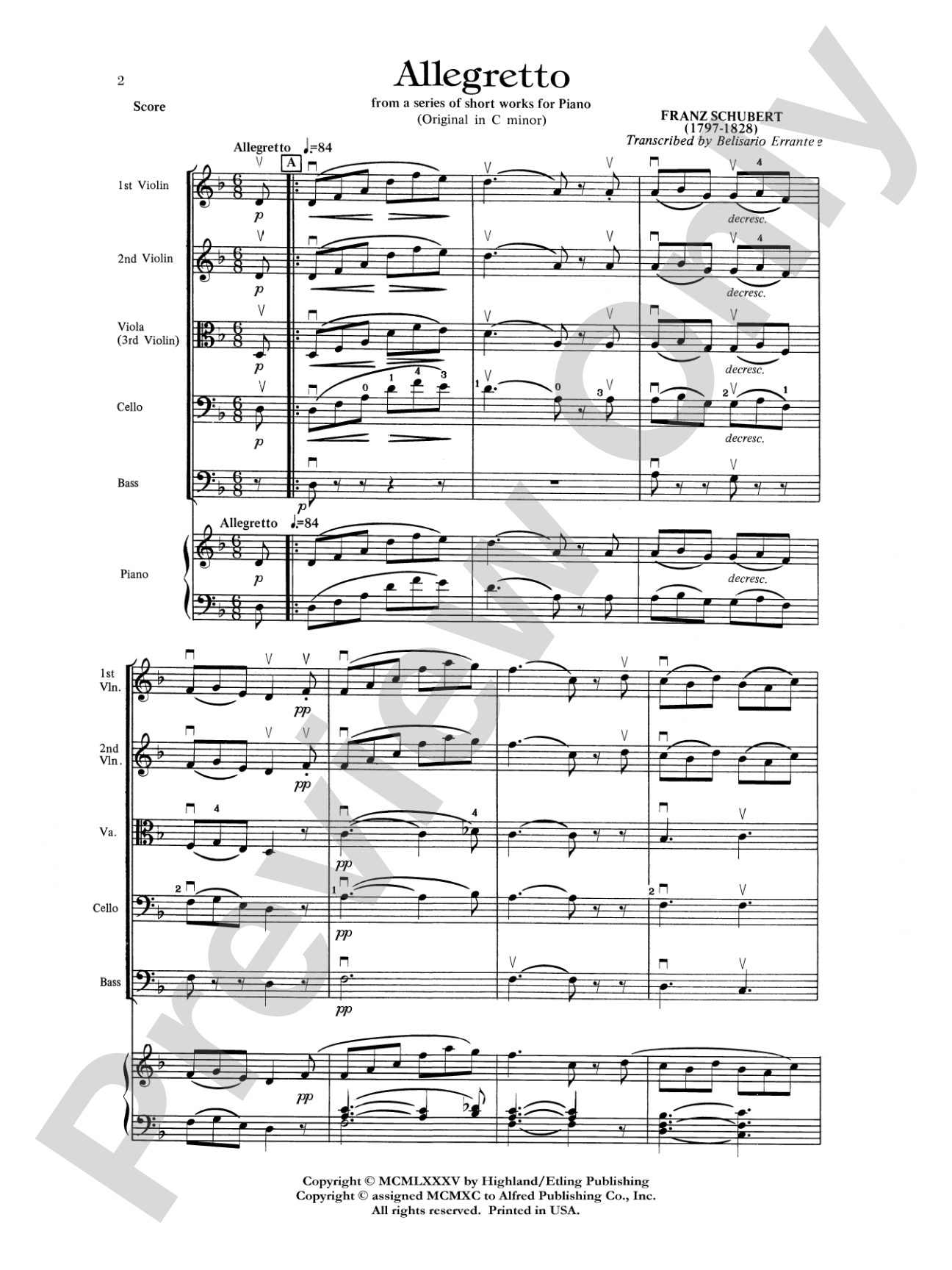
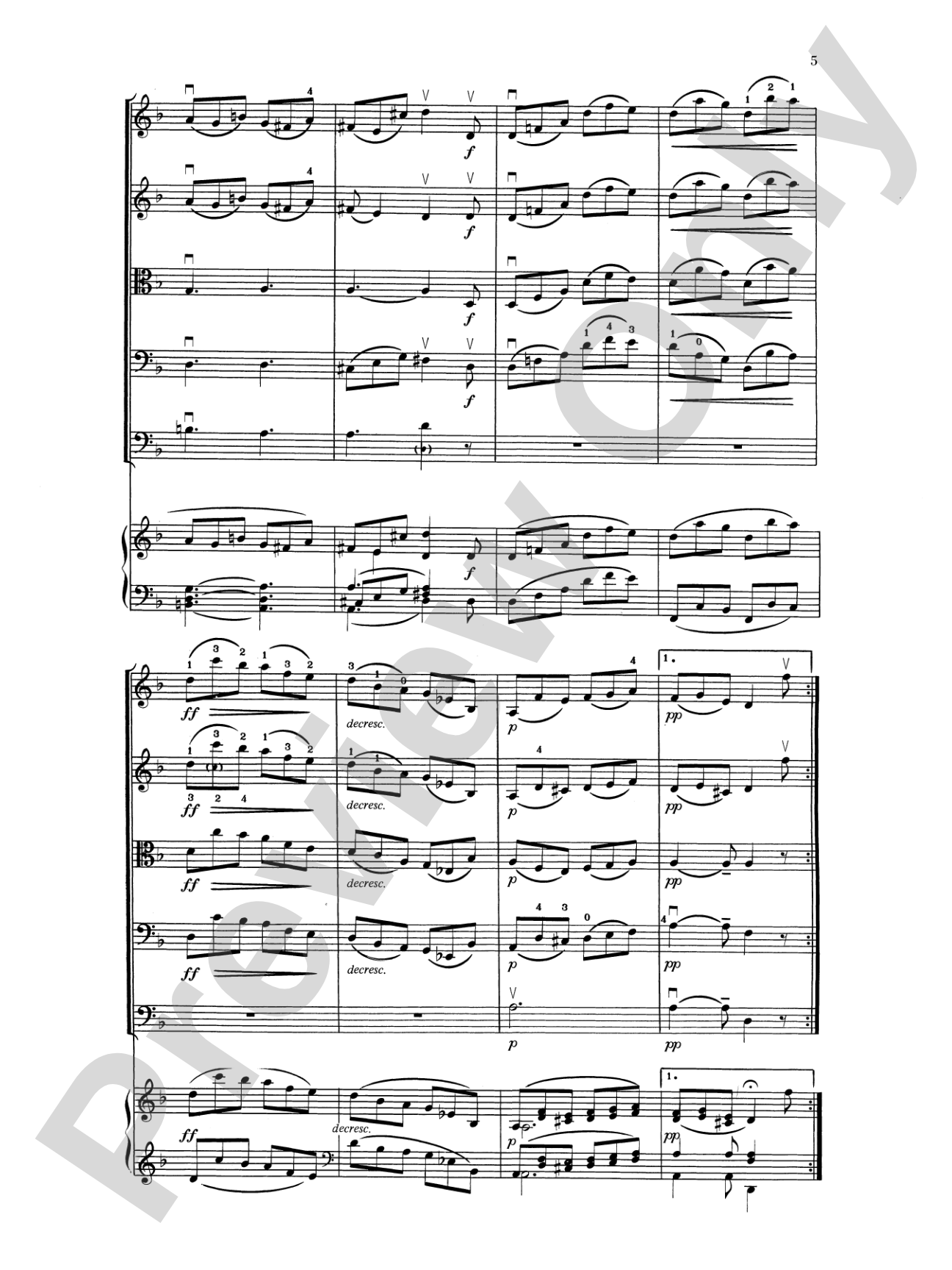
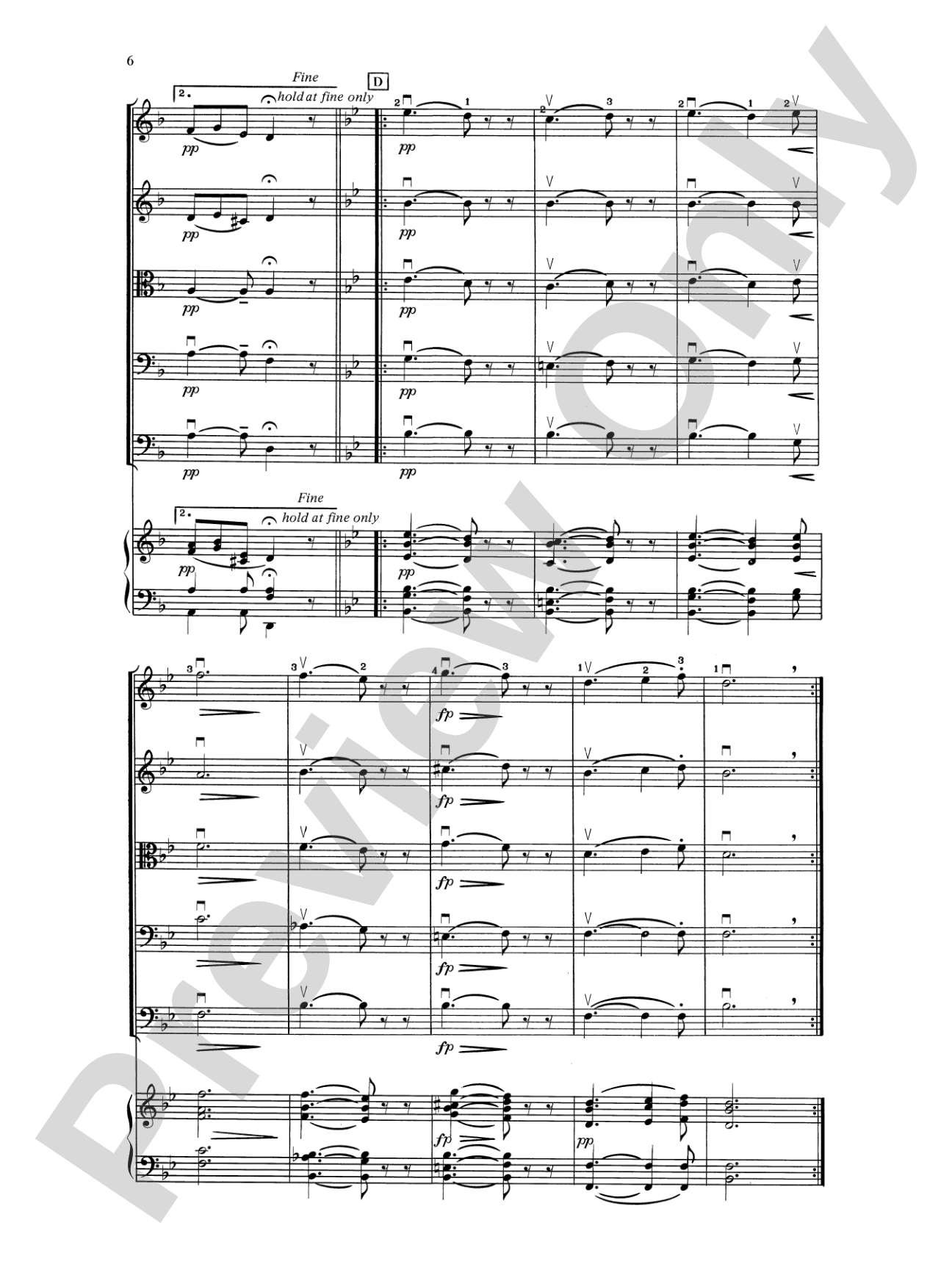
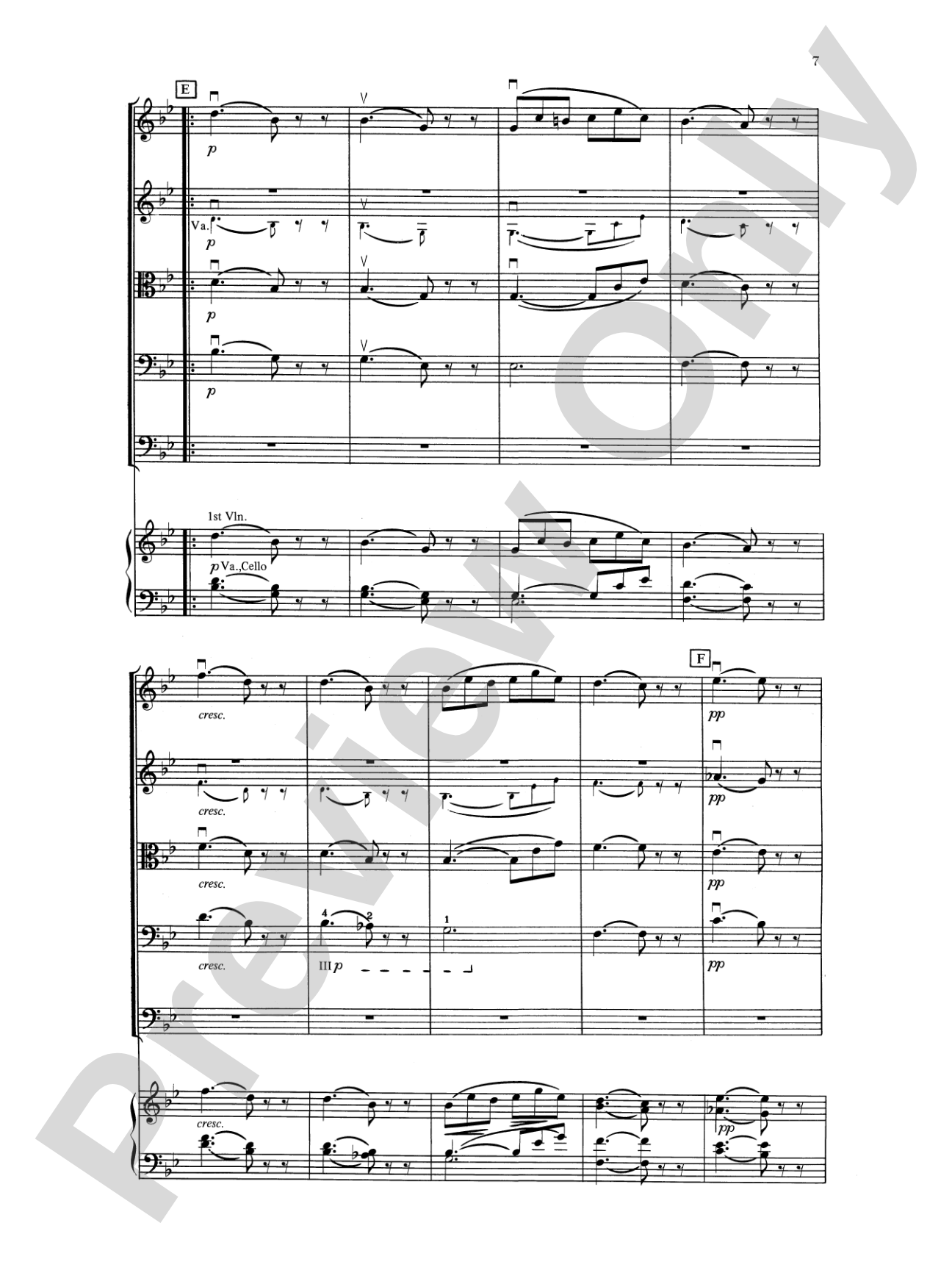
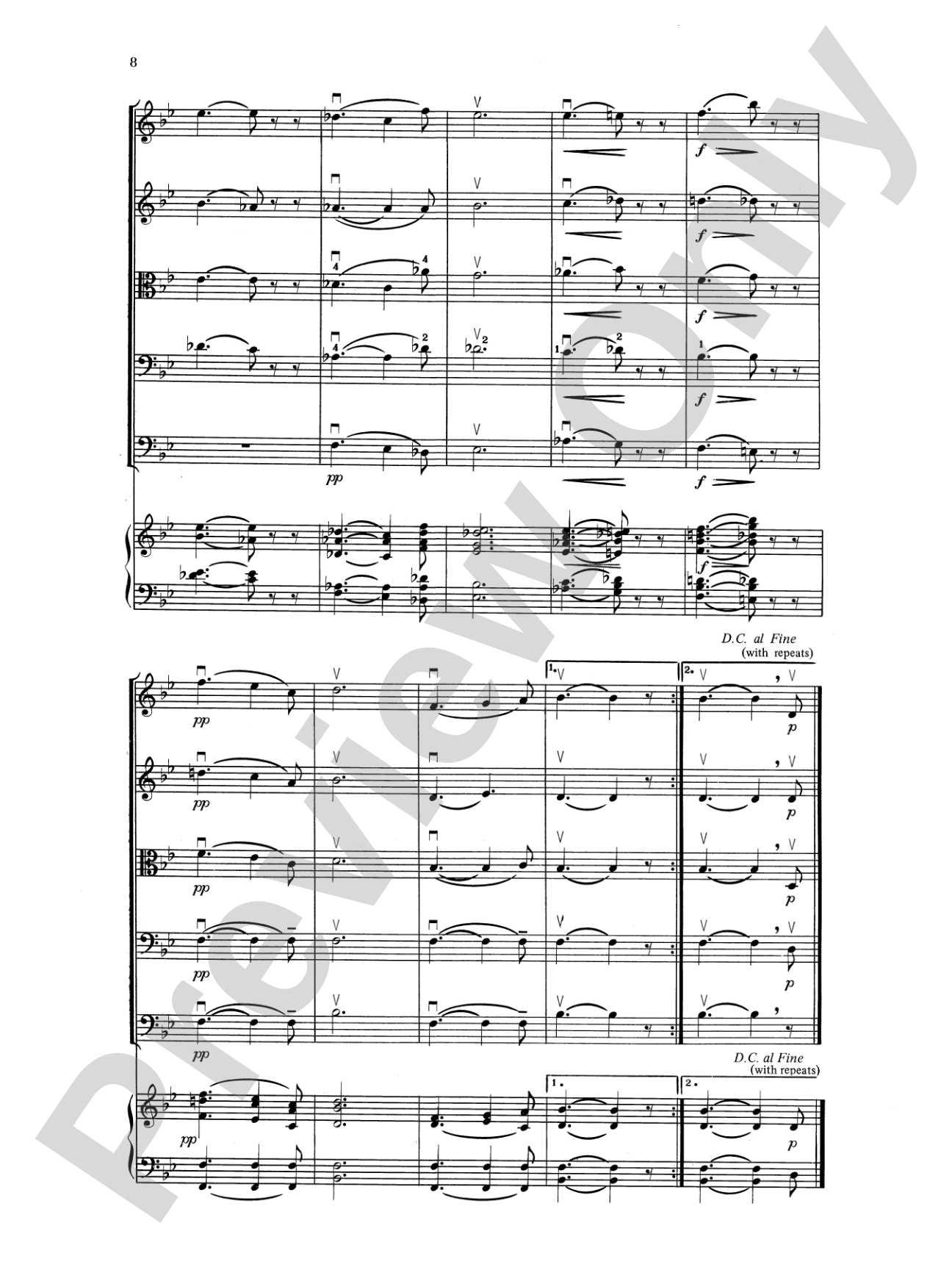

Allegretto
By Franz Schubert / arr. Russell Errante
Grade: 3
Item: 00-PK-0000121

$45.00
Pickup currently not available
Buy Extra Parts (Digital PDF Download)
| Product | Price | Quantity |
|---|---|---|
| Allegretto: Score | $6.00 | |
| Allegretto: 1st Violin | $5.99 | |
| Allegretto: 2nd Violin | $5.99 | |
| Allegretto: Viola | $5.99 | |
| Allegretto: Cello | $5.99 | |
| Allegretto: String Bass | $5.99 | |
| Allegretto: Piano Accompaniment | $5.99 |
Parts Added to Cart!
Description


Don't just read it, hear it, play along with it, and watch your students grow with it. In MakeMusic Cloud, Allegretto comes alive with professional accompaniment, adjustable tempo, and built-in practice tools that turn solo practice into real progress.
Open in the Player
Jump straight in and assign it today.
Start Your Free Trial
Open this title and explore the full library in minutes.
Sample Audio
No sample audio found.
Sample Video
No sample videos found.
Additional Details
Series:
Highland/Etling String Orchestra
Publisher:
Alfred Music
SKU:
00-PK-0000121
More about this title
About the Composer: Franz Schubert
Franz Schubert (1797, 1828) composed prolifically across every major genre despite his short life, leaving behind nine symphonies, fifteen string quartets, and hundreds of songs that fundamentally shaped Romantic music. His gift for melody was unmatched; he could spin out phrases that feel inevitable yet surprising, and his harmonic language opened doors that later composers walked through for the rest of the century. For student musicians, Schubert's work offers direct access to the emotional depth and structural sophistication that define the Classical-to-Romantic transition.
His string writing is particularly generous to young ensembles. Rather than demanding technical virtuosity, Schubert distributes musical ideas across all voices so that every player experiences the satisfaction of carrying important material. This arrangement of Allegretto preserves that character while making it accessible to intermediate players.
Why we love this
This arrangement distills one of Schubert's most singable melodies into a Grade 3 string setting that remains musically dignified. Russell Errante's orchestration preserves the warmth and directness of the original while giving every section meaningful material, making it equally suitable for developmental ensembles and concerts where quality repertoire matters.
What to expect
Schubert's Allegretto radiates elegance and warmth, with the characteristic gentle momentum of the Classical era informed by early Romantic sensibility. The melody unfolds with understated grace, supported by steady harmonies that create a sense of inevitability without drama or urgency.
Who it's for
This arrangement serves intermediate string orchestras (Grade 3) looking for genuine Classical-Romantic repertoire that doesn't compromise musical substance. Ensembles preparing for festivals, concerts, or recordings will find a piece that demonstrates both technical competency and interpretive musicianship.
How to get the most out of it
- Shape the primary melody with a gentle dynamic arc; resist playing it flat or mechanical. Let the line breathe naturally, especially at phrase turns.
- Balance the harmonic support in lower voices so accompaniment figures remain transparent and don't overwhelm the singing quality of the piece.
- Attend to intonation in the Romantic-era harmonies, where tuning clarity makes the harmonic color sing. Minor adjustments in chord voicing have immediate expressive impact.
- Maintain steady pulse without rigidity. The Allegretto character calls for forward motion with lyrical flexibility rather than metronomic precision.
How to use it
This work pairs beautifully alongside other Classical miniatures or as an opening number on a concert exploring the transition from Classical to Romantic styles. It also serves as an excellent stepping stone repertoire piece for developing ensembles moving toward more substantial Romantic-era works.
Skills your students will build
- Sustaining a lyrical melodic line with direction and shape
- Balancing melody against harmonic accompaniment textures
- Tuning within traditional Romantic-era harmonic progressions
- Interpreting tempo flexibility and musical phrasing in song-like material
- Playing with stylistic awareness of the Classical-Romantic transition