
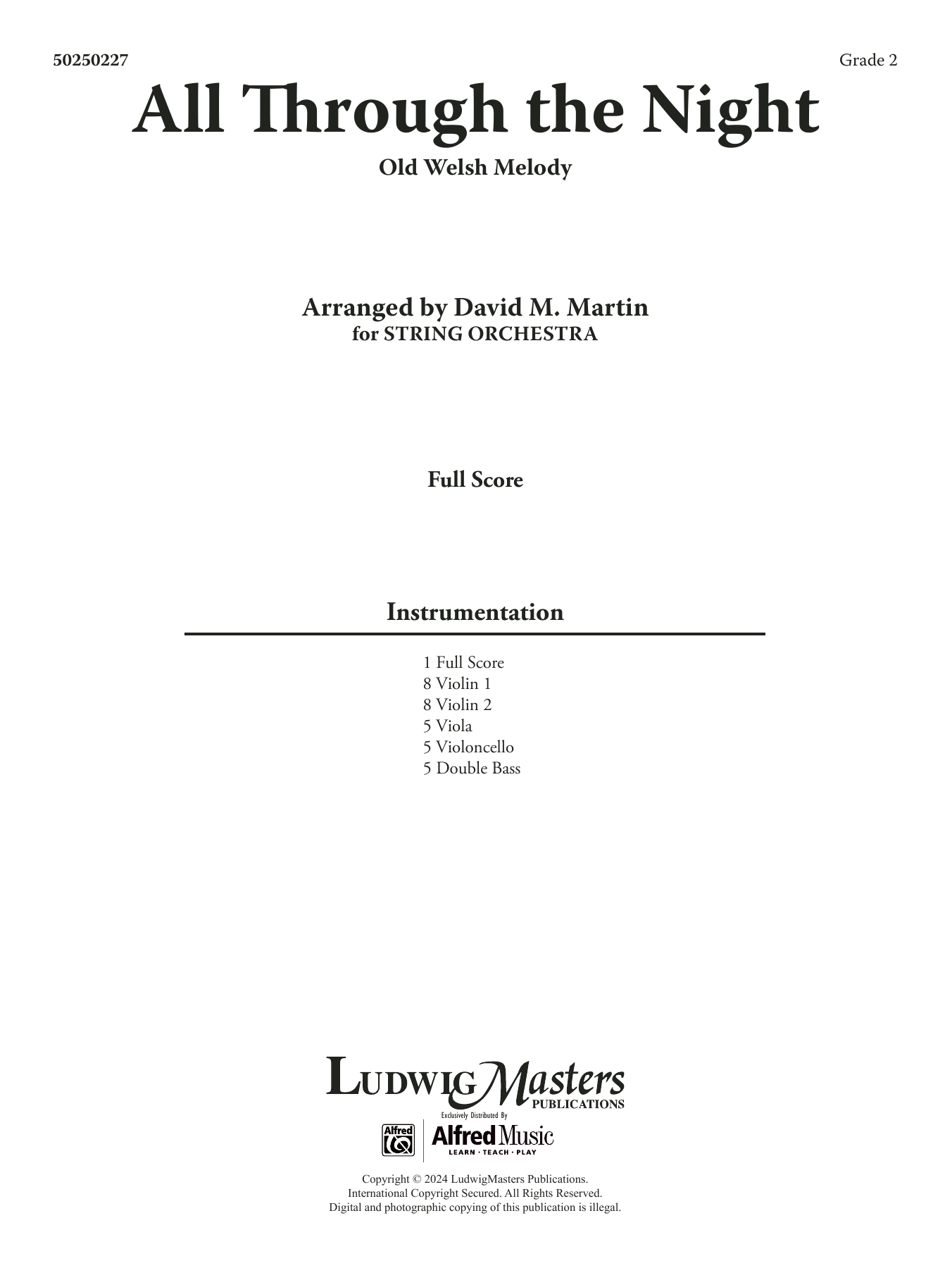

All Through The Night (arr. David M Martin): String Orchestra Conductor Score & Parts
By Traditional / Arranged by David M Martin
Grade: 2
Item: 35-PK01513655
$40.00
Pickup currently not available
Buy Extra Parts (Digital PDF Download)
Parts Added to Cart!
Description
This beautiful arrangement of the well-known Welsh folk song offers a lyrical and poignant respite in your concert program that audiences and players alike will enjoy!


Discover MakeMusic Cloud: thousands of interactive titles your students can play along with today.
Sample Audio
No sample audio found.
Sample Video
No sample videos found.
Additional Details
Publisher:
Hal Leonard
SKU:
35-PK01513655
More about this title
About the Composer: Traditional
Welsh folk songs form the backbone of Britain's musical heritage, passed down through generations of singers and players. These melodies carry the emotional weight of a culture and language, making them invaluable resources for music education and concert programming.
Why we love this
Martin's arrangement respects the song's inherent simplicity while adding textural depth that engages young string players without overwhelming them. At Grade 2, it gives students a chance to inhabit a melody they may recognize, which builds confidence and connection to the material in ways technical exercises cannot.
What to expect
The melody unfolds with the quiet dignity of a lullaby, each phrase settling like breath. There's an old-world tenderness here, the kind of timeless beauty that makes audiences lean in and listen.
Who it's for
String orchestras at the early intermediate level will find this arrangement both playable and artistically rewarding. Directors programming concerts that need a reflective moment, or those building units around folk song arrangements and cultural music, will appreciate having a Grade 2 option that doesn't sacrifice musicality.
How to get the most out of it
- Shape the opening phrase with a slight swell toward the midpoint, then let it settle gently. This teaches singers (and string players) the difference between playing notes and singing a line.
- Balance the harmonic accompaniment so it supports rather than competes with the melody. A common mistake is letting lower voices push forward too eagerly.
- Allow yourself rubato in the most poignant moments. Folk music lives in small temporal breaths; rigid metronomic playing drains the song of its character.
- Adjust your tempo based on your hall's acoustics. A slower pace in a resonant space can sound peaceful; in a dry room, it may drag. One rehearsal in your actual venue makes all the difference.
How to use it
Position this after a more energetic opening work to give the audience and your ensemble a moment of repose. It also serves well as a bridge between contrasting styles in the same concert, or as the centerpiece of a folk music themed set that might include arrangements from other traditions.
Skills your students will build
- Phrasing and direction in lyrical lines
- Balancing melody and accompaniment voices
- Sustaining tone through longer harmonic progressions
- Responding to expressive gestures from the conductor
- Playing with cultural awareness and historical context