
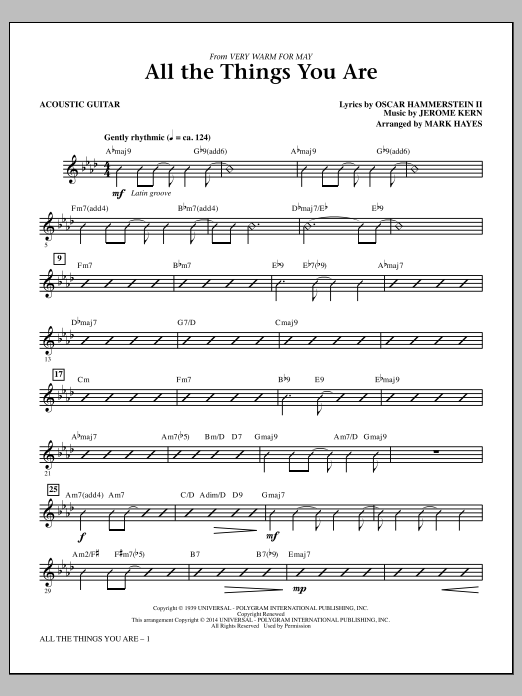

All the Things You Are: Choral Instrumental Pak
As performed by Jerome Kern / As performed by Oscar Hammerstein II / As performed by Jack Leonard with Tommy Dorsey Orchestra / Arranged by Mark Hayes
Item: 35-PK00296966
$21.00
Pickup currently not available
Buy Extra Parts (Digital PDF Download)
Parts Added to Cart!
Description
Hammerstein and Kern's popular hit, and part of the American songbook, is presented with a light and jazzy Latin feel, complete with optional instrumental parts or rhythmic accompaniment track. Smooth vocal lines sit above the exciting samba-like accompaniment. Accessible to all levels and gorgeous for many voicings. Duration: ca. 3:25


All the Things You Are: Choral Instrumental Pak isn't in MakeMusic Cloud just yet...but it could be. Let us know you'd like to see it, and you'll help shape what comes next. In the meantime, start a free trial and dive into thousands of interactive titles your students can play along with today.
Request This Title
Tell us you want it.
Start Your Free Trial
Explore everything that's ready to play right now.
Sample Audio
No sample audio found.
Sample Video
No sample videos found.
Additional Details
Publisher:
Hal Leonard
SKU:
35-PK00296966
More about this title
About the Artist: Jerome Kern
Jerome Kern (1885–1945) shaped American musical theater through his gift for memorable melodies and sophisticated harmonic language. His collaborations with lyricist Oscar Hammerstein II produced some of the most enduring songs in the standard repertoire, works that have been interpreted by jazz musicians, pop singers, and classical vocalists for generations.
Why we love this
Mark Hayes's arrangement strips away none of the song's harmonic richness while wrapping it in a warm, propulsive samba groove that feels both fresh and respectful to the original. The vocal writing sits naturally for singers while the optional instrumentation gives ensembles the flexibility to expand their sound, making this equally strong whether performed a cappella or fully orchestrated.
What to expect
Warm and sophisticated. The samba accompaniment creates forward momentum without demanding aggressive or overly contemporary energy, while Kern's elegant melody invites singers into a relaxed, conversational expression. There's a real sense of class here; this doesn't feel precious, but it does feel finished and refined.
Who it's for
Any choir seeking an accessible standard that works equally well in a pop or jazz-focused concert, an American music survey, or a lighter spring program. The arrangement accommodates various voicing needs and instrumental resources, making it practical for diverse ensemble sizes and configurations.
How to get the most out of it
- Shape the vocal phrases with attention to the lyrical contour rather than the accompaniment's rhythmic drive; let the singers breathe at logical textual points even when the Latin groove continues underneath.
- If using instrumental parts, establish the samba rhythm clearly in rehearsal before adding vocals; consider having rhythm section run the groove independently for several rehearsals to internalize the pocket.
- Lean into the smoothness of the vocal lines without rushing the tempo; this arrangement rewards clarity of articulation and legit tone production that sits above the accompaniment rather than competing with it.
- Balance the recorded track volume during rehearsals so singers can hear their own blend; pull it back in performance to allow the live ensemble more presence.
How to use it
Pair this with other standard repertoire to create a mid-concert segment celebrating American songwriting, or use it as an opener to establish a more contemporary, jazz-adjacent mood for the evening. The roughly three-and-a-half minute duration makes it strong either as a standalone feature or as part of a medley exploring different jazz and pop interpretations of classic material.
Skills your students will build
- Singing over syncopated accompaniment without rhythmic alignment
- Phrasing and lyrical interpretation in the jazz-standards tradition
- Balancing vocal blend against rhythmic instrumental textures
- Samba rhythm and Latin feel recognition
- Flexibility between a cappella and accompanied voicing