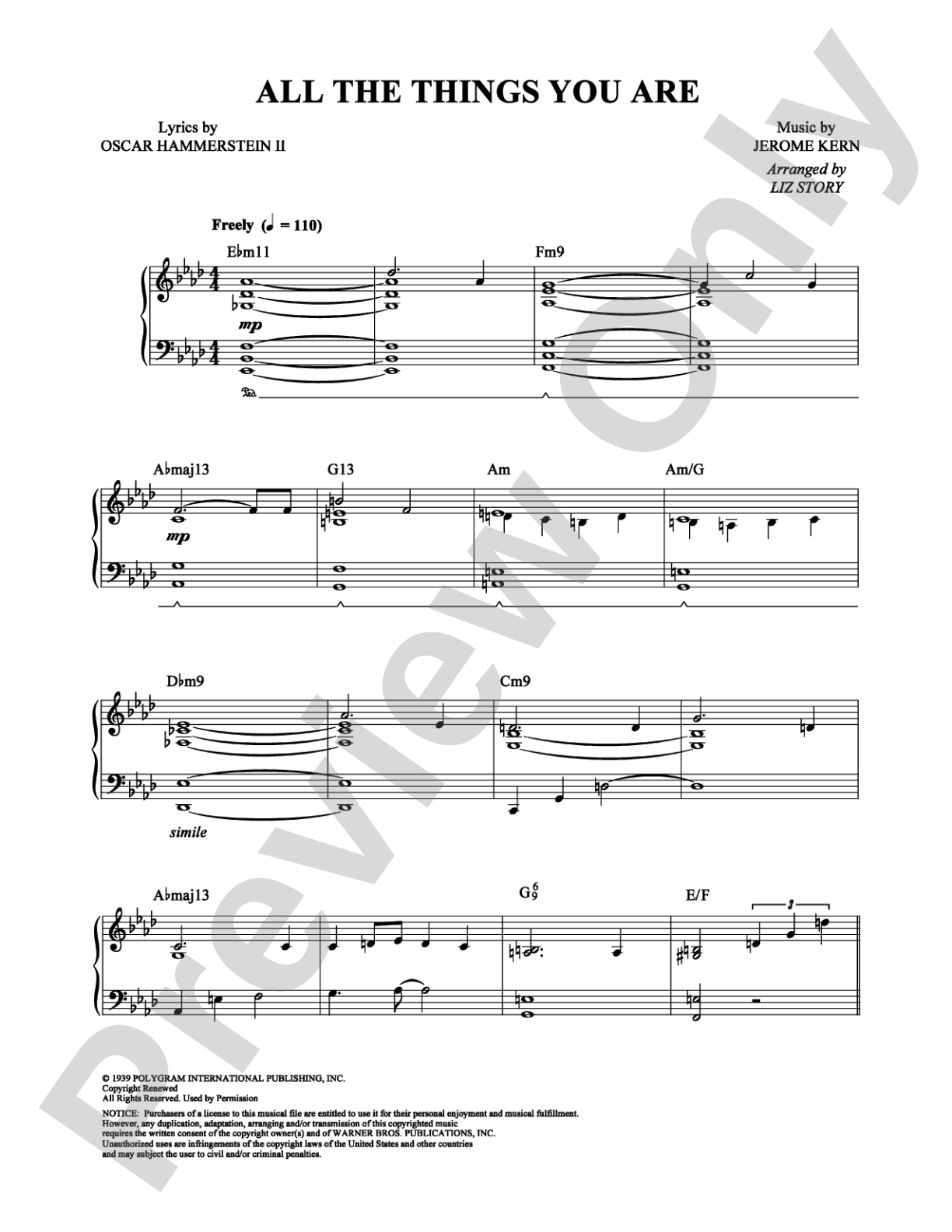
All the Things You Are: Piano Digital Sheet Music

All the Things You Are: Piano Digital Sheet Music

Jerome Kern, Liz Story

Item: 00-PS-0006626

Digital Download
$2.95
Description

All the Things You Are: Piano Digital Sheet Music isn't in MakeMusic Cloud just yet...but it could be. Let us know you'd like to see it, and you'll help shape what comes next. In the meantime, start a free trial and dive into thousands of interactive titles your students can play along with today.

Sample Audio
No sample audio found.
Sample Video
Additional Details
SKU: 00-PS-0006626

More about this title

About the Artist: Liz Story

Liz Story is a contemporary pianist and composer known for her accessible interpretations of jazz standards and her ability to bridge classical technique with improvisational sensibility. Her arrangements are crafted for players seeking musicality without excessive technical demands, making her work a reliable choice for educators building jazz literacy in their studios.

Why we love this

Story's reading of this Kern and Hammerstein standard captures the song's harmonic richness while keeping the part playable. Her voicings invite students into the actual construction of jazz chords rather than oversimplifying them, which means learners develop real harmonic literacy alongside performance skill.

What to expect

Sophisticated yet unhurried, with the bittersweet nostalgia that defines this Rodgers and Hammerstein masterpiece. Story's voicings create warmth and depth, inviting the performer to inhabit the song's reflection rather than simply execute its surface.

Who it's for

Piano students with intermediate to advanced classical training who are beginning to explore standards and jazz repertoire. This arrangement serves teachers looking to introduce jazz harmony and improvisation through a piece that respects both the song's standards tradition and contemporary performance practice.

How to get the most out of it

  • Shape the melody with subtle dynamic shaping rather than heavy accent; let the voice-leading in the accompaniment support the phrasing naturally.
  • Treat the chord changes as conversational rather than mechanical. Each harmonic shift has emotional weight in this standard, so listen through the full progression before playing.
  • Balance rubato sparingly. A slight relaxation at phrase endings will open up the aristocratic quality of the piece without sacrificing structural clarity.
  • Pay attention to pedal clarity in the left hand; these voicings reward precision, especially in passages where bass notes move with harmonic intent.

How to use it

Feature this in a recital segment exploring American songbook standards, or use it as a bridge between classical and jazz study for advanced students. It also works as an encore or as part of a themed concert pairing standards with art song.

Skills your students will build

  • Navigating seventh chords and extended harmonic progressions
  • Balancing melody and accompaniment voicing in jazz contexts
  • Developing sensitivity to rubato and phrase architecture
  • Reading and interpreting contemporary jazz piano notation

You May Also Like