

All the Pretty Little Horses: String Orchestra Conductor Score & Parts
American Folk Tune / arr. Carrie Lane Gruselle
Grade: 2.5
Item: 00-PK-0000950

$44.00
Pickup currently not available
Buy Extra Parts (Digital PDF Download)
| Product | Price | Quantity |
|---|---|---|
| All the Pretty Little Horses: Score | $9.00 | |
| All the Pretty Little Horses: 1st Violin | $5.99 | |
| All the Pretty Little Horses: 2nd Violin | $5.99 | |
| All the Pretty Little Horses: Viola | $5.99 | |
| All the Pretty Little Horses: Cello | $5.99 | |
| All the Pretty Little Horses: String Bass | $5.99 |
Parts Added to Cart!
Description
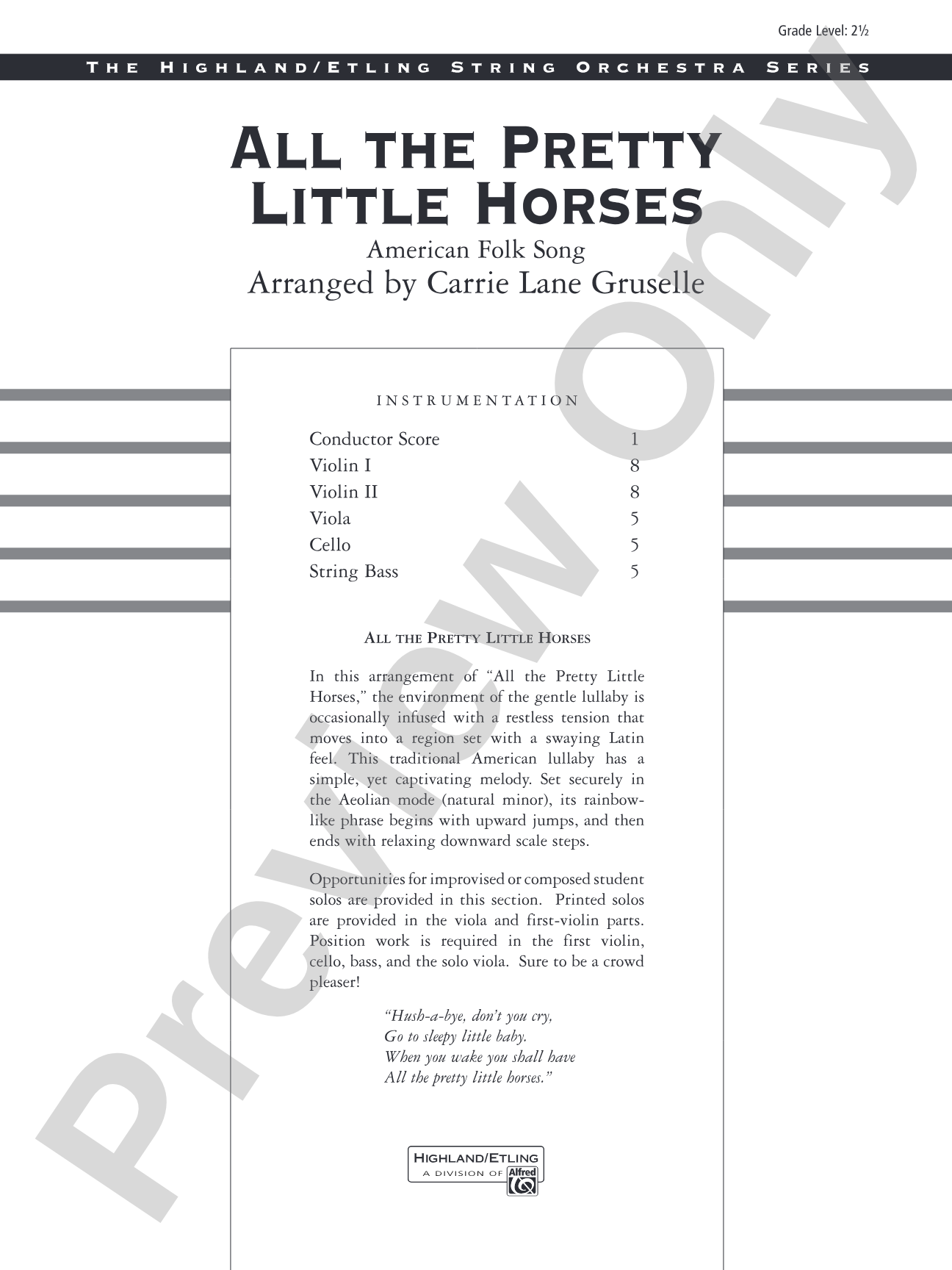
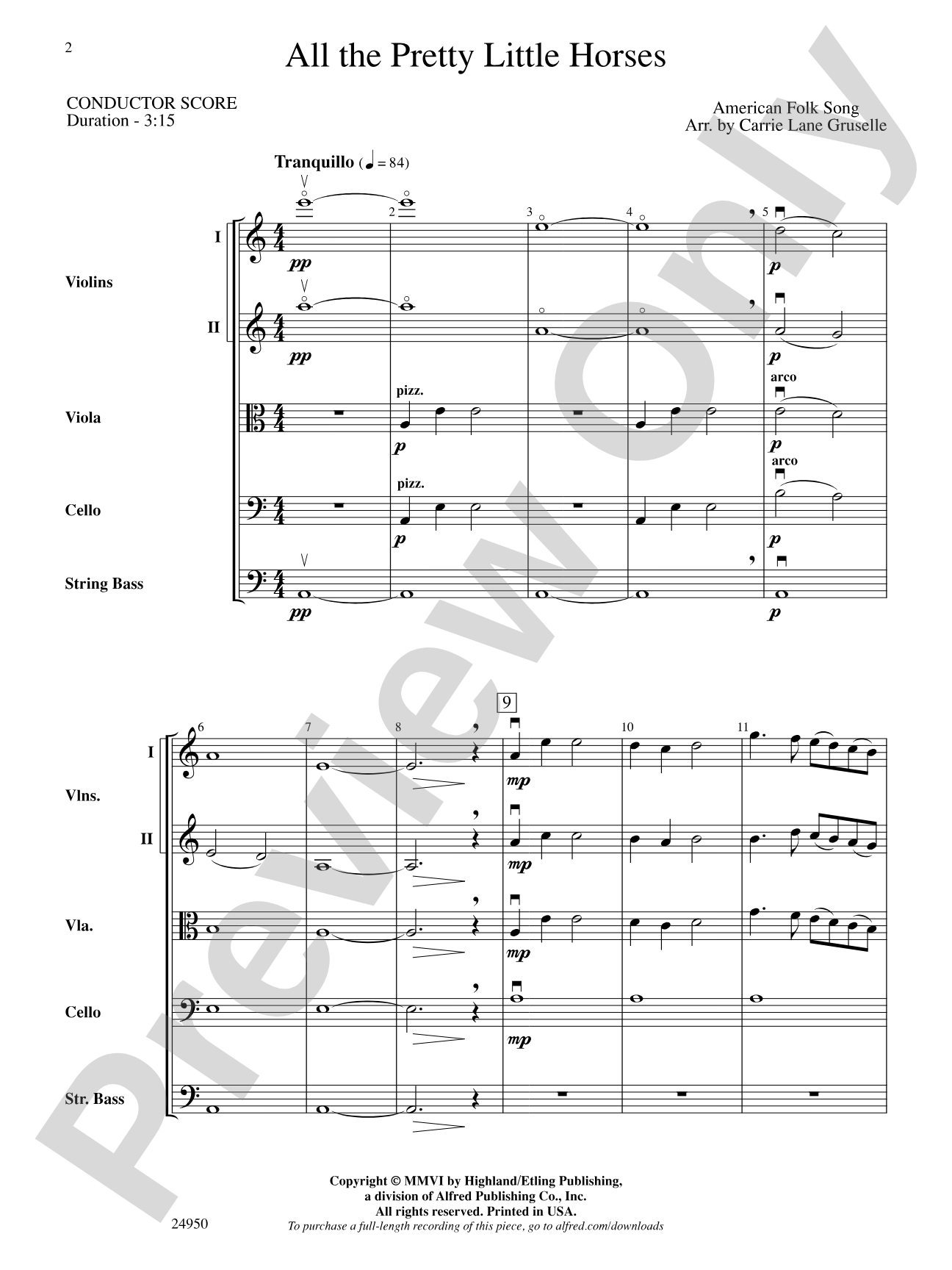
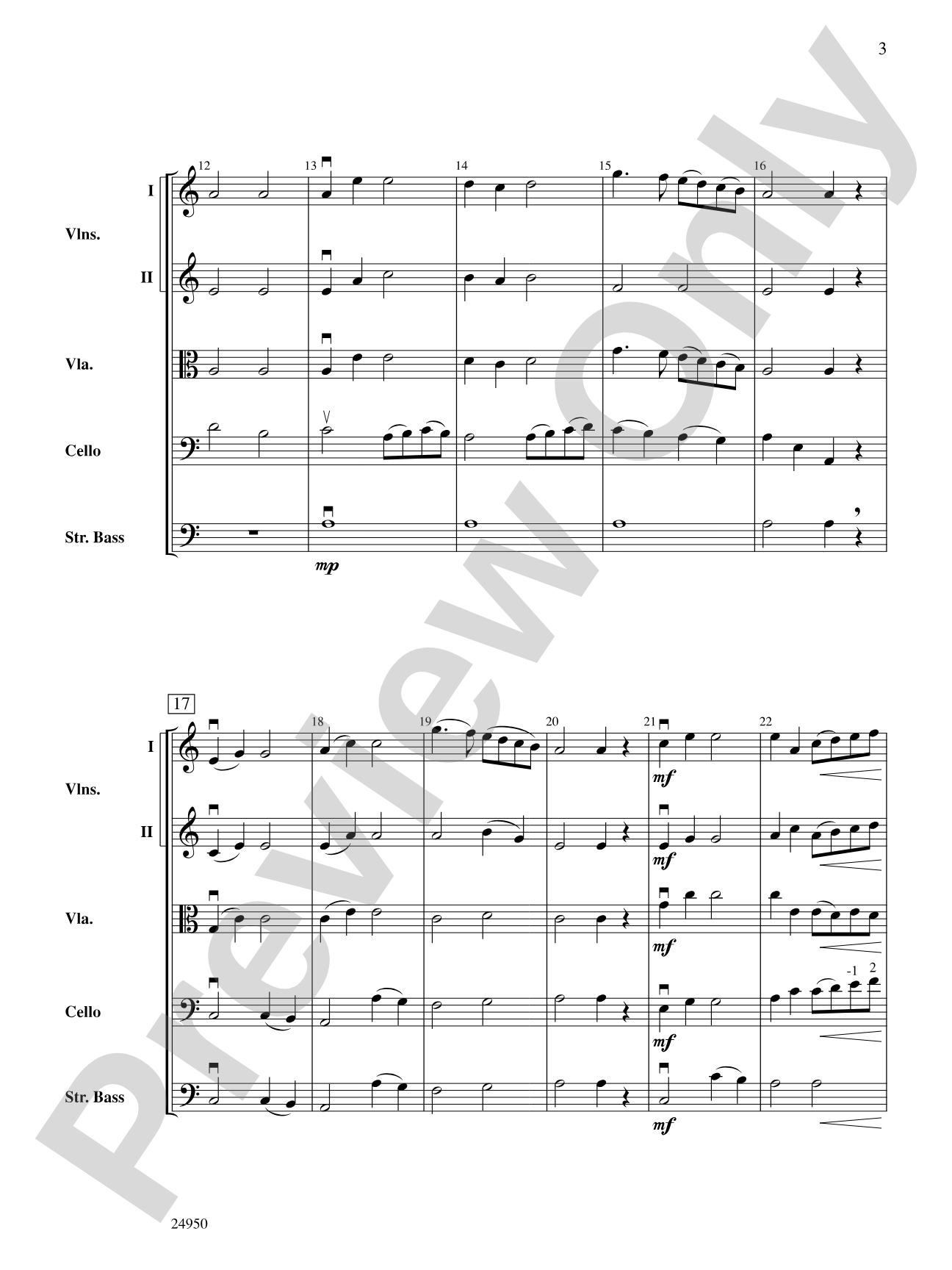
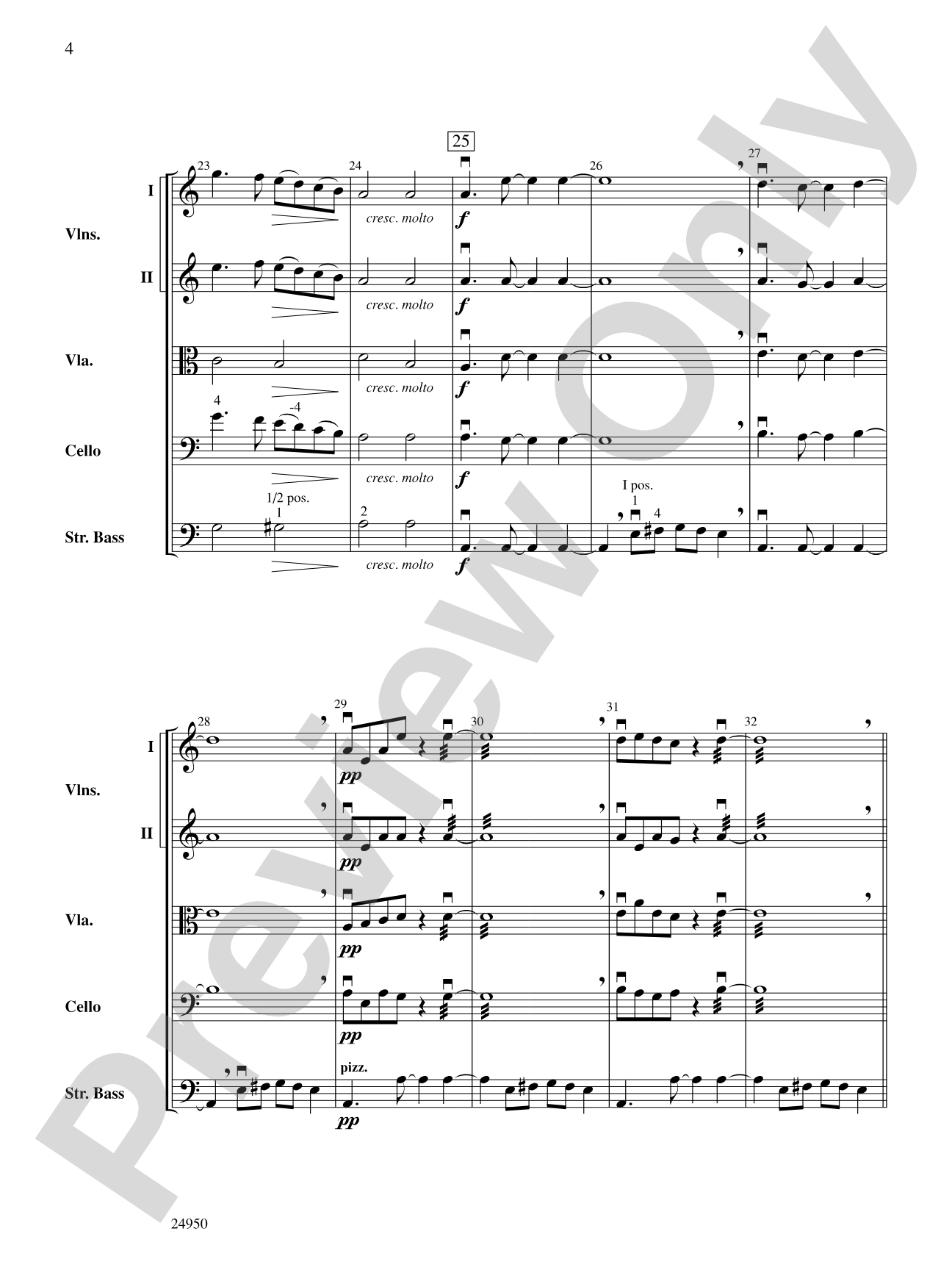
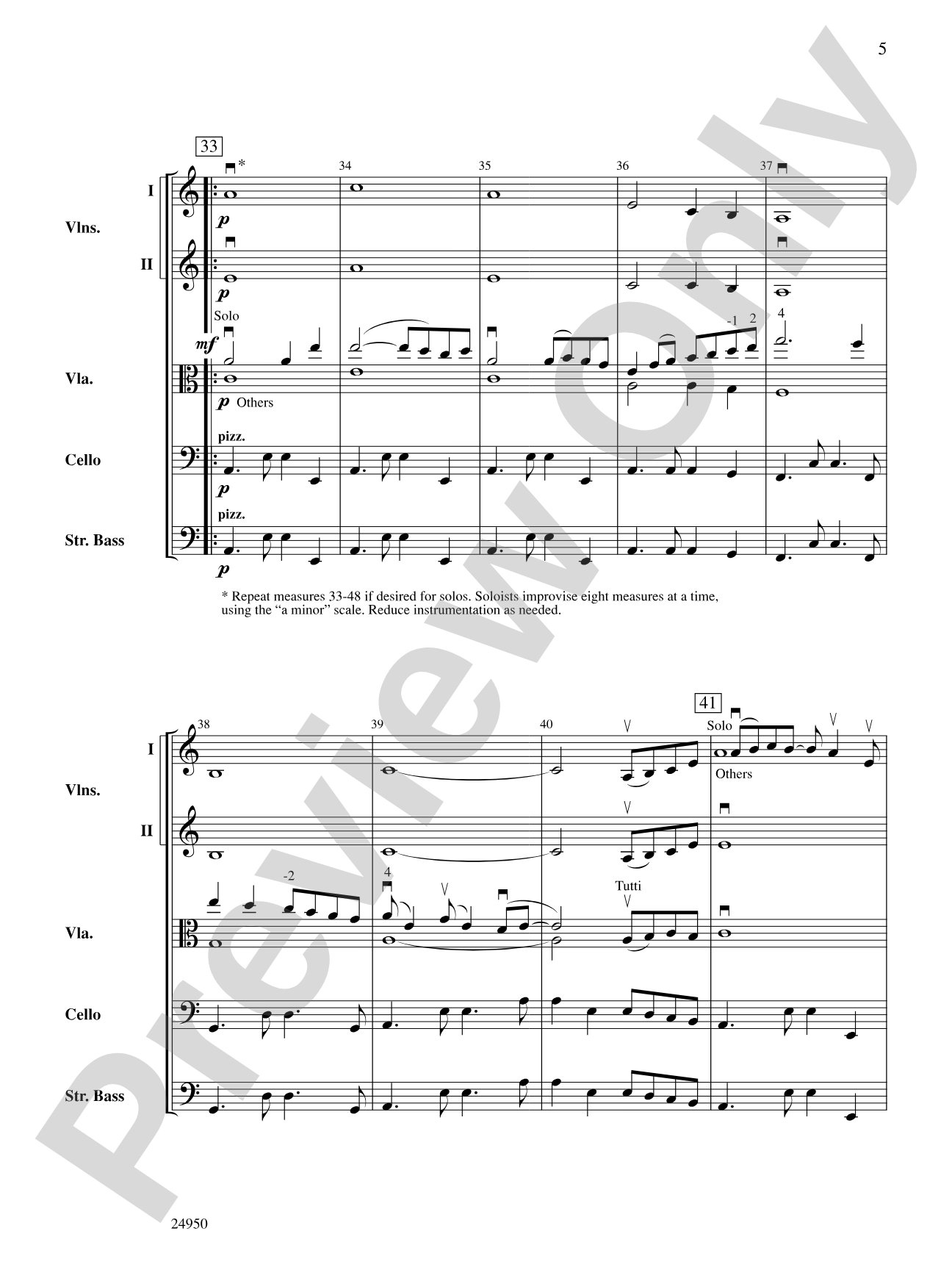
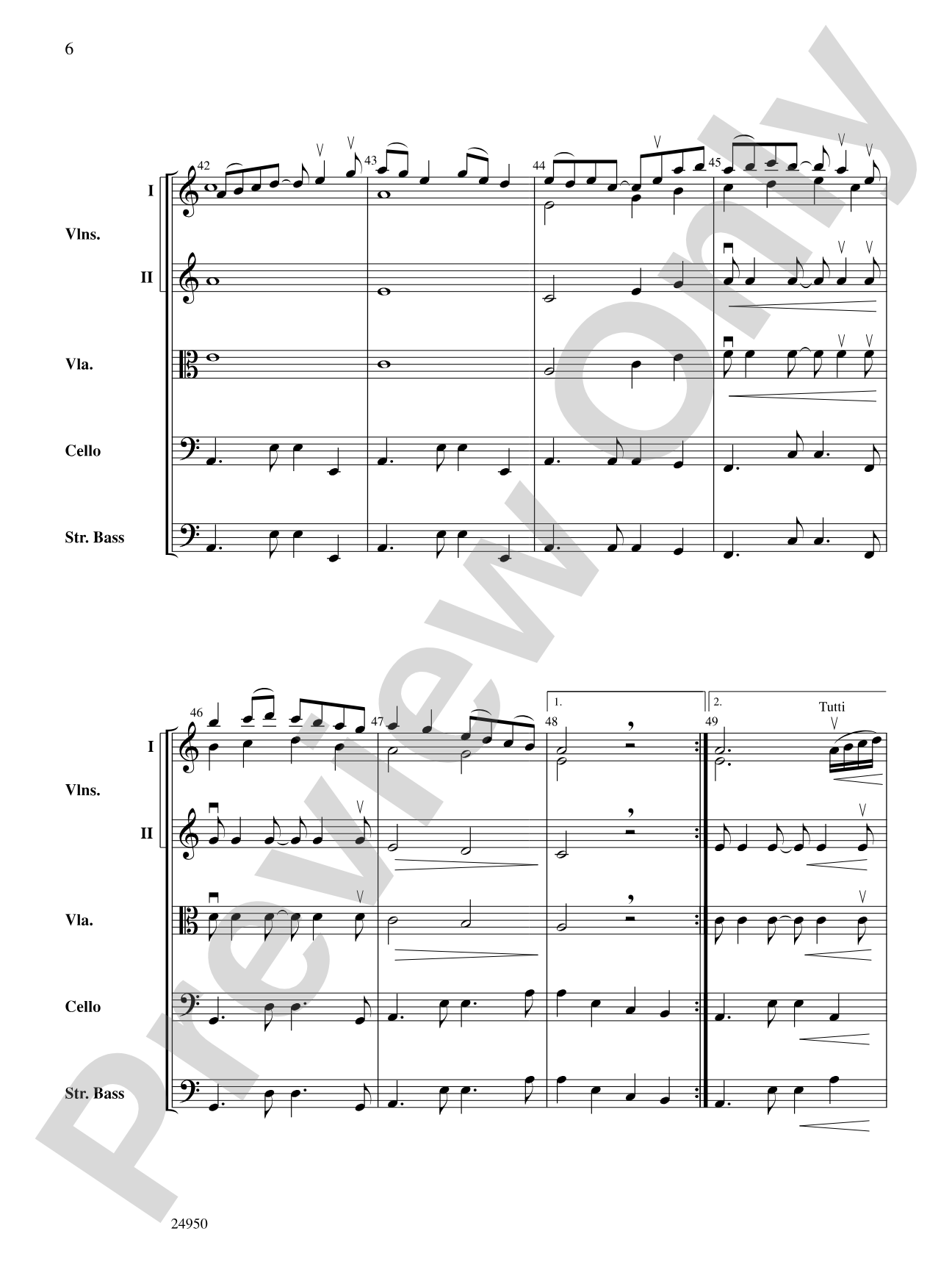
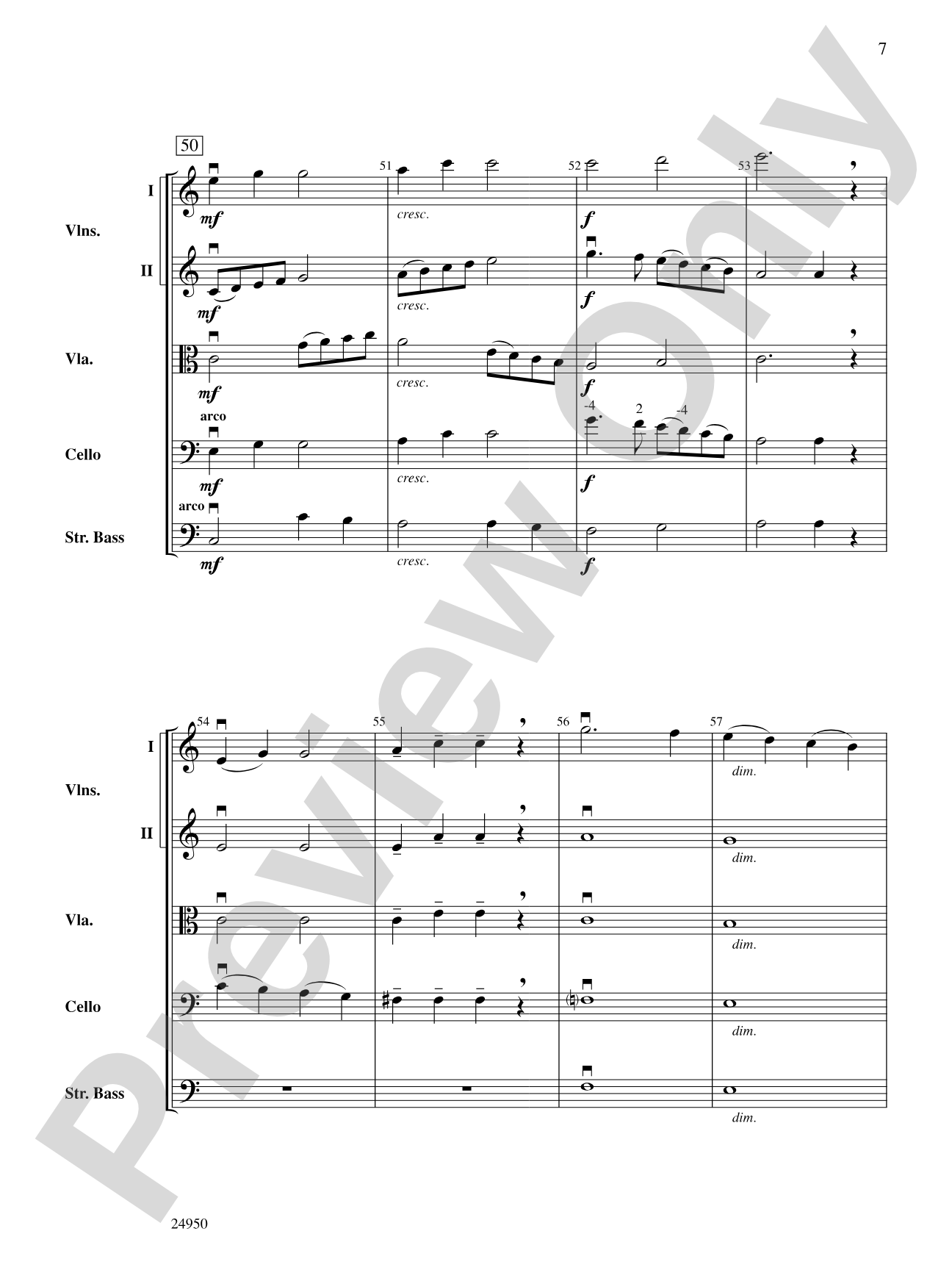
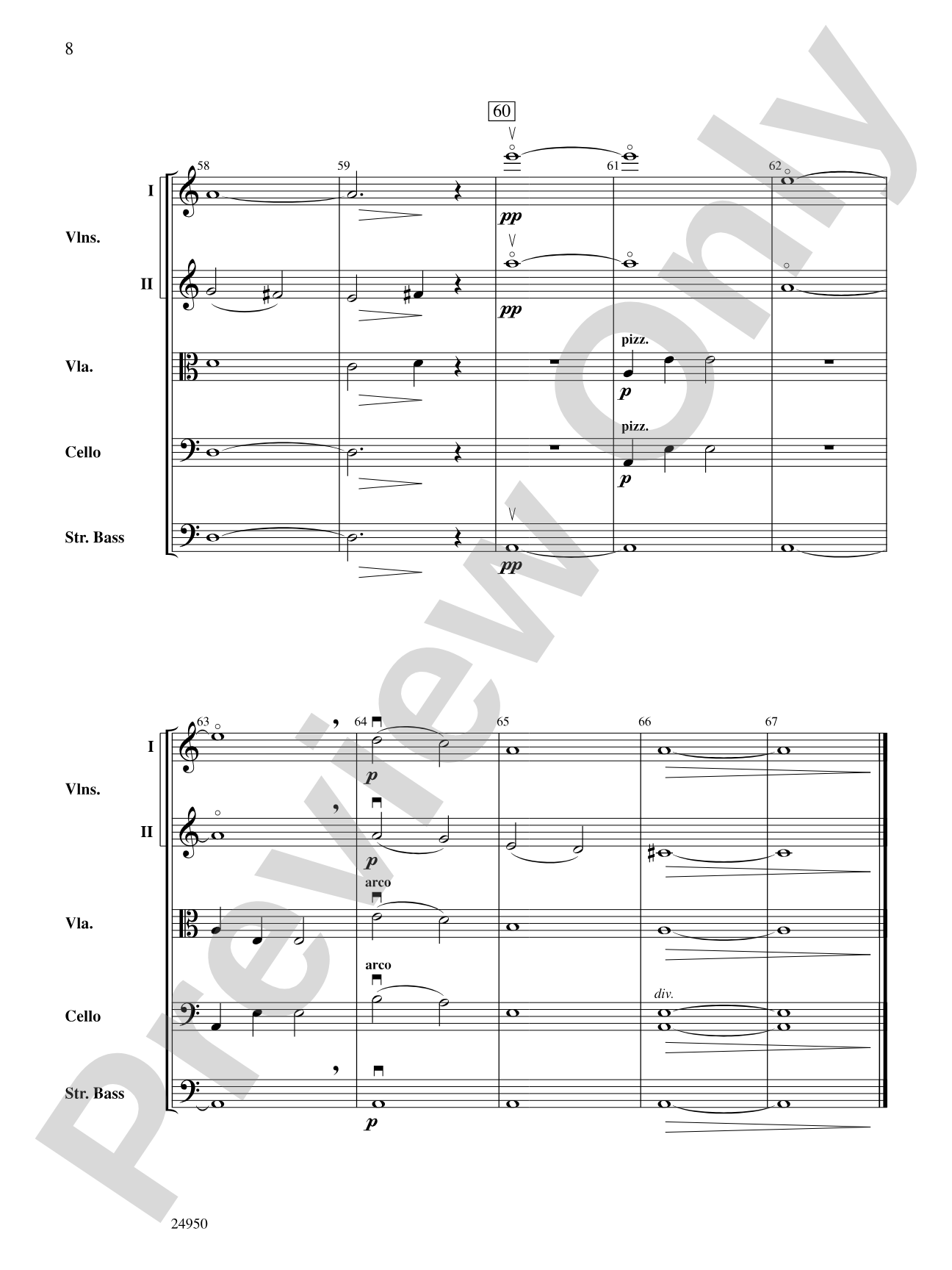
This traditional American lullaby has a simple, yet captivating melody. Set securely in the Aeolian mode (natural minor), its rainbow-like phrase begins with upward jumps, and then ends with relaxing downward scale steps. In this arrangement of "All The Pretty Little Horses", the environment of the gentle lullaby is occasionally infused with a restless tension that moves into a region set with a swaying Latin feel. Opportunities for improvised or composed student solos are provided in this section. Printed solos are provided in the viola and first violin parts. Position work is required in the first violin, cello, bass, and the solo viola. "Hush-a-bye, don't you cry, Go to sleepy little baby. When you wake you shall have, All the pretty little horses."


Don't just read it, hear it, play along with it, and watch your students grow with it. In MakeMusic Cloud, All the Pretty Little Horses: String Orchestra Conductor Score & Parts comes alive with professional accompaniment, adjustable tempo, and built-in practice tools that turn solo practice into real progress.
Open in the Player
Jump straight in and assign it today.
Start Your Free Trial
Open this title and explore the full library in minutes.
Sample Audio
1
Audio File
--:--
0:00
0:00
Sample Video
No sample videos found.
Additional Details
Series:
Highland/Etling String Orchestra
Publisher:
Alfred Music
Page Count:
62
SKU:
00-PK-0000950
More about this title
About the Arranger: Carrie Lane Gruselle

Carrie Lane Gruselle earned her Bachelor of Music Education from the University of Wisconsin–Eau Claire and went on to complete a Master's degree in Music Education from the University of Wisconsin–Stevens Point, where she specialized in Suzuki pedagogy. She has taught elementary and middle school strings in the Appleton Area School District and serves as a cello instructor for the Lawrence University Arts Academy in Wisconsin.
Why we love this
Gruselle transforms a familiar lullaby into something orchestrally engaging without losing its essential tenderness. The arrangement balances accessibility with genuine musical interest, offering space for student solos while teaching real harmonic color through the shift into Latin-influenced sections. At Grade 2.5, it delivers substance: position work for multiple sections, modal harmony, and textural variety that keeps both players and audiences attentive.
What to expect
A familiar, comforting melody enters in its natural minor setting, then gently surprises. The restless tension and swaying Latin pulse inject a quiet energy that contrasts with the piece's lullaby origins, creating an arrangement that feels both tender and alive. The arrangement wraps you in something intimate, then nudges you awake.
Who it's for
String orchestras at the Grade 2.5 level ready to tackle harmonic color and position work. This arrangement works for groups that have solid rhythmic foundation and can handle both straight orchestral textures and a brief foray into Latin rhythmic feel. Young players benefit from the printed solo options while more advanced students can rise to improvisation.
How to get the most out of it
- Shape the opening melody with the natural arch of the text: upward jumps feel like gentle reaching, then downward scales settle into rest. Let phrasing breathe rather than rushing.
- When the Latin section arrives, establish a steady, swaying pulse in the lower strings. This rhythmic anchor lets soloists explore their improvised or printed passages without losing cohesion.
- Prepare first violin, viola, cello, and bass for position work by mapping fingerings well in advance. Smooth shifting happens when students know exactly where they're going.
- Balance the printed viola and first violin solos carefully; they should float above the accompaniment without dominating it, maintaining the lullaby's hushed quality.
How to use it
Program this alongside other folk arrangements or American classics to create a thematic concert segment. Its moderate length and accessible Grade 2.5 level make it an excellent choice for mid-season concerts when students are comfortable with fundamentals but still developing technical range. The gentle, familiar melody also connects well with younger audiences in family or school concert settings.
Skills your students will build
- Playing in Aeolian mode and understanding natural minor harmony
- Position work across multiple string sections (first violin, viola, cello, bass)
- Reading and performing printed solo passages
- Adapting to contrasting textures (straight orchestral sections and Latin-influenced passages)
- Balancing as accompaniment players while soloists emerge from the ensemble
- Shaping long melodic phrases with rubato and expressive phrasing