
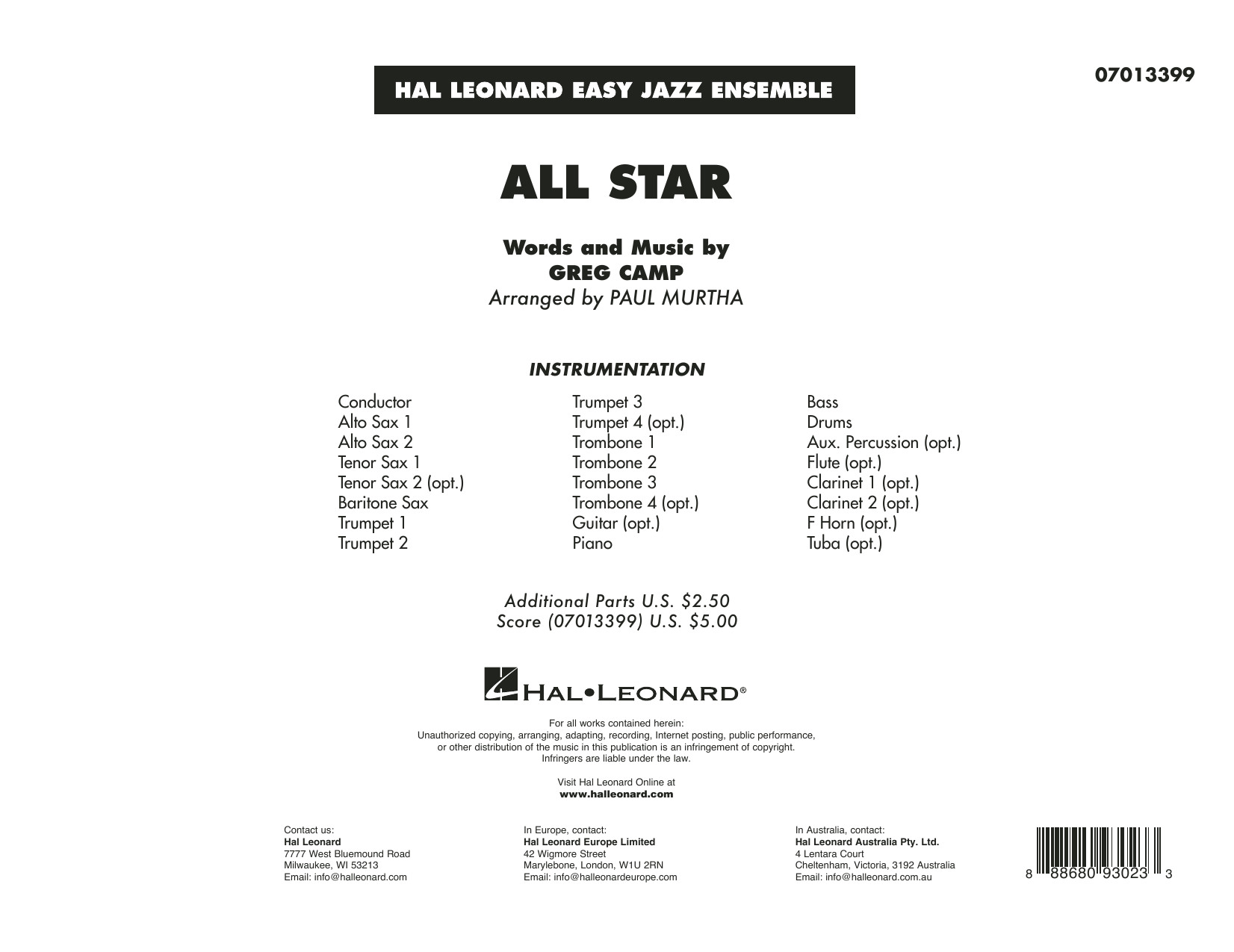

All Star (arr. Paul Murtha): Jazz Ensemble Conductor Score & Parts
As performed by Smash Mouth / Arranged by Paul Murtha
Grade: 2
Item: 35-PK00441331
$45.00
Pickup currently not available
Buy Extra Parts (Digital PDF Download)
Parts Added to Cart!
Description
Recorded by Smash Mouth and featured in the movie "Shrek", this familiar pop hit has become an enduring part of our pop culture. This arrangement features the melody passed from section to section and the players even get to whistle! Solos can be played by any combination of alto sax, trumpet or trombone.


All Star (arr. Paul Murtha): Jazz Ensemble Conductor Score & Parts isn't in MakeMusic Cloud just yet...but it could be. Let us know you'd like to see it, and you'll help shape what comes next. In the meantime, start a free trial and dive into thousands of interactive titles your students can play along with today.
Request This Title
Tell us you want it.
Start Your Free Trial
Explore everything that's ready to play right now.
Sample Audio
No sample audio found.
Sample Video
No sample videos found.
Additional Details
Publisher:
Hal Leonard
SKU:
35-PK00441331
More about this title
About the Artist: Smash Mouth
Smash Mouth burst onto the late 1990s pop scene with an infectious blend of ska, rock, and hip-hop that made them fixtures on both radio and MTV. Their breakout hit "All Star" became inescapable after its placement in the 2001 film "Shrek," introducing the band's signature sound to multiple generations and cementing the song as a cultural touchstone that endures in classrooms and concert halls alike.
What made Smash Mouth particularly relevant for music education is how their work bridges accessible pop sensibility with ensemble musicality. The energy and optimism embedded in their catalog translates remarkably well to student ensembles, offering material that players recognize and connect with emotionally while developing their technical and collaborative skills.
Why we love this
Paul Murtha's arrangement captures the song's infectious charm without overwhelming young players. The melodic pass-around keeps every section engaged, and the optional whistling moments add personality and lightness that makes rehearsals fun while building unison listening skills.
What to expect
Bright, optimistic, and impossible to play without a smile creeping across your face. The arrangement bubbles with the same good-natured confidence that made the original a hit, mixing straightforward pop sensibility with genuine jazz ensemble textures that feel both contemporary and accessible.
Who it's for
Grade 2 jazz ensembles looking for repertoire that connects with students while staying musically honest. Directors want material their players actually recognize, and this delivers exactly that without compromising on arranging craft or educational value.
How to get the most out of it
- Keep the energy steady and rhythmically grounded in the rhythm section. This arrangement depends on crisp ensemble timing rather than rubato, so your bassist and drummer should lock in first.
- Balance the solo section carefully. Since any combination of alto sax, trumpet, or trombone can take solos, rehearse the transitions between soloists beforehand to avoid dead air or confusion about who plays when.
- Emphasize the melodic exchanges between sections with clear phrasing rather than just hitting notes. When the melody passes from trumpets to trombones to saxes, shape each phrase so listeners hear the story continue.
- The whistling part works best when it sounds spontaneous and fun. Resist over-rehearsing it into perfection; a slightly rough, genuine quality keeps the moment charming.
How to use it
This works beautifully as a concert opener or closer, setting an upbeat tone that the audience recognizes immediately. It also pairs well in a pop or film music themed concert, or as a palate cleanser between heavier classical or jazz standard selections that require deeper listening concentration.
Skills your students will build
- Passing melodic material between sections with awareness of phrasing and continuity
- Balance and blend when multiple sections play simultaneously
- Solo improvisation over a harmonic framework (for designated soloists)
- Listening to rhythmic lock between rhythm section and ensemble
- Stylistic interpretation of contemporary pop within a jazz ensemble context