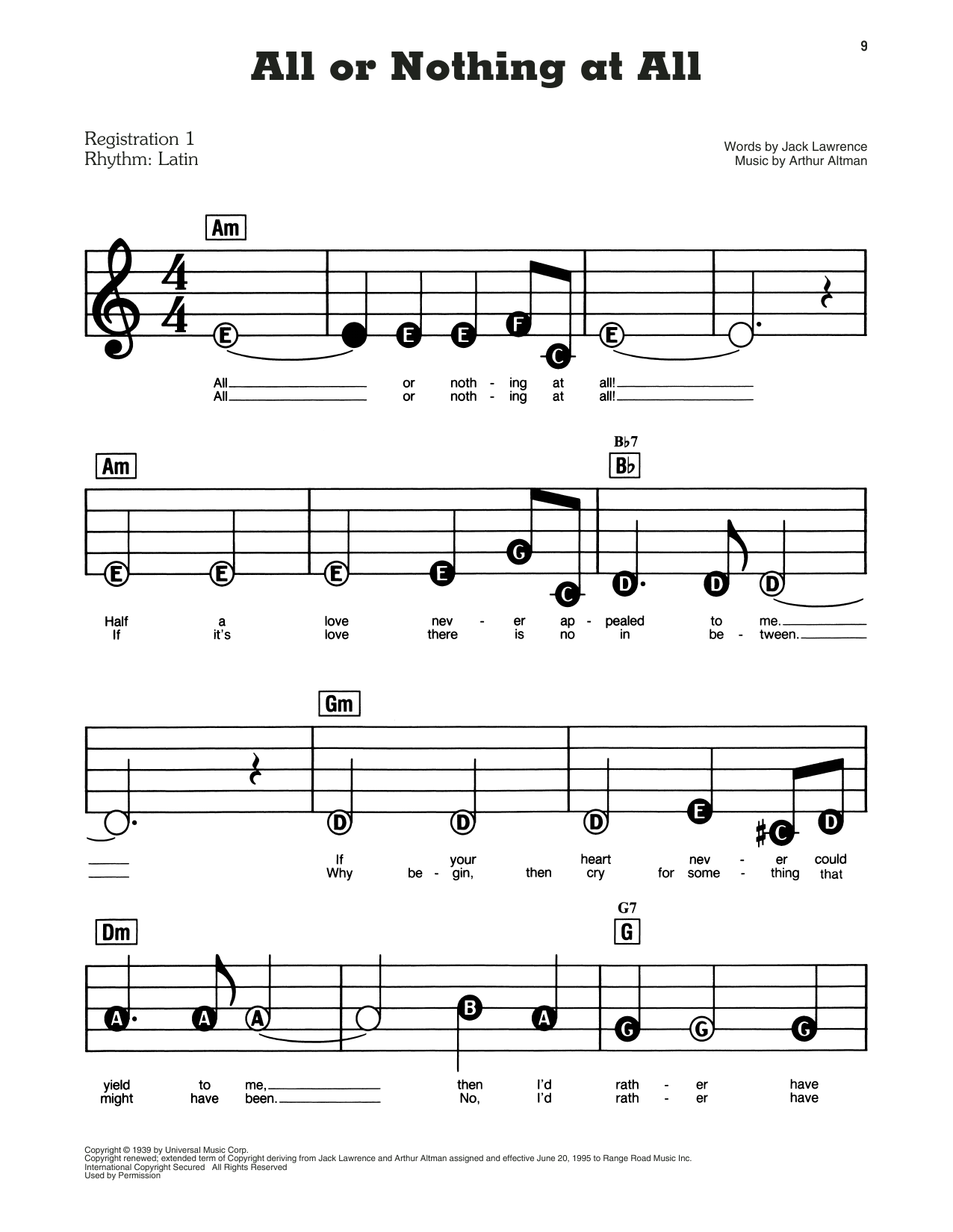
All Or Nothing At All Sheet Music Preview

All Or Nothing At All: E-Z Play Today

As performed by Frank Sinatra

Item: 35-DS00456169

Digital Download
$4.99
Description

All Or Nothing At All: E-Z Play Today isn't in MakeMusic Cloud just yet...but it could be. Let us know you'd like to see it, and you'll help shape what comes next. In the meantime, start a free trial and dive into thousands of interactive titles your students can play along with today.

Sample Audio
No sample audio found.
Sample Video
Additional Details
Publisher: Hal Leonard
Page Count: 3
SKU: 35-DS00456169

More about this title

About the Artist: Frank Sinatra

Frank Sinatra redefined American popular song through his sophisticated approach to phrasing, dynamics, and interpretive freedom. His influence on jazz vocalists and instrumentalists alike shaped how musicians approach melody, time, and emotional communication within a song structure.

Why we love this

Sinatra's standards remain essential listening for pianists studying jazz interpretation and popular song. This arrangement gives students direct access to one of his most elegant recordings, offering a real model for balancing rubato with harmonic sophistication.

What to expect

Mature and unhurried, with a quiet confidence that comes from knowing exactly what you're saying. The piece unfolds with conversational ease rather than display, inviting the listener into an intimate musical moment.

Who it's for

Pianists preparing for jazz standards repertoire, students learning from American songbook classics, and intermediate players ready to explore how harmony and restraint work together in jazz contexts.

How to get the most out of it

  • Listen to Sinatra's original recording multiple times before touching the keys; his phrasing choices are as important as the chord changes themselves.
  • Shape the melody line with dynamic restraint rather than literal dynamic markings; let the harmony suggest where the phrase should breathe.
  • Treat the accompaniment as conversational support for the melody, not as background texture.

How to use it

Pair this with other standards from the American songbook when building a jazz or popular music unit. It works well as a solo piano feature in a concert celebrating vocal standards or as a reference recording for jazz history study.

Skills your students will build

  • Interpreting jazz standards and understanding how melody interacts with chord changes
  • Shaping phrases with rubato while maintaining harmonic integrity
  • Accompanying a melody line with musical sensitivity rather than literal notation following

You May Also Like