
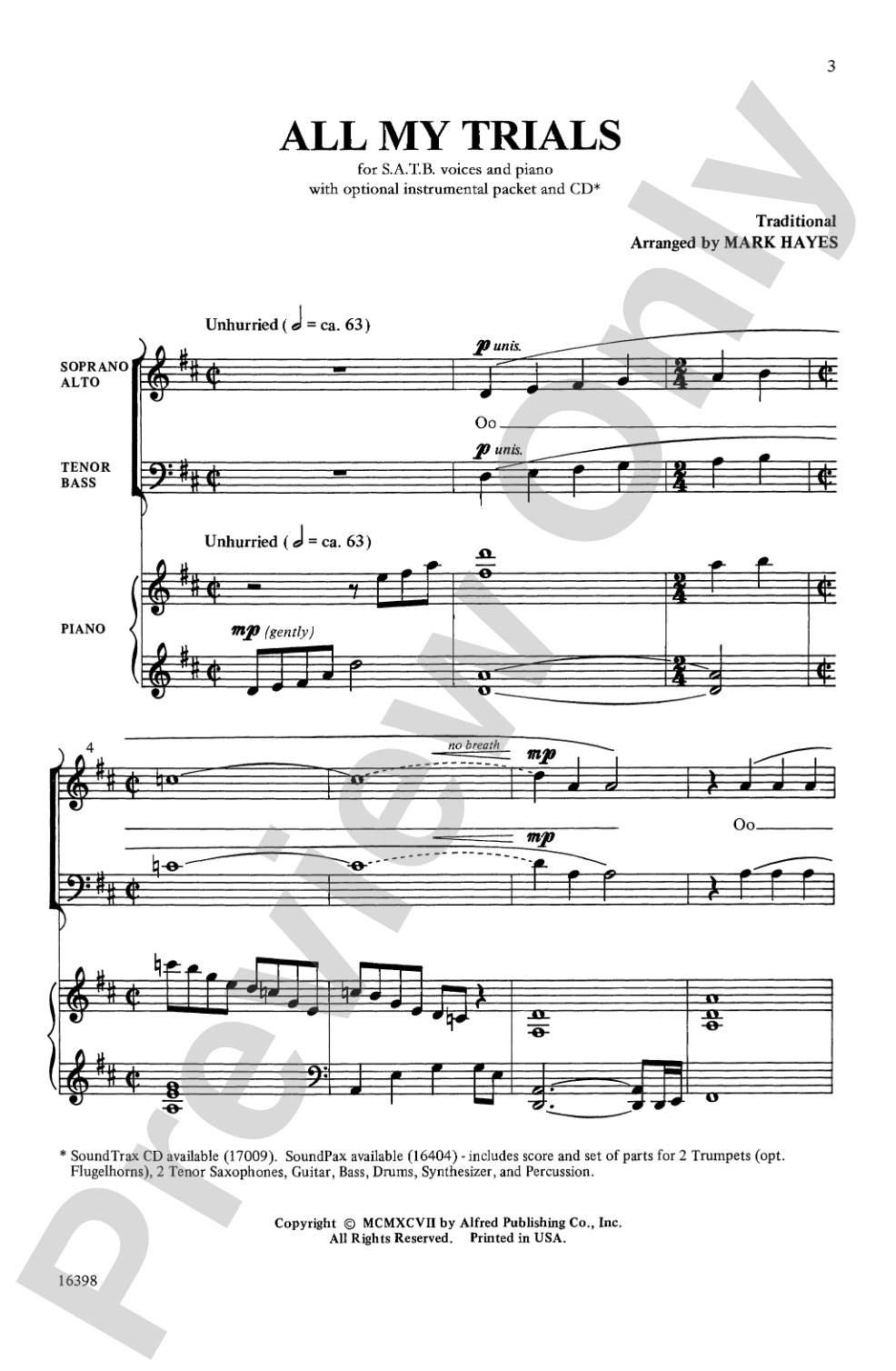
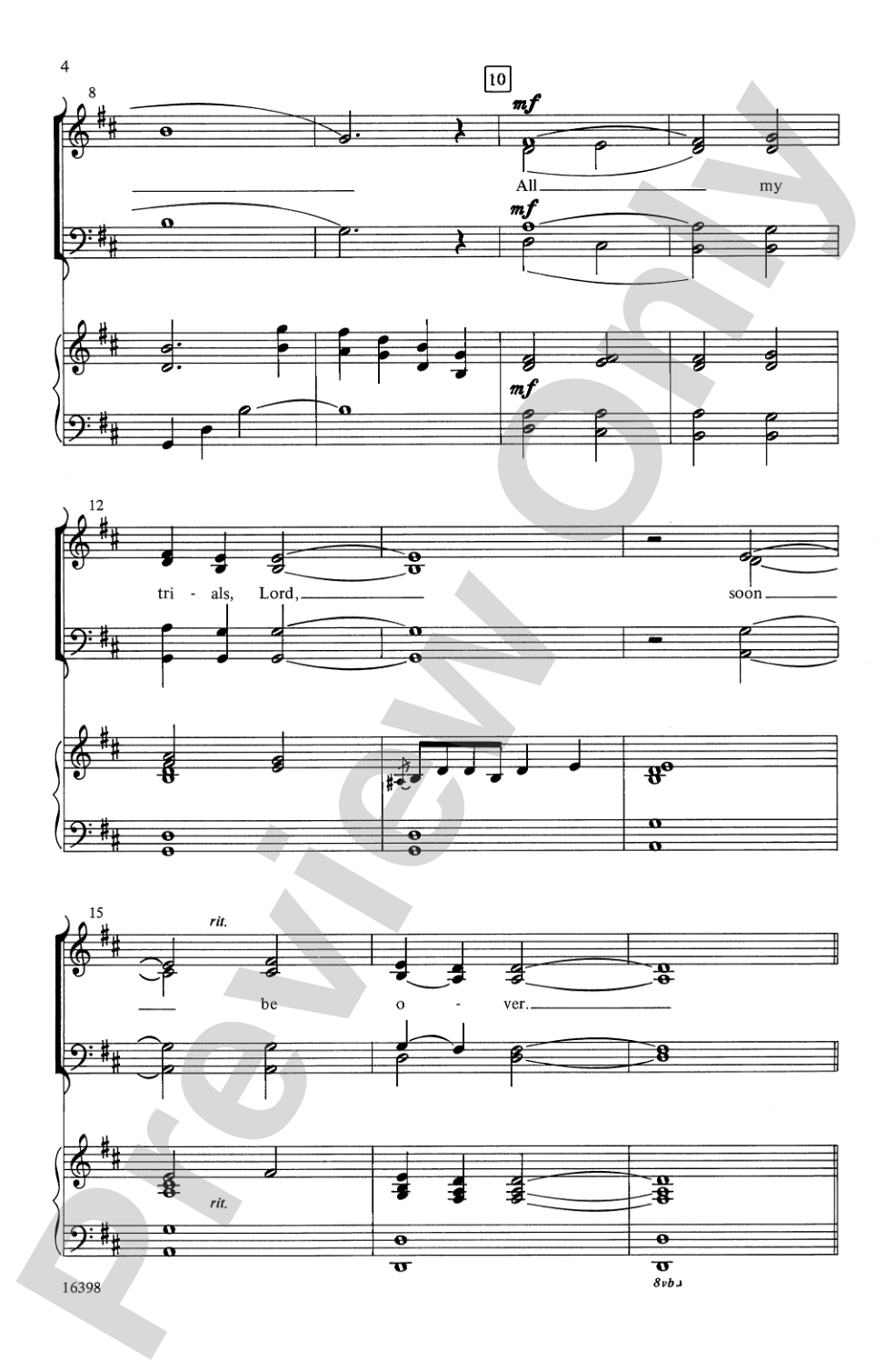
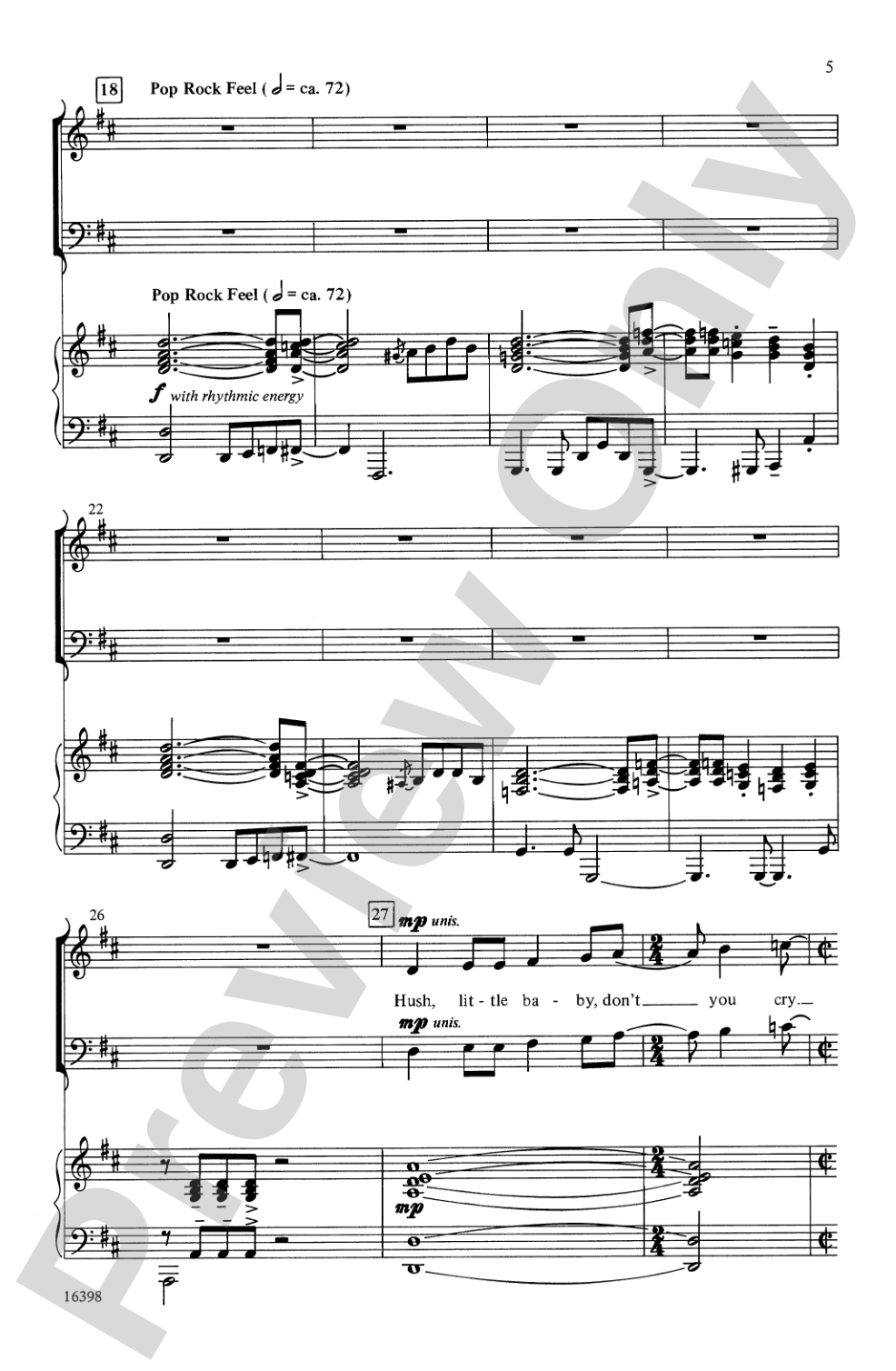

All My Trials: SATB Choral Octavo
Arr. Mark Hayes
Item: 00-PO-0003990
$2.95
Minimum order quantity: 20 copies
Pickup currently not available
Description
An outstanding arrangement by Mark Hayes of an American folk spiritual. An unhurried introduction gives way to a moderate rock groove highlighted with rhythmic intensity. Much unison writing in men's part; women occasionally divide to three parts. InstruPax includes: director's score, 2 trumpets [opt. flugelhorns], 2 tenor saxes, rhythm, synthesizer, percussion.


All My Trials: SATB Choral Octavo isn't in MakeMusic Cloud just yet...but it could be. Let us know you'd like to see it, and you'll help shape what comes next. In the meantime, start a free trial and dive into thousands of interactive titles your students can play along with today.
Request This Title
Tell us you want it.
Start Your Free Trial
Explore everything that's ready to play right now.
Sample Audio
No sample audio found.
Sample Video
No sample videos found.
Additional Details
Series:
Alfred Archive Edition: Alfred Choral Designs
Publisher:
Alfred Music
Page Count:
16
SKU:
00-PO-0003990
More about this title
About the Arranger: Mark Hayes
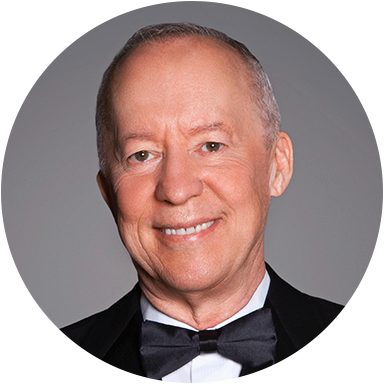
Mark Hayes stands among the most prolific arrangers and composers in sacred and secular choral music today, with over 1,750 published works to his name. A summa cum laude graduate in Piano Performance from Baylor University (1975), he has guest conducted at Lincoln Center, the National Cathedral, and Carnegie Hall, and premiered his Requiem at Lincoln Center in 2013 and again at St. Ignatius Basilica in Rome as part of the Vatican-sponsored Festival Pro Musica E Arte Sacra. In 2010, Baylor University's Center for Christian Music Studies recognized him with the Award for Exemplary Leadership in Christian Music.
Beyond choral and orchestral composition, Hayes maintains a deep commitment to piano literature, with over 100 piano books spanning gospel, classical, jazz, and Broadway styles. He has orchestrated musicals, arranged concert works, and produced recordings. His approach to arrangement is rooted in both technical mastery and a gift for bringing vernacular music (including spirituals, folk songs, and contemporary styles) into concert settings that honor their origins while expanding their possibilities.
Why we love this
Hayes brings a sophisticated ear to this spiritual, layering a moderate rock groove over a contemplative introduction without losing the song's emotional core. The strategic use of unison in the men's parts keeps the ensemble grounded while selective divisi in the women's voices create texture, making this accessible to many choirs while sounding polished and current. The optional instrumentation (brass, saxes, rhythm section, synth, percussion) scales elegantly from piano alone to a full band, giving you real flexibility in how you present it.
What to expect
The piece opens in quiet reflection, creating space for listeners to settle into the spiritual's emotional weight. As the rock groove enters, energy builds with rhythmic precision and groove, transforming the arrangement into something alive and present without ever becoming frivolous. The balance between steady, grounded unison sections and shimmering moments of vocal divisi keeps the texture fresh across a 16-page score.
Who it's for
SATB choirs seeking a spiritual arrangement that feels contemporary without sacrificing reverence. This works for church choirs, concert choirs, and festival ensembles that want to include folk spirituals in a program alongside other sacred works. The optional instrumentation makes it adaptable whether your ensemble has a full band or relies on piano accompaniment alone.
How to get the most out of it
- Shape the unhurried introduction with space and breath; let the quiet prayer-like quality settle before the rhythm section enters, then make that transition clear and purposeful.
- Balance the rock groove by keeping the rhythm section tight without overwhelming the voices; the percussion and synthesizer should anchor rather than dominate.
- Emphasize the unison sections in the men's parts as moments of collective strength; these passages benefit from confident, full-voiced singing that brings unity to the ensemble.
- Work the occasional three-part divisi in the women's voices with care; these moments should feel organic rather than mechanical, with smooth voice leading between the split sections.
How to use it
Place this as a contrasting movement in a sacred concert program, where its contemporary groove and spiritual roots sit meaningfully alongside more traditional hymns or classical choral works. It also serves well as a closer or near-closing piece, leaving the audience with both comfort and a sense of resilience. If your ensemble has access to a rhythm section and horns, this becomes a signature piece that showcases the full range of your choral and instrumental resources.
Skills your students will build
- Singing unison passages with confidence and rhythmic precision
- Executing clean transitions between divisi and unison sections
- Maintaining ensemble blend while singing with a contemporary groove
- Shaping musical phrasing across a structure that moves from soft, reflective passages to full-voiced, rhythmically intense sections
- Sight-reading optional instrumental parts for coordination (if voices are learning alongside the band)