
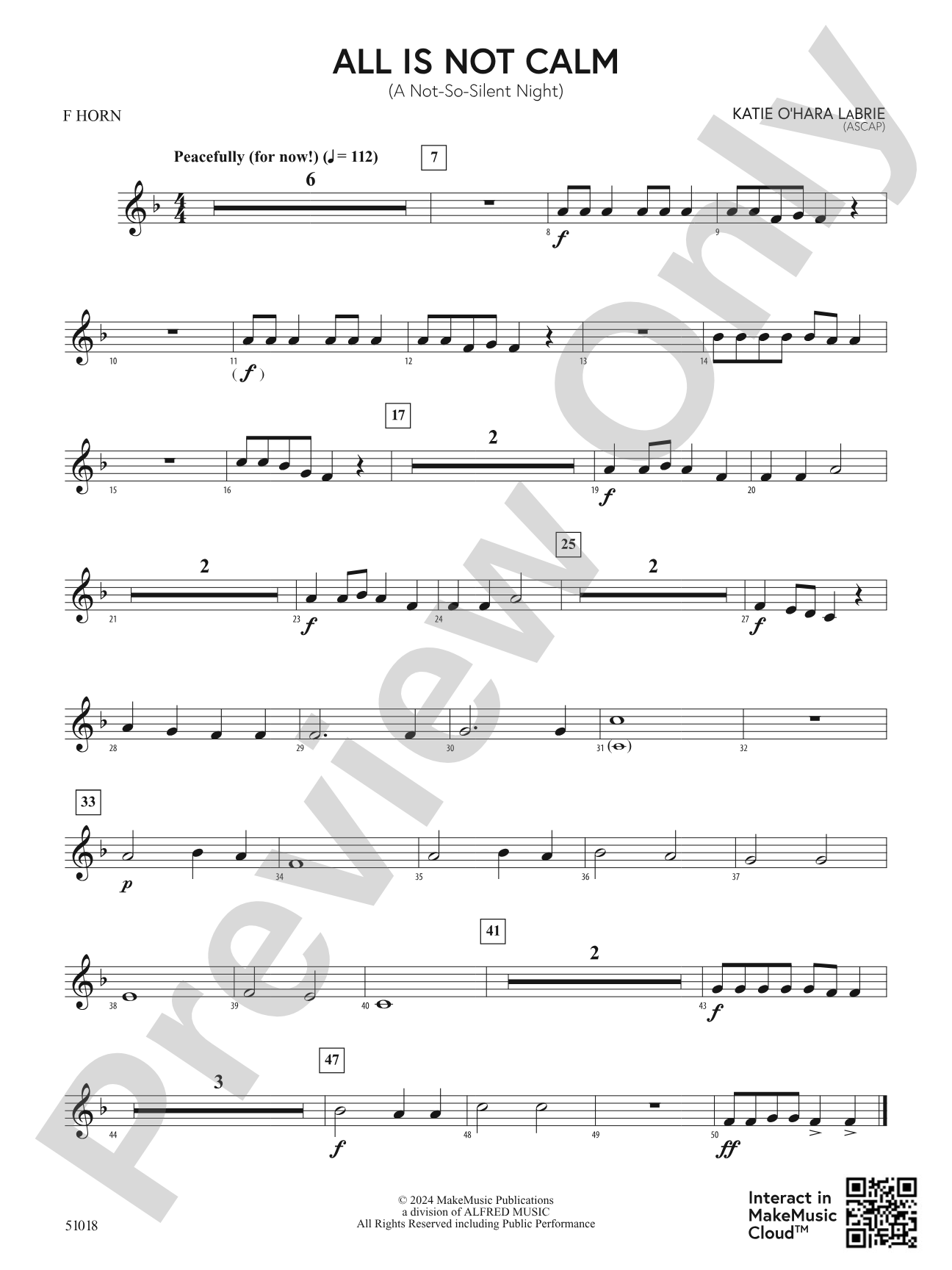

All is NOT Calm: 1st F Horn
(A Not-So-Silent Night)
Arranged by Katie O'Hara LaBrie
Grade: 1
Item: 00-PC-0019230_H1
$5.99
Pickup currently not available
Description
Imagine the sweet sounds of "Silent Night" lulling you to sleep when the next-door neighbors start blasting various holiday carols at full volume! All Is NOT Calm, arranged by Katie O'Hara LaBrie, is a musical battle between woodwinds, brass, and percussion that features snippets of various holiday favorites. This is sure to engage your students as they explore dynamics in a fun and creative way. (1:45)


Don't just read it, hear it, play along with it, and watch your students grow with it. In MakeMusic Cloud, All is NOT Calm: 1st F Horn comes alive with professional accompaniment, adjustable tempo, and built-in practice tools that turn solo practice into real progress.
Open in the Player
Jump straight in and assign it today.
Start Your Free Trial
Open this title and explore the full library in minutes.
Sample Audio
1
Audio File
--:--
0:00
0:00
Sample Video
Additional Details
Series:
MakeMusic Developing Band
Publisher:
MakeMusic Publications
SKU:
00-PC-0019230_H1
More about this title
About the Composer: Katie O'Hara LaBrie

Katie O'Hara LaBrie is a composer, conductor, clinician, and cellist based in Northern Virginia with deep roots in music education. She spent 15 years teaching orchestra in Fairfax County schools before pursuing advanced study in conducting at George Mason University, where she worked with Anthony Maiello. Her musical training began at St. Olaf College under Steven Amundson.
LaBrie's compositional voice emerges from her classroom experience. She creates music intentionally designed to engage student musicians while remaining educationally rigorous and audience-friendly. Her work has earned J.W. Pepper Editor's Choice recognition multiple times and performances at prestigious venues including the Midwest Band and Orchestra Directors Clinic and American String Teachers Association Conference. In 2022, Yamaha honored her as one of their "40 Under 40" for her contributions to music education. She founded the Fairfax Chamber Players and co-created "the Big IDEA" practice method, reflecting her commitment to purposeful musicianship.
Why we love this
This arrangement tackles dynamic contrast head-on by pitting holiday melodies against each other, giving your band a playful but purposeful reason to shift between volumes and textures. The Grade 1 accessibility means even your youngest ensembles can execute real musical drama without struggling through complicated technical passages. At just 1 minute 45 seconds, it fits perfectly into a holiday program without eating up precious rehearsal time.
What to expect
Musical mischief wrapped in holiday nostalgia. You hear the gentle opening of "Silent Night," then suddenly your neighbors burst through with competing carols from every corner of the band, creating affectionate chaos. The piece moves with humor and momentum, letting your students feel like they're creating something playful rather than just executing another arrangement.
Who it's for
Grade 1 concert bands new to exploring dynamic range through an engaging musical concept. This works beautifully for holiday concerts, pep band events, or any program where you want your developing ensemble to experience real expressive control in a fun, relatable context.
How to get the most out of it
- Establish clear section independence before blending. Have woodwinds lock their version of "Silent Night" separately, then add brass carols, then percussion entries so each group owns their material before the musical collision happens.
- Mark dynamic extremes in rehearsal. Circle every fortissimo and pianissimo on parts so students can visualize the breadth they need to create between quiet and loud moments.
- Balance melody against accompaniment rather than playing everything at the same volume. Whoever carries the primary tune in each section should rise slightly above the harmonic backdrop.
- Use tempo stability as your anchor when dynamics shift. It's easy for players to slow down when playing softer or rush when playing louder, so consistent conducting will lock the ensemble together during the chaos.
How to use it
Place this as a shorter, lighter moment within a longer holiday concert to break up the reverent tone after a more traditional carol arrangement. Its brevity and high engagement factor make it ideal for opening a program or bridging between different musical moods. Consider programming it early in your holiday season when students still have energy and novelty appeal matters.
Skills your students will build
- Dynamic contrast (sudden shifts between soft and loud)
- Ensemble balance (melody versus accompaniment)
- Independent melodic security (playing distinct tunes simultaneously)
- Controlled articulation across multiple competing sections
- Listening and responding to other sections in real time