All Good People: Lead Sheet Digital Sheet Music

All Good People: Lead Sheet Digital Sheet Music

Yes, Chris Squire

Item: 00-PS-0000248

Digital Download
$1.99
Description

All Good People: Lead Sheet Digital Sheet Music isn't in MakeMusic Cloud just yet...but it could be. Let us know you'd like to see it, and you'll help shape what comes next. In the meantime, start a free trial and dive into thousands of interactive titles your students can play along with today.

Sample Audio
No sample audio found.
Sample Video
Additional Details
SKU: 00-PS-0000248

More about this title

About the Composer: Chris Squire

Chris Squire was the bassist and primary songwriter for Yes, one of progressive rock's most influential bands. His melodic sensibility and harmonic sophistication defined the Yes sound across five decades, making him one of the most recognizable bass players in rock history. Squire's compositional voice blended accessible pop-rock hooks with complex structural arrangements, creating songs that appealed to both general audiences and serious musicians.

Why we love this

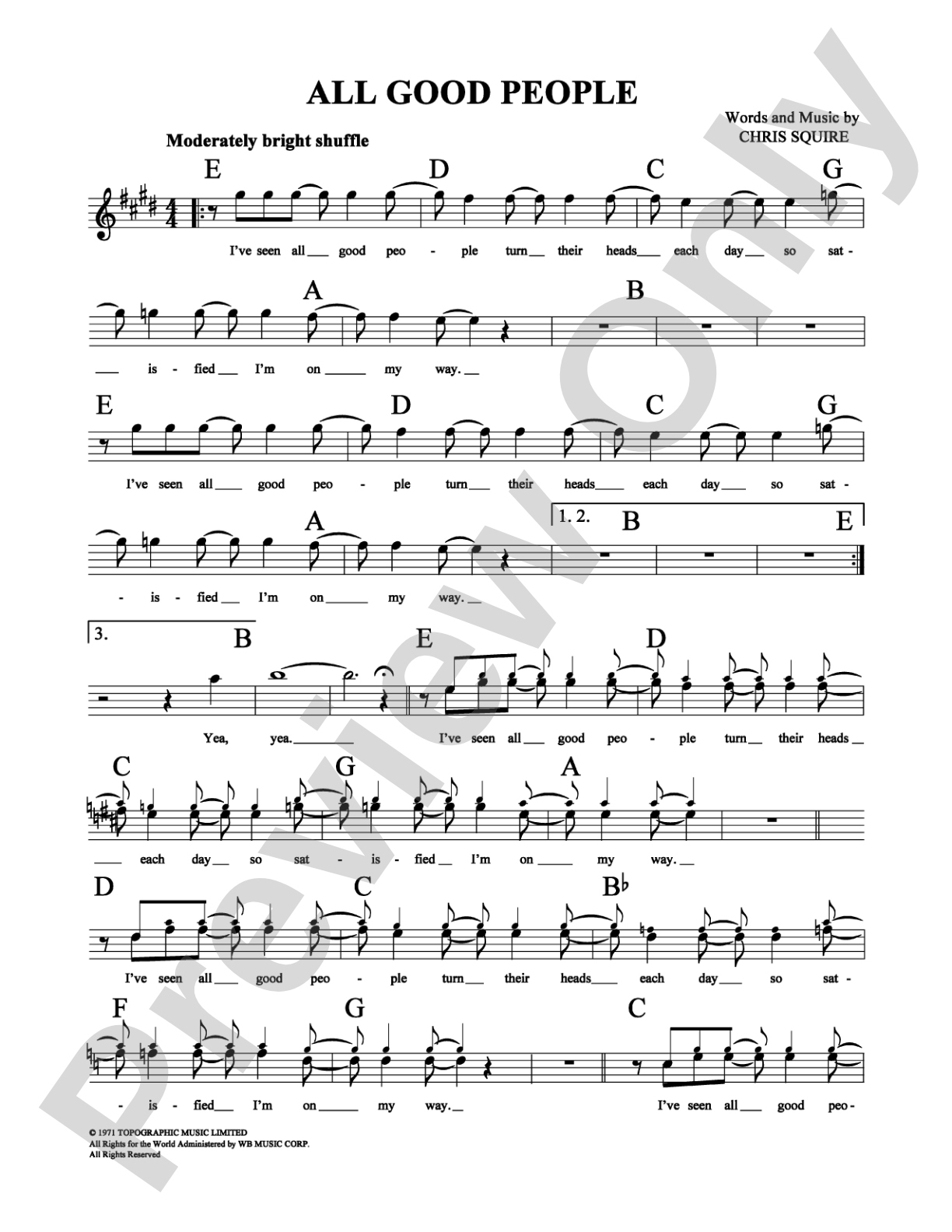
This lead sheet captures one of Yes's most enduring songs in a format that lets pianists, guitarists, and singers explore its melodic and harmonic architecture. The song's memorable hook and sophisticated chord changes make it a rewarding choice for musicians who want to understand how progressive rock achieves both accessibility and musical depth. It's also a natural fit for anyone teaching or learning contemporary arrangement and reharmonization.

What to expect

The song has a sunny, propulsive energy anchored by confident bass lines and soaring melodic moments. Its harmonic language sits squarely in the sweet spot between pop accessibility and progressive sophistication, creating something that feels both intimate and expansive at once.

Who it's for

This lead sheet works for pianists and guitarists exploring pop-rock songwriting, singers building their arrangement literacy, and ensemble musicians interested in how a classic rock song functions harmonically and melodically. It's particularly useful for musicians in jazz or commercial music programs who study contemporary songwriting.

How to get the most out of it

  • Pay attention to the song's dynamic shape. The melody blooms gradually, so resist the urge to play at full energy from the start; let the harmonic progression build your intensity.
  • Experiment with the chord voicings on piano or guitar. This song rewards rich, colorful extensions that reflect the original arrangement's sophistication.
  • Lock the rhythm of the main hook in your body before performing it. This song's hook is deceptively simple, and precision in the groove is what makes it land.

How to use it

Program this for a contemporary songwriting unit or a rock history elective where you're examining how hit songs function structurally. It also works well as a sight-reading exercise for advanced pianists or guitarists, since the lead sheet format requires musicians to interpret harmony and arrangement rather than follow a prescribed part.

Skills your students will build

  • Reading and interpreting lead sheet notation
  • Understanding chord progressions and voice leading in pop-rock contexts
  • Recognizing how melody interacts with harmonic support
  • Arranging and reharmonizing from a skeletal musical blueprint

You May Also Like