
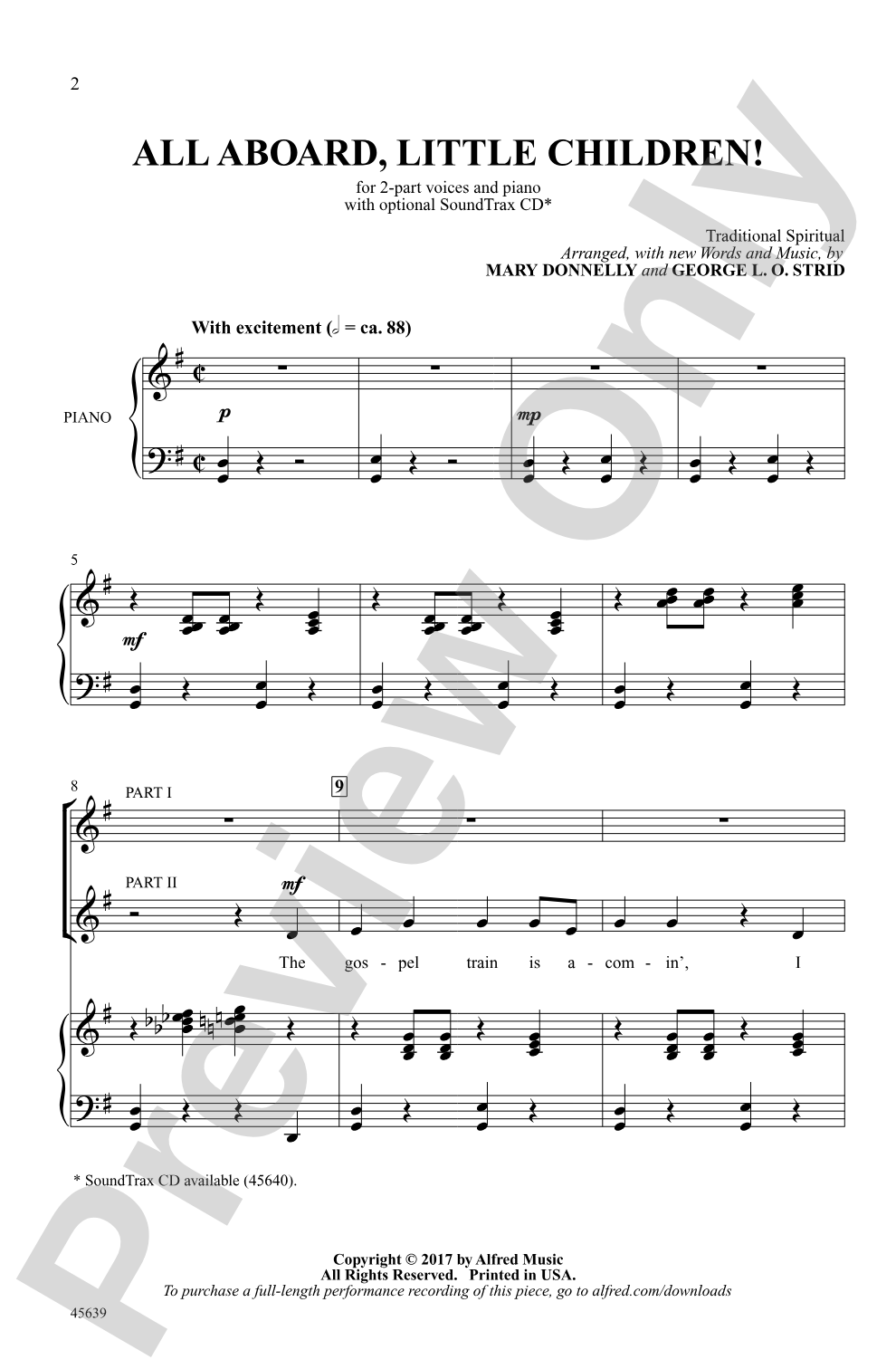
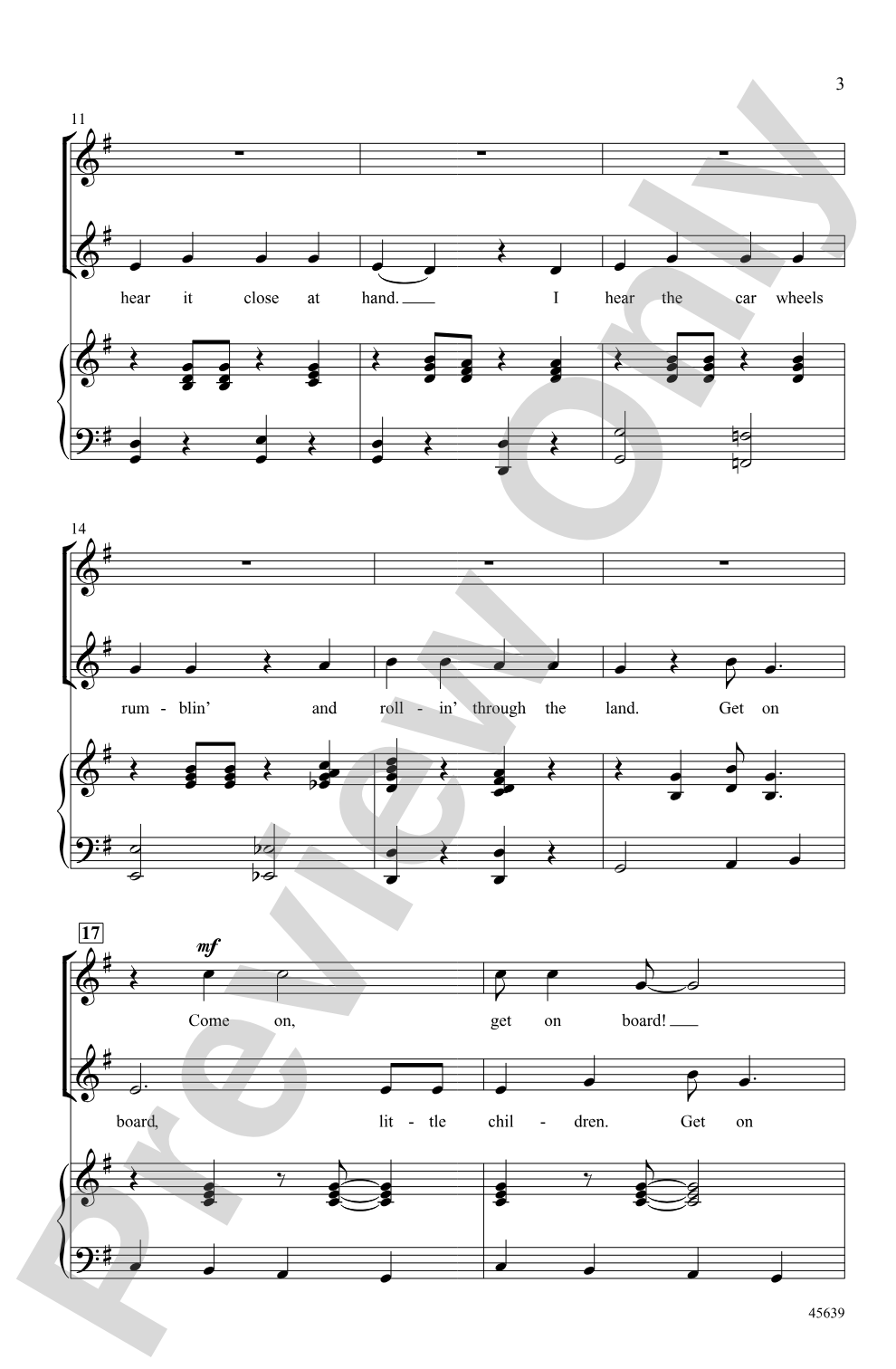

All Aboard, Little Children!: 2-Part Choral Octavo
Traditional Spiritual / arr., with new words and music, by Mary Donnelly and George L. O. Strid
Item: 00-PO-0005524
$1.90
Minimum order quantity: 20 copies
Pickup currently not available
Description
Get on board with this lively partner song adaptation of the well-known traditional spiritual! Featuring easy-to-sing countermelodies for both the verse and chorus, it's a snap to put together and an excellent first experience with singing in parts.


All Aboard, Little Children!: 2-Part Choral Octavo isn't in MakeMusic Cloud just yet...but it could be. Let us know you'd like to see it, and you'll help shape what comes next. In the meantime, start a free trial and dive into thousands of interactive titles your students can play along with today.
Request This Title
Tell us you want it.
Start Your Free Trial
Explore everything that's ready to play right now.
Sample Audio
1
Audio File
--:--
0:00
0:00
Sample Video
Additional Details
Series:
Alfred Choral Designs
Publisher:
Alfred Music
Page Count:
12
SKU:
00-PO-0005524
More about this title
About the Arranger: Mary Donnelly

Mary Donnelly spent three decades in the classroom teaching general music and choir in Nevada's Washoe County schools, working primarily with elementary and middle school students. Her path to music education began unconventionally: after earning degrees in English and French from the University of Nevada, Reno, she discovered her passion for children's choral music while helping establish two youth choruses as an undergraduate. She later pursued formal training in music education, completing a Master's Degree from Lesley College with a focus on arts integration across the curriculum.
In 1985, Donnelly met arranger and composer George L. O. Strid while co-teaching a sixth grade general music class. When their principal requested they create a musical for Reading Week, they collaborated on The Million Dollar Mystery, launching a partnership that has produced over two hundred songs and twenty-five musicals. She is an active member of ACDA, NEA, and ASCAP.
Why we love this
This arrangement captures the infectious energy of a beloved spiritual while removing the intimidation factor of two-part singing. Donnelly and Strid have crafted countermelodies that sit naturally in each voice, creating genuine harmonic interest without requiring advanced sight-reading skills. It's the kind of piece that builds confidence and makes students proud of what they can accomplish together.
What to expect
Bright, spirited, and celebratory, with the unmistakable warmth of a traditional spiritual given fresh life through accessible harmonization. The piece radiates joy without veering into cutesy territory, honoring the source material while meeting young singers exactly where they are.
Who it's for
Choirs new to part singing will find this accessible entry point genuinely musical, not dumbed-down. Upper elementary and middle school directors seeking repertoire that builds part-singing skills without frustration will appreciate how the easy countermelodies allow singers to focus on blend and balance rather than decoding complex harmonies.
How to get the most out of it
- Establish the rhythmic foundation first by drilling the verse and chorus separately, letting each part own its line before combining them.
- Use the recorded accompaniment to help singers internalize their own part and understand where they sit harmonically within the fuller sound.
- Incorporate the suggested movement and staging to channel the piece's inherent joy and keep energy consistent from first rehearsal through performance.
- Balance the two parts so neither overwhelms the other; this piece works best when both lines remain equally clear and present.
How to use it
Program this as a festival or contest selection to showcase growing ensemble confidence and part-singing ability in an uplifting, accessible package. It pairs well alongside other spirituals or traditional songs in a concert celebrating American vocal heritage, and its built-in staging possibilities make it equally at home in a spring concert or assembly performance.
Skills your students will build
- Singing independent melodic lines while maintaining awareness of harmonic context
- Reading and performing two-part vocal harmony
- Blend and balance between voices
- Confidence in part-singing as a first substantial two-part experience
- Interpretation of spiritual traditions through contemporary arrangement