Alice Blue Gown Sheet Music Preview

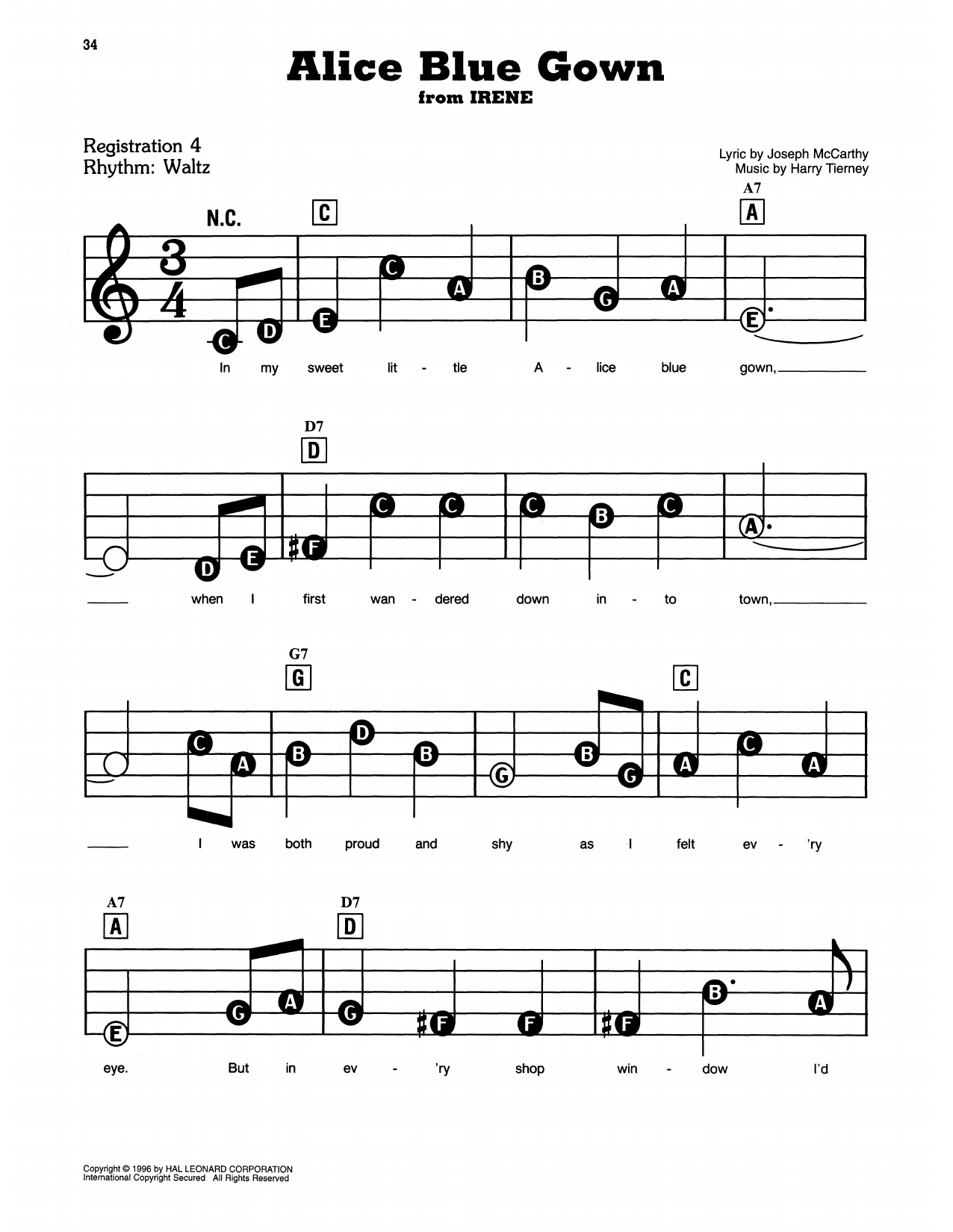
Alice Blue Gown: E-Z Play Today

As performed by Edith Day

Item: 35-DS01390974

Digital Download
$4.99
Description

Alice Blue Gown: E-Z Play Today isn't in MakeMusic Cloud just yet...but it could be. Let us know you'd like to see it, and you'll help shape what comes next. In the meantime, start a free trial and dive into thousands of interactive titles your students can play along with today.

Sample Audio
No sample audio found.
Sample Video
Additional Details
Publisher: Hal Leonard
Page Count: 2
SKU: 35-DS01390974

More about this title

About the Artist: Edith Day

Edith Day was an American stage and film actress whose career spanned the 1910s through 1930s. She originated the role of Jane in the Broadway production of "Irene" and became known for her work in musical theater, recording several songs that became standards of the era.

Why we love this

"Alice Blue Gown" sits at that perfect intersection where jazz sensibility meets early twentieth century charm, giving pianists a chance to explore swing interpretations of a genuine standard. The song's compact two-page format makes it accessible for intermediate players while still offering room for expressive phrasing and jazz voicing exploration.

What to expect

"Alice Blue Gown" carries the warmth and elegance of early Broadway, with a melody that feels both gently nostalgic and genuinely singable. The piece invites a conversational, intimate approach to the piano part, letting the song's simple beauty speak rather than demanding virtuosic display.

Who it's for

This arrangement works well for intermediate pianists exploring the standard jazz repertoire or for those studying the intersection of theater music and jazz styles. It serves teachers seeking accessible material that connects students to early twentieth century American song traditions.

How to get the most out of it

  • Pay attention to the melody's natural contours rather than rushing through phrases; this song rewards singers and listeners who let each line breathe.
  • Experiment with left-hand voicings to create movement beneath a relatively straightforward melody, pulling from both jazz and classical traditions.
  • Balance clarity in the right hand against textural accompaniment in the left so the tune remains the focal point throughout.

How to use it

Include this as a lighter moment in a recital mixing standards across eras, or pair it with other show tunes to create a Broadway retrospective set. Its modest technical demands make it an excellent choice for building confidence with older repertoire while maintaining audience appeal.

Skills your students will build

  • Jazz chord voicing and reharmonization possibilities
  • Phrasing and rubato in early twentieth century popular song
  • Balance between accompaniment texture and melodic clarity
  • Sight-reading of standard lead sheet notation and lyrics

You May Also Like