

Alfred's Guitar 101, Ensemble: Manzanita: Guitar Score & Parts
By Jody Fisher
Item: 00-PK-0006469

$14.99
Pickup currently not available
Buy Extra Parts (Digital PDF Download)
Parts Added to Cart!
Description
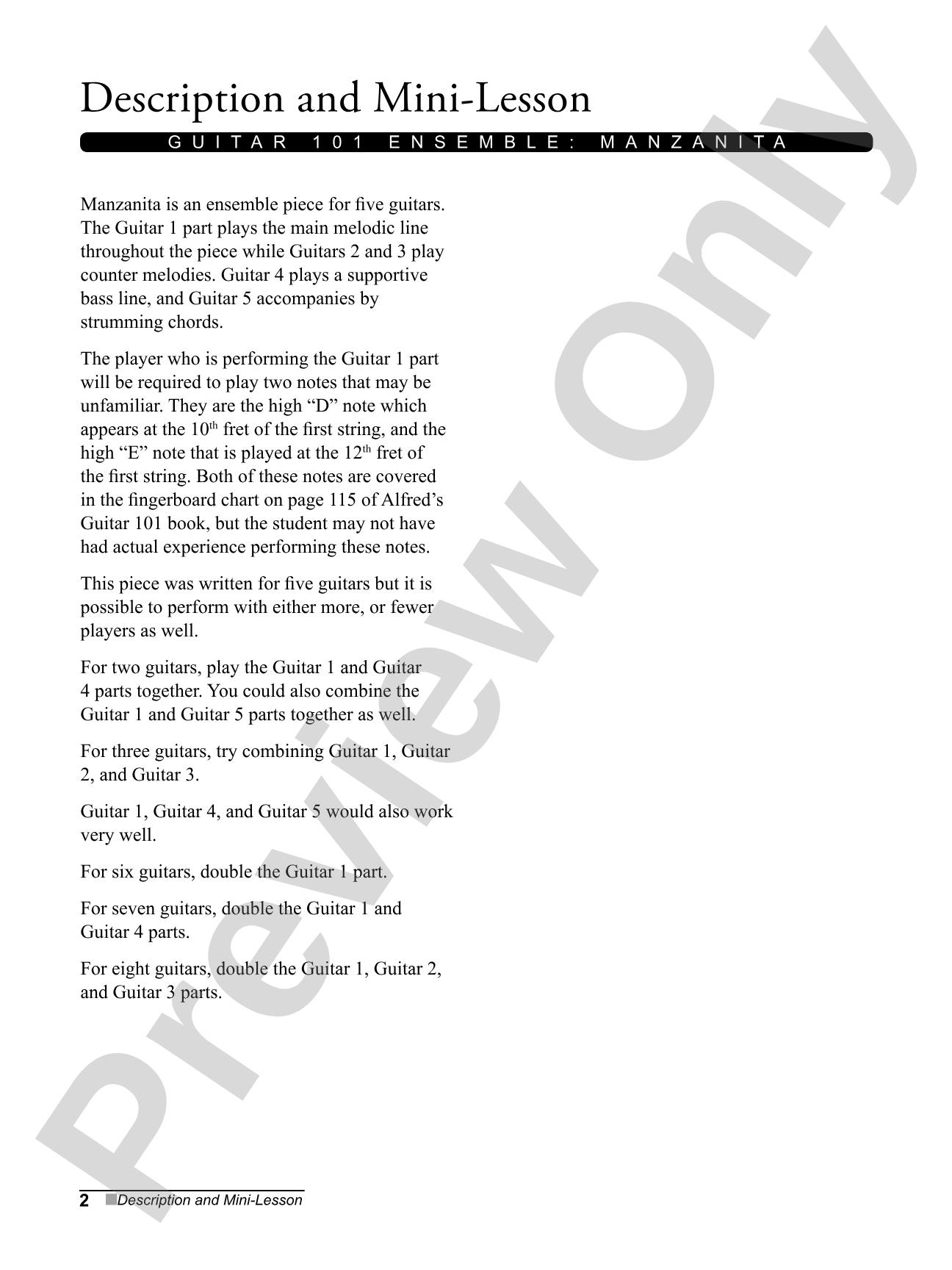
Alfred's Guitar 101, Ensemble makes a great supplement to any class guitar program. Your students will enjoy rehearsing and performing great-sounding pieces using the skills and concepts they have learned in Alfred's Guitar 101. This flexible guitar ensemble is written for five guitars, but it can easily be adapted for as few as two or as many as eight guitars. A creative teacher can find many ways to use Alfred's Guitar 101, Ensemble: add a bass player, percussion, or other melodic or harmonic instruments---whatever fills the needs of your students and program.
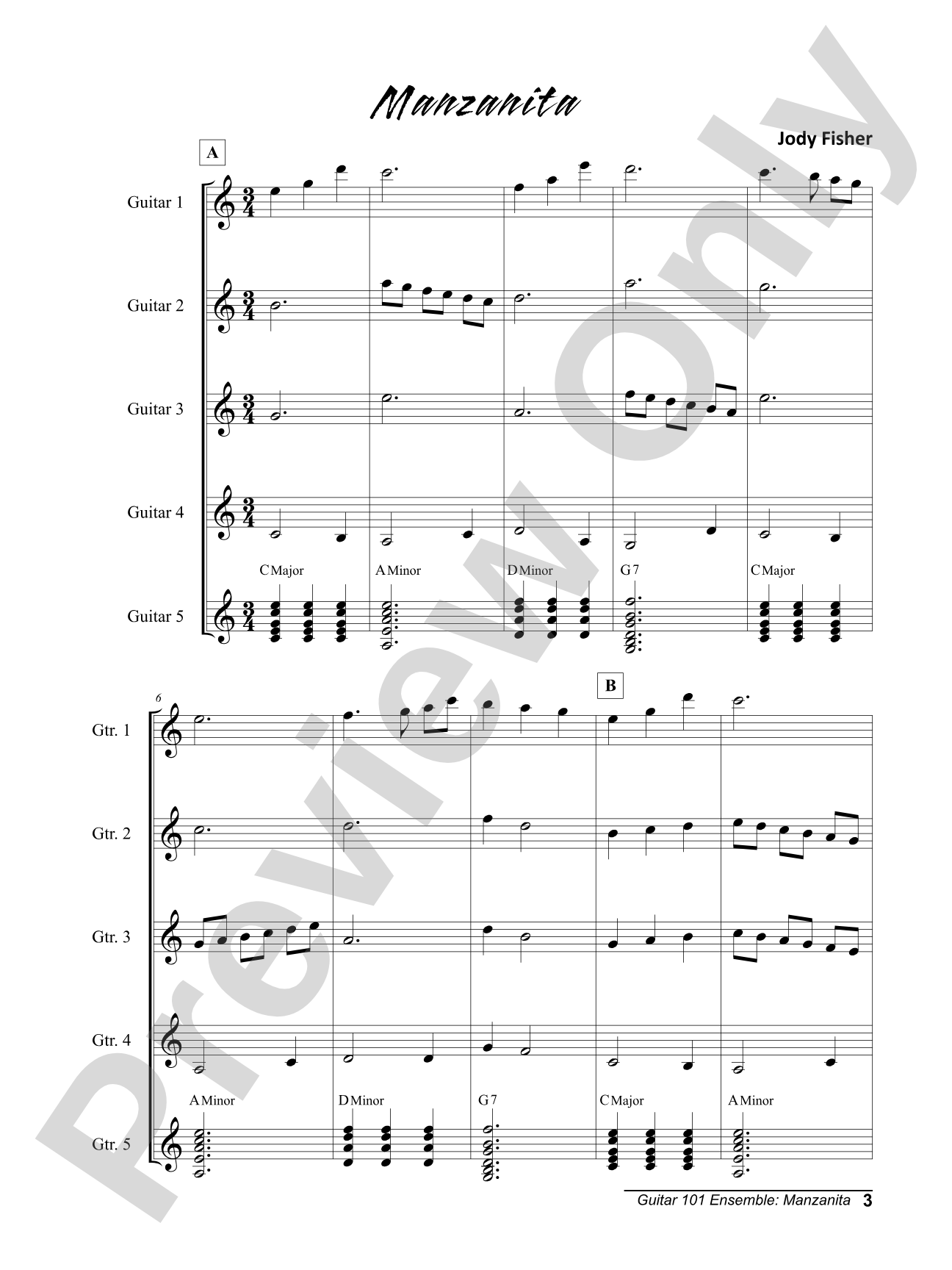
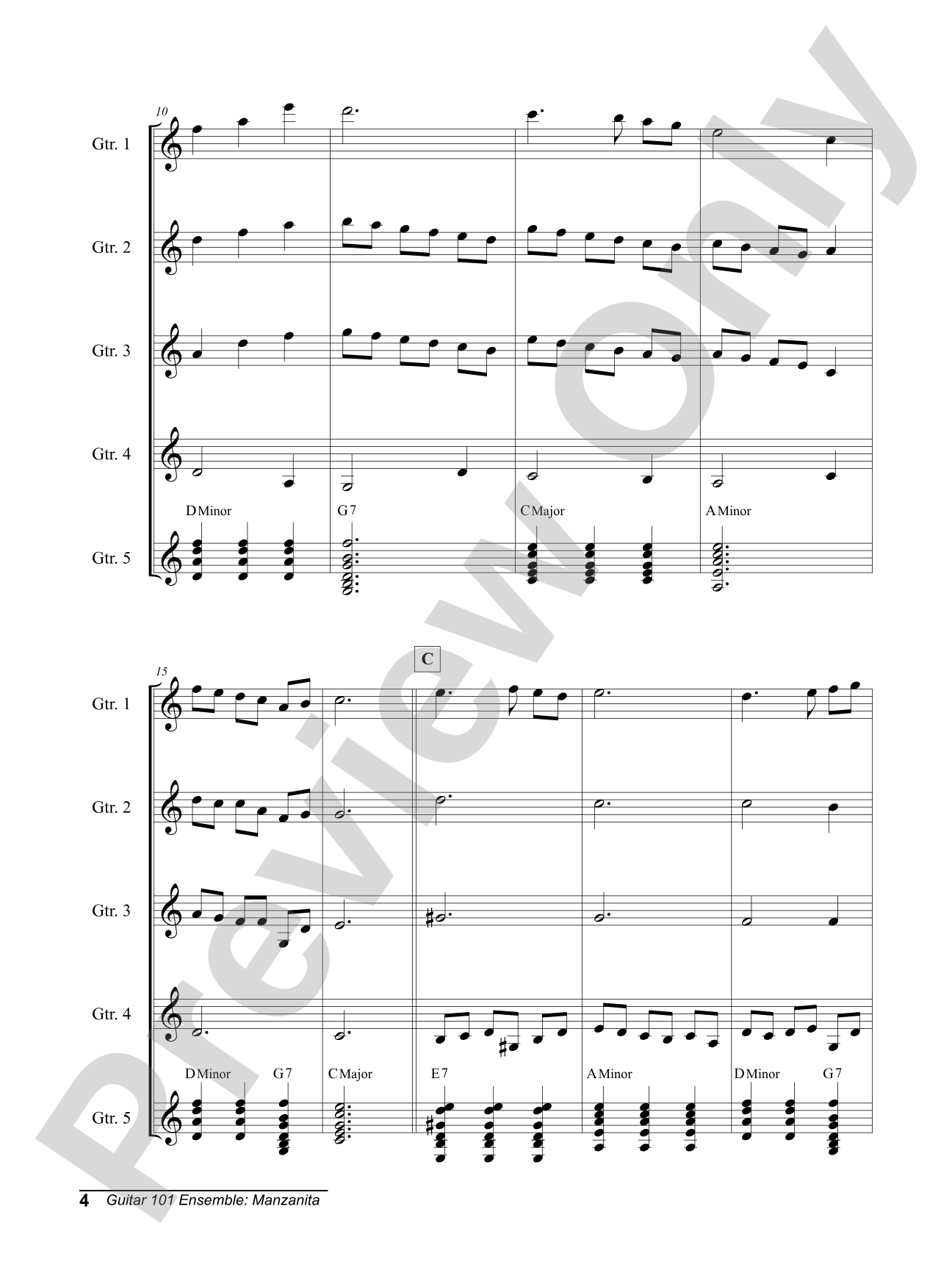
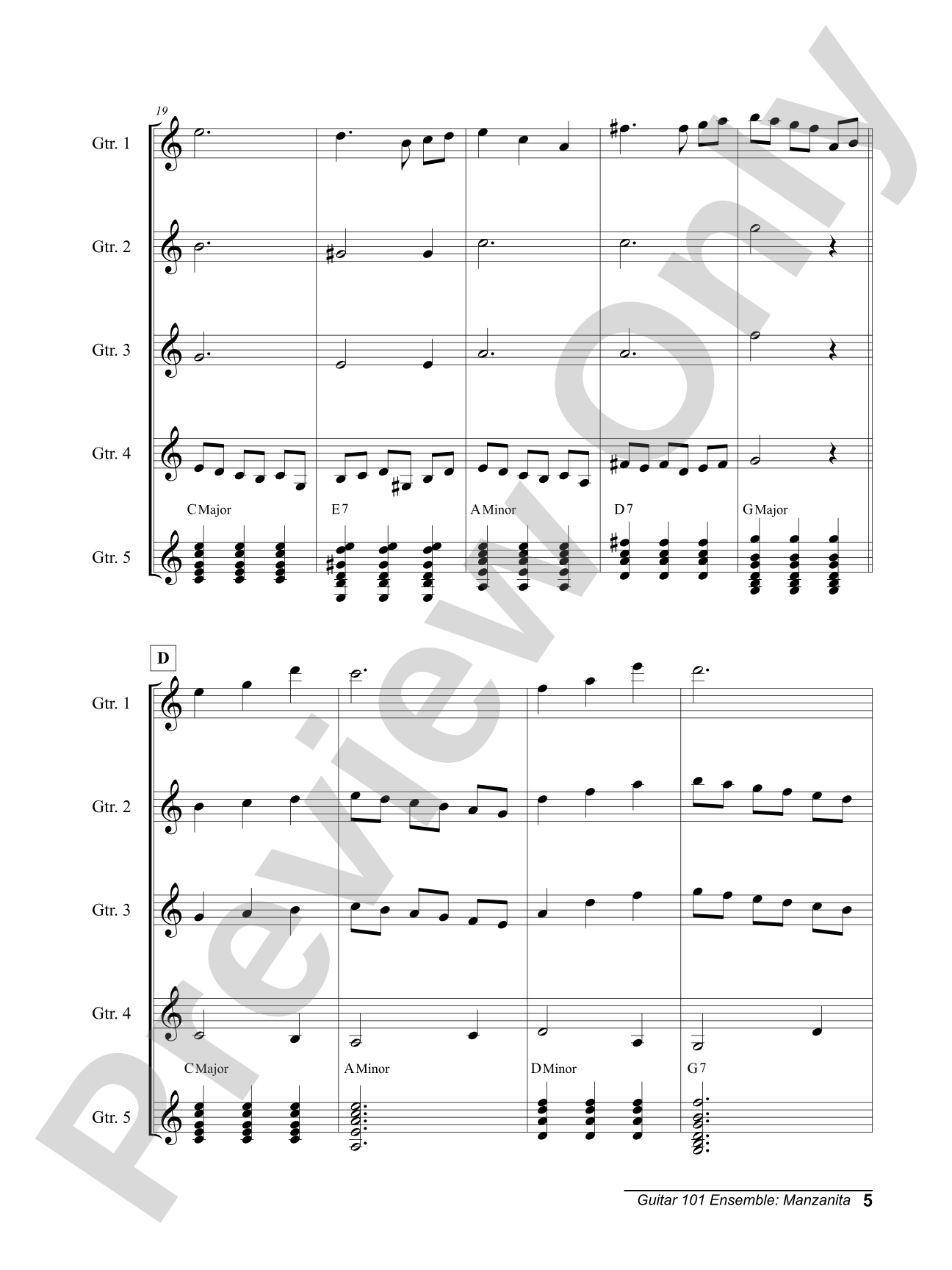
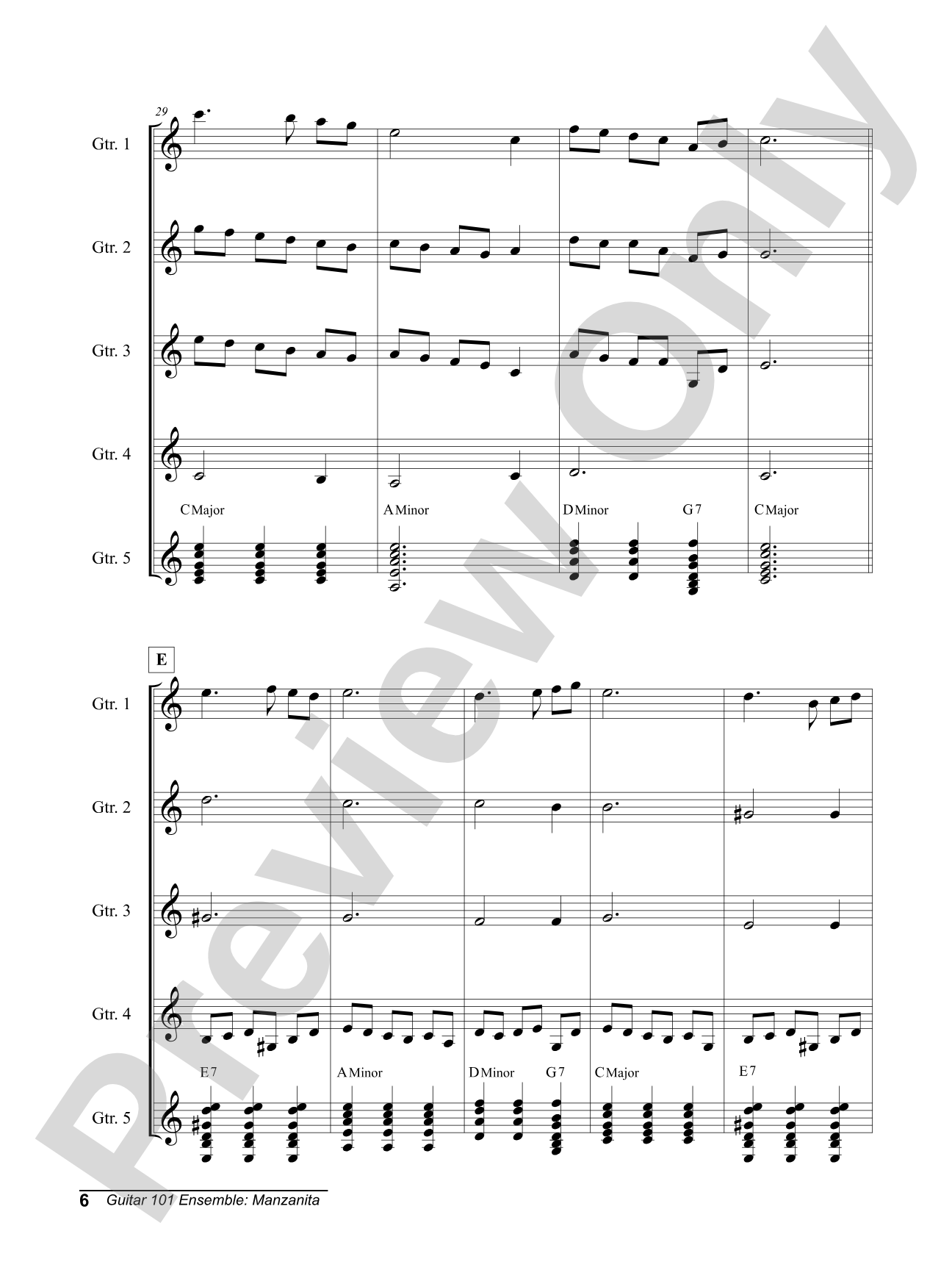
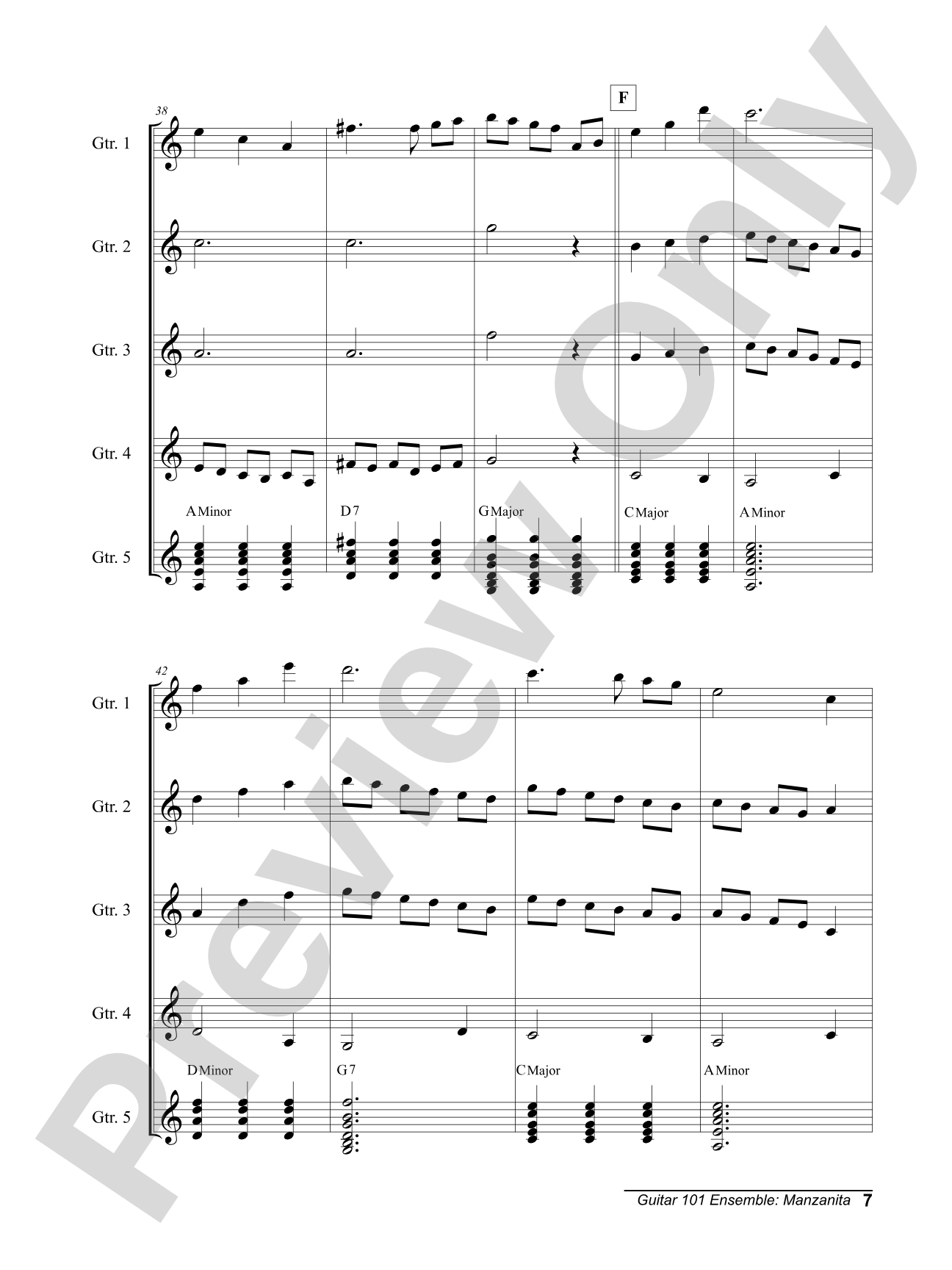
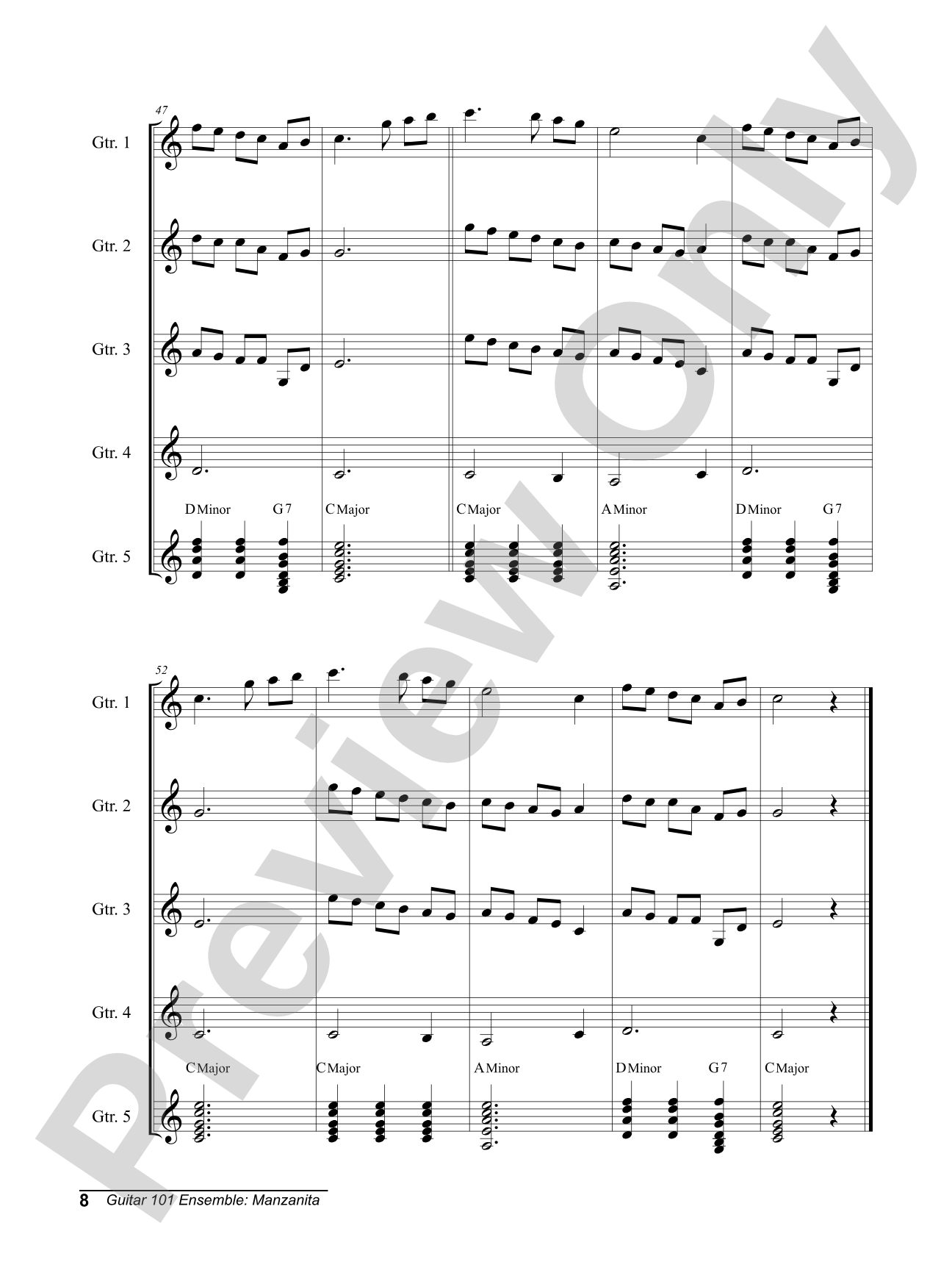
Manzanita is an ensemble piece to help students learn to play and read in 3/4 time. The Guitar 1 part contains quarter notes, dotted quarter notes, half notes, and eighth notes providing experience playing constantly changing note values. Guitar parts 2 and 3 fill a harmonic role and will also help develop proficiency performing call and response playing. Guitar 4 challenges the student to play steady streams of eighth notes in the bass register, while the Guitar 5 part helps develop a good time feel while learning to change basic chords accurately.


Manzanita is an ensemble piece to help students learn to play and read in 3/4 time. The Guitar 1 part contains quarter notes, dotted quarter notes, half notes, and eighth notes providing experience playing constantly changing note values. Guitar parts 2 and 3 fill a harmonic role and will also help develop proficiency performing call and response playing. Guitar 4 challenges the student to play steady streams of eighth notes in the bass register, while the Guitar 5 part helps develop a good time feel while learning to change basic chords accurately.
Don't just read it, hear it, play along with it, and watch your students grow with it. In MakeMusic Cloud, Alfred's Guitar 101, Ensemble: Manzanita: Guitar Score & Parts comes alive with professional accompaniment, adjustable tempo, and built-in practice tools that turn solo practice into real progress.
Open in the Player
Jump straight in and assign it today.
Start Your Free Trial
Open this title and explore the full library in minutes.
Sample Audio
1
Manzanita
--:--
Manzanita
0:00
0:00
Sample Video
No sample videos found.
Additional Details
Series:
101 Series
Publisher:
Alfred Music
Page Count:
20
SKU:
00-PK-0006469
More about this title
Why we love this
Manzanita solves the real problem of finding ensemble repertoire that matches what your students have actually learned in their method book. Fisher writes each guitar part with a distinct pedagogical job, so every player stays engaged without sitting through measures of rests or playing above their reading level.
What to expect
Manzanita has the bright, approachable character of a traditional guitar piece written in 3/4 time. The combination of Guitar 1's melodic movement, the harmonic support beneath it, and the rhythmic anchor in the lower voices creates a piece that sounds polished even when played by early-intermediate students.
Who it's for
Class guitar programs using Alfred's Guitar 101 will find this ensemble piece reinforces exactly the skills and concepts from the method itself. It works for programs with 2 to 8 guitarists, making it adaptable to class size and flexibility.
How to get the most out of it
- Have Guitar 1 mark the frequently changing note values (quarter notes, dotted quarter notes, eighth notes) in their part before rehearsal so rhythm reading stays sharp during group preparation.
- Use the call and response sections between Guitars 2 and 3 to drill listening and ensemble balance; these moments are natural stopping points for feedback.
- Lock Guitar 4's steady eighth-note bass line as your rhythmic foundation; once that anchor is solid, the melodic parts land more securely.
- Rotate which guitarist plays Guitar 5 during rehearsal so multiple students gain confidence with the chord changes and develop that steady time feel.
How to use it
Program Manzanita as a performance piece in recitals or ensemble showcases once your class has solidified 3/4 meter reading. You can also use it as a rehearsal project to check that students have truly internalized the concepts from their method book, or expand it by adding bass, percussion, or borrowed instruments from other classes.
Skills your students will build
- Reading and performing in 3/4 time
- Recognizing and executing changing note values (quarter notes, dotted quarter notes, eighth notes, half notes) within a single part
- Call and response playing and ensemble listening
- Performing sustained rhythmic patterns (steady eighth-note streams) in the lower register
- Changing basic chords accurately while maintaining steady pulse
- Ensemble balance and part independence