
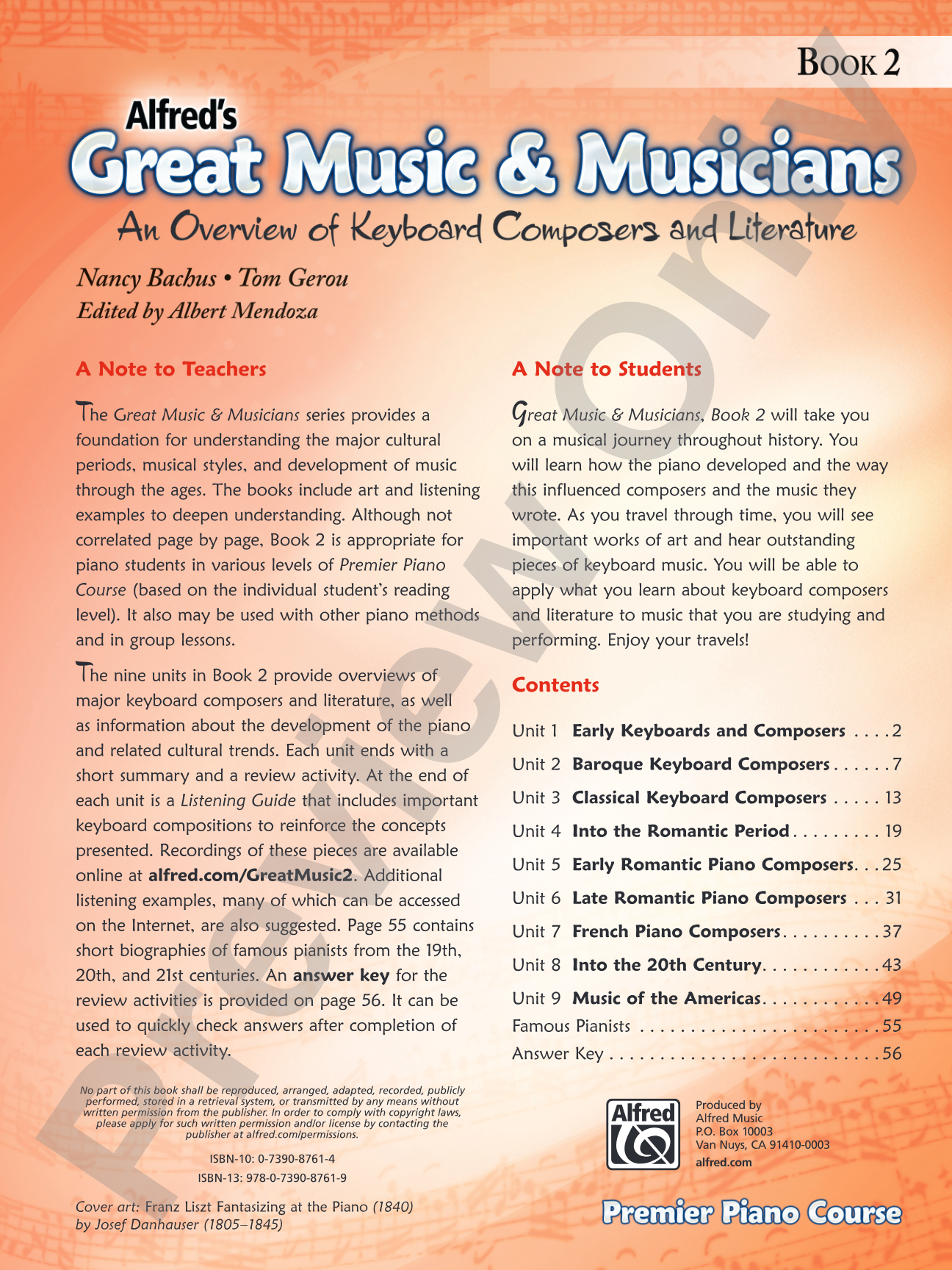

Alfred's Great Music & Musicians, Book 2: An Overview of Keyboard Composers and Literature: Piano
An Overview of Keyboard Composers and Literature
By Nancy Bachus and Tom Gerou / ed. Albert Mendoza
Item: 00-PB-0000963
$12.99
Pickup currently not available
Related Items
Alfred's Great Music & Musicians, Book 2: Music History Book and Online Audio |
$12.99
|
View |
Description
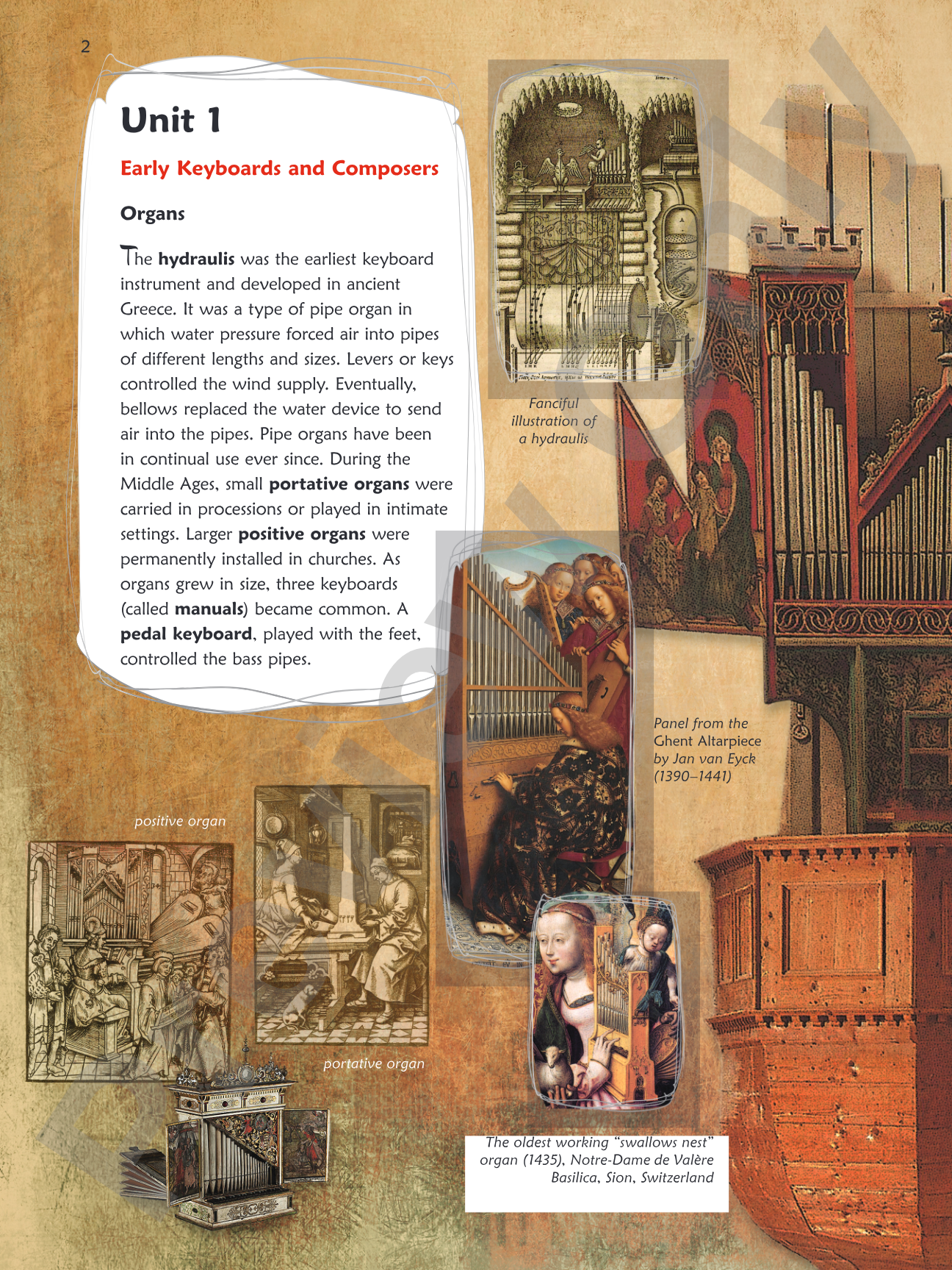
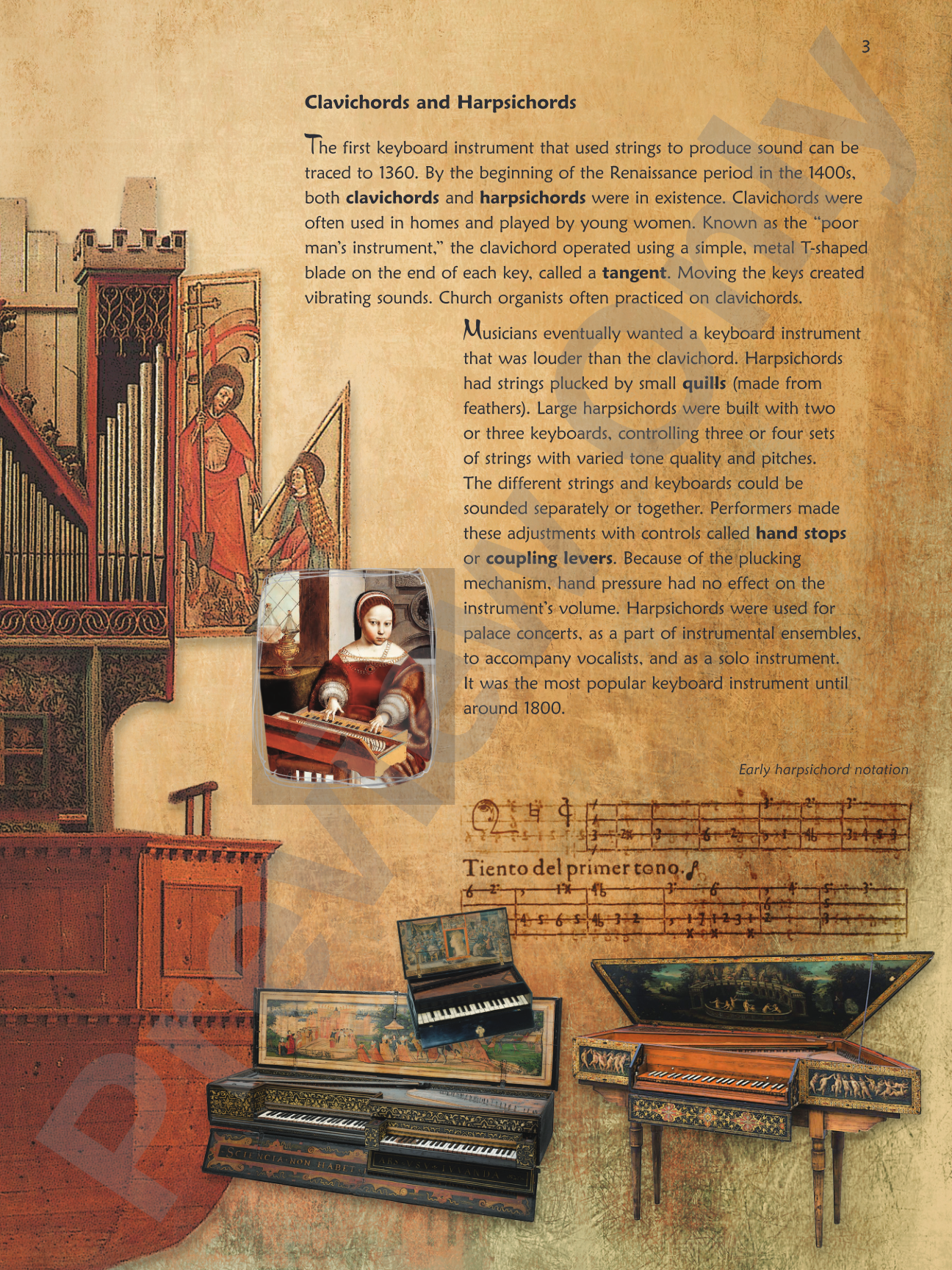
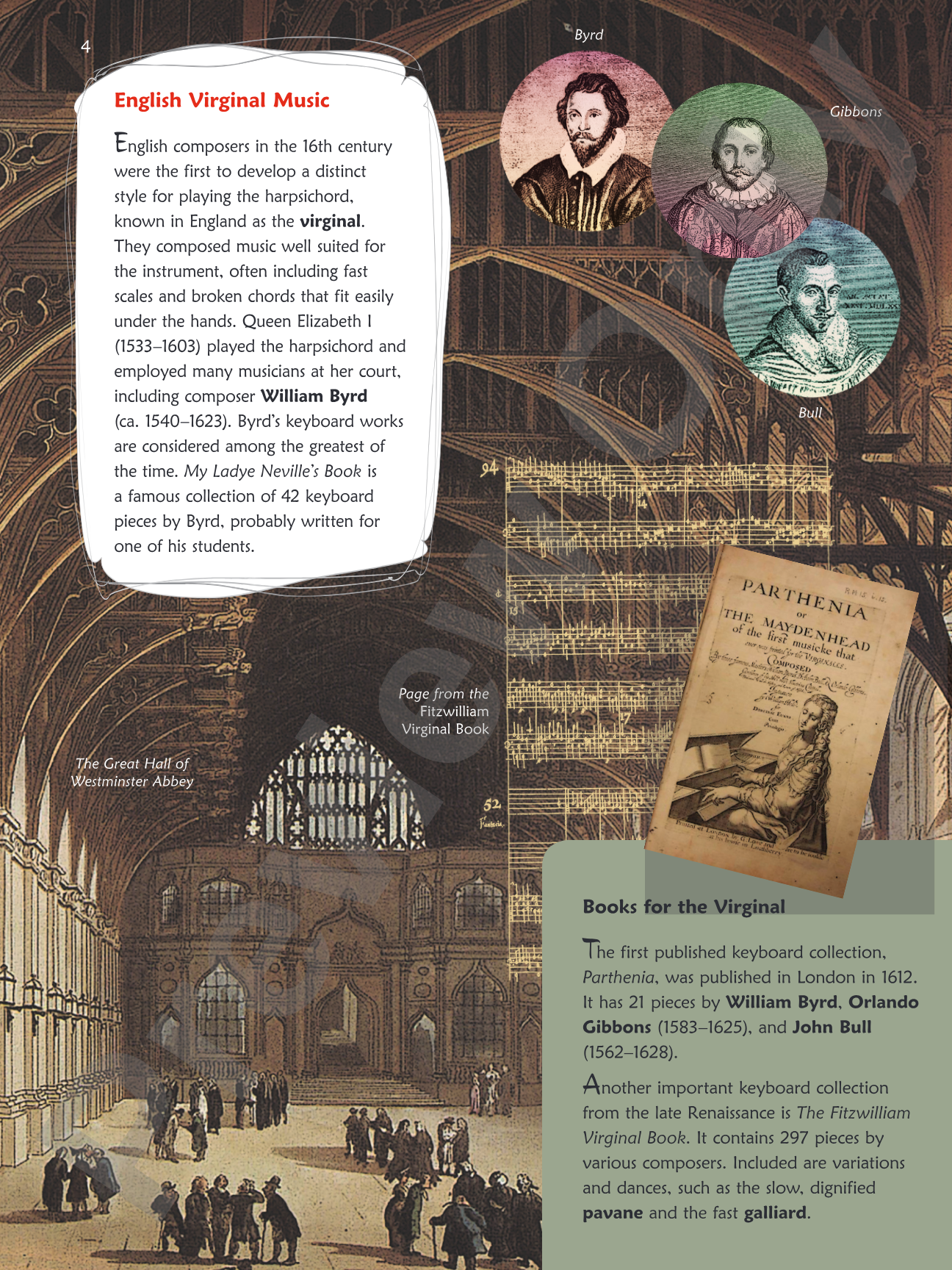
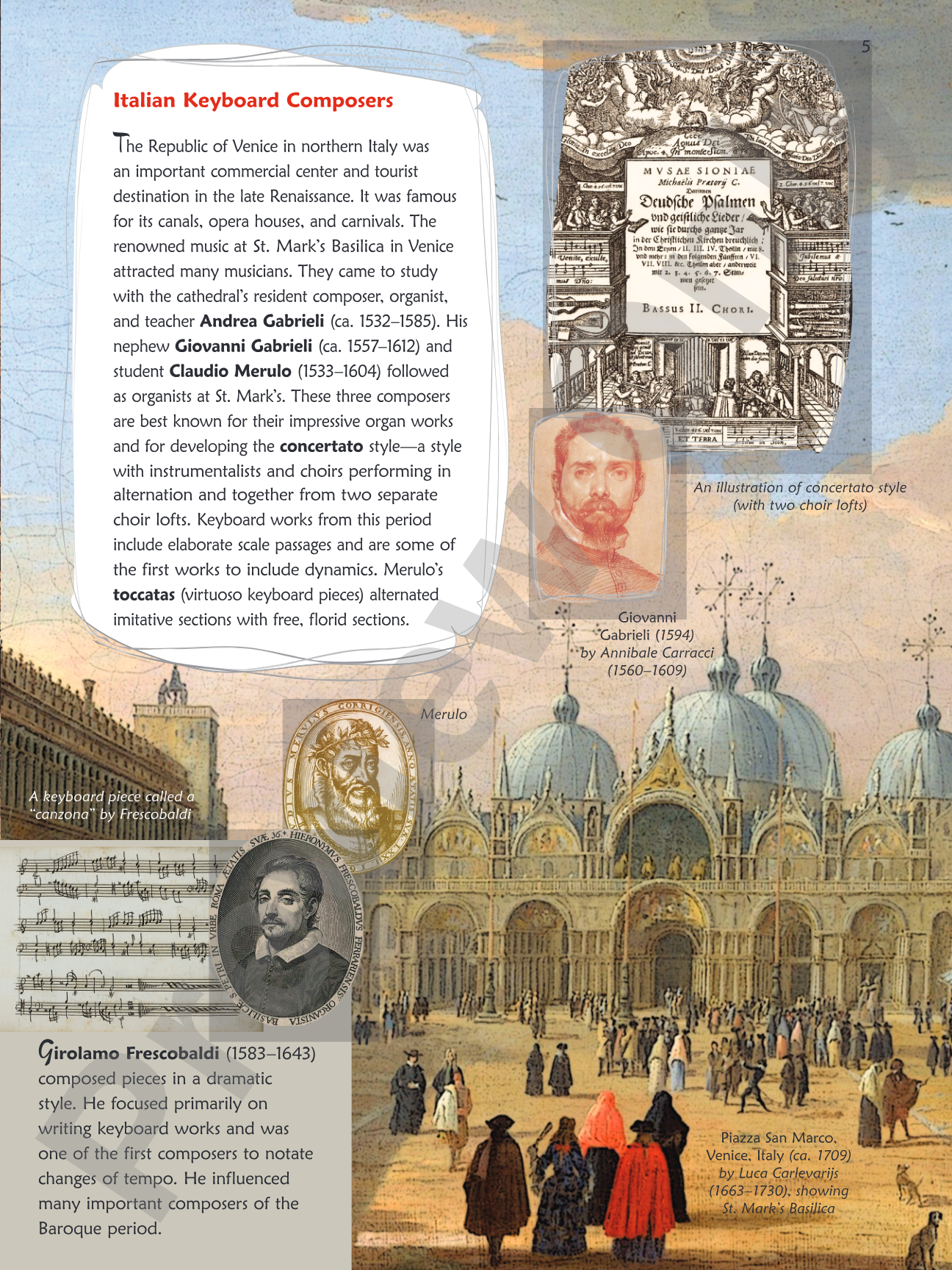
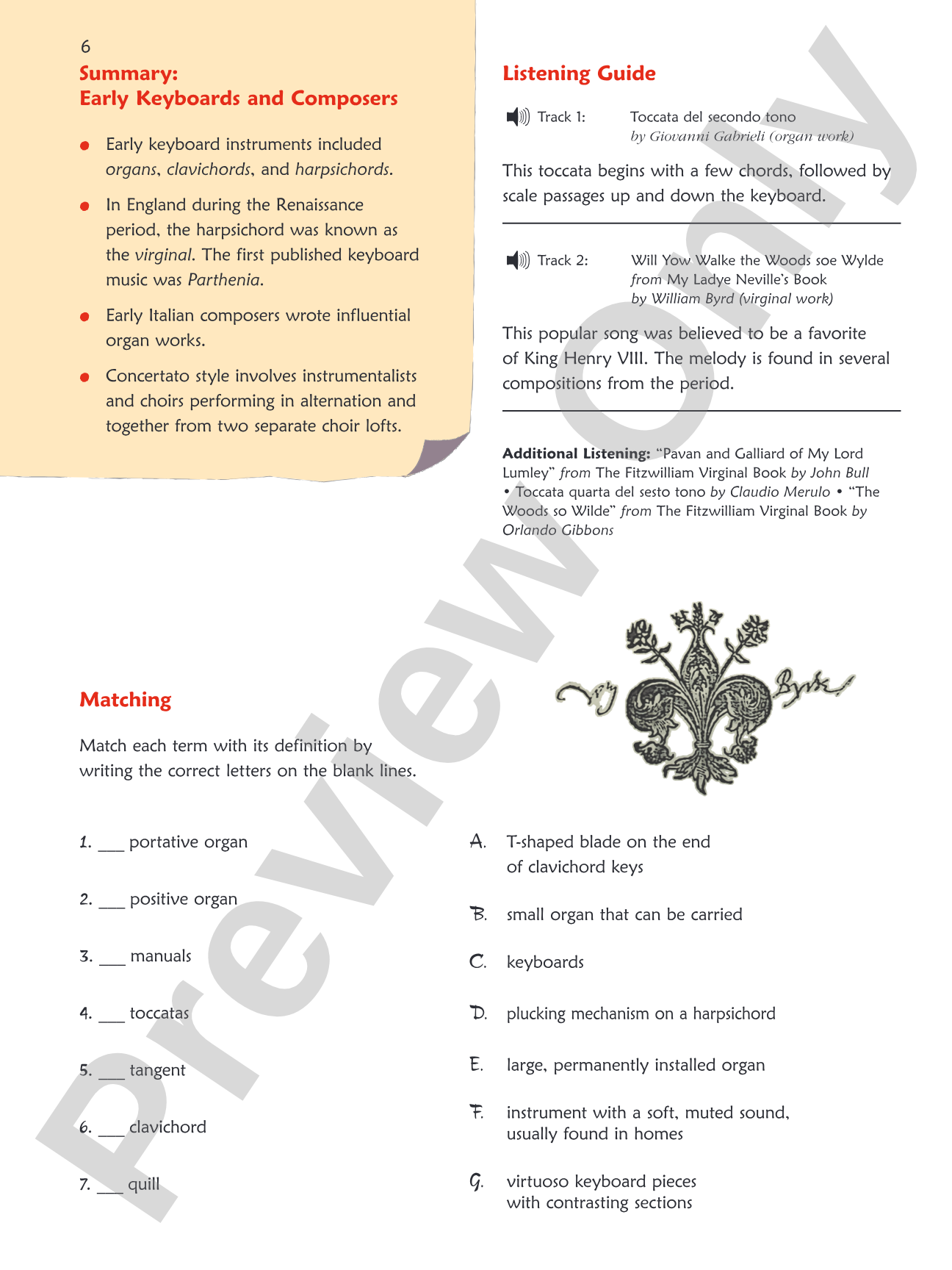
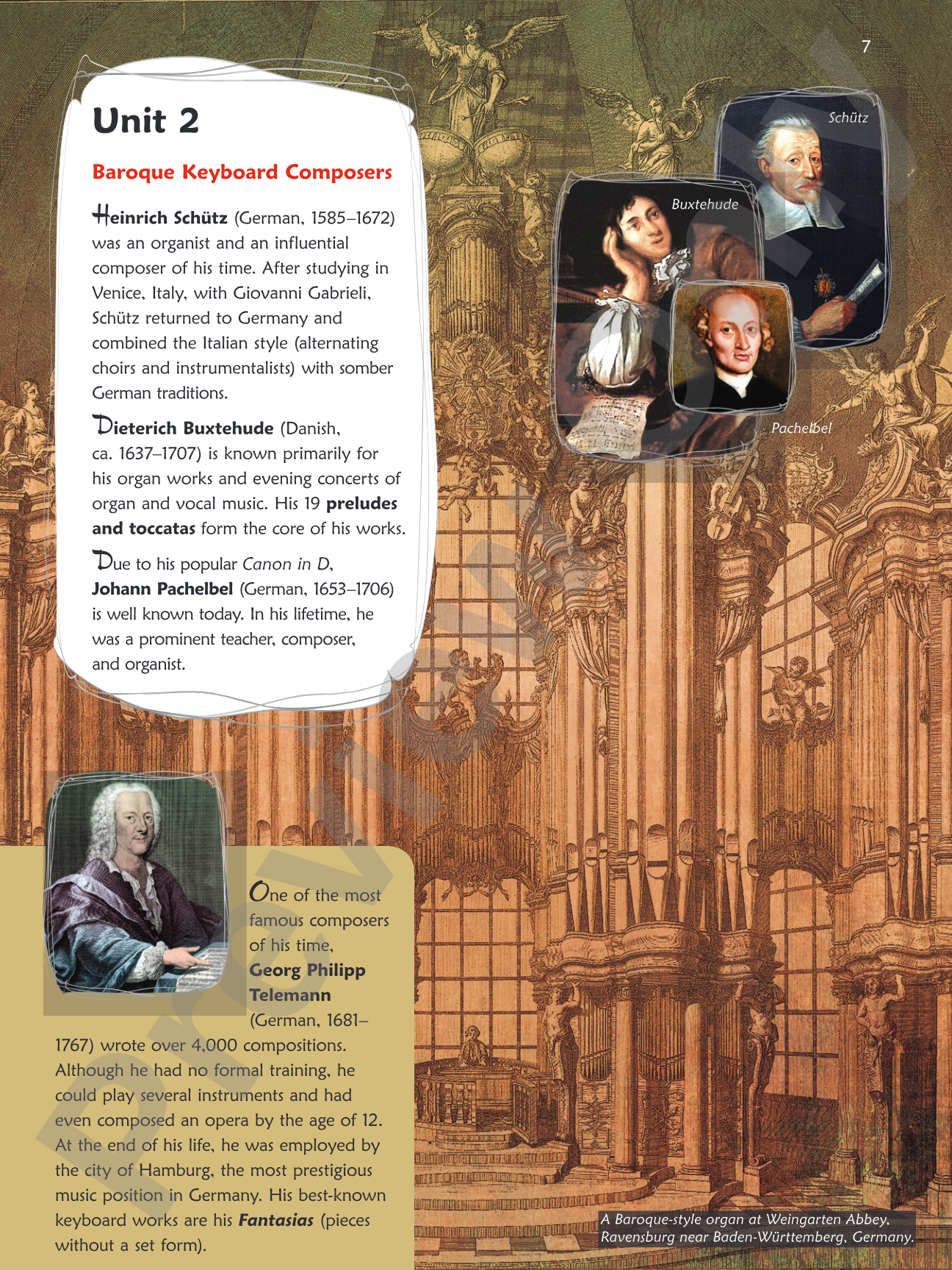
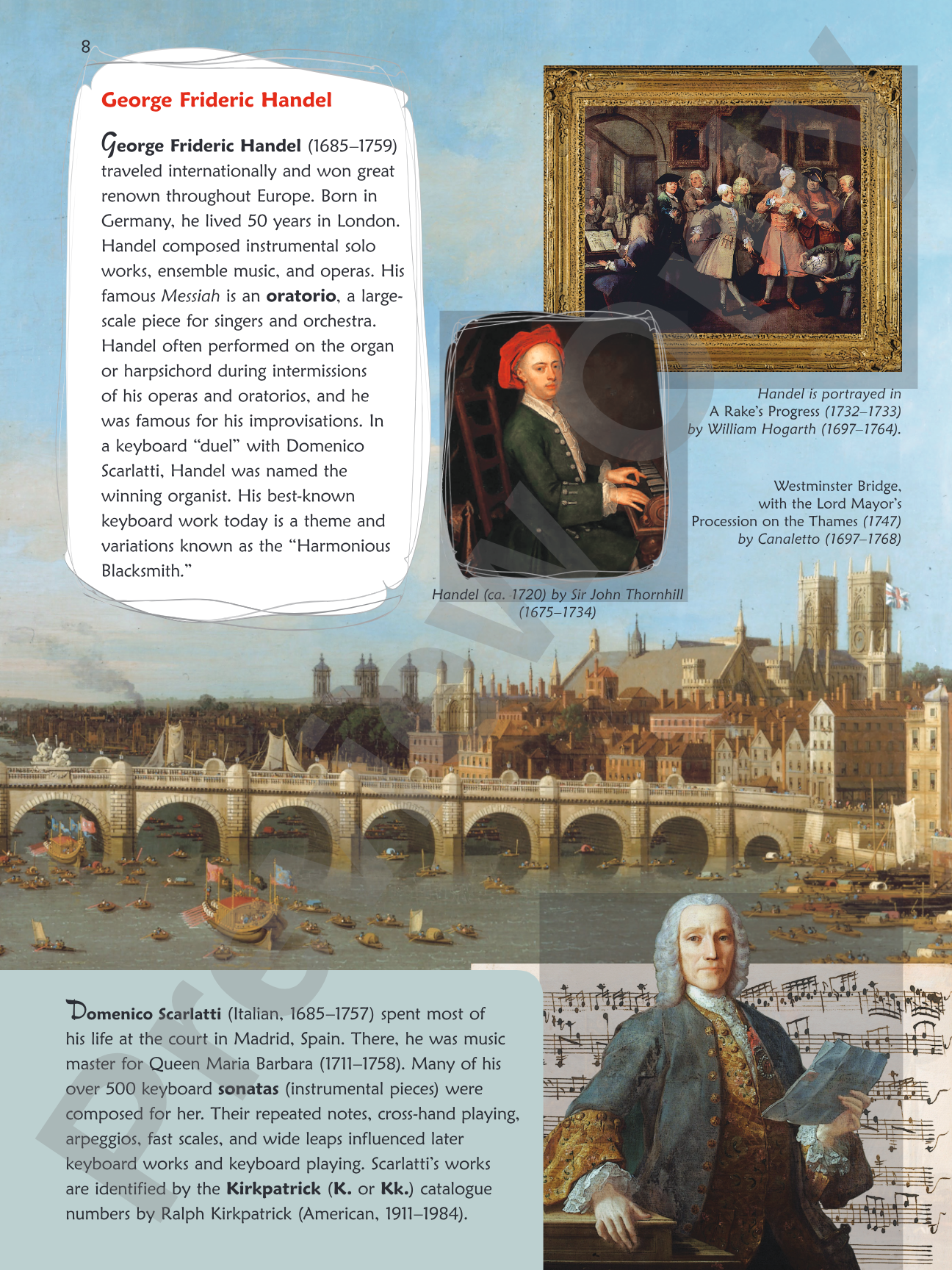
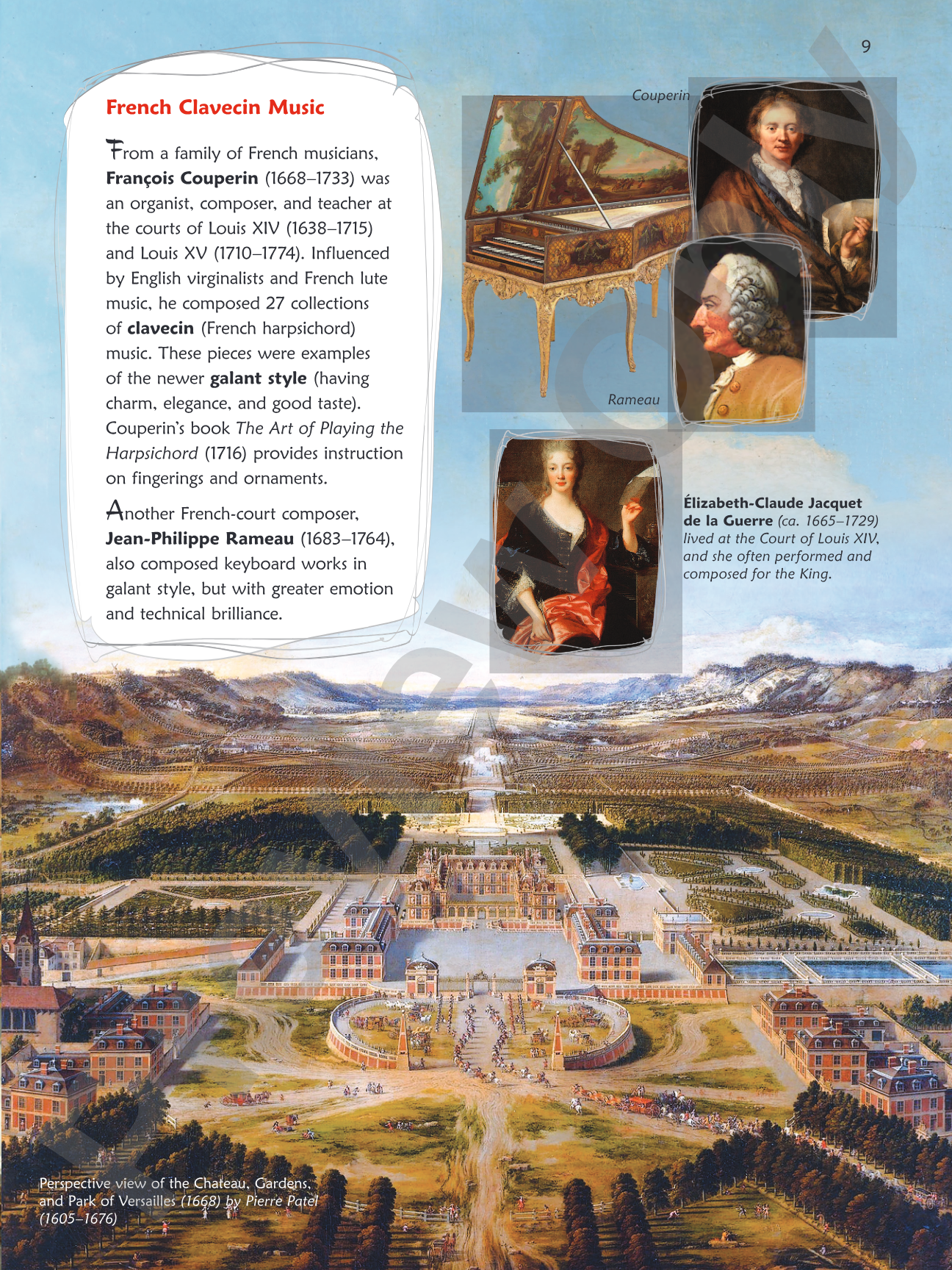
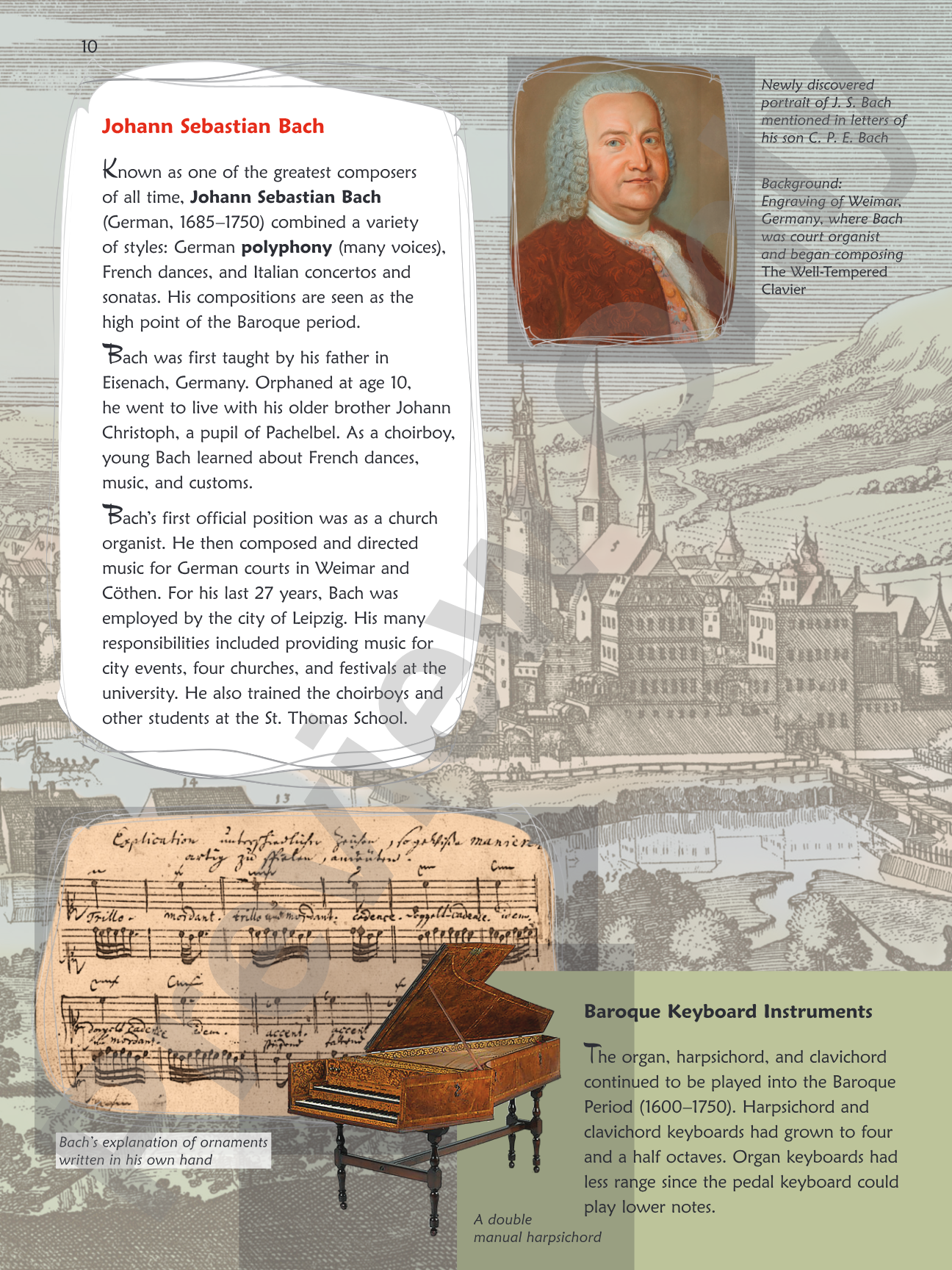
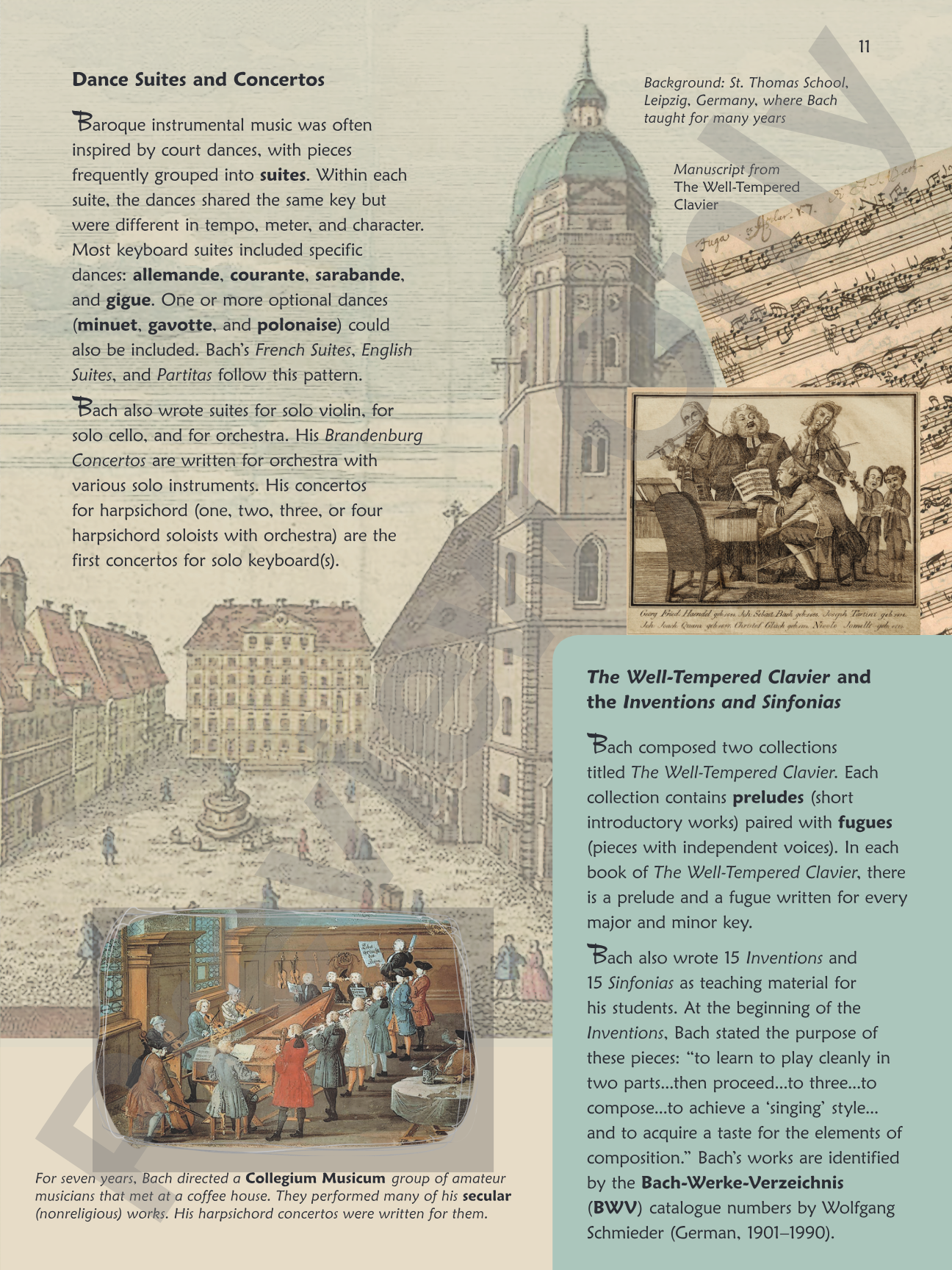
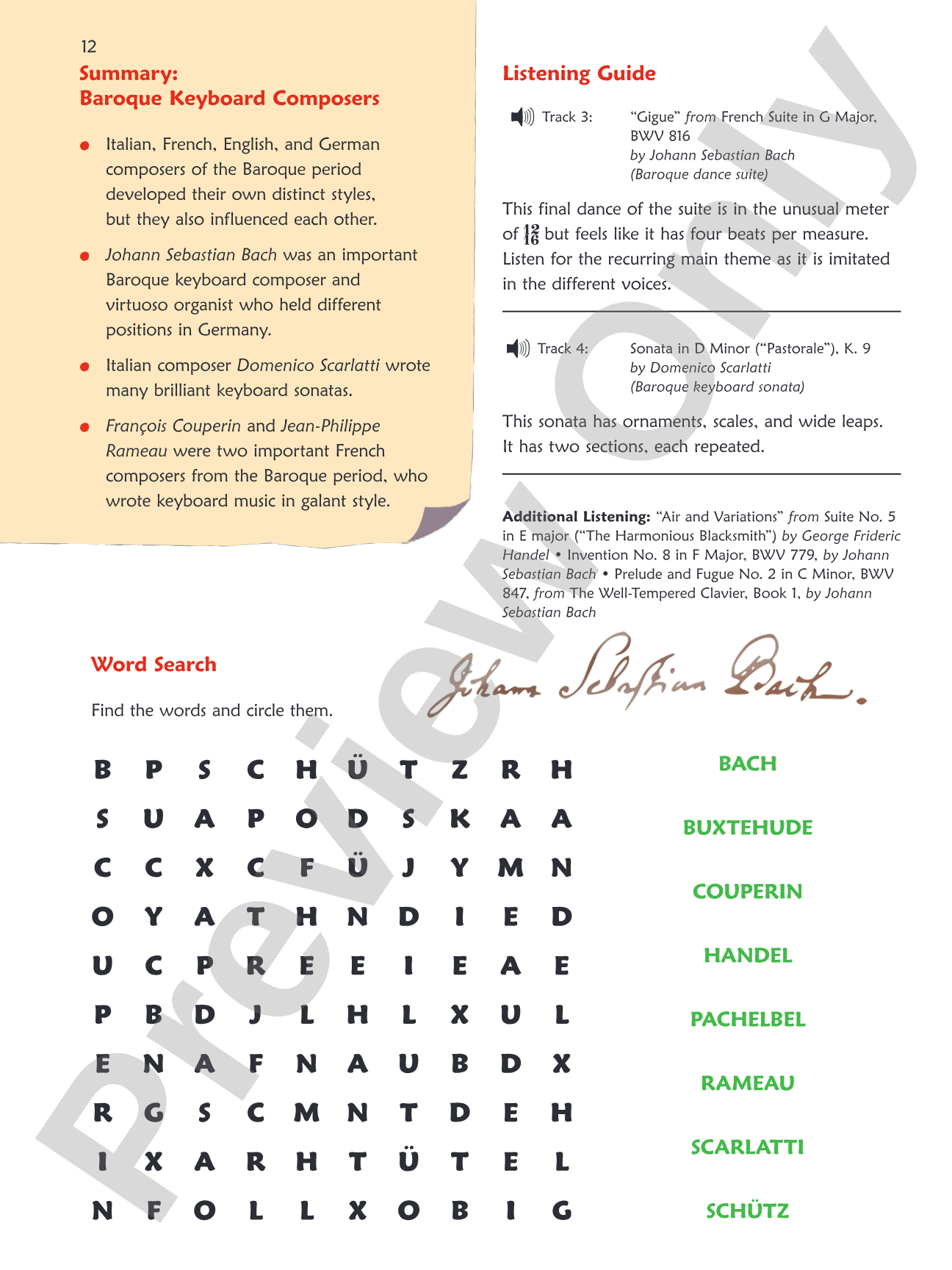
The Great Music & Musicians series provides a foundation for understanding the major cultural periods, musical styles, and development of music through the ages. The books include art and listening examples to deepen understanding. Although not correlated page by page, Book 2 is appropriate for piano students in various levels of Premier Piano Course (based on the individual student's reading level). It also may be used with other piano methods and in group lessons. Each unit includes an overview of major keyboard composers and literature, as well as information about the development of the piano and related cultural trends. Also included are short unit summaries and review activities. At the end of each unit is a Listening Guide that includes important keyboard compositions to reinforce the concepts presented. Recordings of these pieces can be downloaded as MP3 files.


Alfred's Great Music & Musicians, Book 2: An Overview of Keyboard Composers and Literature: Piano isn't in MakeMusic Cloud just yet...but it could be. Let us know you'd like to see it, and you'll help shape what comes next. In the meantime, start a free trial and dive into thousands of interactive titles your students can play along with today.
Request This Title
Tell us you want it.
Start Your Free Trial
Explore everything that's ready to play right now.
Sample Audio
1
Etude Op 10, No 12 Chopin
--:--
2
Gigue French Suite in G Major Bach
--:--
3
Maple Leaf Rag Joplin
--:--
4
Toccata del secondo tono
--:--
5
Will Yow Walke the Woods soe Wylde
--:--
Etude Op 10, No 12 Chopin
0:00
0:00
Sample Video
Additional Details
Series:
Premier Piano Course
Publisher:
Alfred Music
Page Count:
56
SKU:
00-PB-0000963
More about this title
About the Composer: Nancy Bachus

Nancy Bachus brings decades of performance and teaching experience to music history education. A graduate of the Eastman School of Music who studied with renowned pianists Eugene List and Brooks Smith, she performed in the original Monster Concerts at Lincoln Center, Carnegie Hall, and Radio City Music Hall, and later coached with Fernando Laires. She has served as a clinician at major piano teacher conferences and conventions, and her writing on music and pedagogy has appeared in Clavier and Keyboard/Clavier Companion magazines.
Bachus earned MTNA Master Teacher certification and taught at the college and university level for 27 years, including faculty positions at Cleveland State University and the National Music Camp at Interlochen. She served on the editorial board of The Piano Magazine and on the Board of Directors of the American Liszt Society. Her published work includes the Spirit anthologies (Baroque, Classical, Romantic, and Beyond), the Exploring Piano Classics series, and the Great Music & Musicians music history outline.
Why we love this
This resource bridges the gap between piano study and music history in a way that actually engages students rather than overwhelming them. Bachus structures each unit to include cultural context, composer information, piano development, and guided listening with downloadable recordings. The visual art and strategic review activities reinforce concepts in a format that respects developing readers while building genuine understanding of style and period.
What to expect
Opening this book reveals a musical world organized by time and style, with each unit inviting you to hear how keyboards evolved and how composers shaped that evolution. The combination of writing, images, and listening examples creates a sense of discovery, helping students connect pieces they play to larger historical currents and the hands that came before them.
Who it's for
This book serves intermediate and early intermediate piano students who are ready to understand the composers and styles they encounter in their repertoire. It works well alongside Premier Piano Course materials or any other piano method, and adapts easily to private lessons, group classes, or independent study.
How to get the most out of it
- Download the MP3 recordings before your first lesson with this material. Play them for students multiple times throughout the unit so the compositions become familiar friends rather than distant names from history.
- Use the listening guides to frame active listening: ask students to identify specific compositional techniques or stylistic features they hear, not just sit passively.
- Connect the cultural trends and piano development sections to the technical demands students encounter in their current method books; students retain more when they understand the 'why' behind what they're practicing.
- Assign the review activities at unit's end as homework, then discuss answers in the next lesson to reinforce retention and catch misconceptions early.
How to use it
Use this resource to deepen student understanding during specific units of study, pairing the listening guides with repertoire students are currently learning. The book also works as supplementary material in group piano classes, where students can explore history together and discuss the cultural shifts that shaped keyboard music.
Skills your students will build
- Recognizing stylistic characteristics of Baroque, Classical, Romantic, and contemporary keyboard music
- Understanding the development of the piano and its impact on keyboard composition
- Connecting historical and cultural context to musical style
- Active listening and score study using guided listening resources
- Identifying major keyboard composers and their contributions to the repertoire