
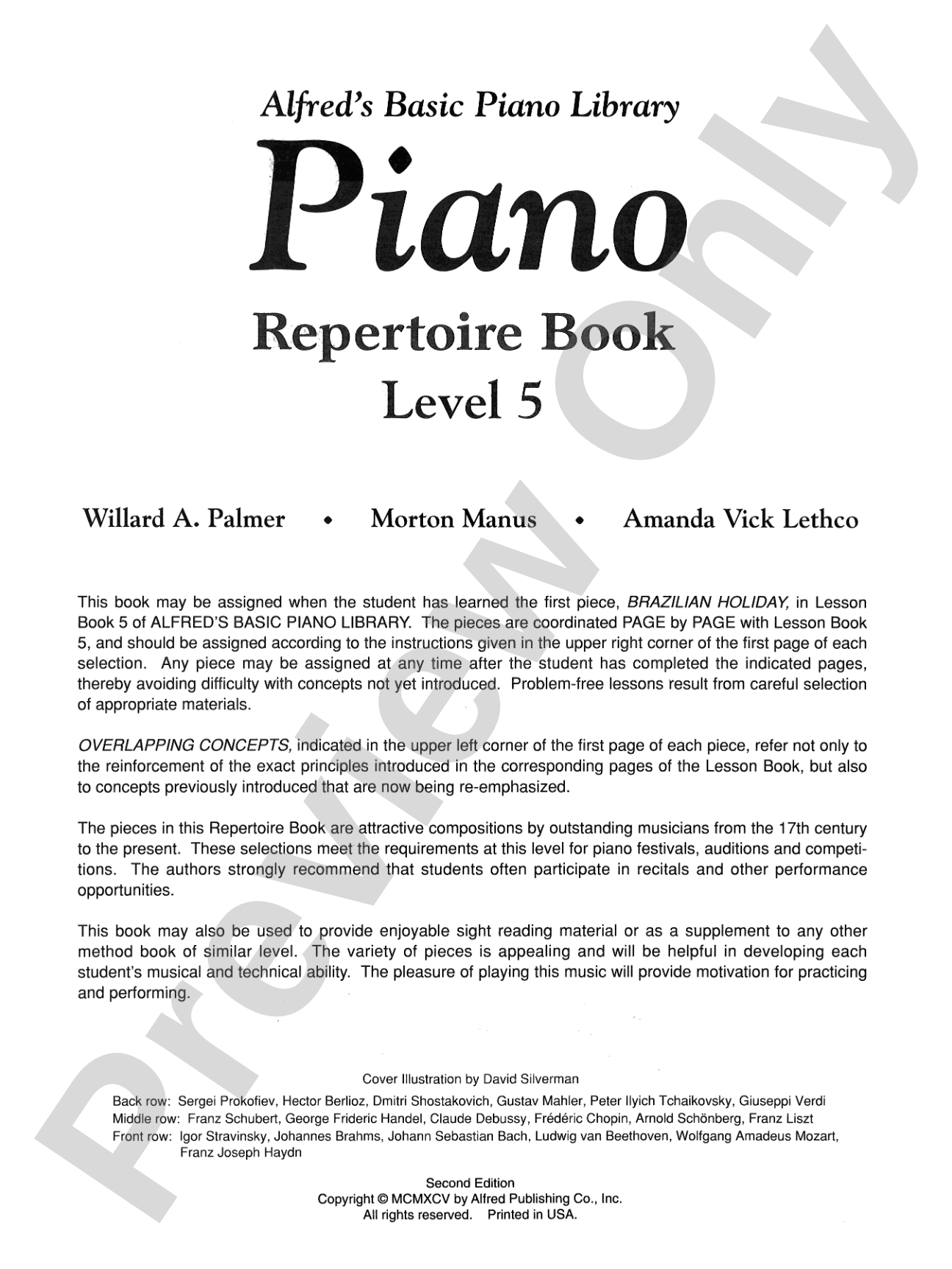

Alfred's Basic Piano Library: Repertoire Book 5: Piano
By Willard A. Palmer, Morton Manus, and Amanda Vick Lethco
Level: 5
Item: 00-PB-0002599
$7.99
Pickup currently not available
Related Items
Alfred's Basic Piano Library: Repertoire Book 5: Piano Book |
$7.99
|
View |
Description
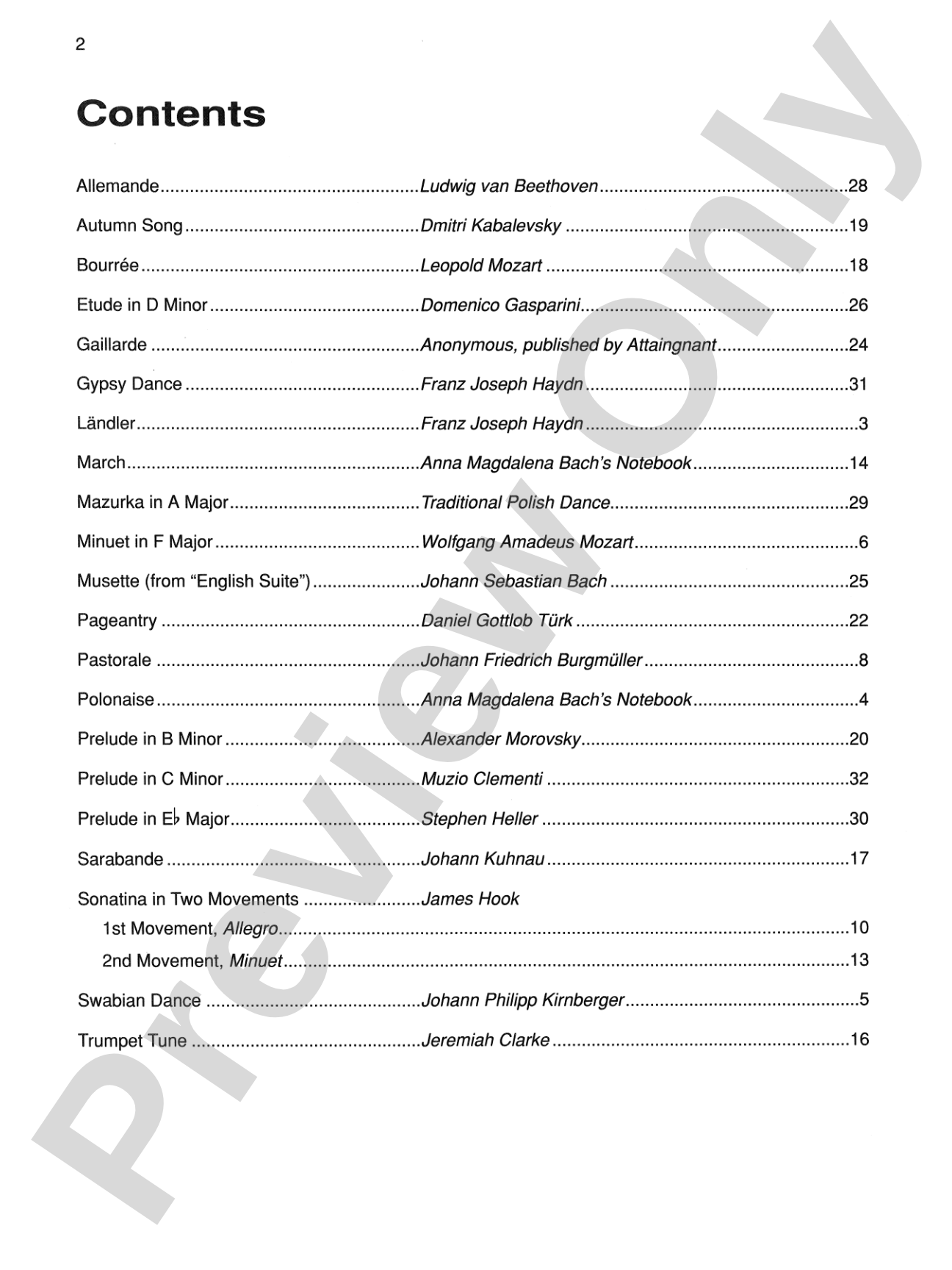
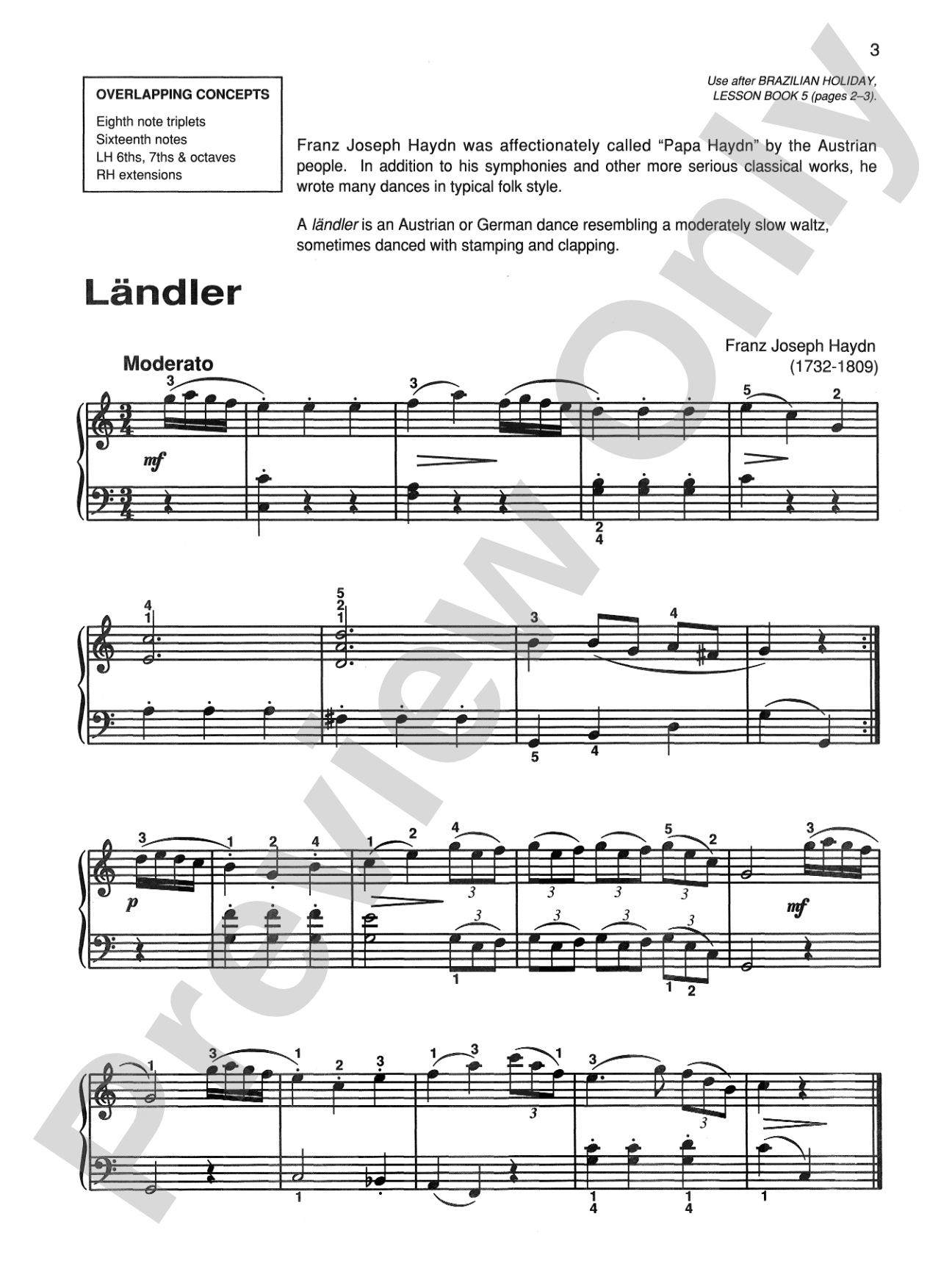
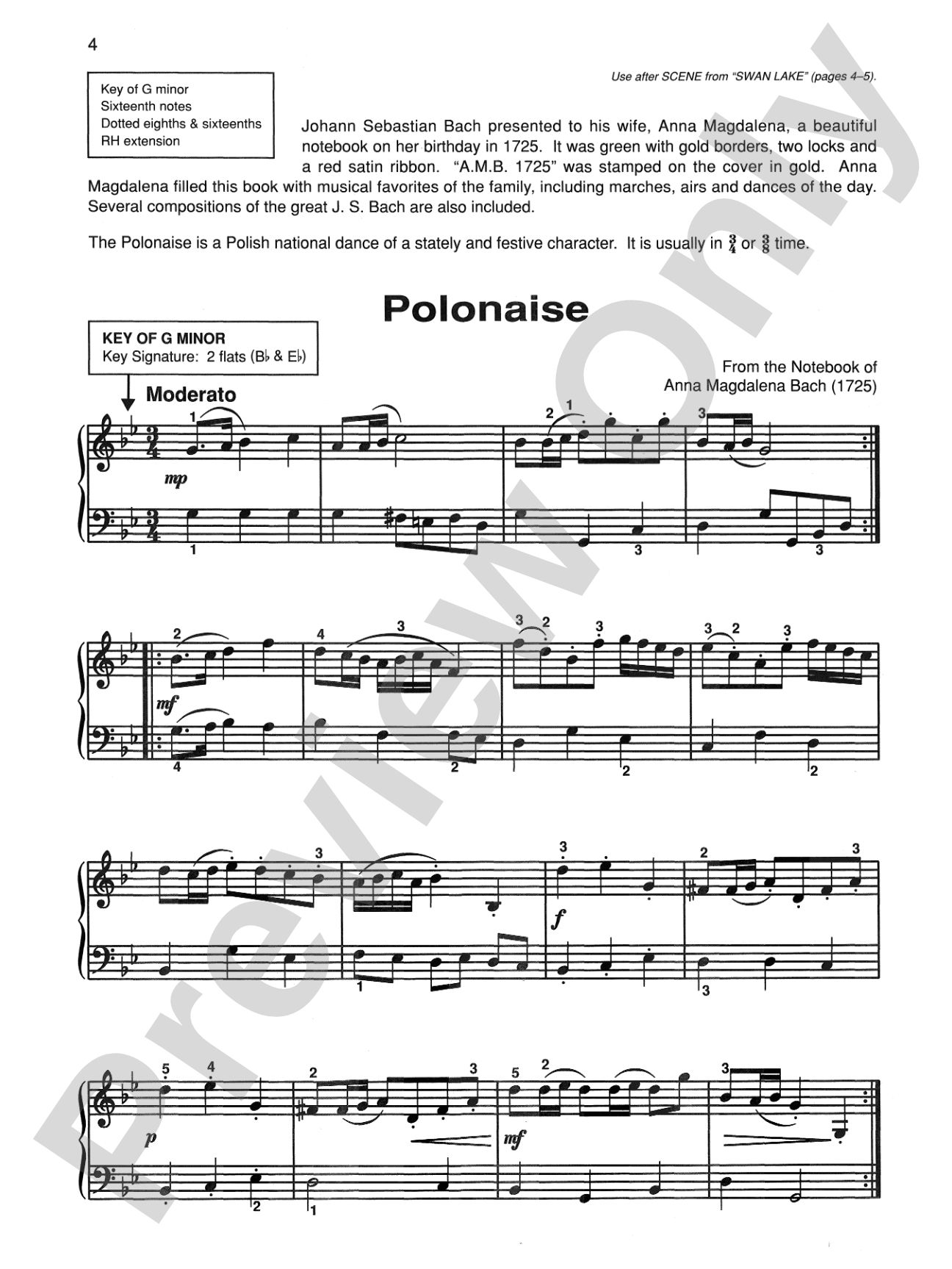
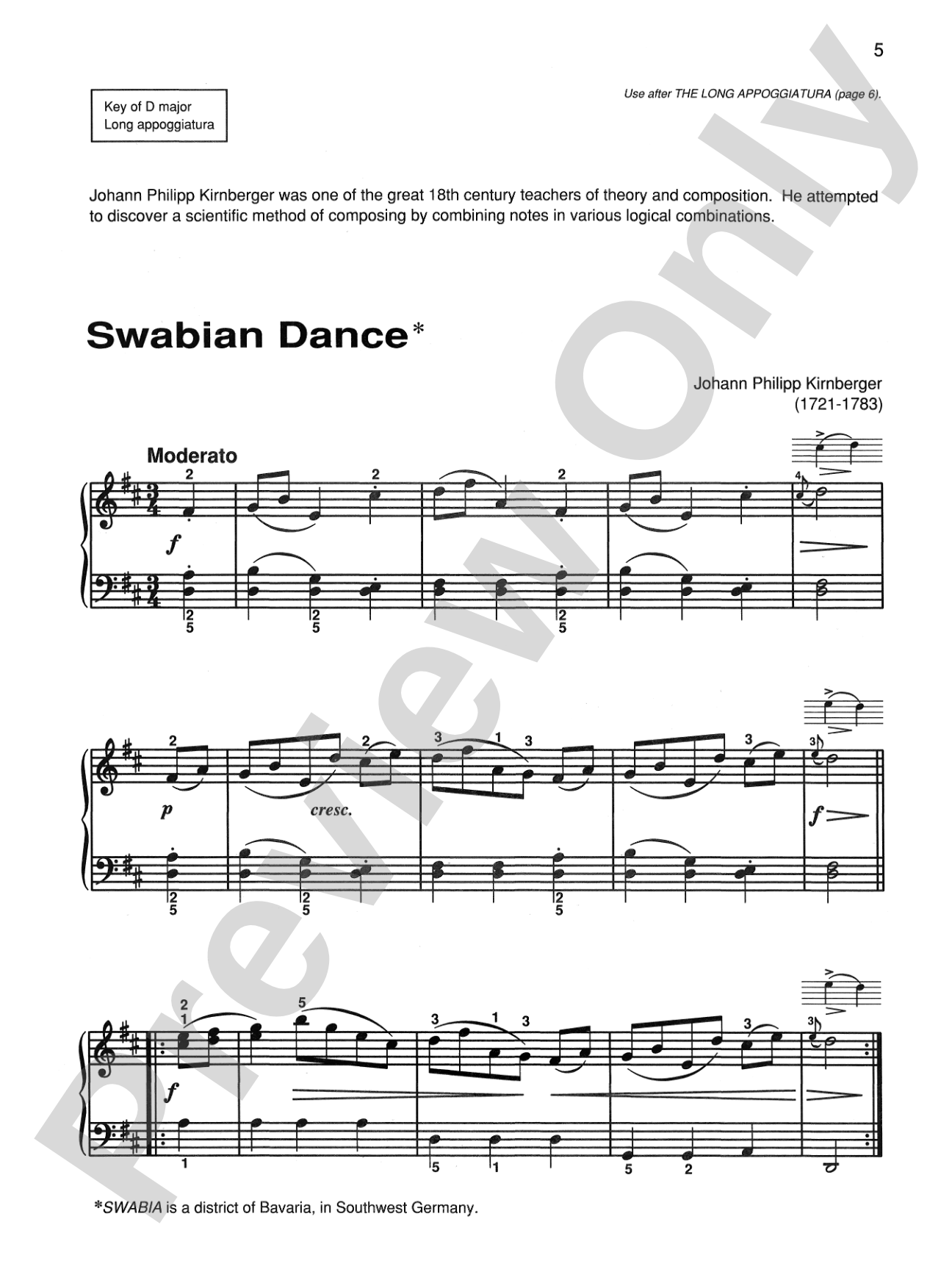
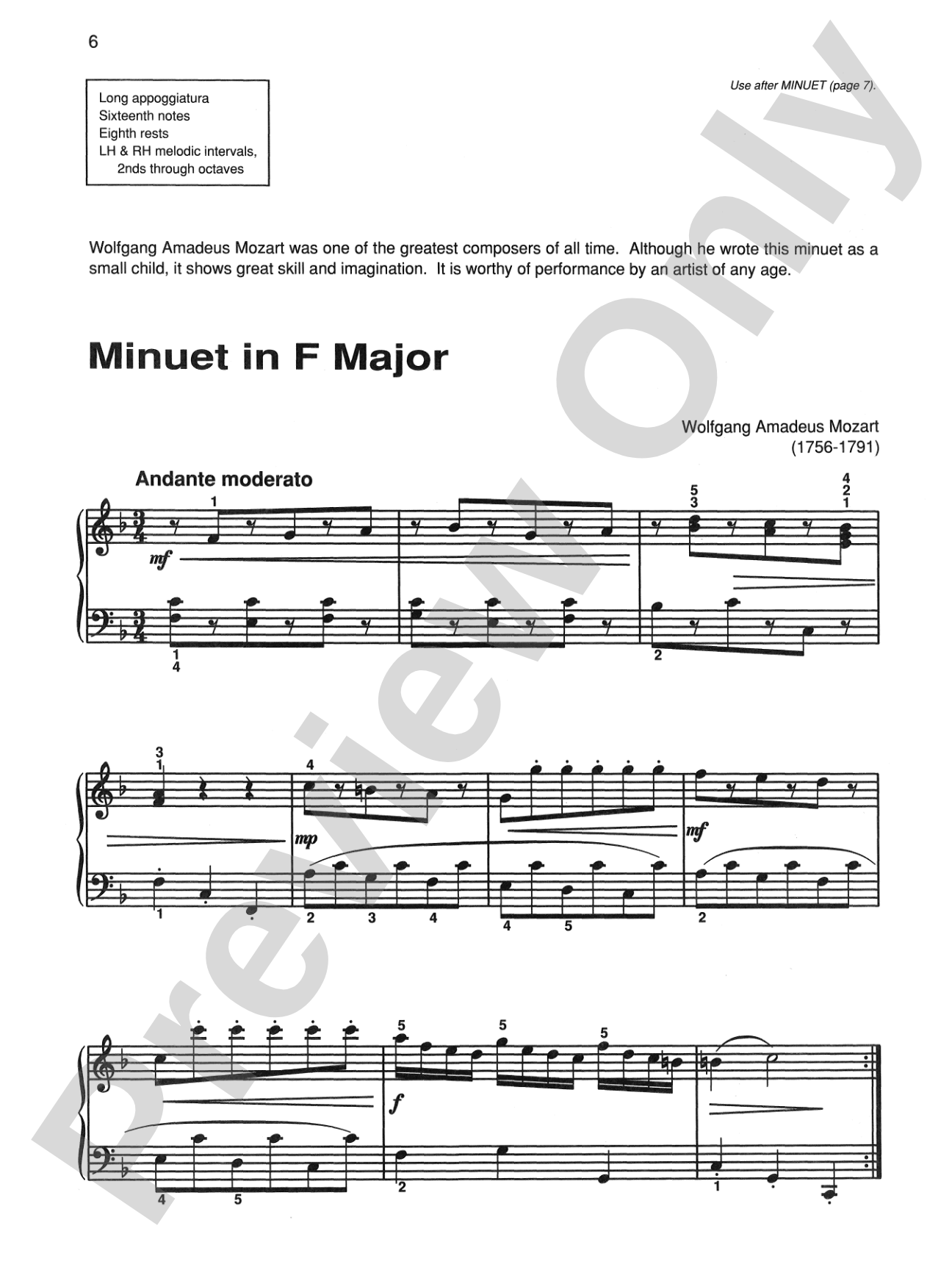
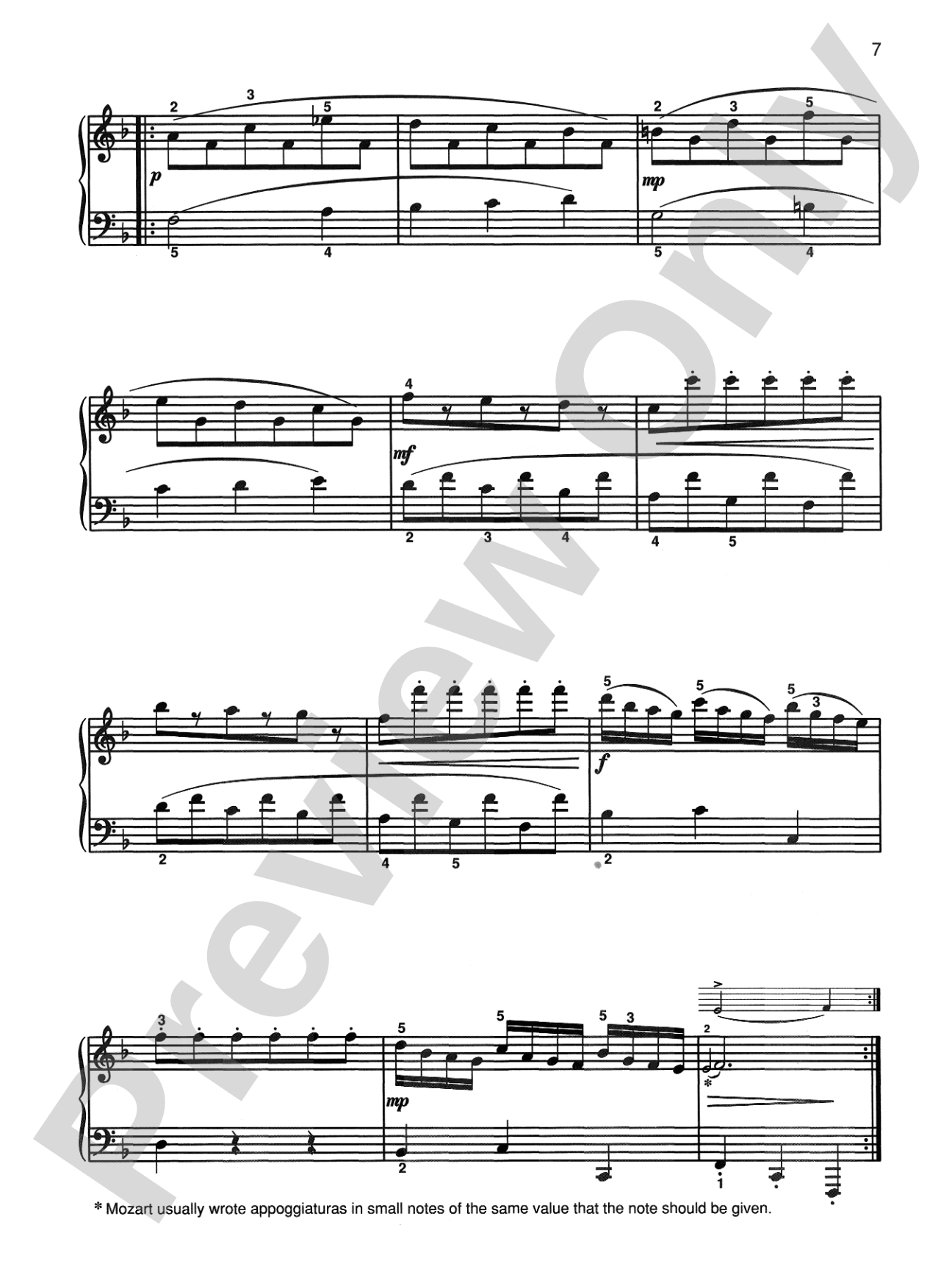
The Repertoire Books contain attractive compositions from the 17th century to the present. The pieces have been organized in progressive order and meet the requirements of many piano festivals, auditions and competitions. The books may also be used as sight reading material or as a supplement to other method books. Titles: Allemande (Beethoven) * Autumn Song (Kabalevsky) * Bourree (L. Mozart) * Etude in D Minor (Gasparini) * Gaillarde (Anon.) * Gypsy Dance (Haydn) * Landler (Haydn) * March (A.M.B. Notebook) * Mazurka in A Major (Traditional Polish Dance) * Minuet in F Major (Mozart) * Musette from "English Suite" (Bach) * Pageantry (Turk) * Pastorale (Burgmuller) * Polonaise (A.M.B. Notebook) * Prelude in B Minor (Morovsky) * Prelude in C Minor (Clementi) * Prelude in E-flat major (Heller) * Sarabande (Kuhnau) * Sonatina in Two Movements (Hook) * Swabian Dance (Kirnberger) * Trumpet Tune (Clarke).


Discover MakeMusic Cloud: thousands of interactive titles your students can play along with today.
Sample Audio
No sample audio found.
Sample Video
No sample videos found.
Additional Details
Series:
Alfred's Basic Piano Library
Publisher:
Alfred Music
Page Count:
32
SKU:
00-PB-0002599
More about this title
About the Composer: Willard A. Palmer
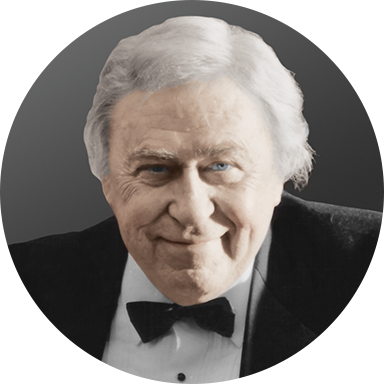
Willard A. Palmer established himself as a prolific composer and educator whose output exceeded 789 published works spanning accordion methods, piano curricula, guitar instruction, and substantial choral and solo repertoire. His compositions have circulated globally in German, Japanese, French, Dutch, and Spanish editions, while his tenure as choir director at Memorial Lutheran Church in Houston anchored his community presence for decades.
Palmer's foundation in technique came early: a child prodigy who performed piano on radio at thirteen, he studied under Mae Vardeman, whose emphasis on correct technique combined with improvisational freedom shaped his pedagogical philosophy. After earning his Bachelor's degree from Millsaps College in Jackson, Mississippi, he pursued advanced study at the Conservatory of Leipzig on scholarship, then completed post-graduate work at the University of Houston where he taught accordion for eighteen years. His later scholarly focus on Baroque ornamentation became internationally recognized, culminating in the acclaimed Alfred Masterworks series. Palmer received honorary doctorates in Humanities (1971) and Music (1983) and served as director of the Riemenschneider Bach Institute.
Why we love this
This collection moves beyond the expected parade of minuets by mixing dance forms from different eras with contrasting character pieces, giving students genuine variety in a single book. Palmer's curation respects the progression of technical demands while refusing to bore intermediate pianists with material that feels beneath them. The repertoire selections meet festival and competition requirements without sacrificing musical substance.
What to expect
A musical time capsule spanning four centuries of European instrumental tradition. You move from the ornamental elegance of Baroque dance to the nascent romanticism of early 19th century character pieces, each work a window into its period's aesthetic. The writing is clear and idiomatic; nothing feels artificially difficult or condescending.
Who it's for
Students at Level 5 who are solid sight readers and ready for more sophisticated repertoire choices. This book suits pianists preparing for festivals and competitions as well as teachers seeking material that combines technical progression with genuine musicianship.
How to get the most out of it
- Attend to stylistic articulation within each dance form. The Sarabande calls for a different touch than the Gypsy Dance; let the period and character guide your use of weight and release.
- Coordinate hands independently in pieces like the Sonatina in Two Movements. Practice each voice separately to clarity its melodic integrity before blending them.
- Shape phrasing in the longer works by identifying structural seams. Burmüller's Pastorale and the Hook Sonatina reward performers who hear phrase architecture, not just note sequences.
- Explore the recorded accompaniments as a learning tool first, then as performance scaffolding. Hearing the pieces in context clarifies tempo choices and harmonic color.
How to use it
Build a repertoire recital around these pieces, grouping them by era or character to frame a coherent program. The shorter works pair naturally with one another for student guild auditions or studio showcases, while the Sonatina stands well as a solo feature. Use the collection progressively through a semester to keep sight reading fresh while introducing stylistic diversity.
Skills your students will build
- Baroque ornamentation and articulation conventions
- Recognizing and performing dance forms (minuet, bourree, polonaise, mazurka, allemande)
- Terraced dynamics and hand independence in polyphonic texture
- Reading across multiple periods and styles with stylistic awareness
- Sonatina form and two-part structure
- Festival and competition repertoire standards