
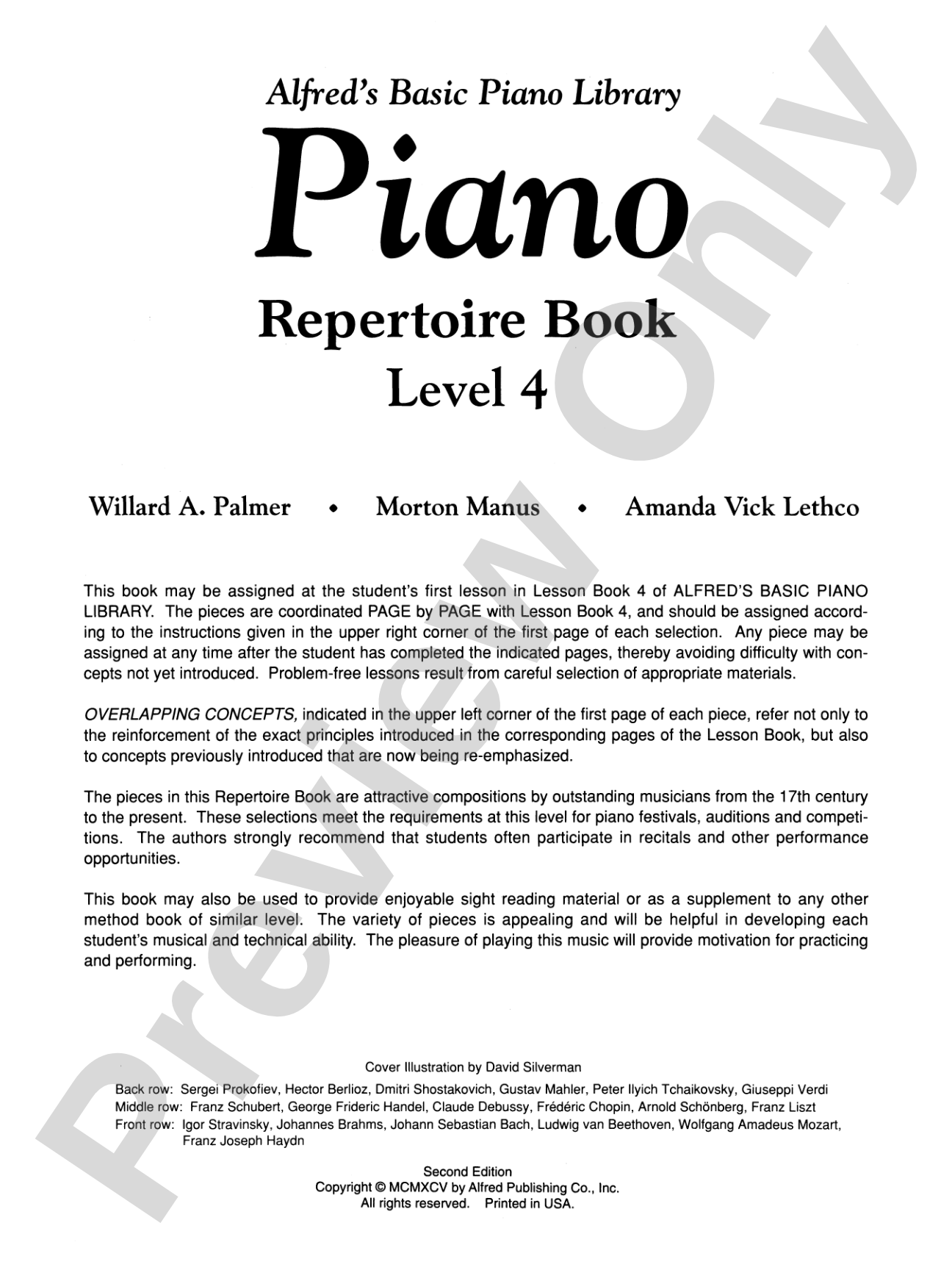

Alfred's Basic Piano Library: Repertoire Book 4: Piano
By Willard A. Palmer, Morton Manus, and Amanda Vick Lethco
Level: 4
Item: 00-PB-0002598
$7.99
Pickup currently not available
Related Items
Alfred's Basic Piano Library: Repertoire Book 4: Piano Book |
$7.99
|
View |
Description
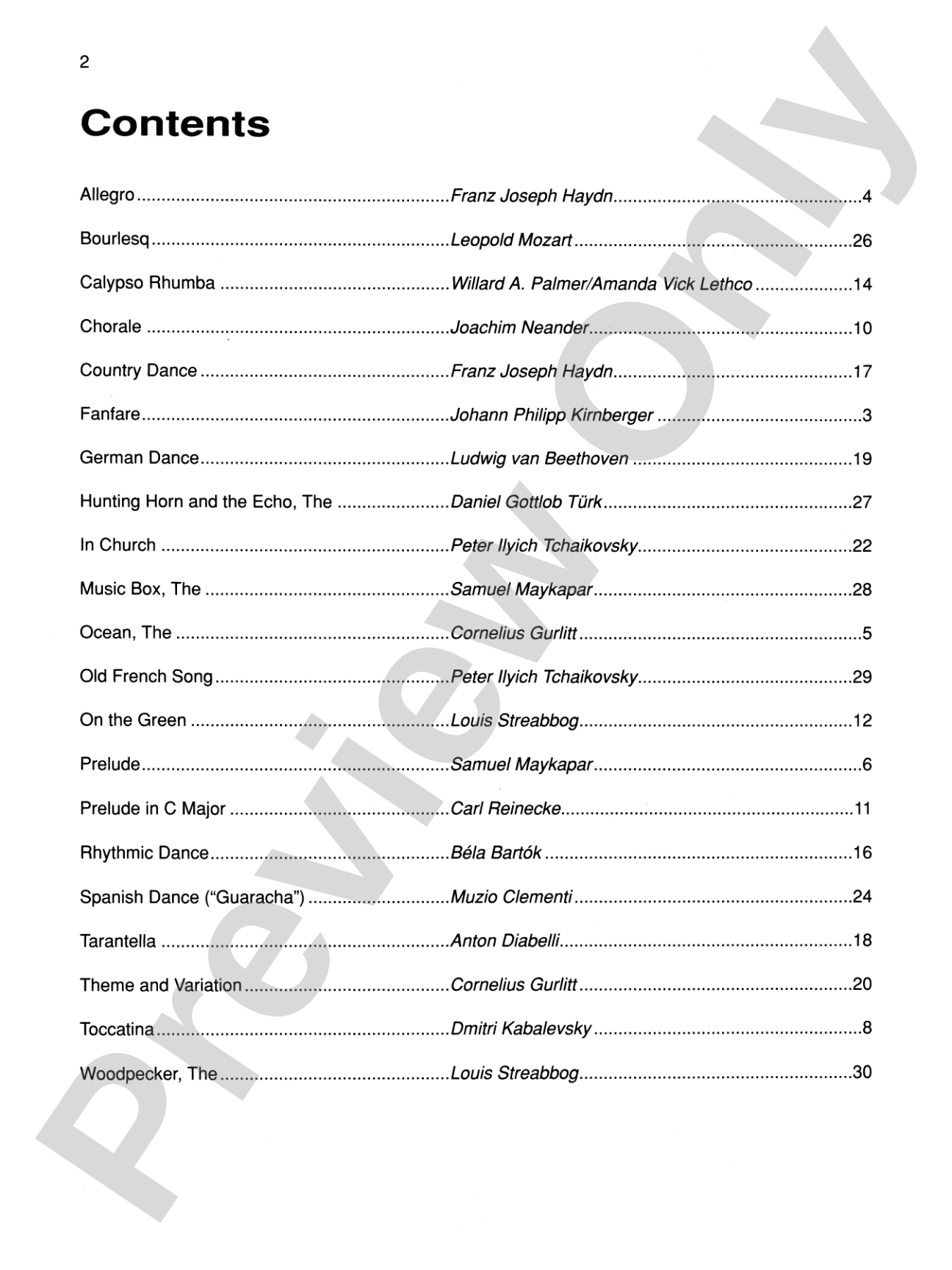
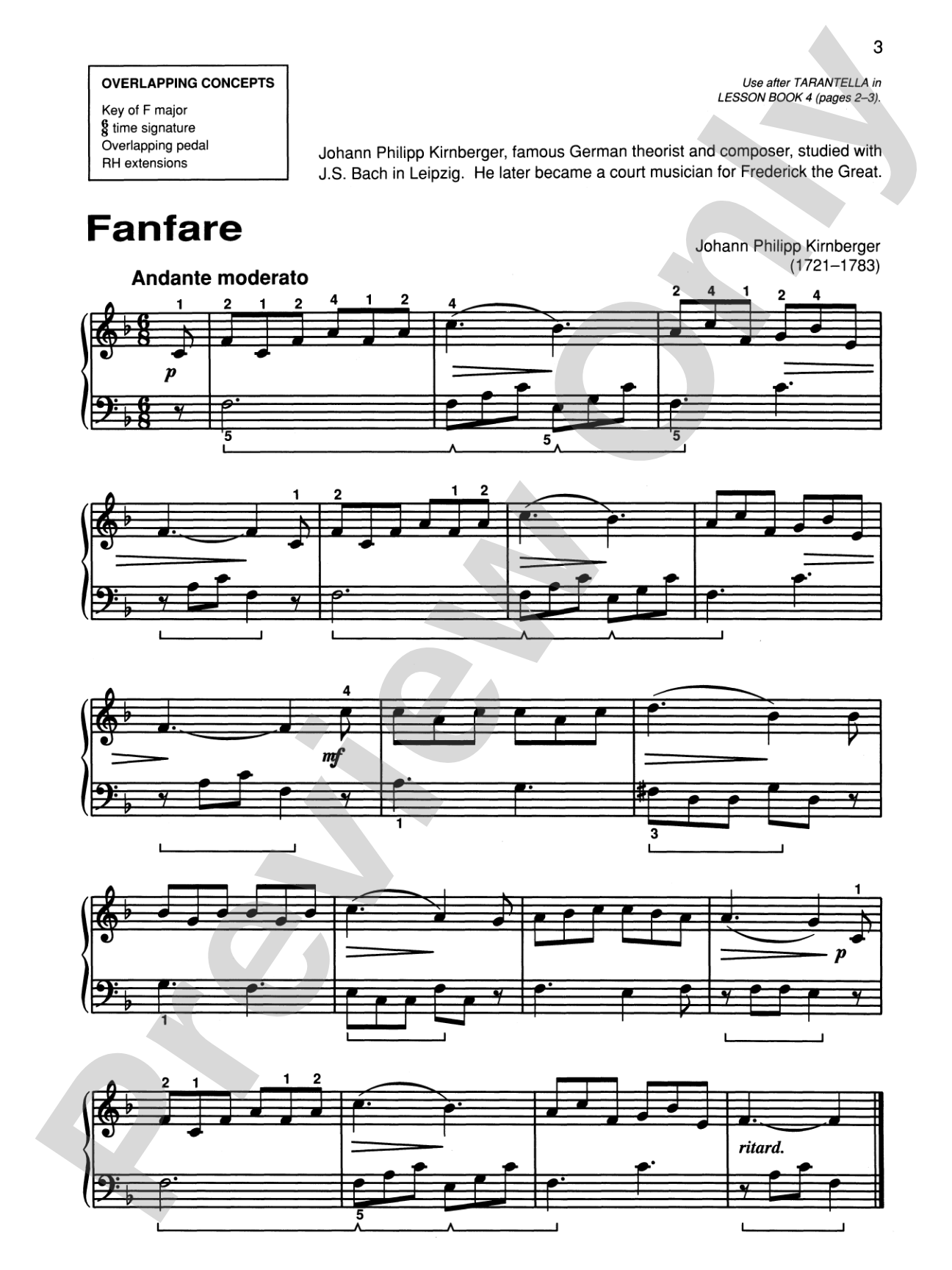
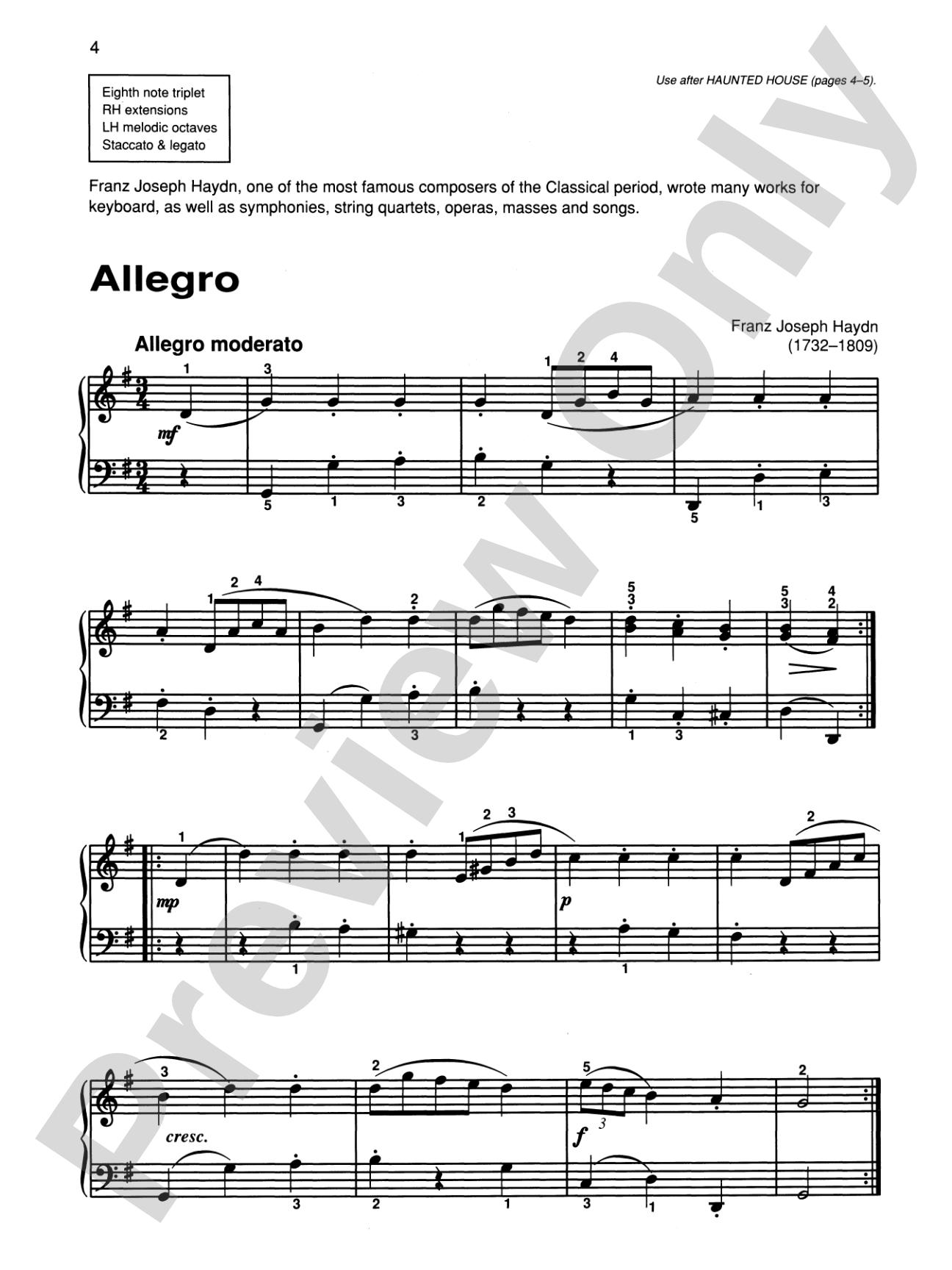
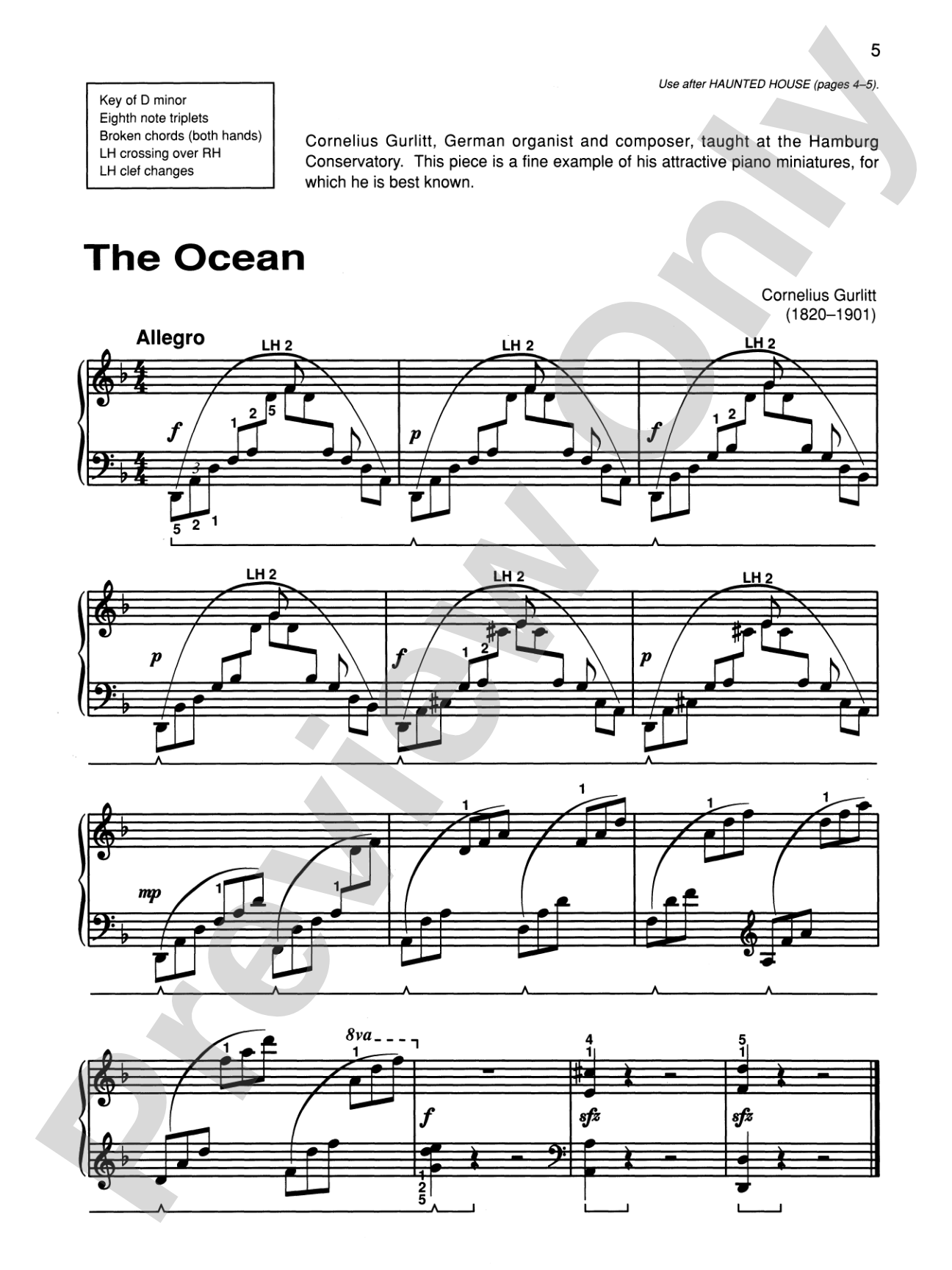
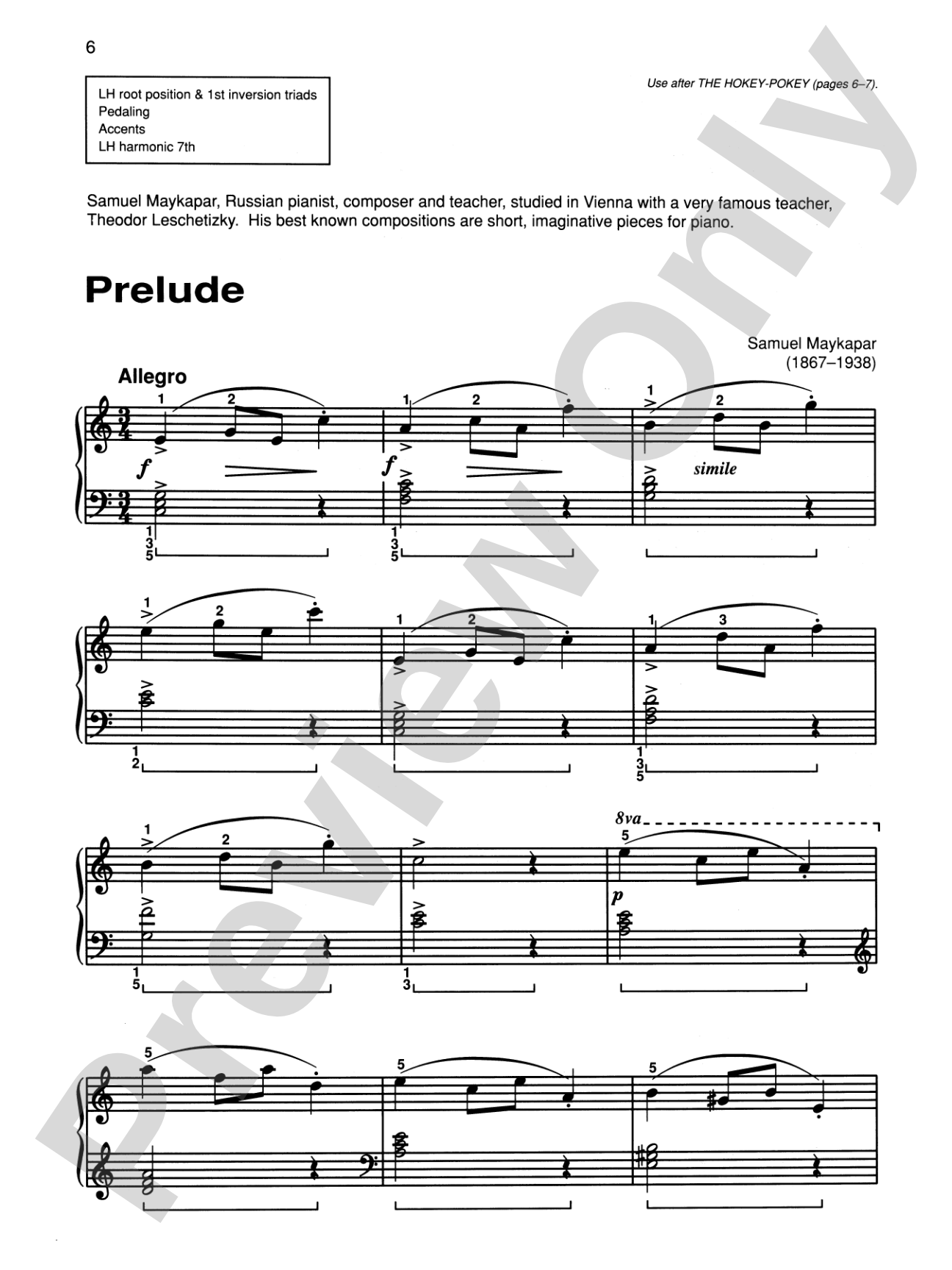
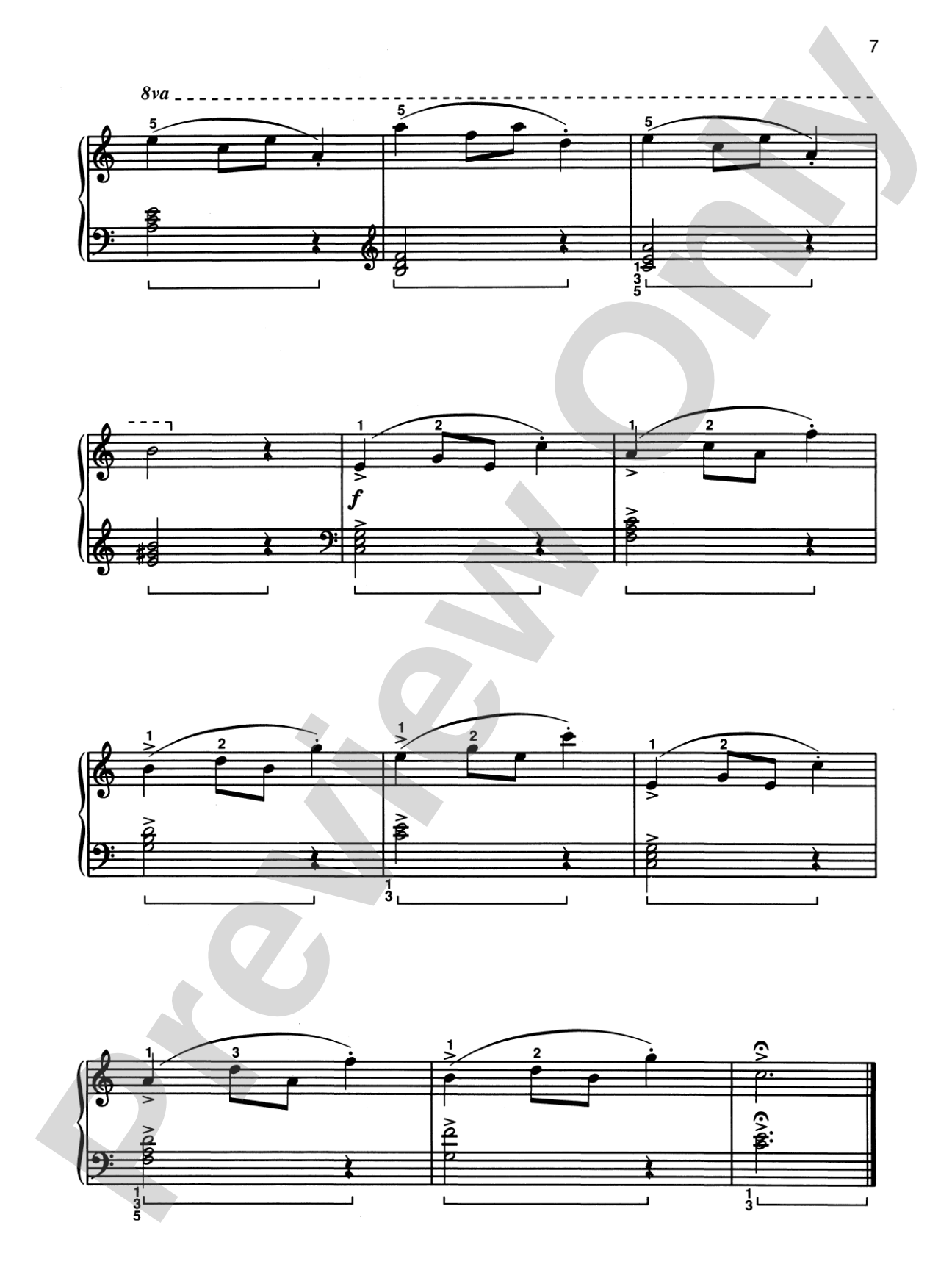
The Repertoire Books contain attractive compositions from the 17th century to the present. The pieces have been organized in progressive order and meet the requirements of many piano festivals, auditions and competitions. The books may also be used as sight reading material or as a supplement to other method books. Titles: Allegro (Haydn) * Bourlesq (L. Mozart) * Calypso Rhumba (Palmer/Lethco) * Chorale (Neander) * Country Dance (Haydn) * Fanfare (Kirnberger) * German Dance (Beethoven) * The Hunting Horn and the Echo (Turk) * In Church (Tchaikovsky) * The Music Box (Maykapar) * The Ocean (Gurlitt) * Old French Song (Tchaikovsky) * On the Green (Streabbog) * Prelude (Maykapar) * Prelude in C Major (Reinecke) * Rhythmic Dance (Bartok) * Spanish Dance ("Guaracha") (Clementi) * Tarantella (Diabelli) * Theme and Variation (Gurlitt) * Toccatina (Kabalevsky) * The Woodpecker (Streabbog).


Discover MakeMusic Cloud: thousands of interactive titles your students can play along with today.
Sample Audio
No sample audio found.
Sample Video
No sample videos found.
Additional Details
Series:
Alfred's Basic Piano Library
Publisher:
Alfred Music
Page Count:
32
SKU:
00-PB-0002598
More about this title
About the Composer: Willard A. Palmer

Dr. Willard A. Palmer stands among the most prolific music educators of the 20th century, with 789 published works spanning piano methods, accordion literature, guitar instruction, and choral music. His influence extends globally; his compositions and pedagogical writings have been translated into German, Japanese, French, Dutch, and Spanish. Palmer's scholarly rigor shaped how generations of teachers approached both performance and music history, particularly through his deep research into Baroque ornamentation and his directorship of the Riemenschneider Bach Institute.
Palmer's own path began as a child prodigy performing piano on radio at age 13, followed by serious study at the Conservatory of Leipzig on a two-year scholarship. He spent 18 years on the University of Houston music faculty, establishing the first successful college accordion courses. His later decades centered on meticulous musicological research, earning him recognition worldwide as an authority on Classical and Baroque practice. The Alfred Masterworks series, built on his scholarship, remains testament to his commitment to both accuracy and accessibility in music education.
Why we love this
This book succeeds because it trusts repertoire to speak for itself. Rather than padding pages with filler or over-simplified arrangements, Palmer and his co-editors selected genuine works from composers who actually matter, then organized them with real progression in mind. Your students encounter Haydn, Beethoven, Bartok, and Kabalevsky in manageable contexts; they're building taste and historical awareness alongside technical skills, which is precisely what Level 4 students are ready for.
What to expect
Moving through this book feels like a guided tour through three centuries of keyboard writing. One moment you're in a Baroque dance with its precise ornaments and formal grace; the next, you're navigating Tchaikovsky's lyrical simplicity or Bartok's rhythmic vitality. Each piece reveals something different about how composers think, keeping the ear engaged and the hands discovering new textures.
Who it's for
Level 4 pianists ready to expand beyond method book etudes into real compositions. This works equally well for festival preparation, sight-reading development, or supplementary repertoire alongside concurrent method study.
How to get the most out of it
- Study the historical context of each piece before rehearsing. Knowing whether you're playing a Baroque dance, a Romantic character piece, or a 20th-century composition changes how you shape phrasing and touch.
- Use the variety within this collection strategically. Alternate between contrasting styles in practice sessions to develop your ear for period-appropriate interpretation.
- Attend to articulation markings closely, especially in the Classical selections. The difference between a clean staccato and a connected legato fundamentally changes the character these composers intended.
How to use it
These pieces fit naturally into studio recitals, festival competitions, and audition preparations at the intermediate level. Because they span era and style, you can program them strategically alongside contemporary works to show stylistic contrast, or cluster them thematically to tell a coherent story within a concert.
Skills your students will build
- Sight-reading fluency across multiple compositional periods
- Baroque ornamentation and articulation practices
- Pedal use in Romantic-era character pieces
- Rhythmic precision in dance forms (country dance, tarantella, rhumba)
- Interpretive decision-making based on historical context
- Technical facility across hand positions and octave ranges
- Tonal control in contrasting texture types (legato melodies, staccato passages, rapid figurations)