Alfred's Basic Piano Library: Repertoire Book 3 Sheet Music Preview

Alfred's Basic Piano Library: Repertoire Book 3: Piano

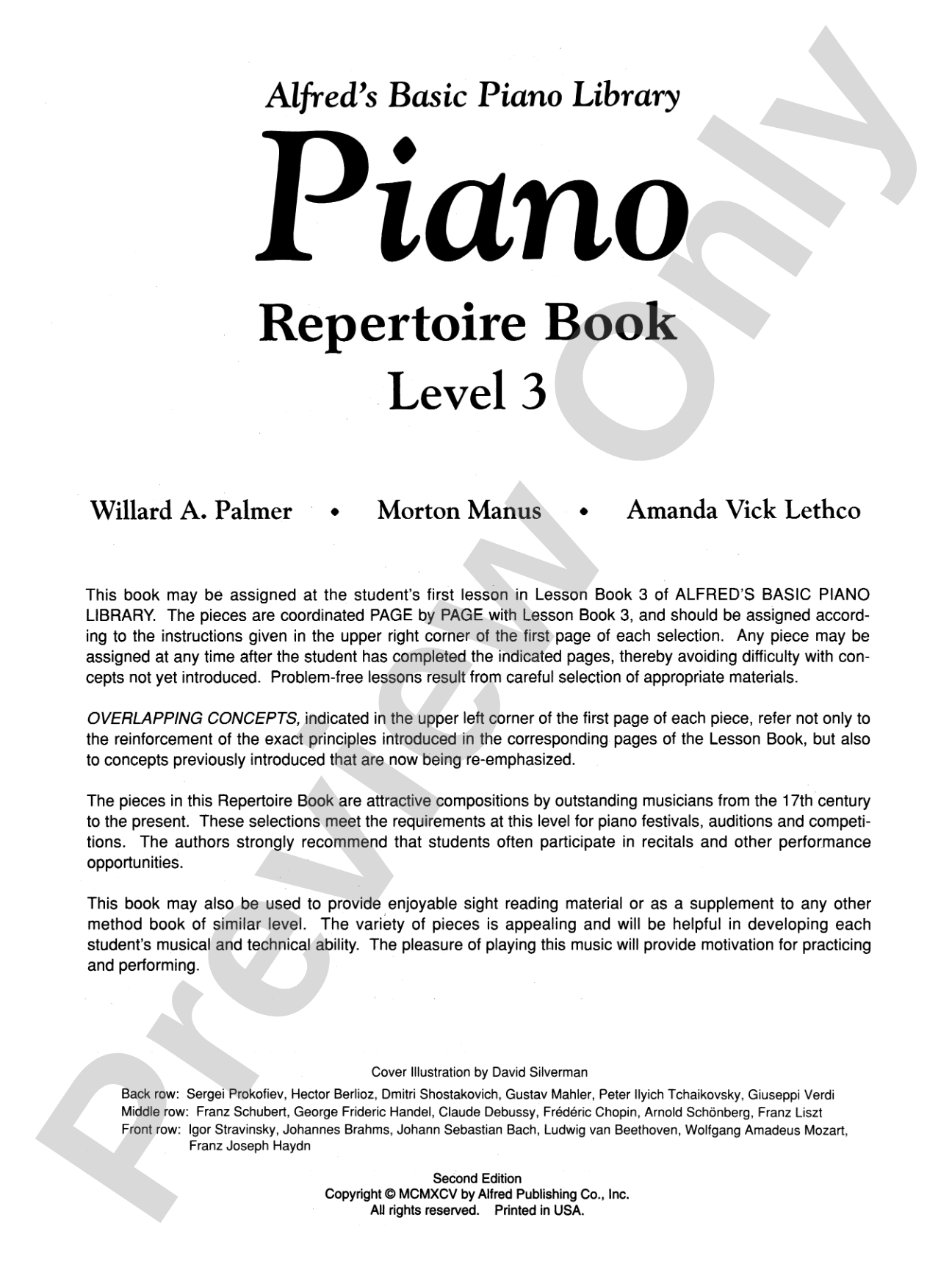
By Willard A. Palmer, Morton Manus, and Amanda Vick Lethco

Level: 3

Item: 00-PB-0002597

Digital Download
$7.99
Description
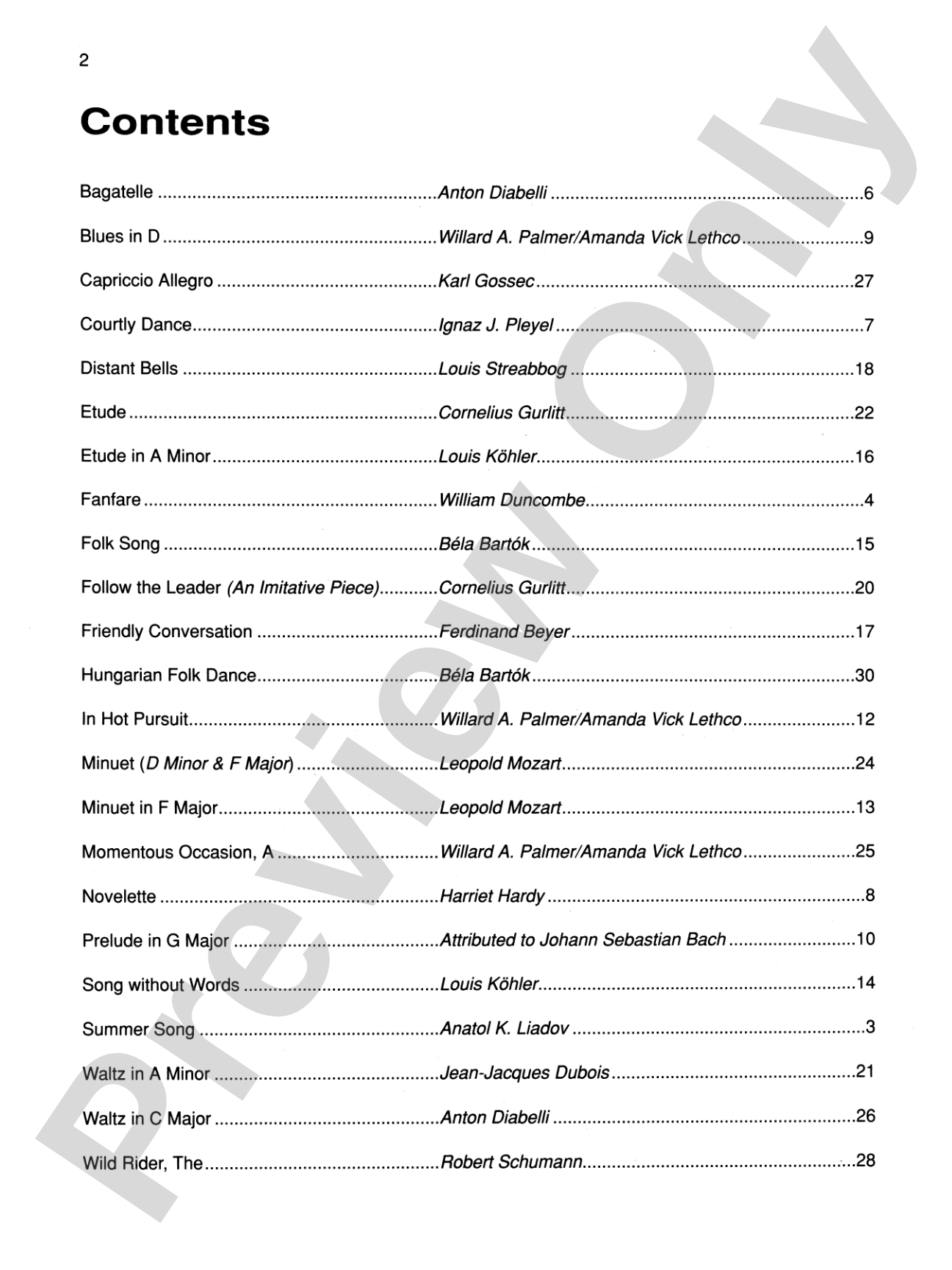
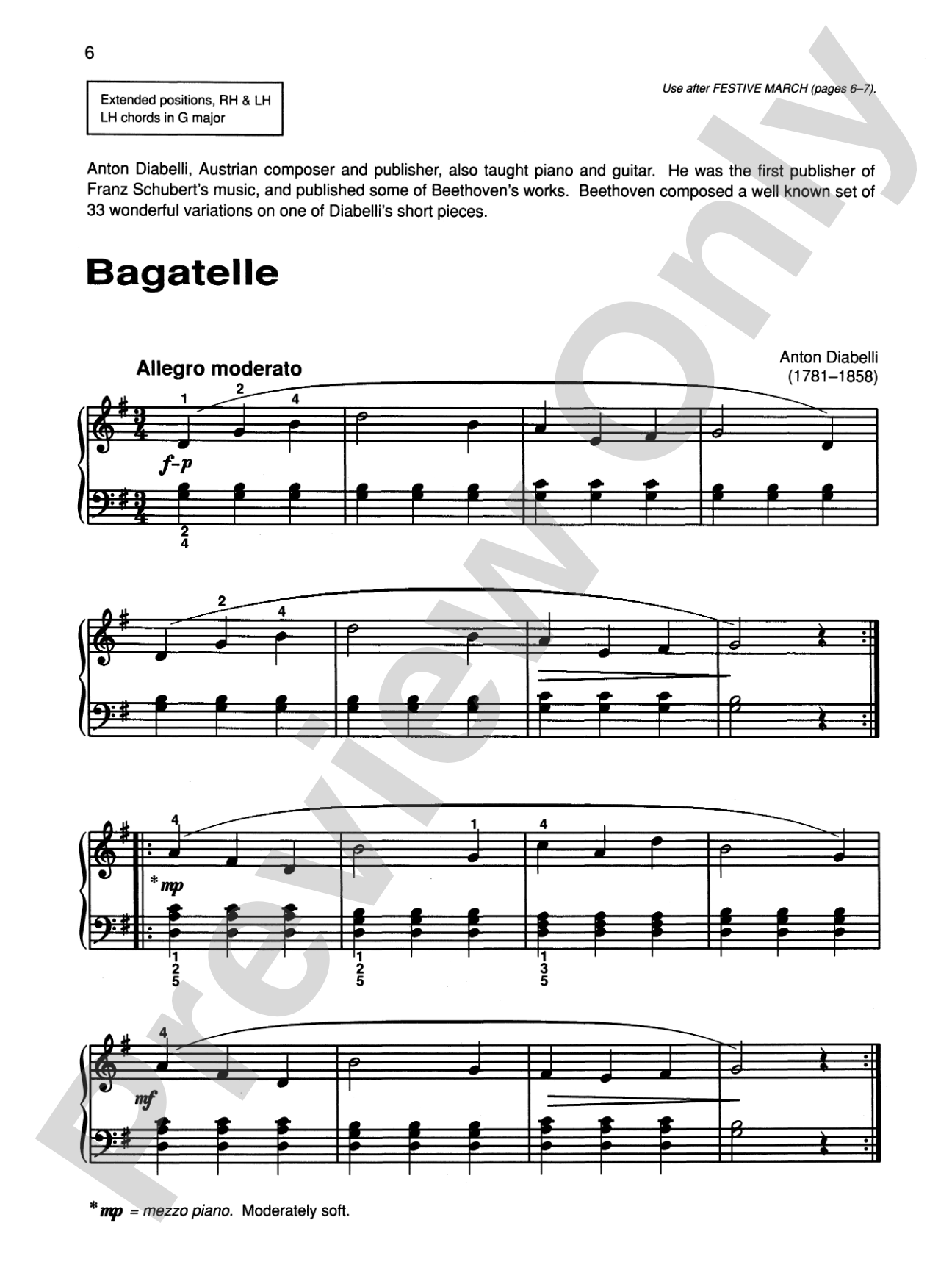
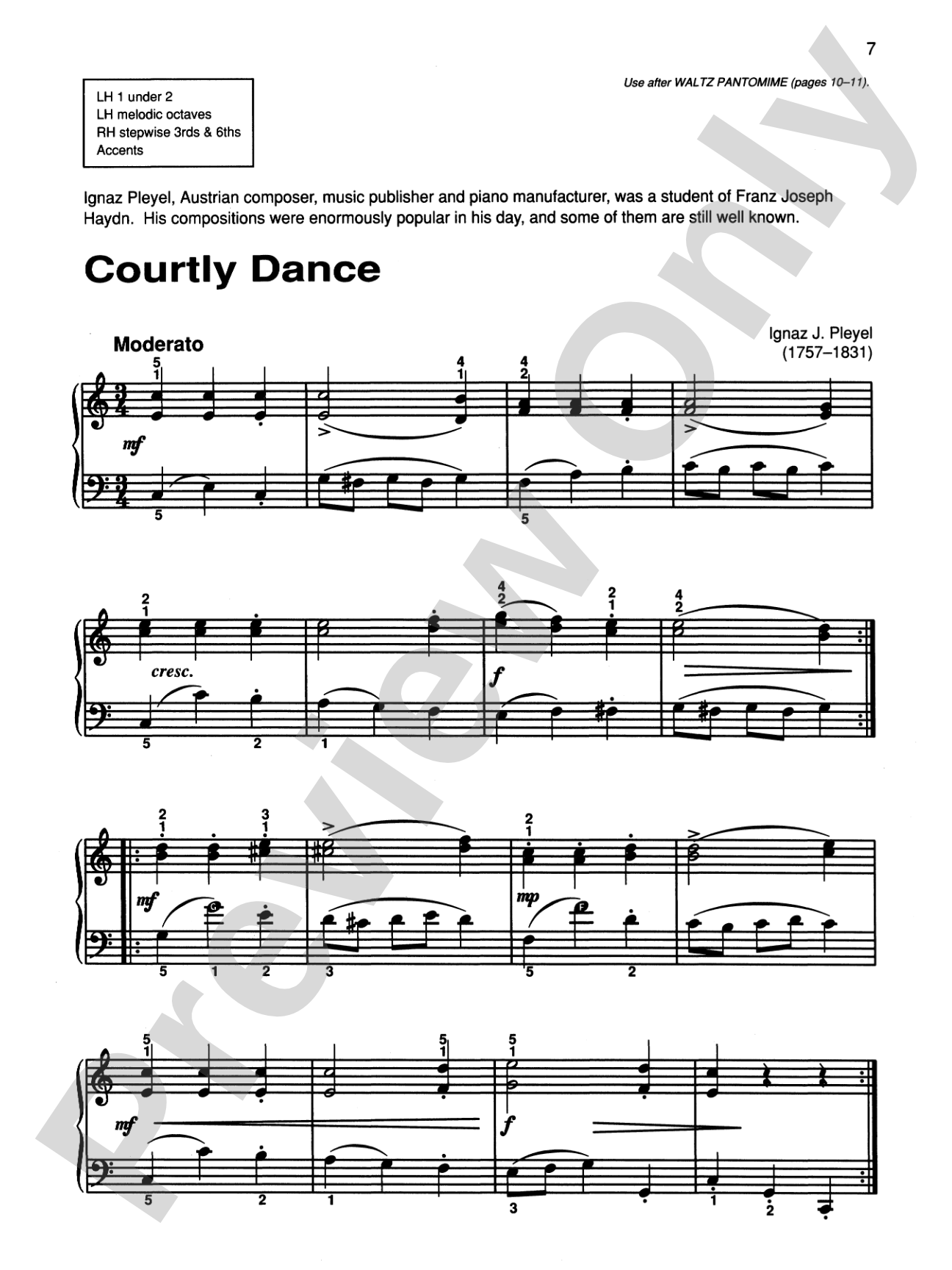
The Repertoire Books contain attractive compositions from the 17th century to the present. The pieces have been organized in progressive order and meet the requirements of many piano festivals, auditions and competitions. The books may also be used as sight reading material or as a supplement to other method books. Titles: Bagatelle (Diabelli) * Blues in D (Palmer/Lethco) * Capriccio Allegro (Gossec) * Courtly Dance (Pleyel) * Distant Bells (Streabbog) * Etude (Gurlitt) * Etude in A Minor (Kohler) * Fanfare (Duncombe) * Folk Song (Bartok) * Follow the Leader (Gurlitt) * Friendly Conversation (Beyer) * Hungarian Folk Dance (Bartok) * In Hot Pursuit (Palmer/Lethco) * Minuet (D Minor & F Major) (L. Mozart) * Minuet in F Major (L. Mozart) * A Momentous Occasion (Palmer/Lethco) * Novelette (Harriet Hardy) * Prelude in G Major (Bach) * Song Without Words (Kohler) * Summer Song (Liadov) * Waltz in A Minor (Dubois) * Waltz in C Major (Diabelli) * The Wild Rider (Schumann).

Discover MakeMusic Cloud: thousands of interactive titles your students can play along with today.

Sample Audio
No sample audio found.
Sample Video
Additional Details
Series: Alfred's Basic Piano Library
Publisher: Alfred Music
Page Count: 32
SKU: 00-PB-0002597

More about this title

About the Composer: Willard A. Palmer

Willard A. Palmer

Willard A. Palmer built a legendary career as a performer, pedagogue, and scholar across multiple instruments. He authored nearly 800 published works spanning accordion, piano, guitar, and choral music, many translated into German, Japanese, French, Dutch, and Spanish. His early years studying piano with Mae Vardeman and later accordion shaped both his compositional voice and his gift for writing accessible yet musically substantive material for students.

Palmer's scholarly work in Baroque music and ornamentation became internationally recognized, ultimately forming the foundation for the prestigious Alfred Masterworks series. Beyond composing and teaching at the University of Houston for 18 years, he directed the Riemenschneider Bach Institute and earned Doctor of Humanities and Doctor of Music degrees in recognition of his contributions to musicological research. His meticulous approach to both composition and music history informed every educational publication he created.

Why we love this

This book delivers real repertoire substance without overwhelming developing pianists. The curated selection moves through centuries and styles (Bach, Mozart, Bartok, Schumann) in carefully graded steps, so students experience authentic musical voices rather than simplified approximations. It works equally well as a festival preparation tool, a sight-reading resource, or a supplement that keeps technique lessons connected to actual music.

What to expect

A journey across centuries of keyboard music, from the grace and clarity of Leopold Mozart's Minuets to the raw energy of Schumann's Wild Rider and the blues swing of contemporary arrangements. Each piece feels like a small discovery, revealing new musical worlds while staying within reach.

Who it's for

Level 3 piano students ready to move beyond exercise-based material and engage with real compositions from multiple periods. Teachers seeking festival-ready repertoire that also serves as supplemental reading material for intermediate technique studies.

How to get the most out of it

  • Study the Bartok pieces separately from the Baroque selections; the folk idiom in Hungarian Folk Dance and Folk Song requires a different touch and rhythmic freedom than the Minuets.
  • Use the contemporary arrangements (Blues in D, In Hot Pursuit) as confidence builders between classical works. Their modern harmonies stay motivating for students who might otherwise feel stuck in period music.
  • Work through the Etudes (Gurlitt, Kohler) as technical bridges rather than standalone pieces. Each targets specific finger patterns or hand independence issues you'll encounter in the longer works.

How to use it

Build a festival or recital program by mixing periods within each student's level. Pair a Baroque prelude with a Romantic waltz, then anchor the group with a folk dance or contemporary piece for contrast. The 32-page format also makes it excellent for a multi-week sight-reading rotation that keeps repertoire study fresh and exploratory.

Skills your students will build

  • Playing across different musical periods and styles with appropriate phrasing and articulation
  • Reading varied rhythmic patterns including syncopation (Blues in D) and mixed meters
  • Finger independence and hand coordination through Etude work
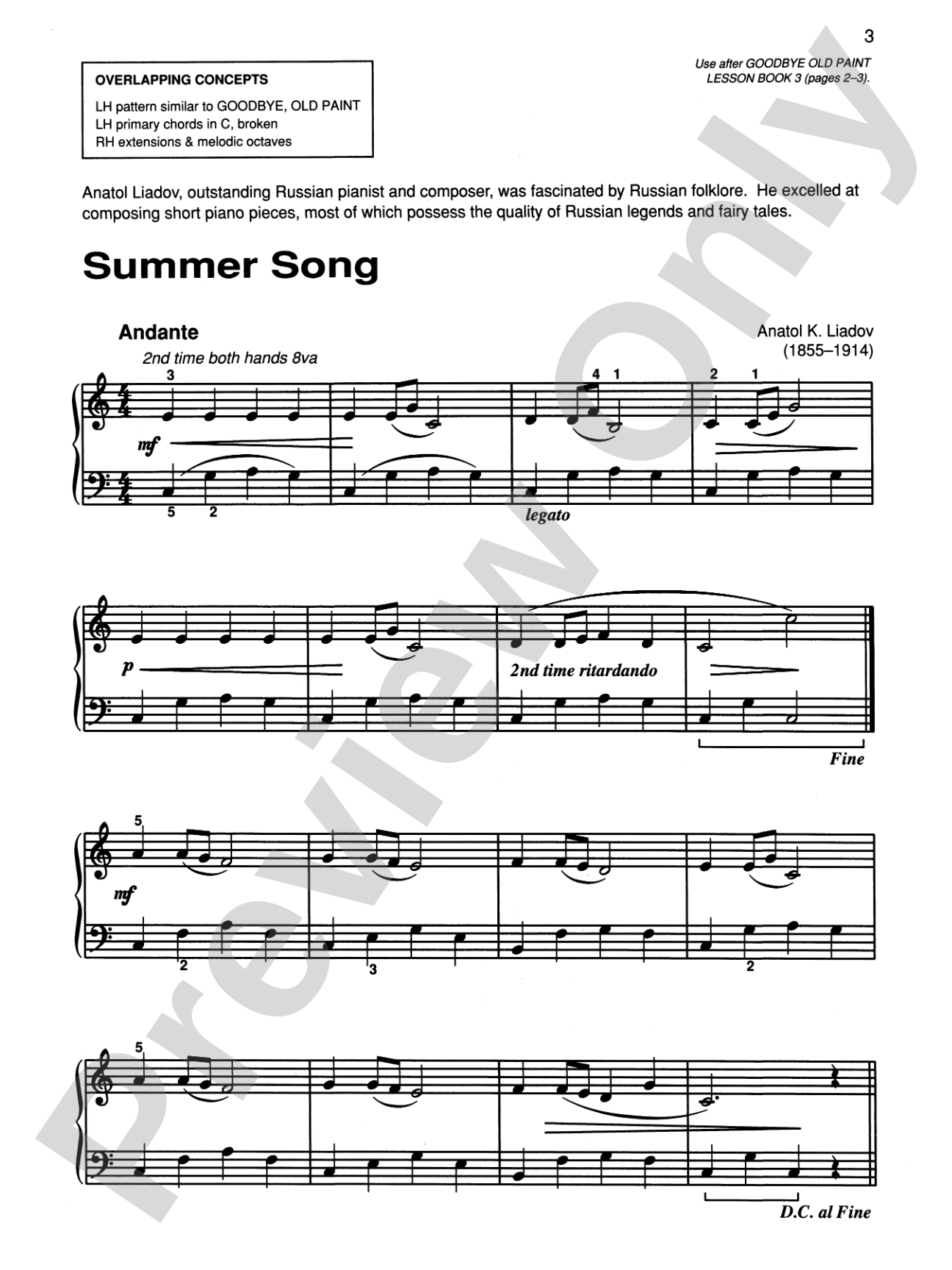
  • Pedal awareness and control in lyrical pieces (Song Without Words, Summer Song)
  • Tempo control and character interpretation in contrasting dance forms

You May Also Like