
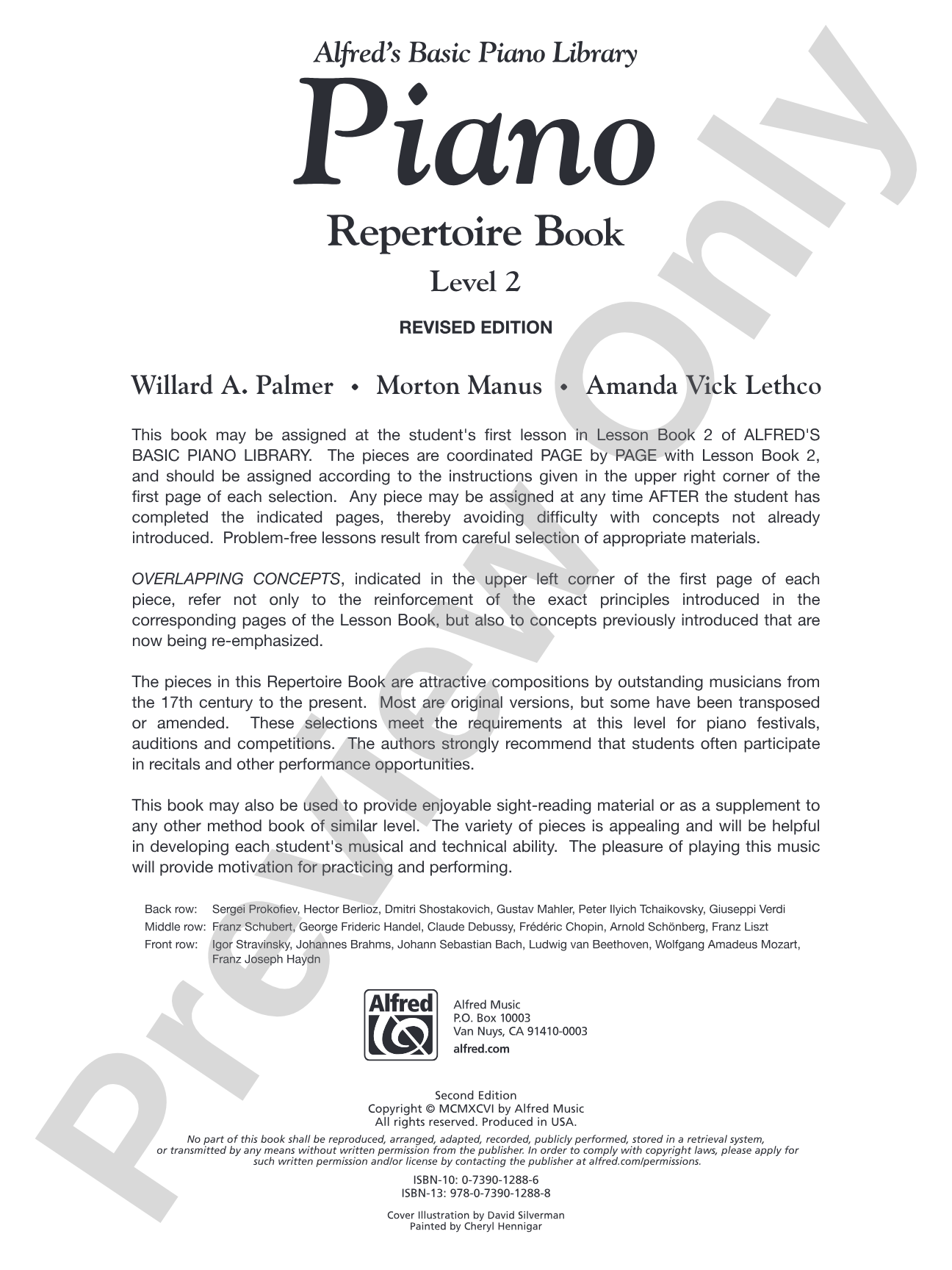

Alfred's Basic Piano Library: Repertoire Book 2: Piano
By Willard A. Palmer, Morton Manus, and Amanda Vick Lethco
Level: 2
Item: 00-PB-0002596
$9.99
Pickup currently not available
Related Items
Alfred's Basic Piano Library: Repertoire Book 2: Piano Book |
$9.99
|
View |
Description
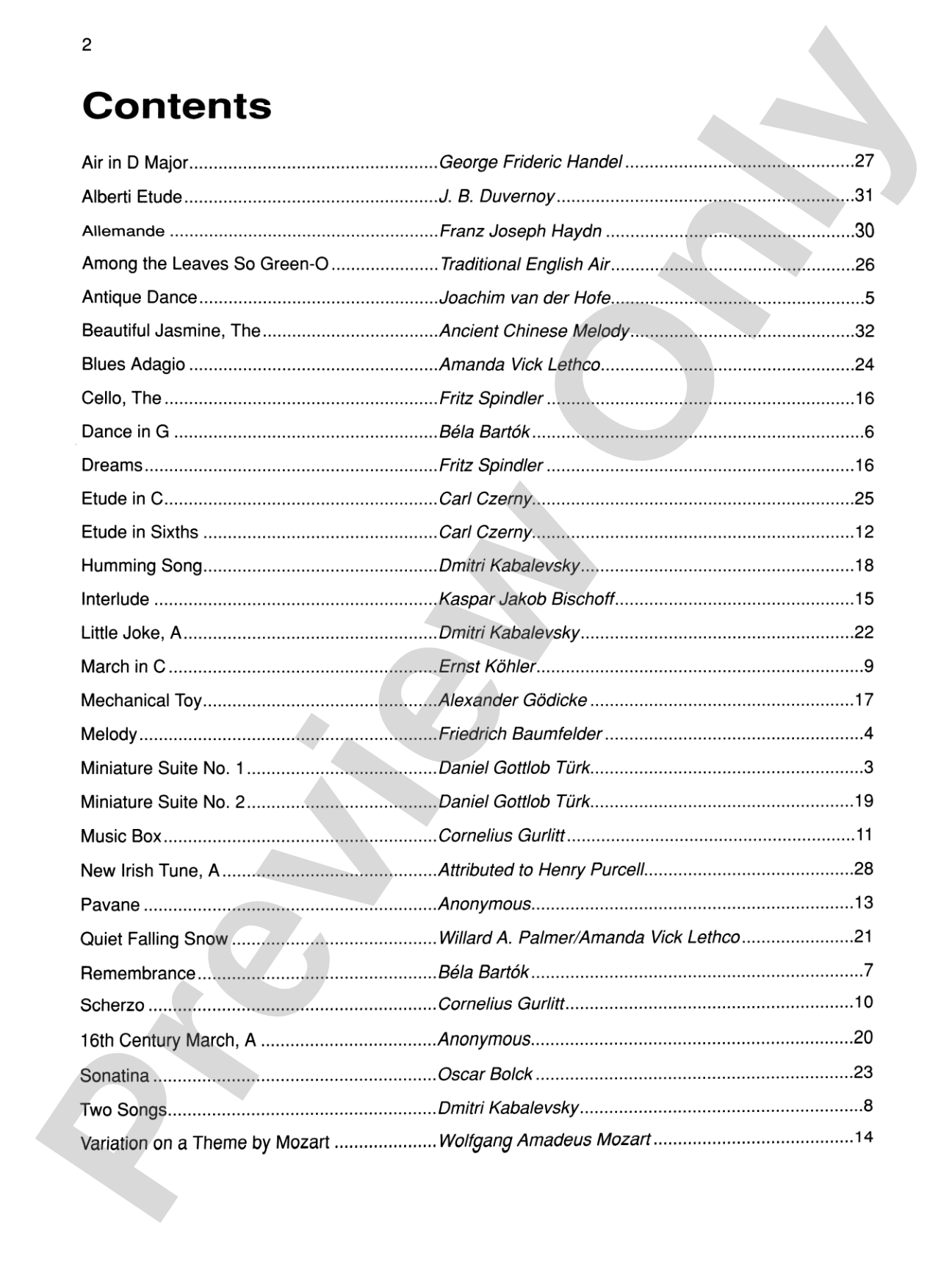
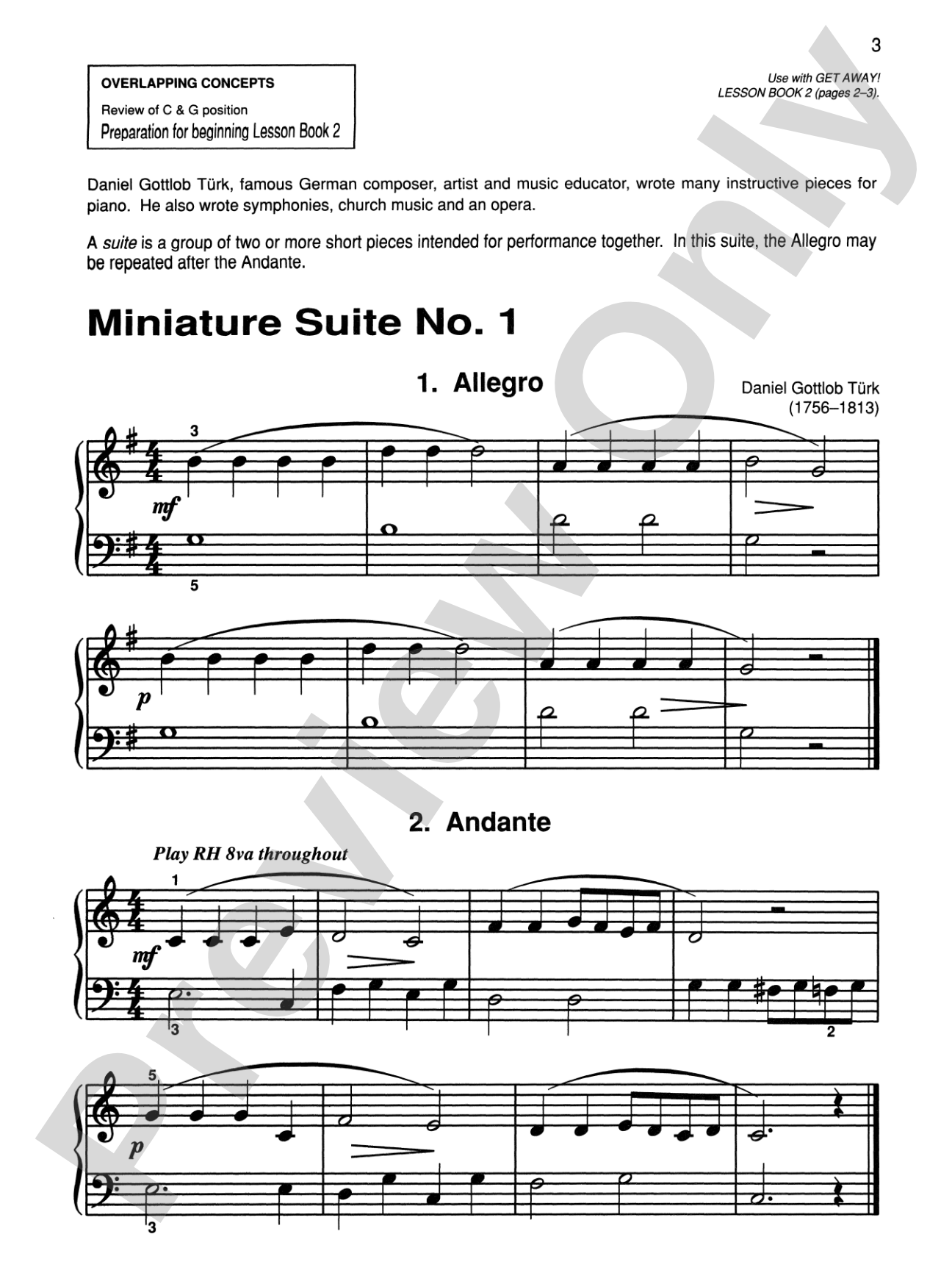
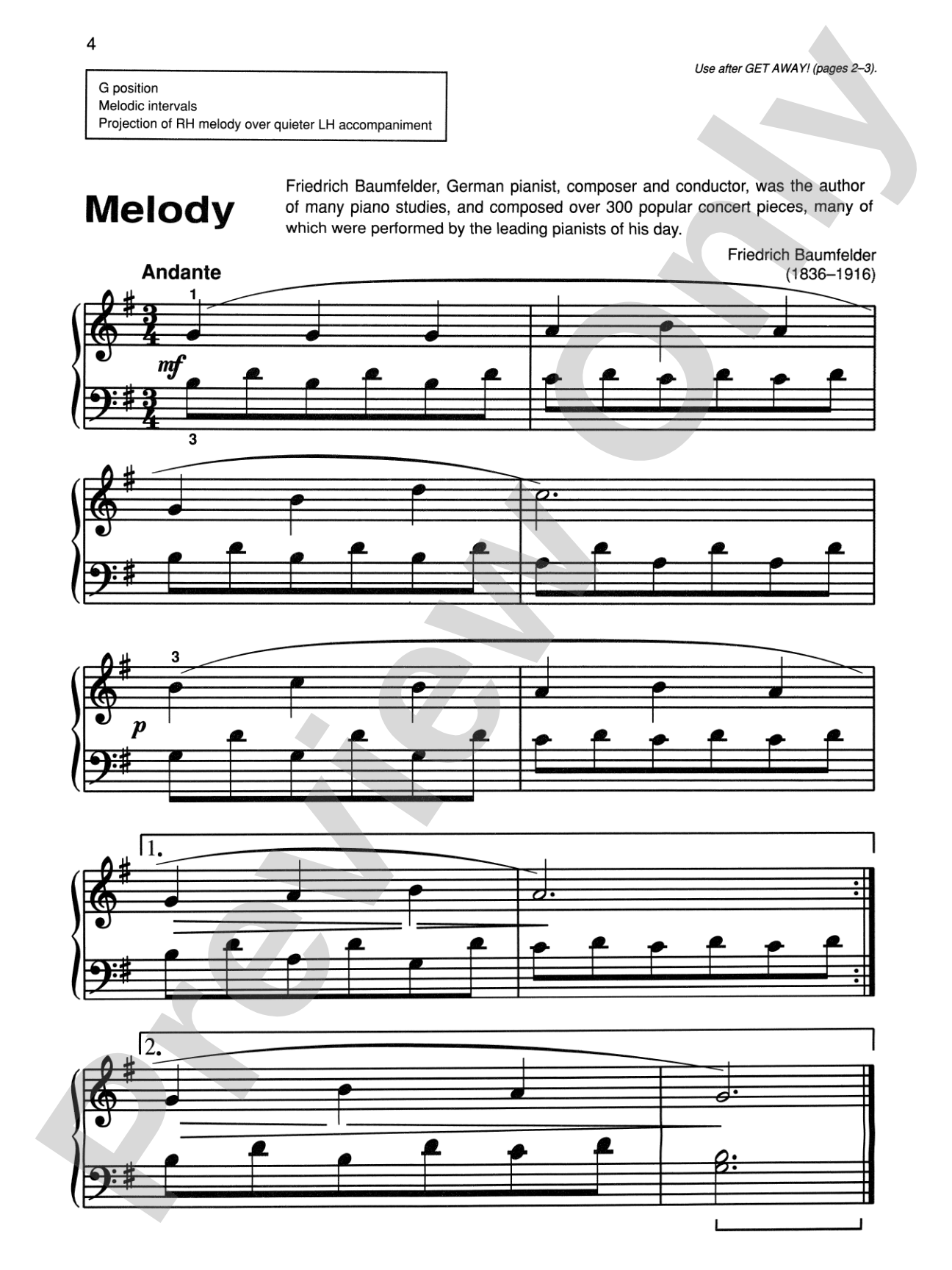
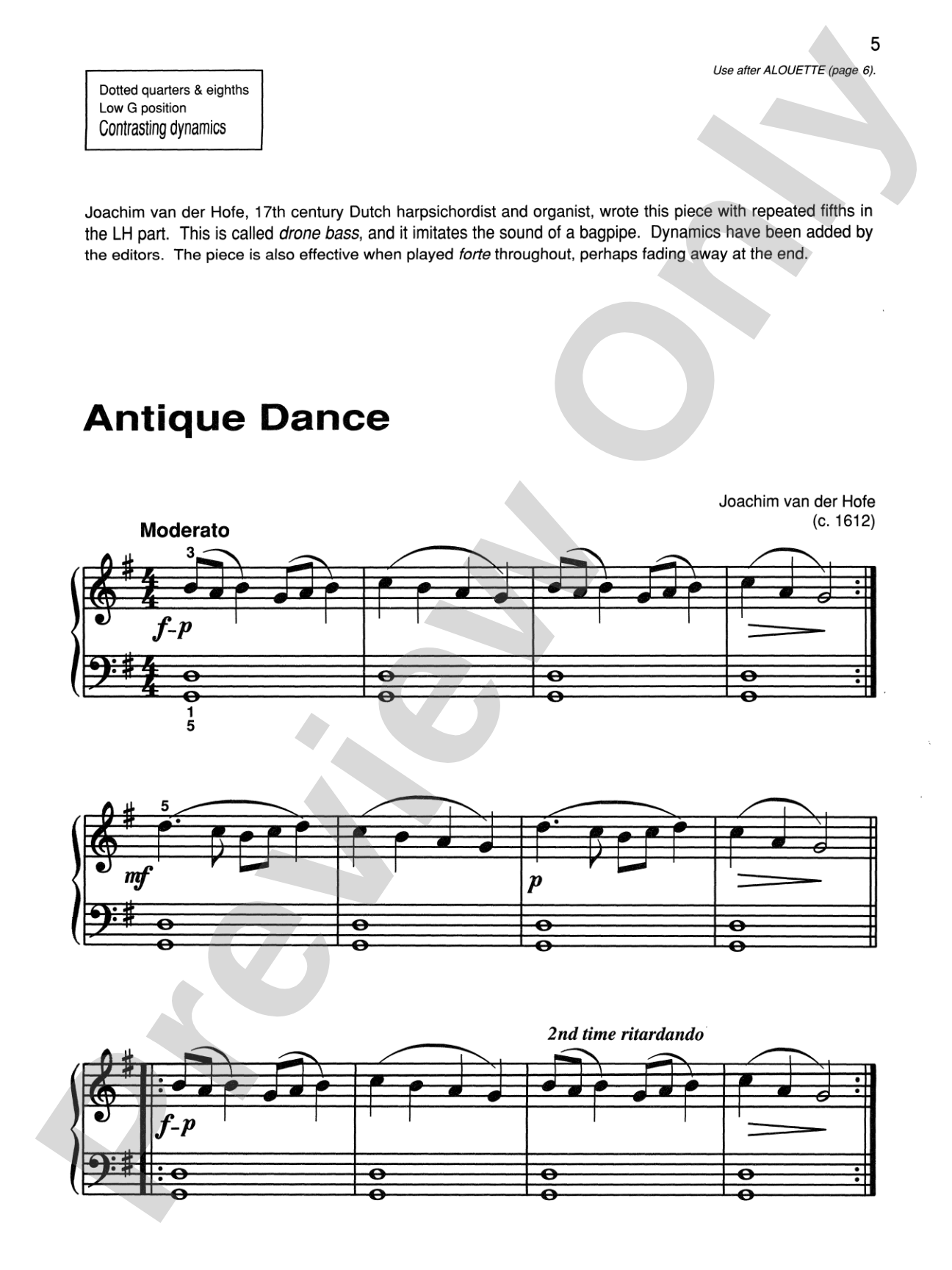
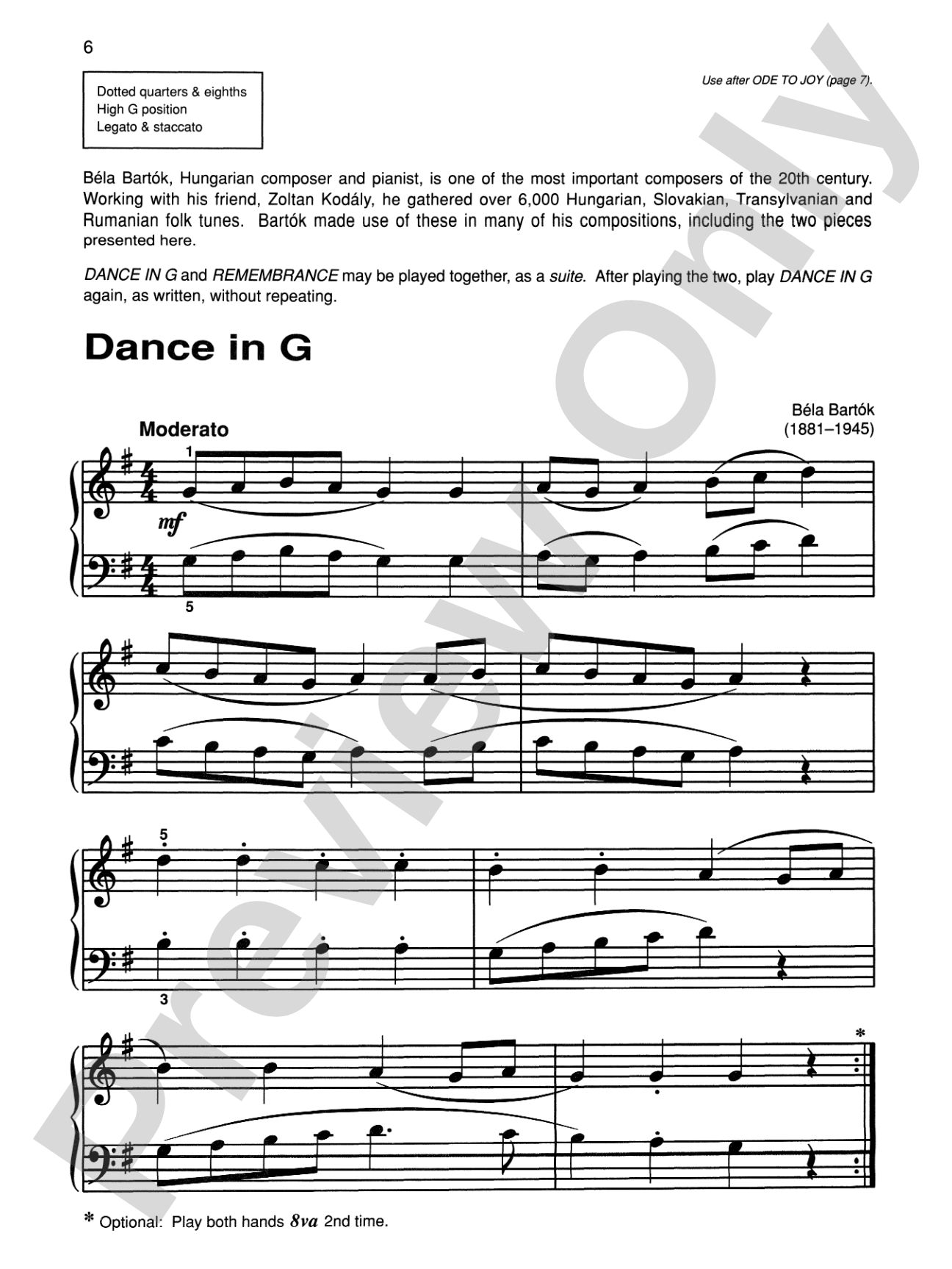
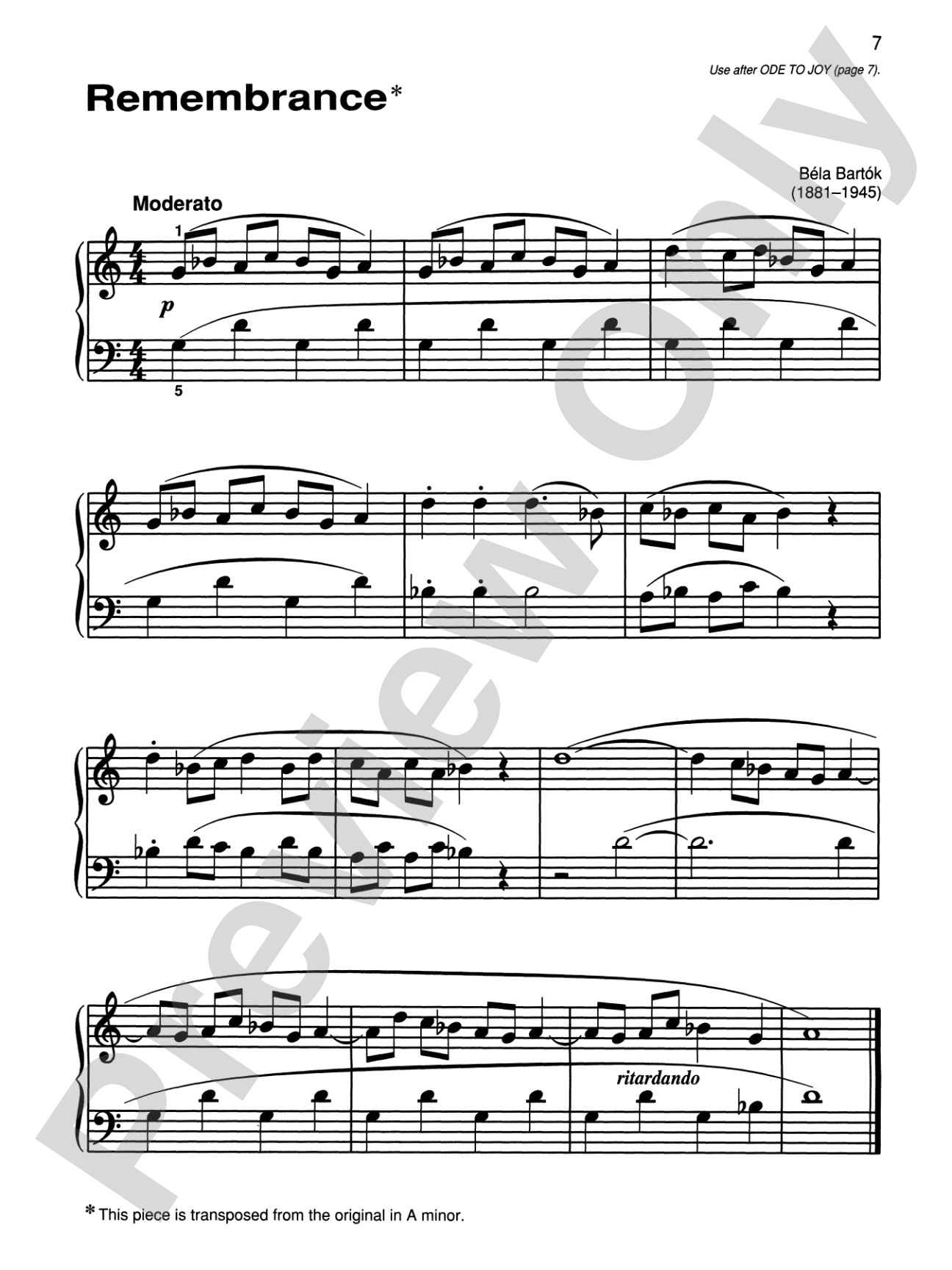
The Repertoire Books contain attractive compositions from the 17th century to the present. The pieces have been organized in progressive order and meet the requirements of many piano festivals, auditions and competitions. The books may also be used as sight reading material or a supplement to other method books. Titles: Air in D Major (Handel) * Alberti Etude (Duvernoy) * Allemande (Haydn) * Among the Leaves So Green-O (Traditional English Air) * Antique Dance (Hofe) * The Beautiful Jasmine (Ancient Chinese Melody) * Blues Adagio (Lethco) * The Cello (Spindler) * Dance in G (Bartok) * Dreams (Spindler) * Etude in C (Czerny) * Etude in Sixths (Czerny) * Humming Song (Kabalevsky) * Interlude (Bischoff) * A Little Joke (Kabalevsky) * March in C (Kohler) * Mechanical Toy (Godicke) * Melody (Baumfelder) * Miniature Suite No. 1 (Turk) * Miniature Suite No. 2 (Turk) * Music Box (Gurlitt) * A New Irish Tune ( Purcell) * Pavane (Anon.) * Quiet Falling Snow (Palmer/Letcho) * Remembrance (Bartok) * Scherzo (Gurlitt) * A 16th Century March (Anon.) * Sonatina (Bolck) * Two Songs (Kabalevsky) * Variation on a Theme by Mozart (Mozart).


Discover MakeMusic Cloud: thousands of interactive titles your students can play along with today.
Sample Audio
No sample audio found.
Sample Video
No sample videos found.
Additional Details
Series:
Alfred's Basic Piano Library
Publisher:
Alfred Music
Page Count:
32
SKU:
00-PB-0002596
More about this title
About the Composer: Willard A. Palmer

Willard A. Palmer stands as a foundational figure in American music pedagogy, having published nearly 800 works across piano, accordion, guitar, and choral media. His output spans methods, solo repertoire, and arrangements that have been translated into German, Japanese, French, Dutch, and Spanish, reaching music students worldwide. A child prodigy who performed piano on radio at age 13, Palmer built his artistry on rigorous technique learned from his teacher Mae Vardeman, who emphasized improvisation alongside proper hand position and voicing.
Palmer's scholarly contributions reshaped how musicians understand Baroque ornamentation and performance practice. After earning degrees from Millsaps College and the Conservatory of Leipzig, he joined the University of Houston faculty, where he established the first successful college accordion program and taught for 18 years. His deep research into Classical and Baroque music eventually led to the Alfred Masterworks series, a resource that remains standard in conservatory libraries. The American music establishment recognized his impact with a Doctor of Humanities degree (1971) and a Doctor of Music degree (1983), cementing his dual legacy as both composer and musical scholar.
Why we love this
Book 2 assembles 31 carefully curated pieces that span four centuries without feeling like a miscellaneous grab bag. The progression moves logically from baroque miniatures through character pieces to small sonatas, allowing students to develop fingerwork and interpretive confidence in manageable chunks. Every title serves double duty: it builds technique while remaining musically coherent enough that students actually enjoy playing it.
What to expect
Opening this book feels like walking through a musical museum where every painting is actually playable. You move from the courtly grace of a Handel air to the mechanical charm of a music box, then into the wry humor of Kabalevsky, discovering that "learning" repertoire and discovering new music can be the same thing. The collection has the warmth of a hand-picked anthology rather than a standardized curriculum.
Who it's for
Piano students solidifying their transition from Method Book 1 to independent repertoire exploration, typically around years two to three of study. Teachers preparing students for festivals, auditions, and competitions will find festival-tested pieces already vetted for suitability at this level. Intermediate learners benefit from the sight reading variety and the range of compositional styles in a single resource.
How to get the most out of it
- Balance the Alberti bass patterns (Duvernoy, Baumfelder) so accompaniment sits behind the melody; students often make these too prominent at this level.
- Let the Baroque pieces (Handel, Purcell, anonymous pavane) breathe with clarity rather than romantic rubato; a steady tempo with clean articulation reveals their elegance.
- Approach the character pieces (Kabalevsky, Bartok, Gurlitt) as storytelling opportunities; small dynamic contrasts and tonal coloring transform "A Little Joke" and "Mechanical Toy" from exercises into performances.
- Use the ornamentation in longer pieces (Miniature Suites by Turk, Variation on Mozart) as a chance to apply historical practice principles without overwhelming the student.
How to use it
Assign pieces from Book 2 as students finish Alfred's Method Book 2, letting them apply new technical skills immediately to real repertoire rather than waiting for a separate "performance pieces" unit. The variety makes it ideal for student recitals, where you can program a Baroque suite, a Romantic character piece, and a 20th century miniature that together tell a musical story. Use selections as festival preparation material, since the pieces already meet competition requirements across multiple organizations.
Skills your students will build
- Alberti bass accompaniment patterns with independence between hands
- Baroque articulation and phrasing without modern pedal dependency
- Character interpretation in short form compositions
- Sight reading across multiple periods and styles
- Ornament execution in both Baroque and Classical contexts
- Secure finger patterns and hand position in keys with few accidentals
- Pedal integration in Romantic character pieces (Spindler, Gurlitt)
- Confidence performing complete, musically coherent works from memory