

Alfred's Basic Piano Library: Hymn Book Complete 2 & 3: For the Later Beginner: Piano
For the Later Beginner
By Willard A. Palmer, Morton Manus, and Amanda Vick Lethco
Level: 2 & 3
Item: 00-PB-0001070
$10.99
Pickup currently not available
Related Items
Alfred's Basic Piano Library: Hymn Book Complete 2 & 3: Piano Book |
$10.99
|
View |
Description
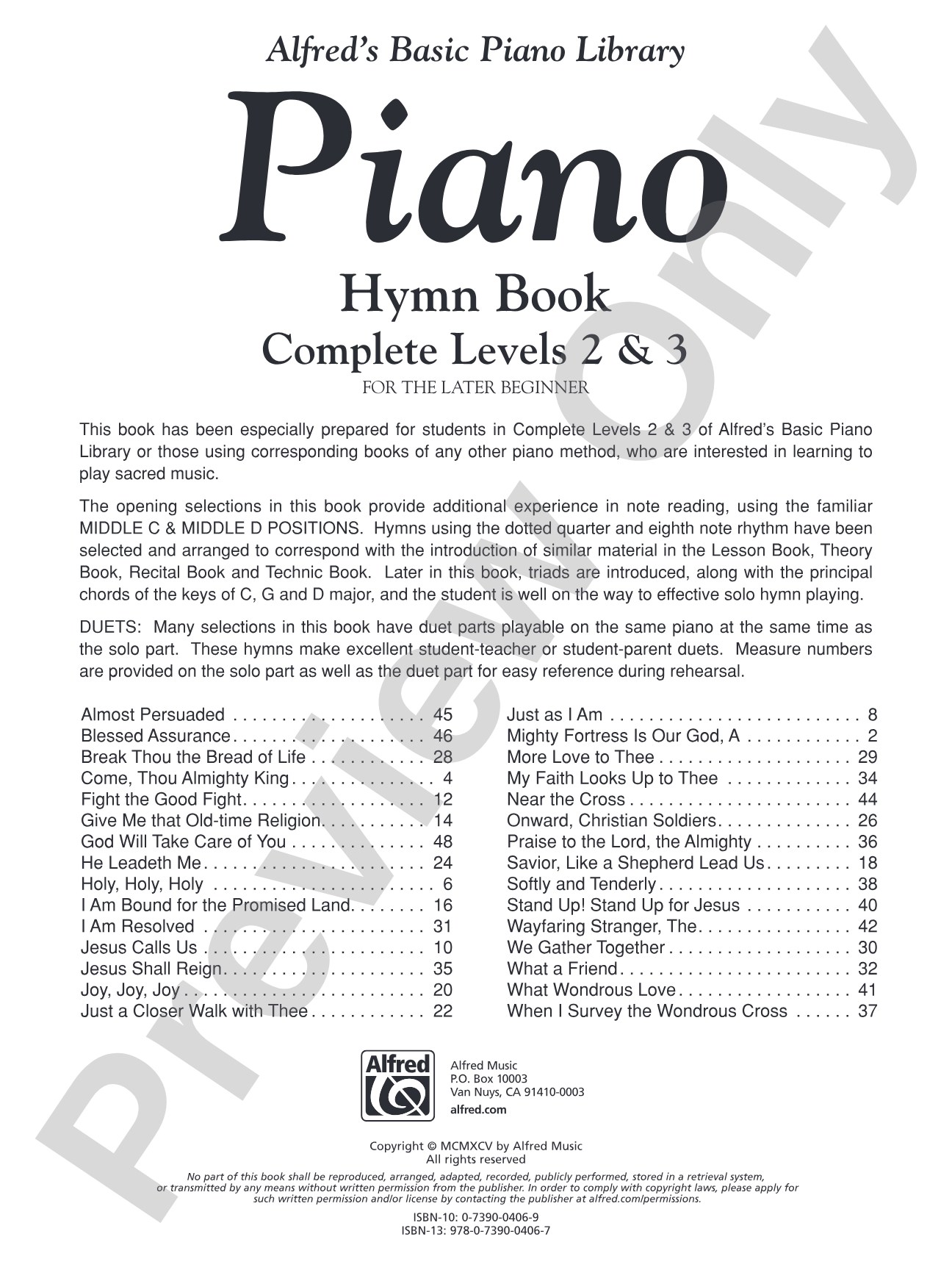
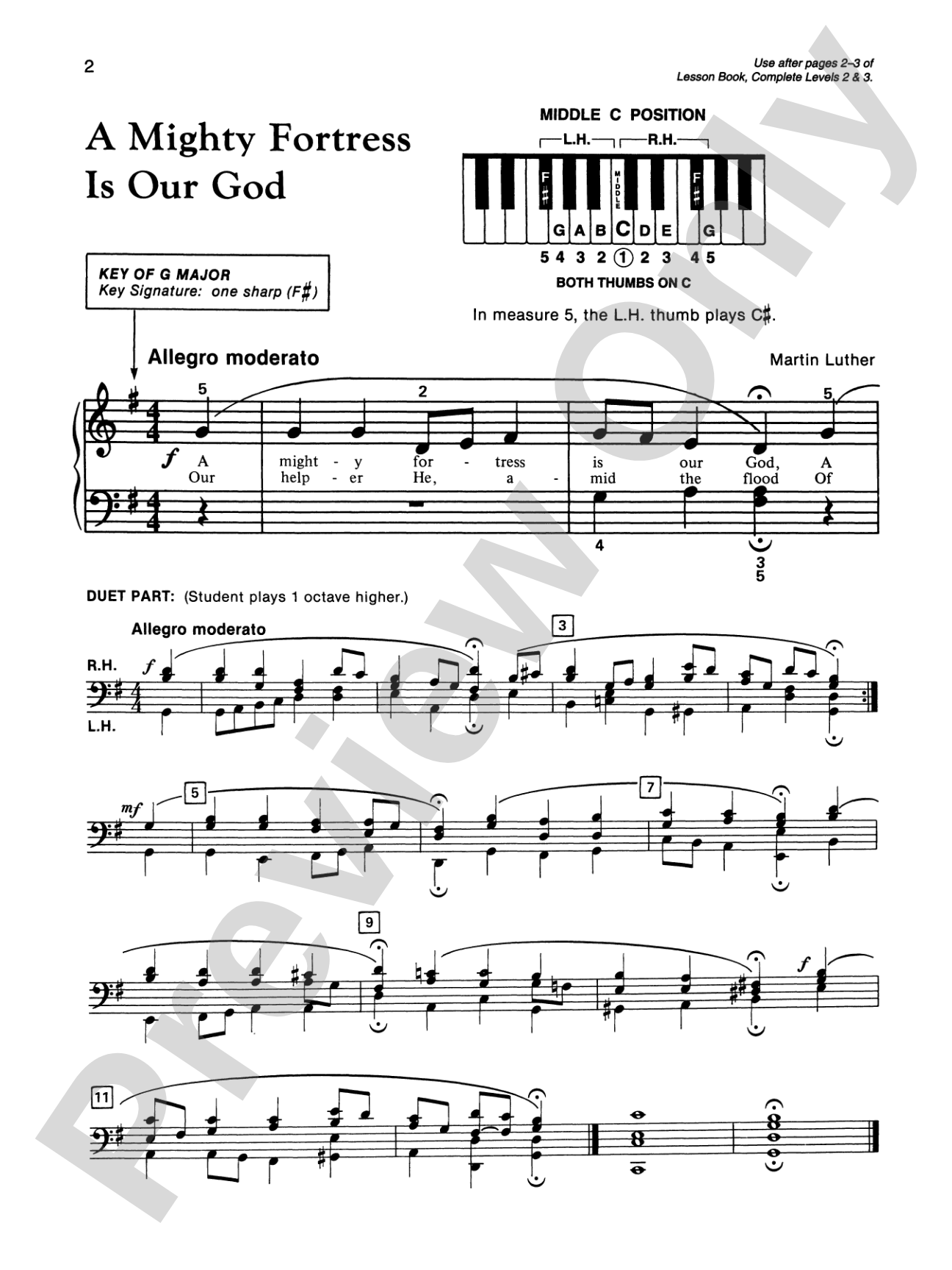
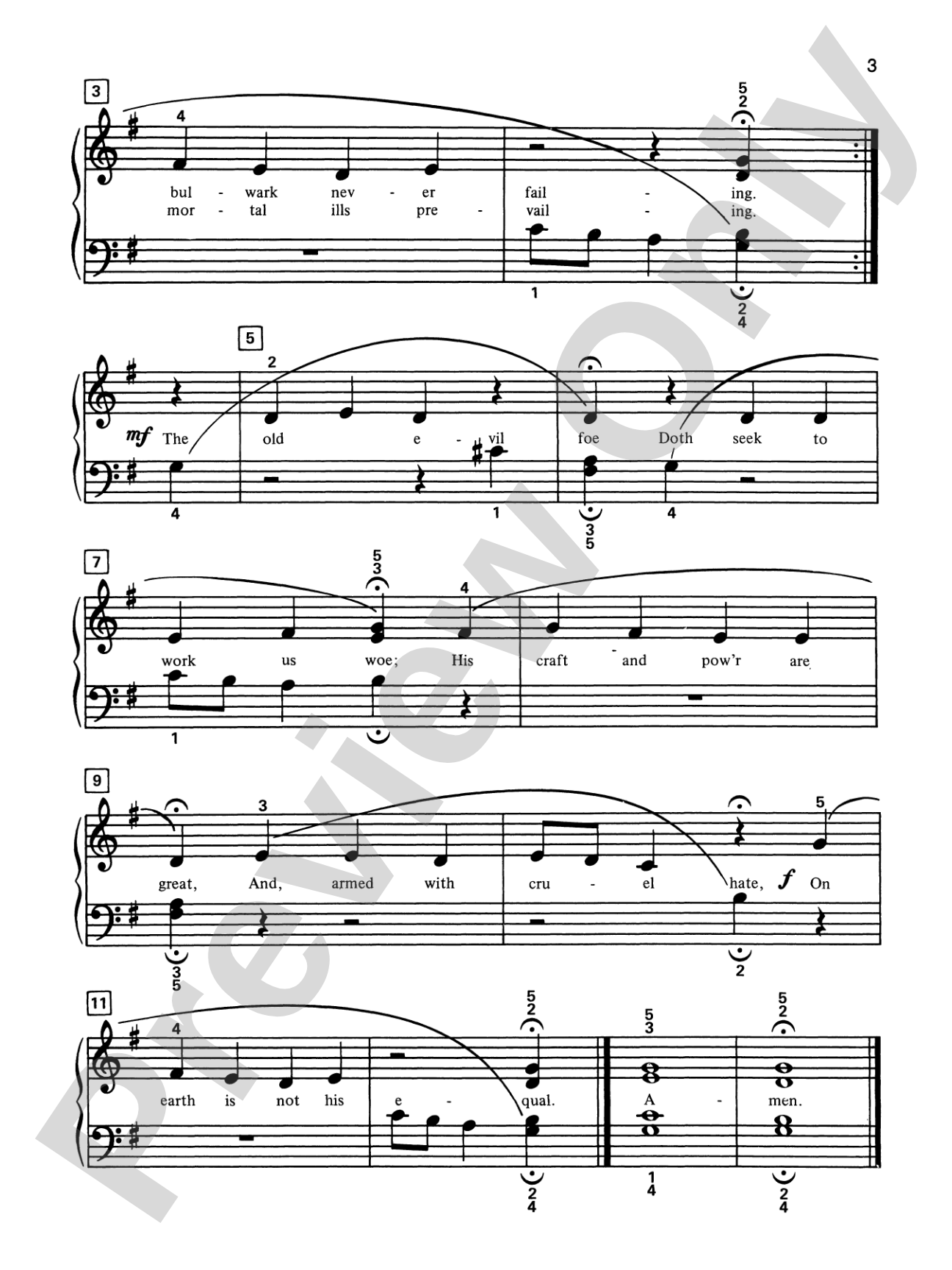
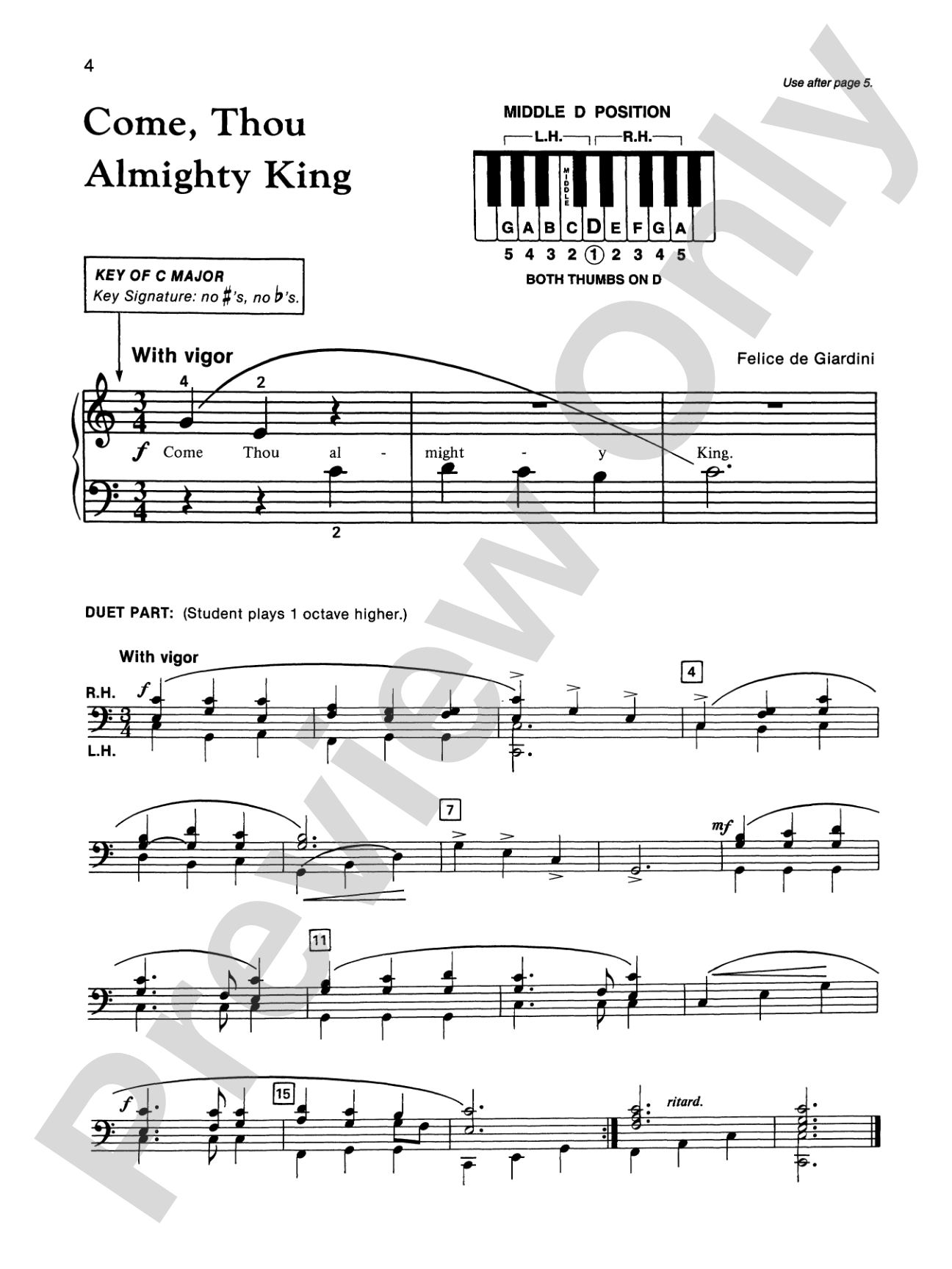
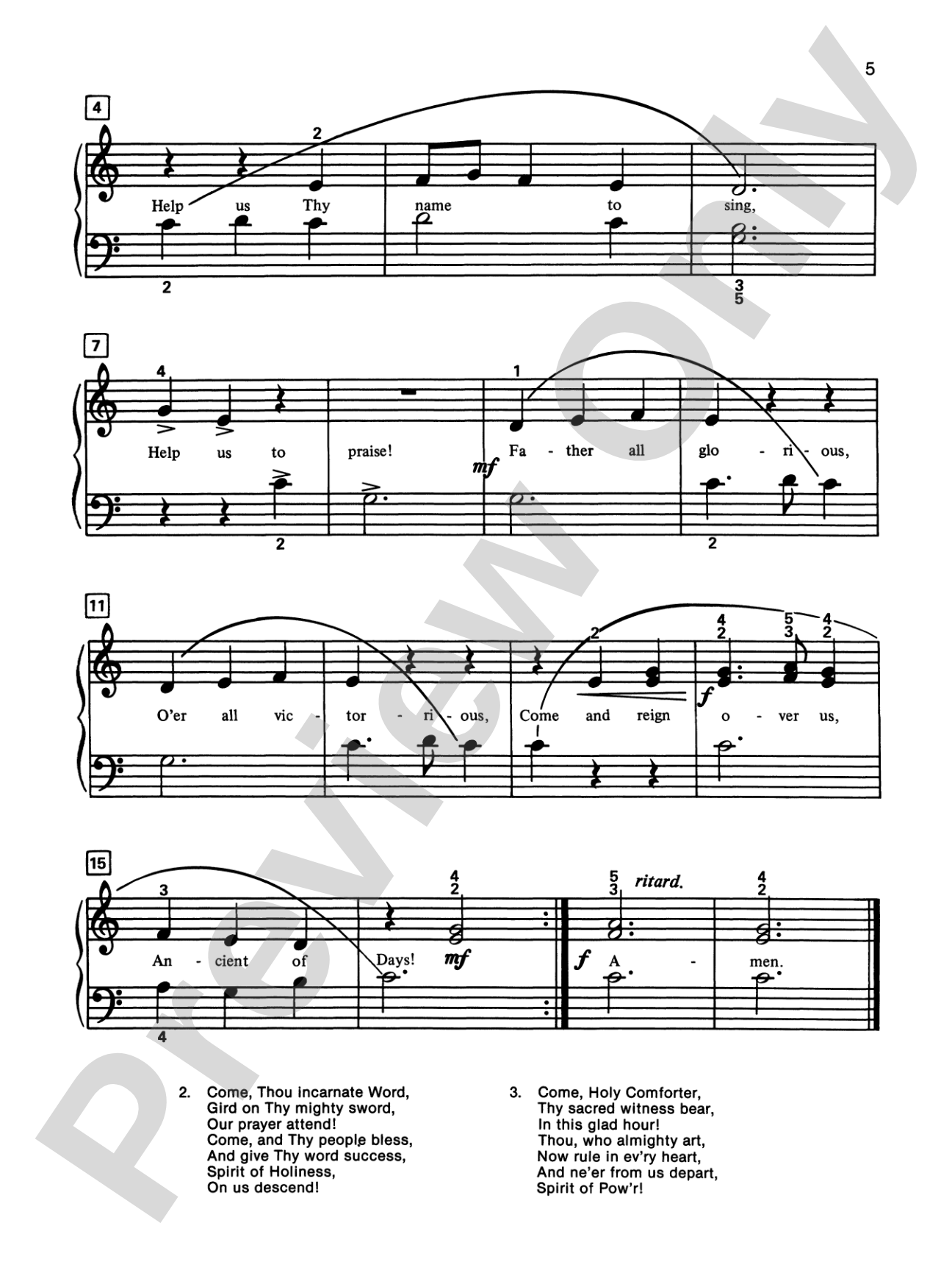
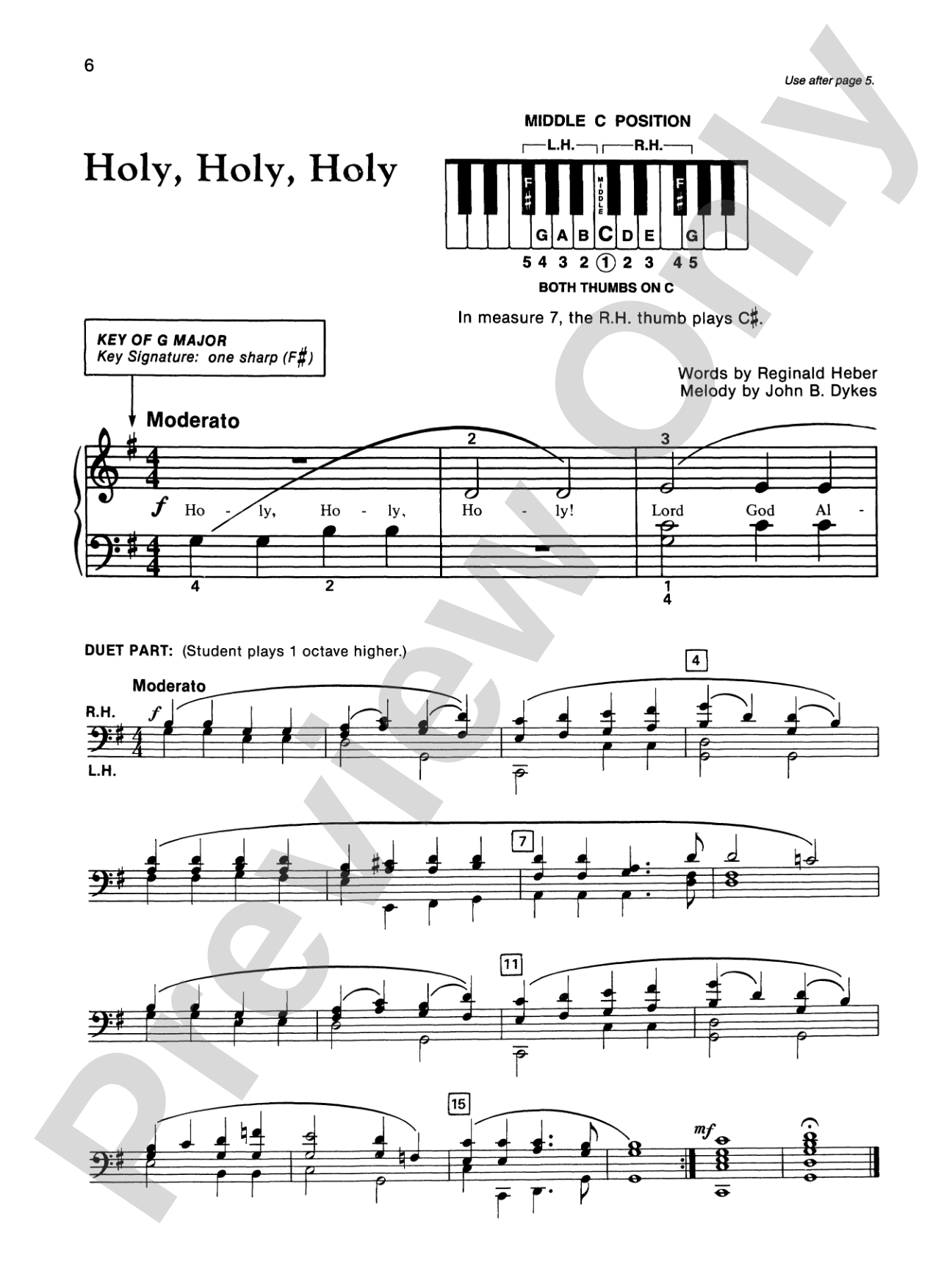
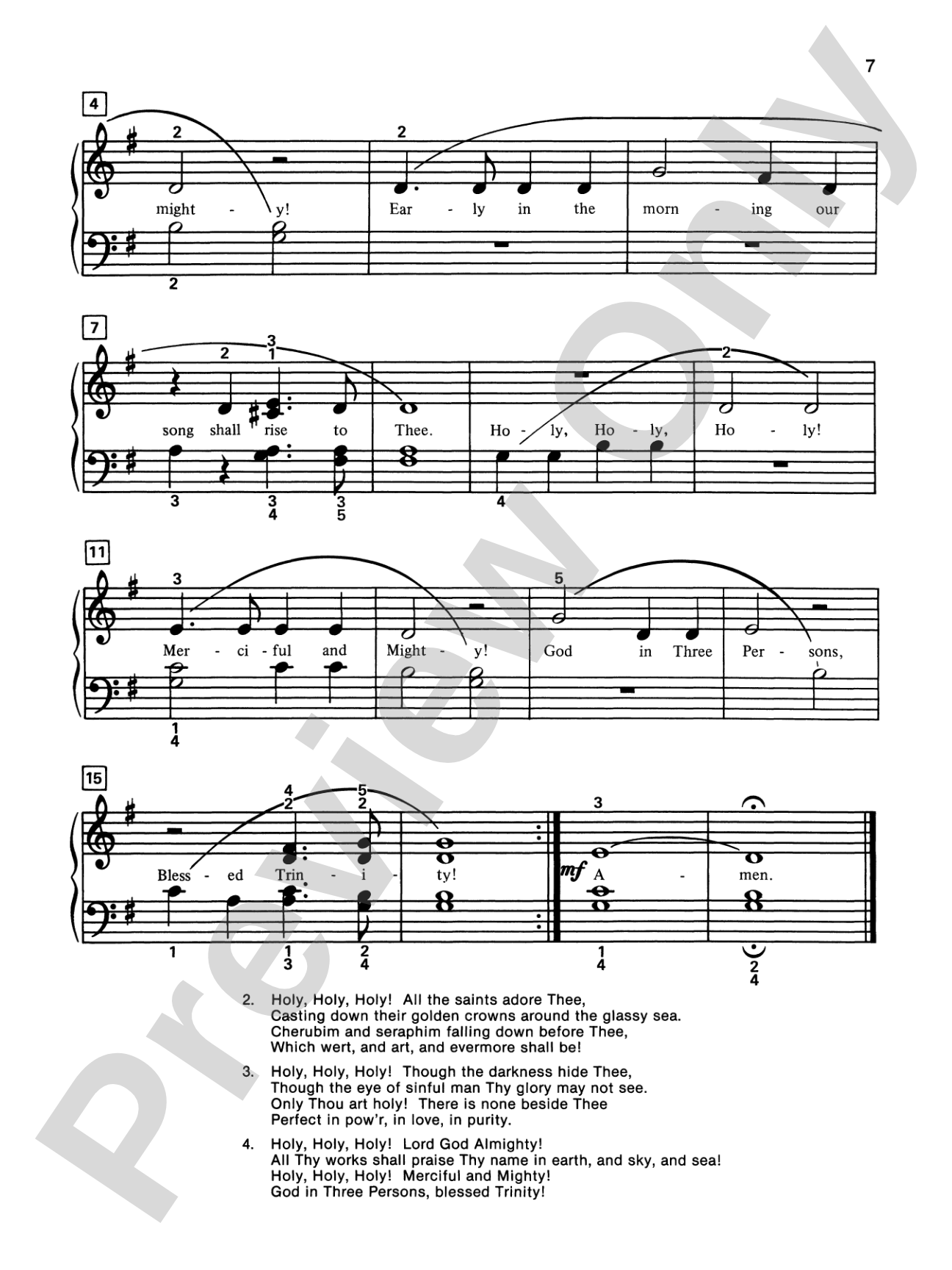
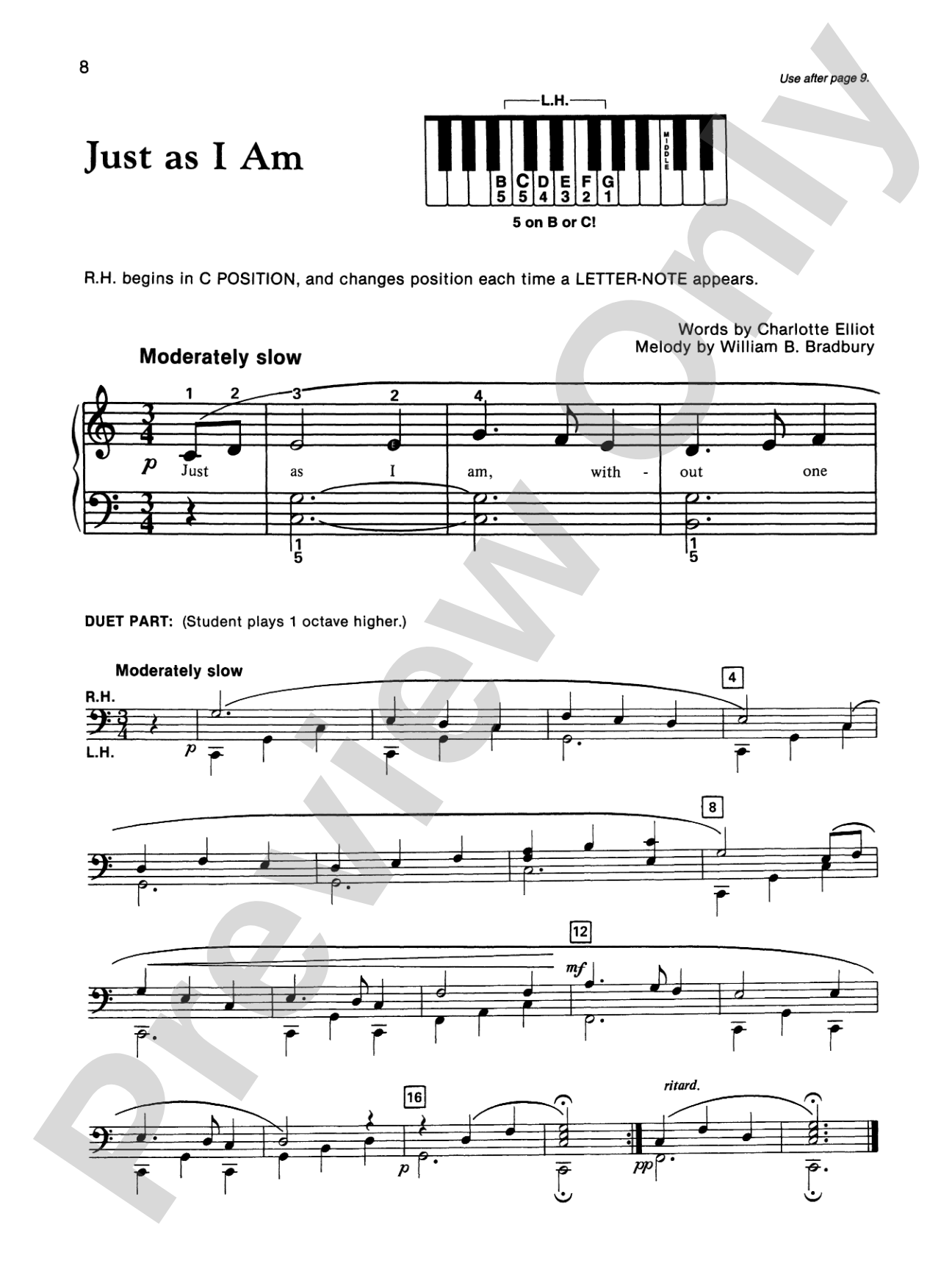
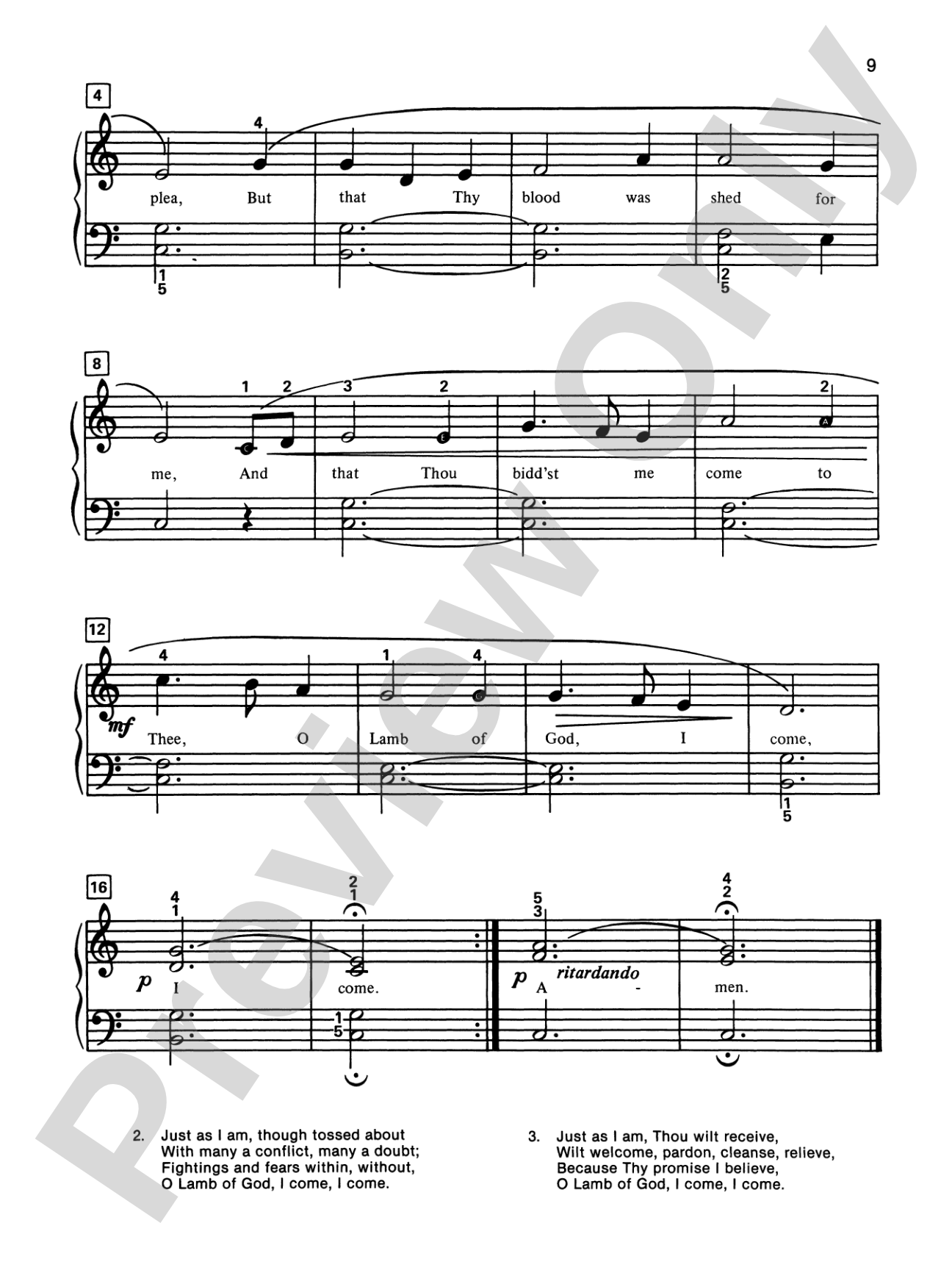
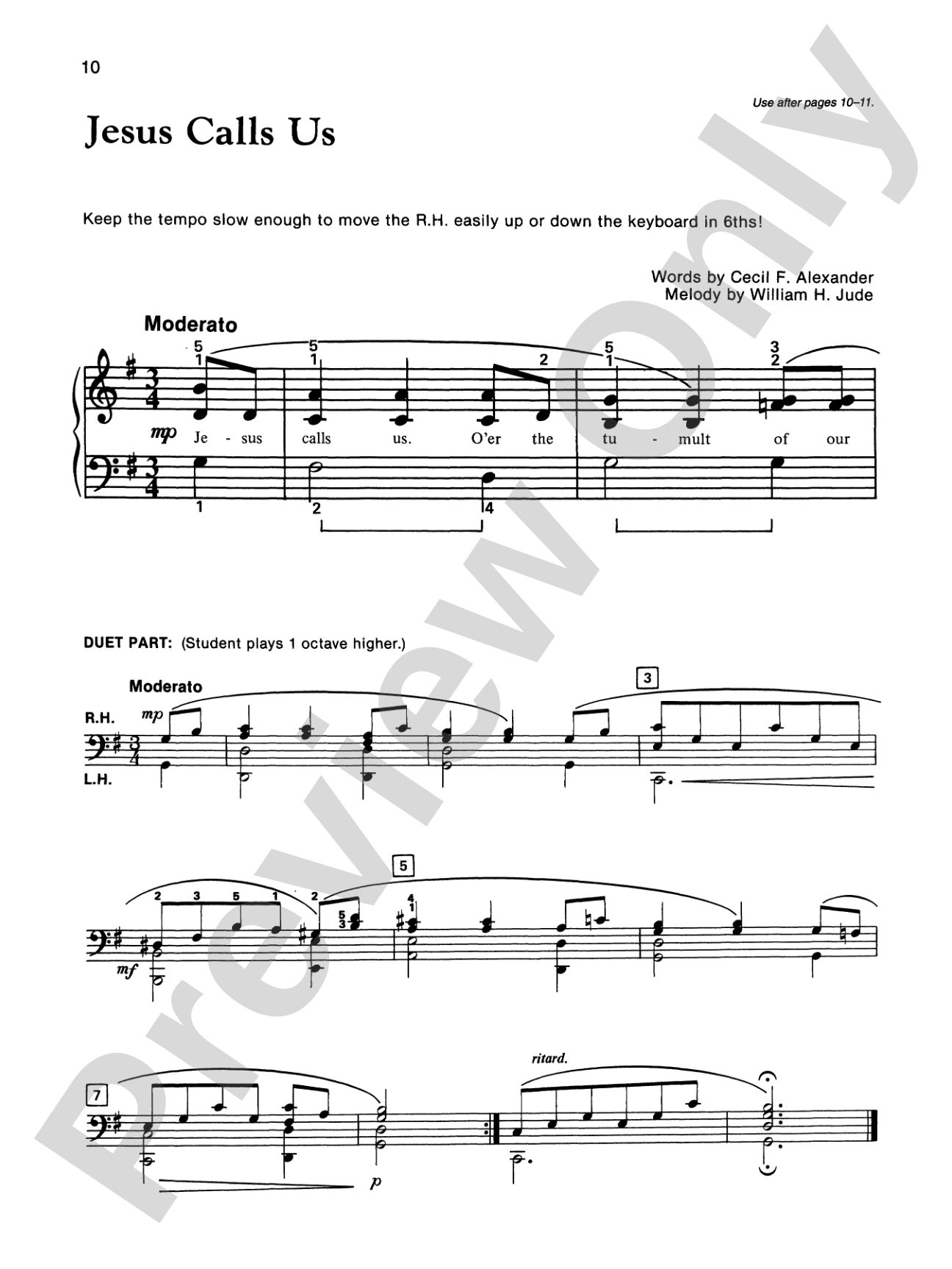
The Hymn Books contain the world's most famous hymns and are perfect for the student who enjoys playing sacred music. Duet parts are included in the first three levels. Titles: Almost Persuaded * Blessed Assurance * Break Thou the Bread of Life * Come, Thou Almighty King * Fight the Good Fight * Give Me That Old-Time Religion * God Will Take Care of You * He Leadeth Me * Holy, Holy, Holy * I Am Bound for the Promised Land * I Am Resolved * Jesus Calls Us * Jesus Shall Reign * Joy, Joy, Joy * Just a Closer Walk with Thee * Just as I Am * A Mighty Fortress Is Our God * More Love to Thee * My Faith Looks Up to Thee * Near the Cross * Onward, Christian Soldiers * Praise to the Lord, the Almighty * Savior, Like a Shepherd Lead Us * Softly and Tenderly * Stand Up! Stand Up for Jesus * The Wayfaring Stranger * We Gather Together * What a Friend * What Wondrous Love * When I Survey the Wondrous Cross.


Discover MakeMusic Cloud: thousands of interactive titles your students can play along with today.
Sample Audio
No sample audio found.
Sample Video
No sample videos found.
Additional Details
Series:
Alfred's Basic Piano Library
Publisher:
Alfred Music
Page Count:
48
SKU:
00-PB-0001070
More about this title
About the Composer: Willard A. Palmer
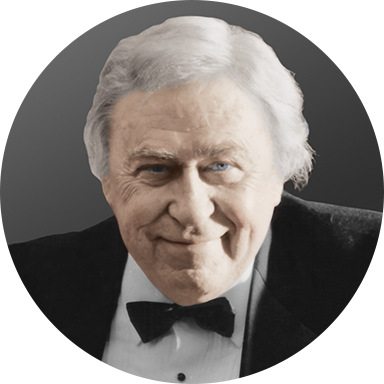
Willard A. Palmer built a prolific career as a composer, educator, and musicologist with over 789 published works spanning piano methods, accordion repertoire, guitar instruction, solo pieces, and choral music. His output reached audiences internationally through translations in German, Japanese, French, Dutch, and Spanish. Palmer's journey began as a child prodigy performing piano on radio at age 13, followed by studies at the Conservatory of Leipzig on scholarship and eventually a position on the University of Houston faculty, where he taught accordion for 18 years.
Palmer's later scholarly work focused on Classical and Baroque music, establishing him as a recognized authority on Baroque ornamentation. This research foundation led to the creation of the Alfred Masterworks series, a cornerstone of music education publishing. His contributions earned him honorary doctorates in Humanities (1971) and Music (1983). Beyond composing and teaching, Palmer served as choir director at Memorial Lutheran Church in Houston and held leadership roles in the American Accordionists' Association and the American Society of Composers, Authors and Publishers.
Why we love this
Palmer's hymn arrangements honor the spiritual and melodic integrity of these beloved songs while writing specifically for hands at this level. The inclusion of duet parts creates natural performance opportunities and allows teachers to model phrasing and tone production alongside their students. This collection bridges sacred music repertoire with the methodical progression students need, making it ideal for studios with church music traditions or families seeking meaningful cultural and spiritual connection through piano.
What to expect
These hymns carry the weight of musical and spiritual history; they're melodies many listeners grew up singing, making each performance feel personal and grounded. The arrangements reveal why these songs have endured: their melodic lines are singable and memorable, their harmonies provide gentle harmonic color without overwhelming the player, and their steady, purposeful rhythms create a sense of stability and forward motion.
Who it's for
Later beginner pianists (Level 2 & 3) in private studios or church music programs who connect with sacred music and want to build repertoire beyond method books. This collection also serves students whose families have hymn-singing traditions and welcome the opportunity to perform meaningful music at home and in worship settings.
How to get the most out of it
- Approach the hymn melodies with singing tone throughout; let the familiar text guide your phrasing even though you're playing without words.
- When playing duet parts, lock the accompaniment's rhythm first so the melody voice can breathe naturally and shape the phrase without rushing.
- Use the harmonic progressions to inform your touch: major sections often benefit from clarity and brightness, while passages with unexpected chords invite slightly softer dynamics to highlight the color.
- Practice the hand independence required for duet playing by isolating each part separately, then combining them at a tempo slow enough to maintain independence without tension.
How to use it
Feature one or two hymn arrangements on a recital program to offer students a change of pace from classical solos and to create programming moments when audiences can experience familiar music rendered with fresh care. These pieces also work beautifully as preparation for students planning to participate in church music performance or as foundational repertoire for students exploring the connection between piano skill and congregational music traditions.
Skills your students will build
- Singing tone production on the piano through phrasing of long melodic lines
- Reading simple harmonic accompaniment patterns in the left hand while maintaining independence from the melody
- Understanding hymn structure and how familiar melodies sit within their harmonic context
- Duet ensemble skills including rhythmic precision, balance between parts, and listening to another player
- Interpreting music with textual and spiritual meaning, connecting playing technique to emotional intention