
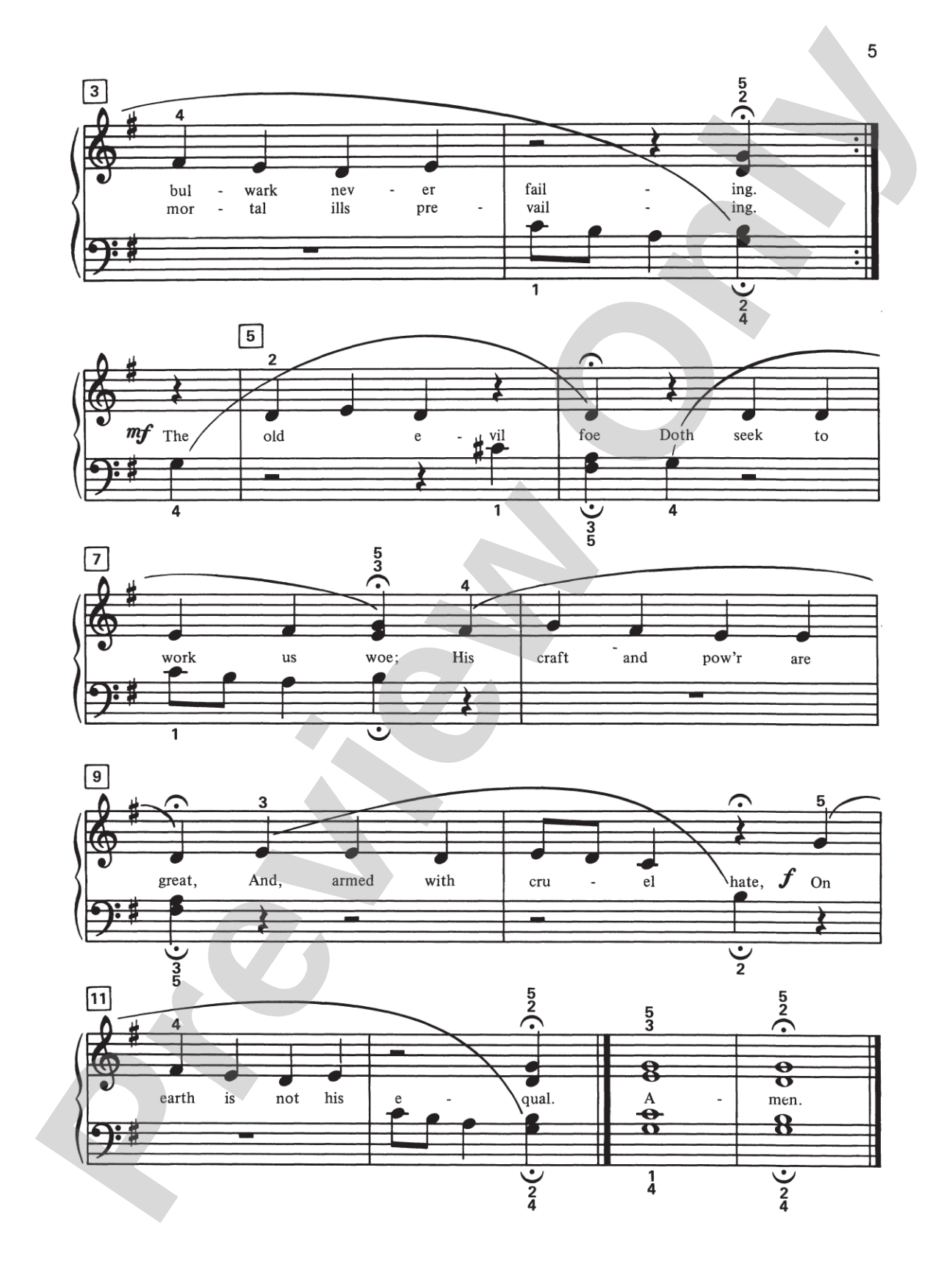
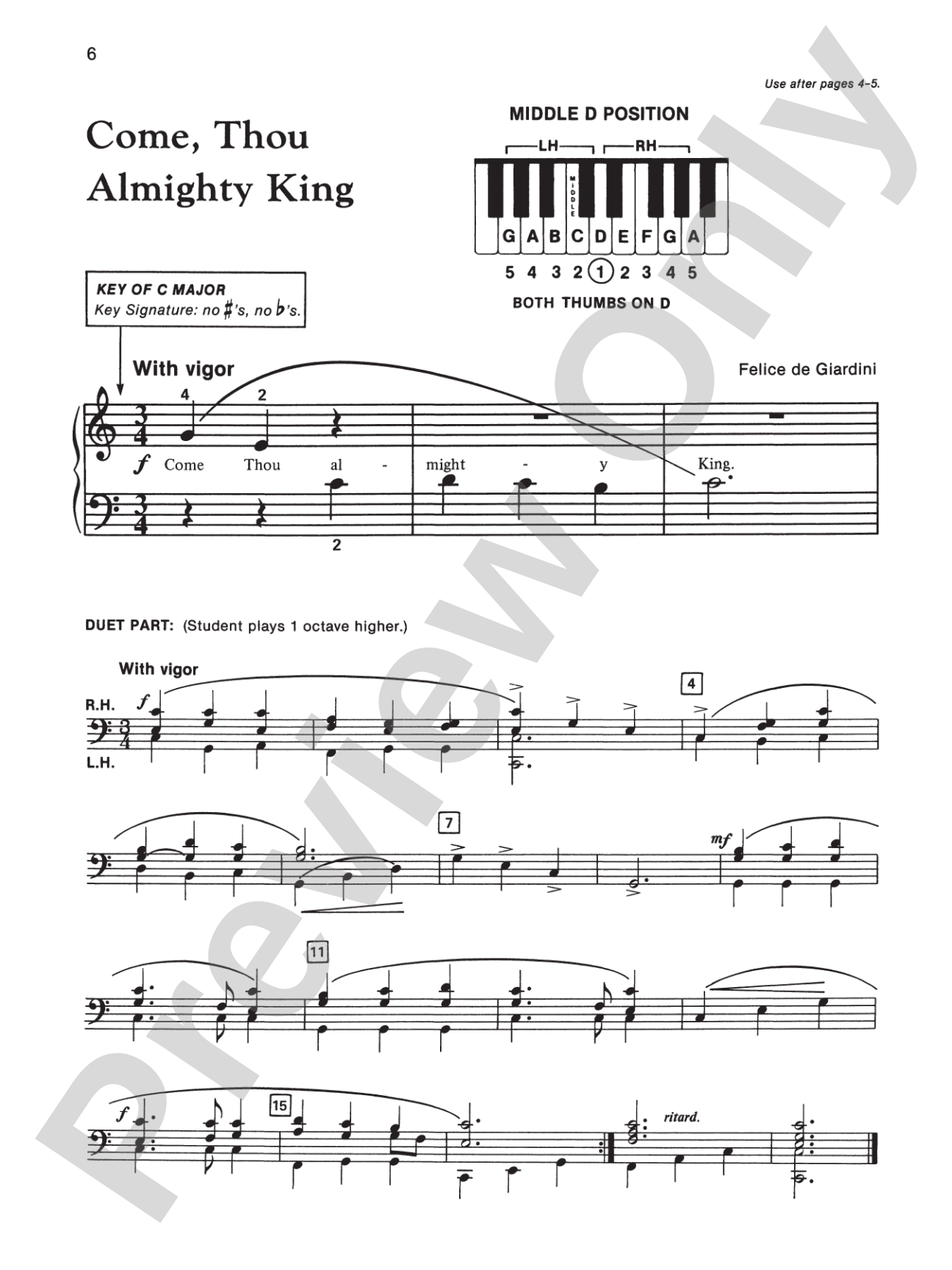
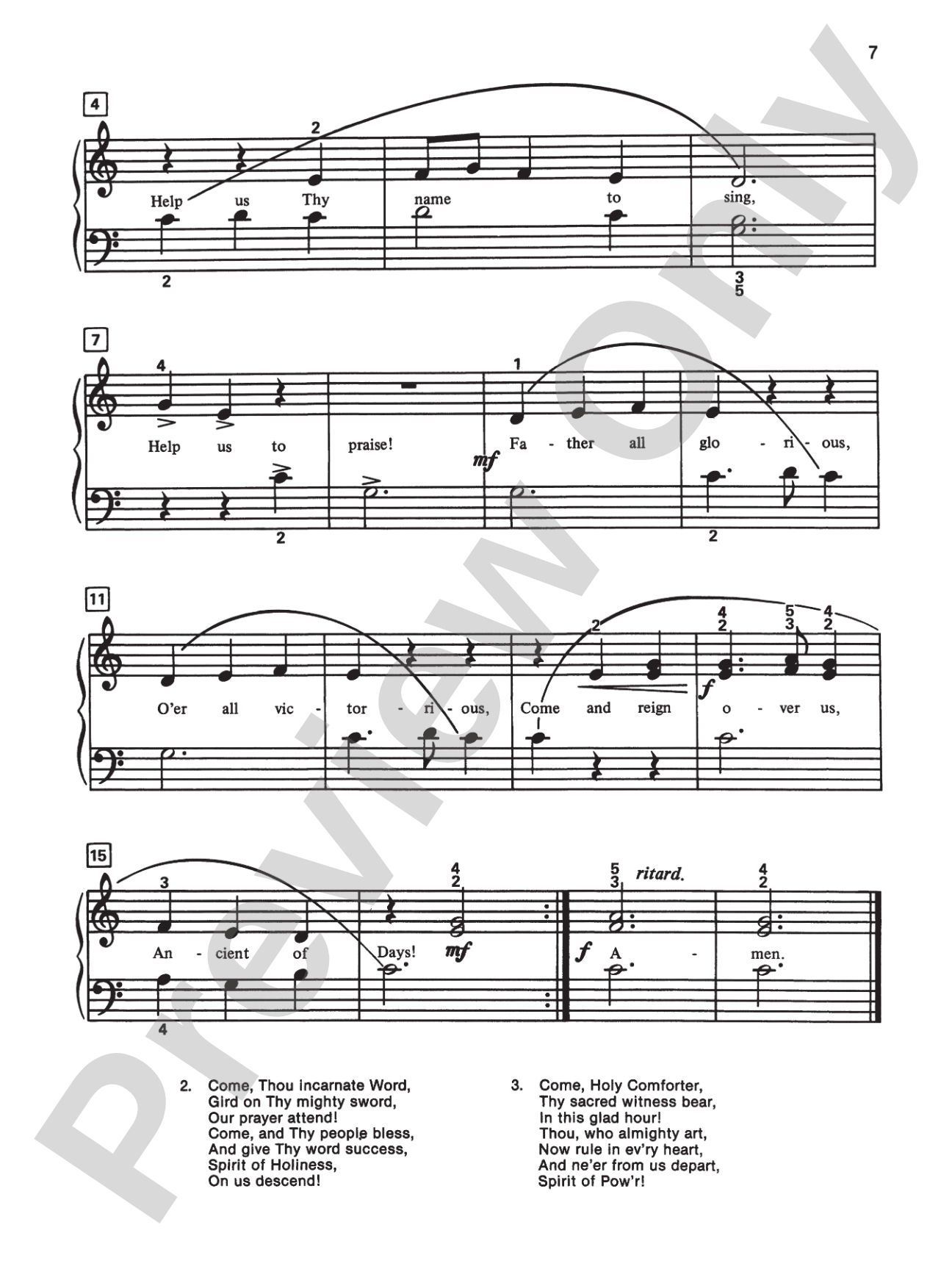

Alfred's Basic Piano Library: Hymn Book 2: Piano
By Willard A. Palmer, Morton Manus, and Amanda Vick Lethco
Level: 2
Item: 00-PB-0002578
$9.99
Pickup currently not available
Related Items
Alfred's Basic Piano Library: Hymn Book 2: Piano Book |
$9.99
|
View |
Description
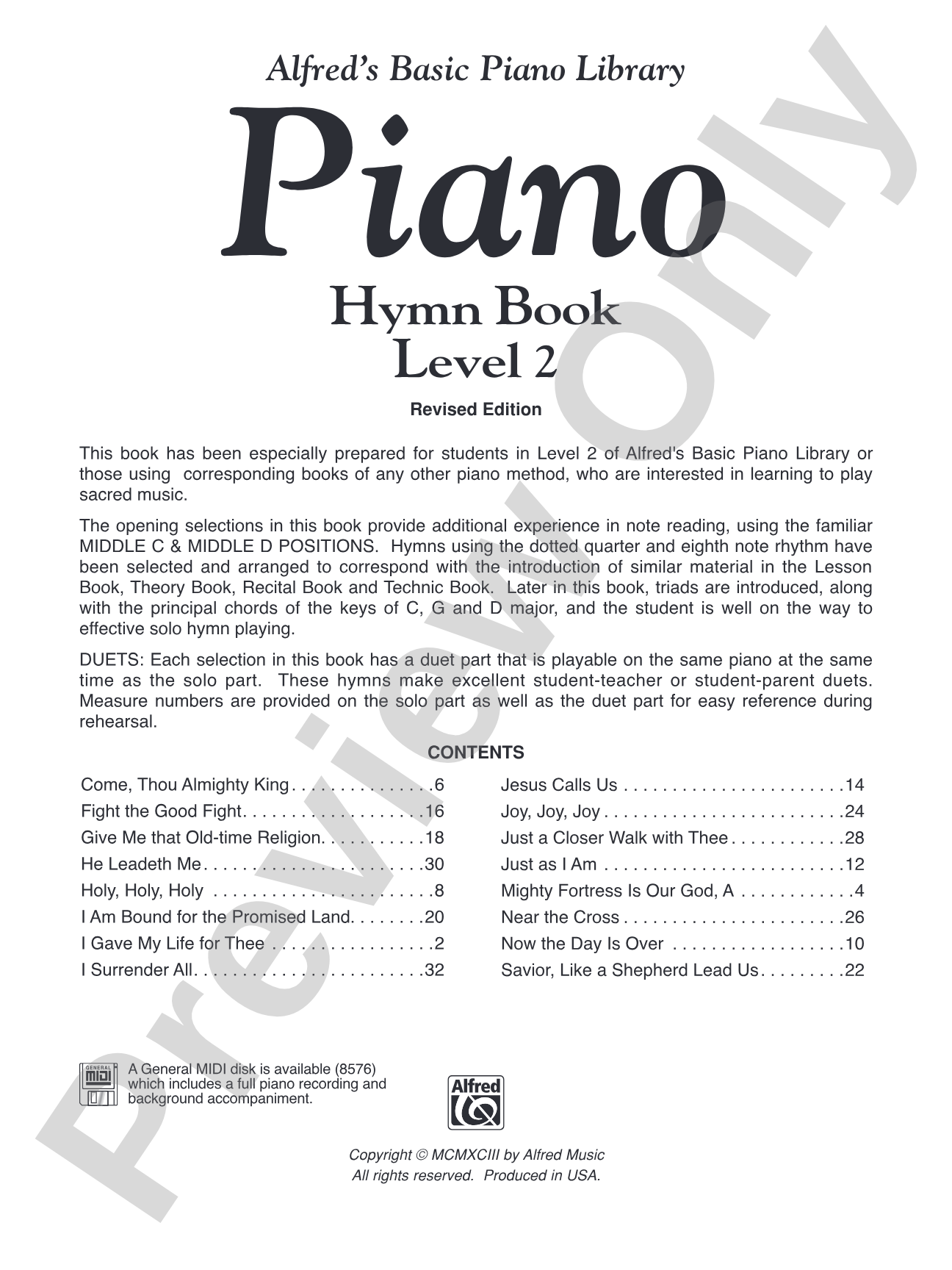
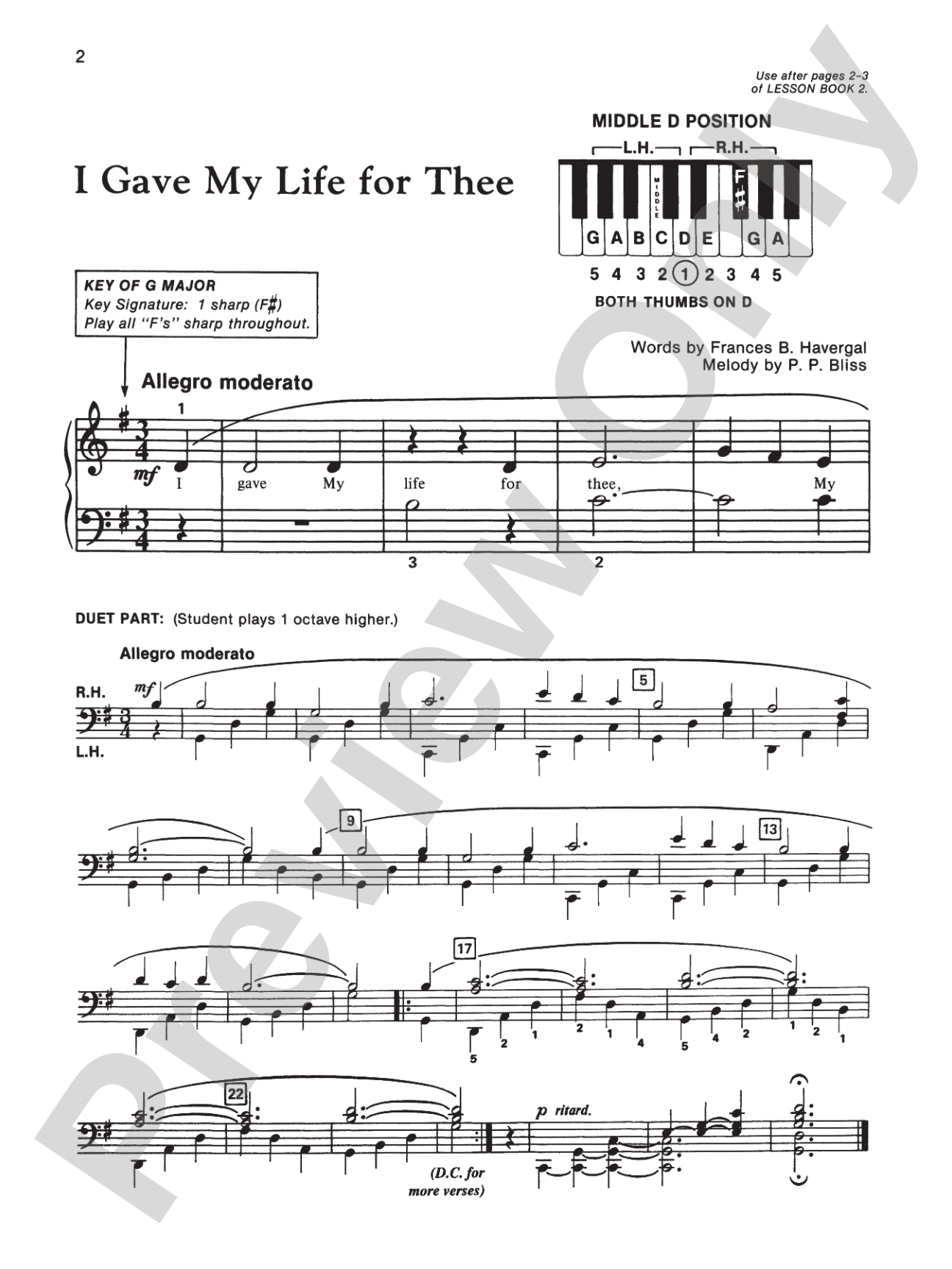
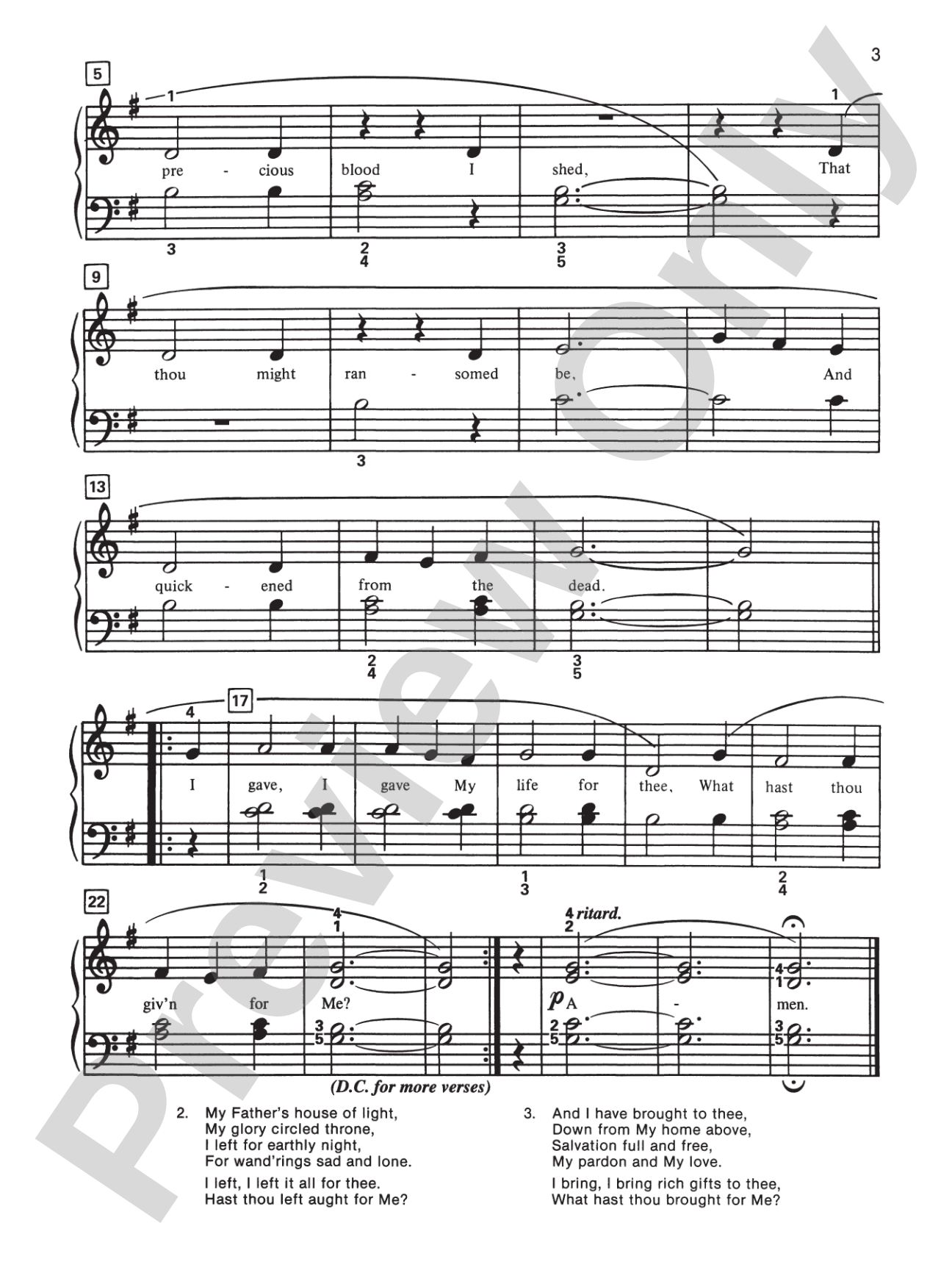
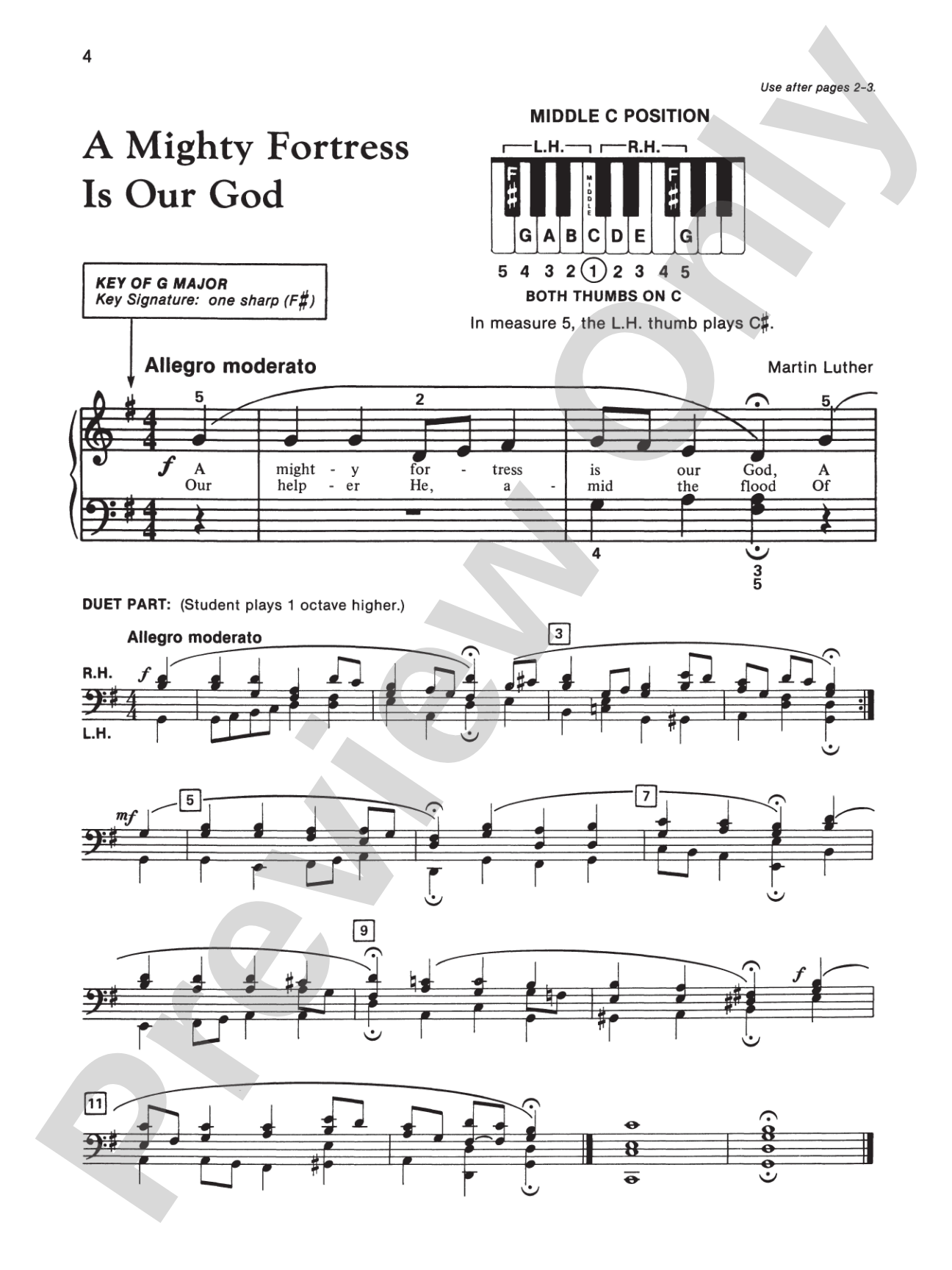
The Hymn Books contain the world's most famous hymns and are perfect for the student who enjoys playing sacred music. Duet parts are included in the first three levels. Titles: Come, Thou Almighty King * Fight the Good Fight * Give Me That Old-Time Religion * He Leadeth Me * Holy, Holy, Holy * I Am Bound for the Promised Land * I Gave My Life for Thee * I Surrender All * Jesus Calls Us * Joy, Joy, Joy * Just a Closer Walk with Thee * Just as I Am * A Mighty Fortress Is Our God * Near the Cross * Now the Day Is Over * Savior, Like a Shepherd Lead Us.


Discover MakeMusic Cloud: thousands of interactive titles your students can play along with today.
Sample Audio
No sample audio found.
Sample Video
No sample videos found.
Additional Details
Series:
Alfred's Basic Piano Library
Publisher:
Alfred Music
Page Count:
32
SKU:
00-PB-0002578
More about this title
About the Composer: Willard A. Palmer

Dr. Willard A. Palmer stands as a pivotal figure in twentieth-century music pedagogy, having composed 789 published works spanning accordion methods, piano curricula, guitar instruction books, and substantial choral repertoire. His prolific output has been translated into German, Japanese, French, Dutch, and Spanish, cementing his influence across continents. Palmer began as a child prodigy, performing piano on radio at thirteen, and went on to study at the Conservatory of Leipzig on scholarship before joining the University of Houston faculty, where he taught accordion for eighteen years.
Palmer's scholarly interests eventually turned toward historical research, establishing him as an internationally recognized authority on Baroque ornamentation and performance practice. This expertise informed his groundbreaking Alfred Masterworks series and earned him a Doctor of Humanities degree in 1971 and a Doctor of Music degree in 1983. For many years, he also served as choir director at Memorial Lutheran Church in Houston, bringing his deep musical knowledge directly into sacred music contexts.
Why we love this
Palmer's hymn arrangements sit at a goldilocks point: substantial enough that students feel they're playing real music, yet shaped with Level 2 hands in mind. The inclusion of duet parts transforms what could be solitary practice into genuine ensemble experience, giving pianists immediate context for listening and following other players. A collection this substantial of familiar melodies gives elementary students genuine stake in their repertoire choices.
What to expect
Playing from this collection feels like joining a long tradition. These melodies carry real weight in American musical culture, and students sense immediately that they are learning something substantive. The harmonies are warm and unhurried, giving pianists room to settle into each piece without technical demands overwhelming the musical content.
Who it's for
Elementary pianists in their second year of study who connect with sacred music and want to build their repertoire beyond method book exercises. This collection also serves students whose churches, schools, or families value hymn singing, offering them a bridge between congregational music and personal practice. Students ready to experience duet playing will find reliable partners in these arrangements.
How to get the most out of it
- Balance the melody against any accompanying voices so the hymn tune remains the clear focal point. Students often rush accompaniment figures; steady practice with a metronome at modest tempos prevents this.
- Lean into the character of each hymn. A processional like 'Come, Thou Almighty King' needs grounded, deliberate phrasing, while 'Joy, Joy, Joy' calls for lighter touch and forward motion.
- When playing duets, the secondo player anchors the tempo and harmonic foundation. Encourage duet partners to establish eye contact and practice separately before combining parts.
- Pedal sparingly at this level. Most students benefit from using the sustain pedal only on whole note endings or where the score specifically indicates.
How to use it
Reserve selections from this book for sacred music units in spring recitals or holiday programming, pairing solos with ensemble arrangements to showcase how the same melodies can be presented in different textures. For schools with chapel services or regular assemblies, duet selections offer opportunities for students to contribute musically to communal gatherings. Teachers with students from faith communities will find this repertoire personally meaningful and motivating.
Skills your students will build
- Reading and sustaining simple hymn textures with consistent phrasing
- Ensemble coordination through duet playing, including listening to a partner's part
- Understanding harmonic progressions in functional tonality
- Interpreting character and tempo through musical context rather than tempo markings alone
- Managing hand independence across multiple voices