
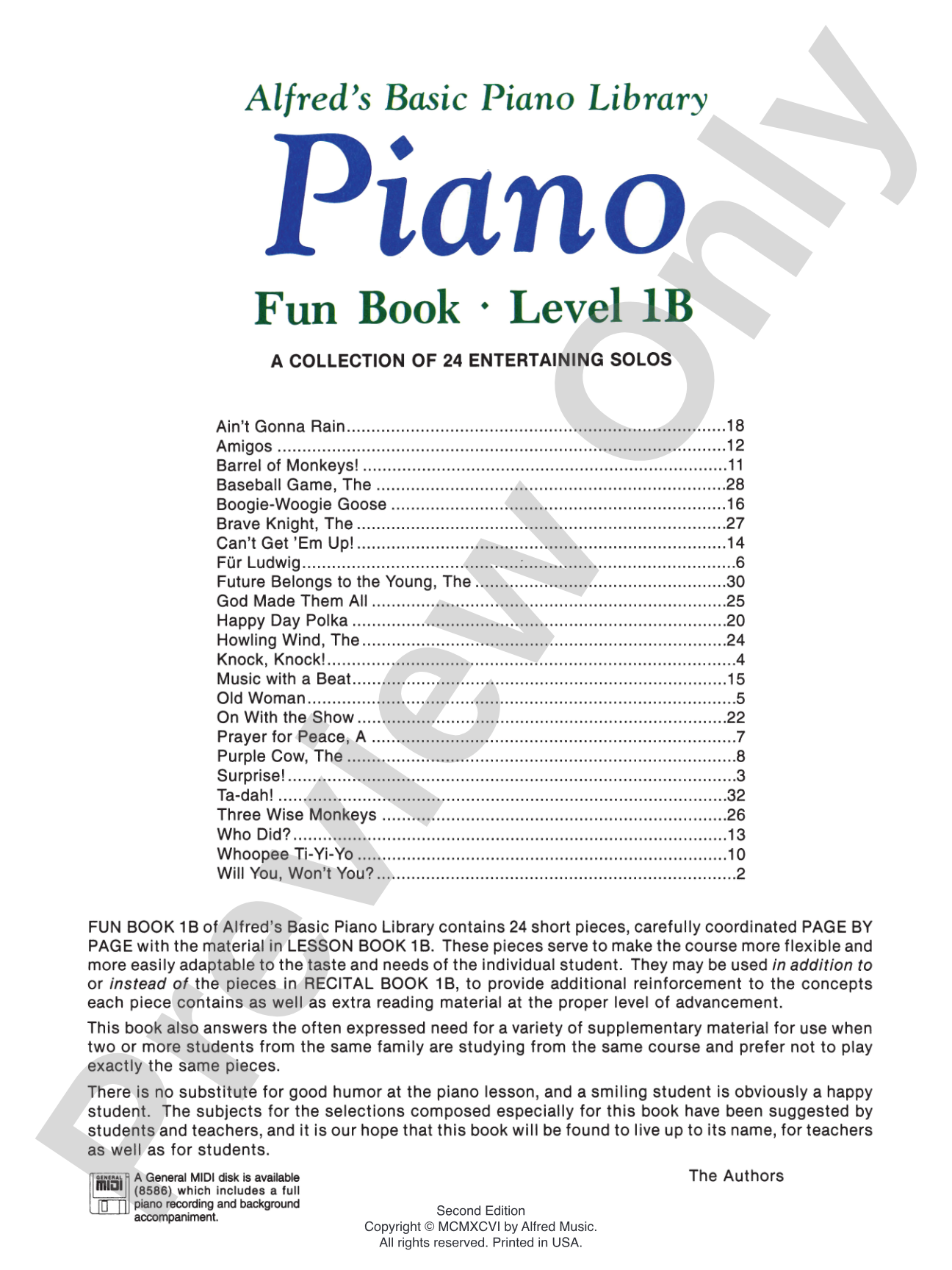
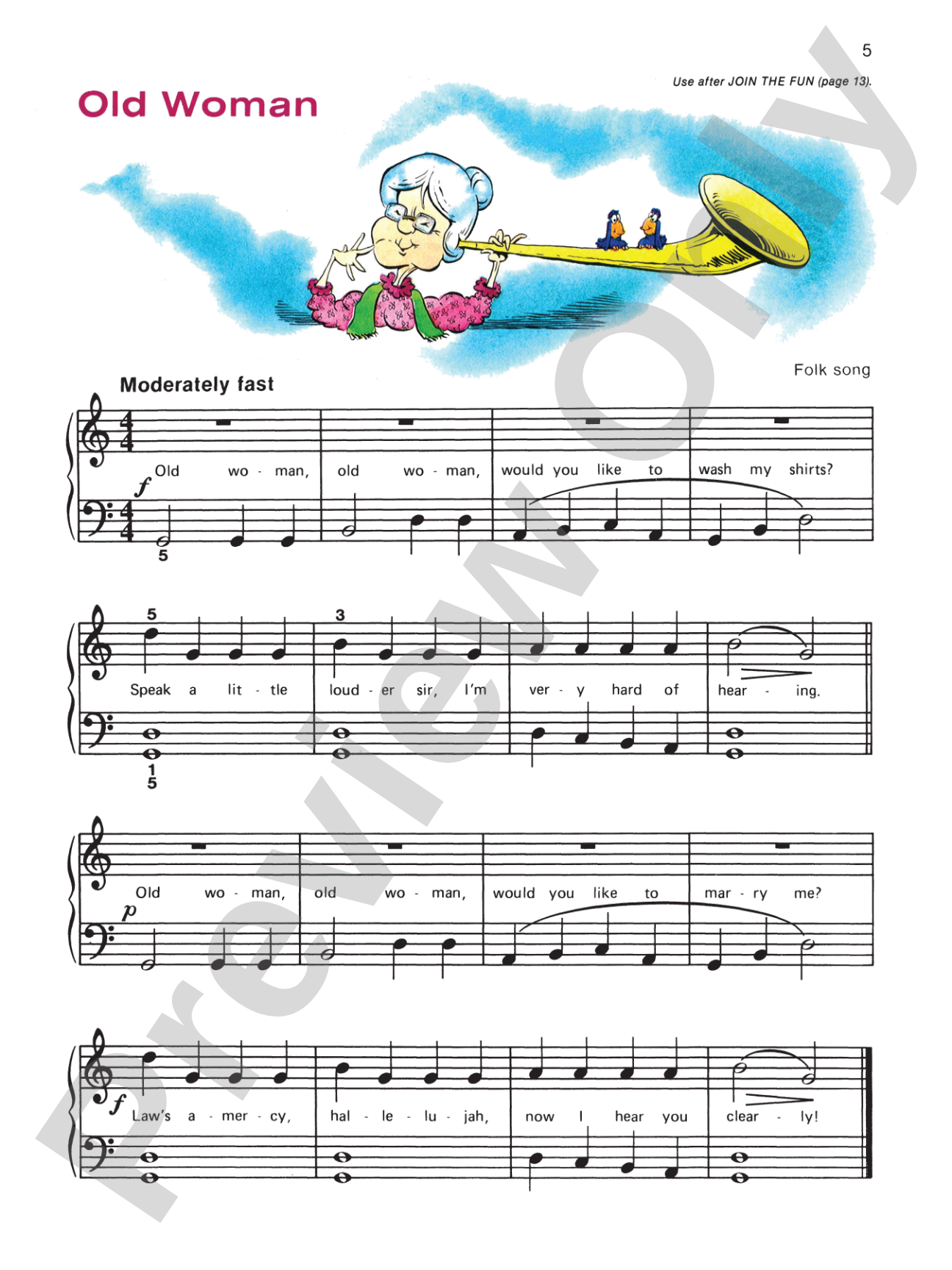
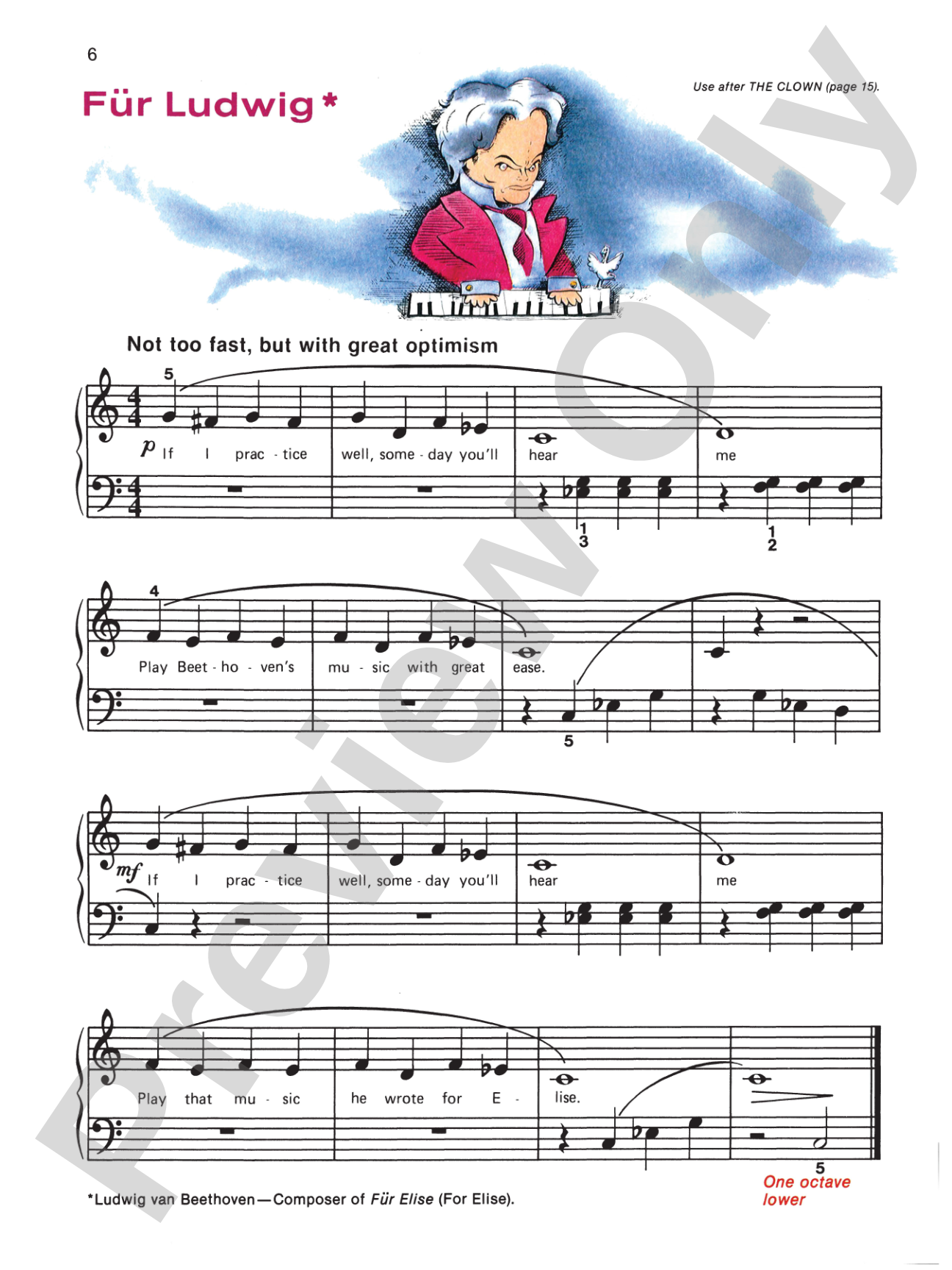
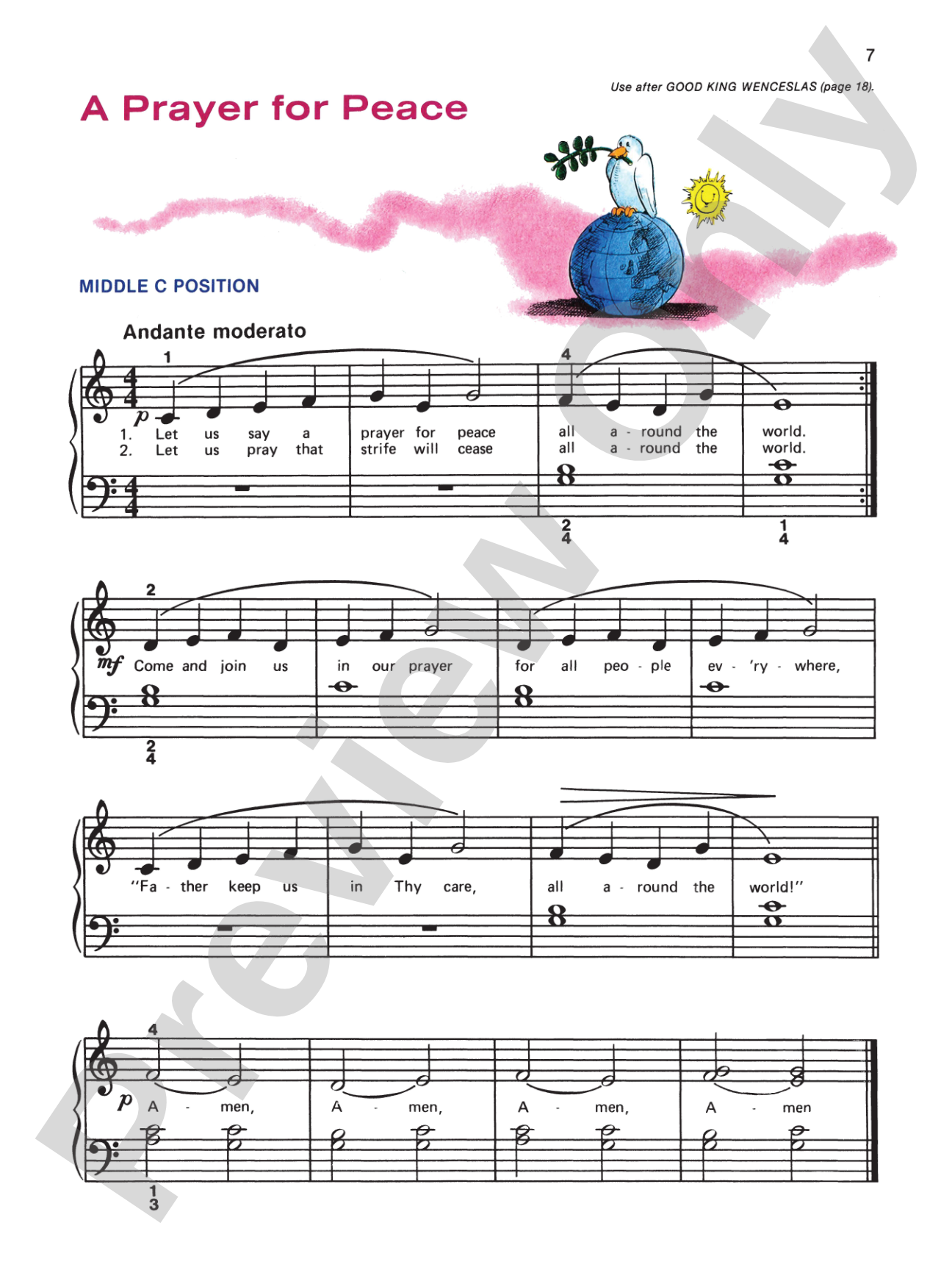

Alfred's Basic Piano Library: Fun Book 1B: A Collection of 24 Entertaining Solos: Piano
A Collection of 24 Entertaining Solos
By Willard A. Palmer, Morton Manus, and Amanda Vick Lethco
Level: 1B
Item: 00-PS-0017748
$10.99
Pickup currently not available
Related Items
Alfred's Basic Piano Library: Fun Book 1B: Piano Book |
$10.99
|
View |
Description
The Fun Books provide additional recital pieces designed for students who require more solo material and are particularly useful when two students are from the same family (Recital Book for one, Fun Book for the other).


Discover MakeMusic Cloud: thousands of interactive titles your students can play along with today.
Sample Audio
No sample audio found.
Sample Video
No sample videos found.
Additional Details
Series:
Alfred's Basic Piano Library
Publisher:
Alfred Music
Page Count:
32
SKU:
00-PS-0017748
More about this title
About the Composer: Willard A. Palmer

Willard A. Palmer stands among the most prolific and influential music educators of the 20th century, having created over 789 published works spanning piano, accordion, guitar, and choral music. His compositions and pedagogical materials have been translated into German, Japanese, French, Dutch, and Spanish, reaching music students worldwide. Palmer began as a child prodigy, performing piano on radio at age 13, and built his career on a foundation of rigorous technique learned from Mae Vardeman, who cultivated his improvisational abilities.
Palmer's academic path took him through Whitworth College and Millsaps College, where he continued performing professionally, and later to the Conservatory of Leipzig on a prestigious scholarship. He subsequently joined the University of Houston faculty, where he taught the first successful college accordion courses for 18 years. His scholarly work in Baroque music and ornamentation became internationally recognized, earning him a Doctor of Humanities degree in 1971 and a Doctor of Music degree in 1983. Palmer also served as director of the Riemenschneider Bach Institute and was a longtime choir director at Memorial Lutheran Church in Houston.
Why we love this
The Fun Book 1B delivers exactly what beginning pianists need when recital season calls for multiple performance pieces without requiring students to share the same solo. Palmer's gift for writing tuneful, character-filled miniatures at an appropriate technical level means students feel confident and engaged rather than frustrated or bored. These pieces hit the sweet spot where technique serves the music, not the reverse.
What to expect
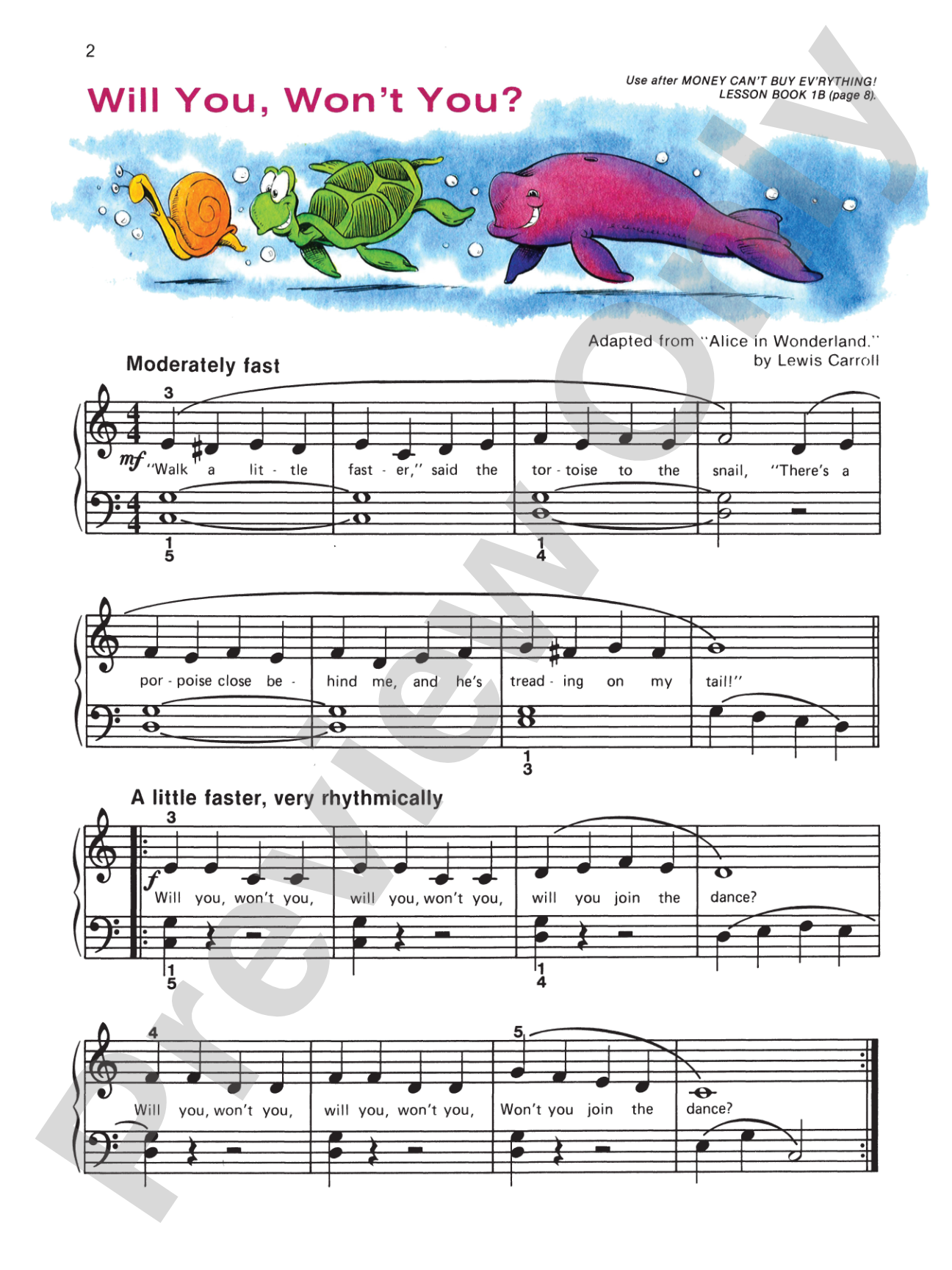
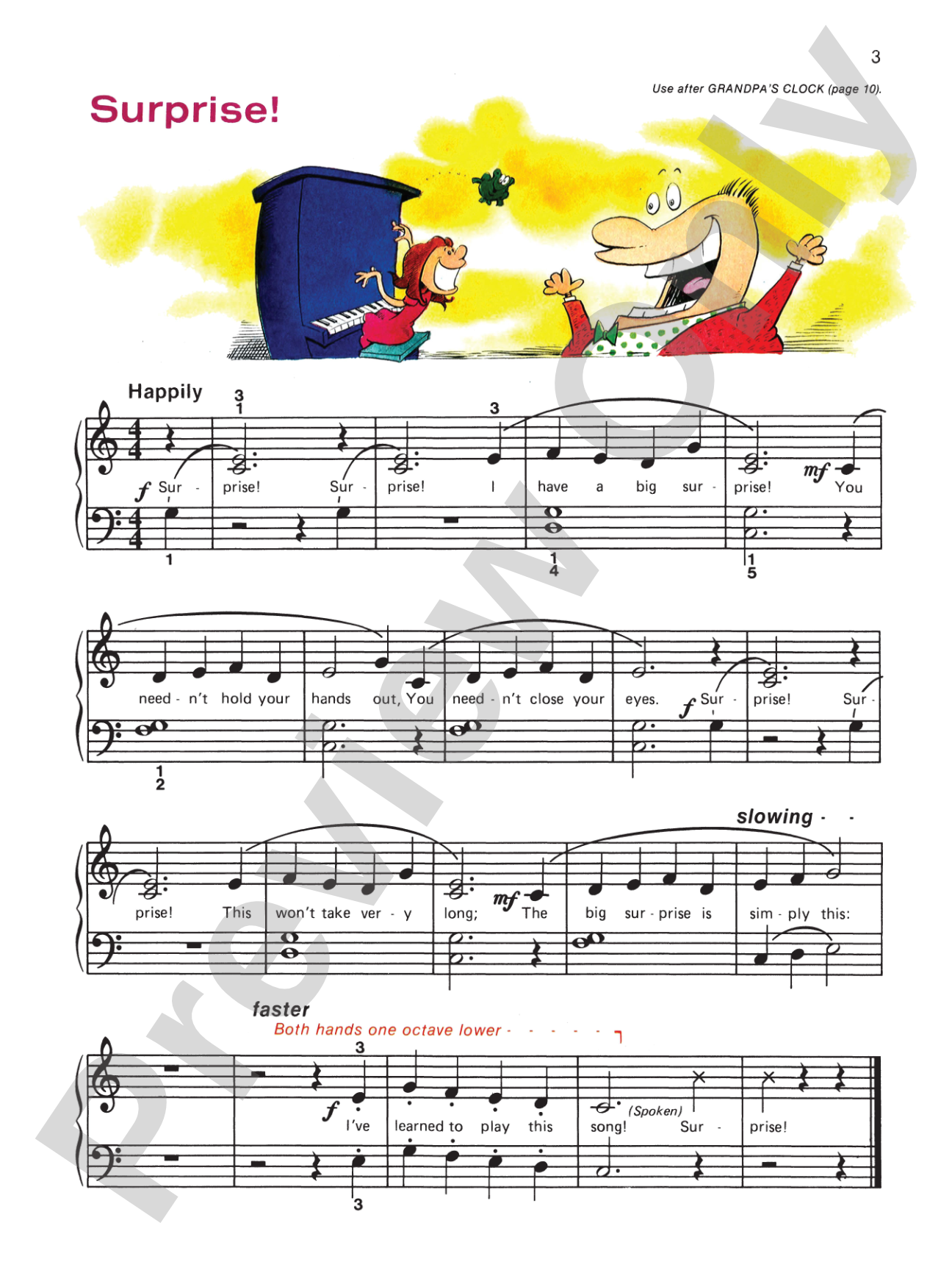
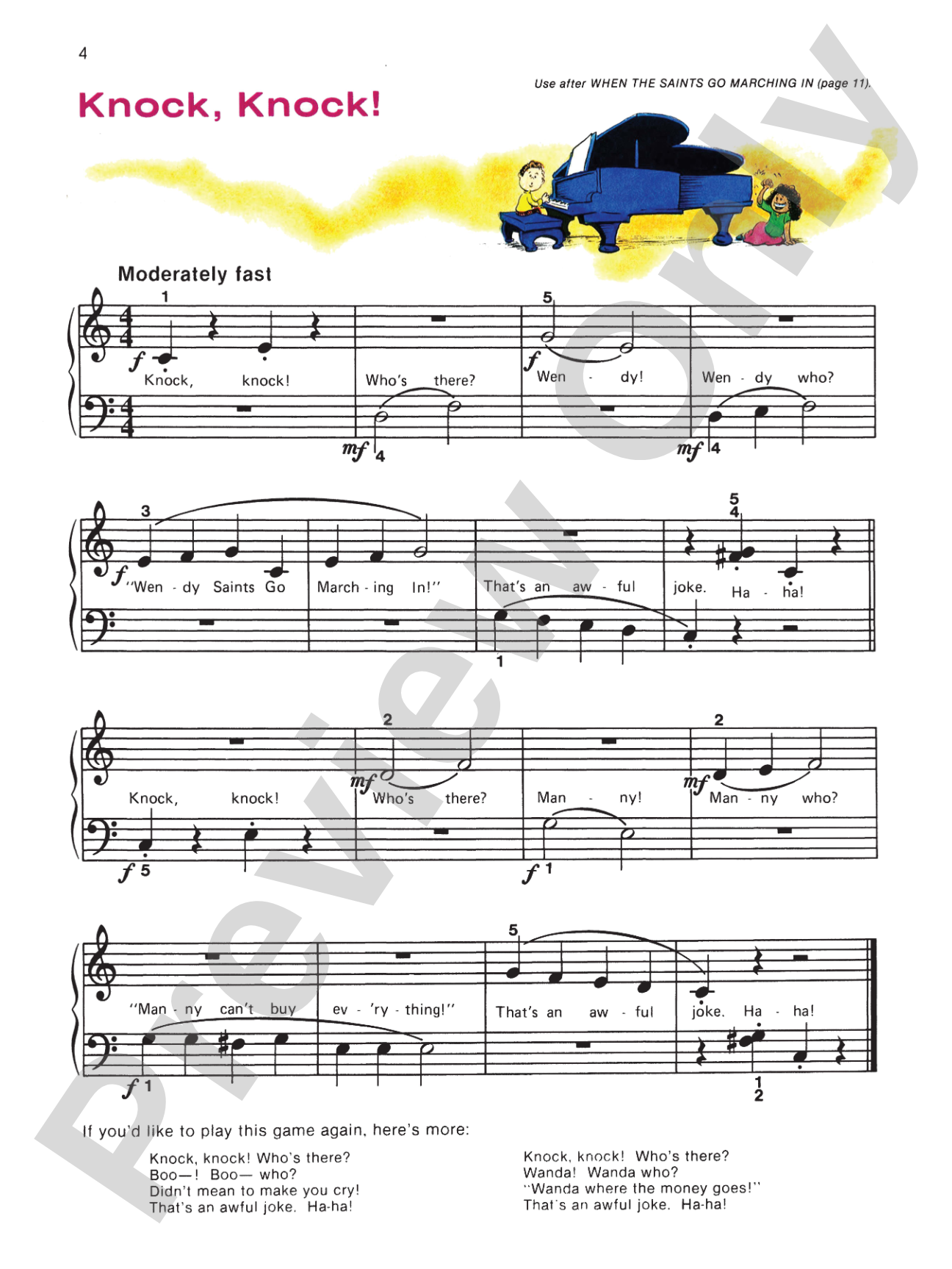
Playful and straightforward, these solos balance melodic appeal with technical accessibility. Each piece has its own character and mood, moving beyond drill-like exercises to genuine musical expression that feels rewarding for a young performer to share with an audience.
Who it's for
Young pianists at the early beginner level (around one year of study) who need multiple performance pieces for recitals or studio showcases. Students who are progressing alongside a sibling or classmate benefit especially, since the Fun Book provides fresh material while another student uses the Recital Book.
How to get the most out of it
- Encourage students to listen for the musical phrase shape in each piece rather than playing mechanically from note to note. Palmer's melodies reward legato playing that honors the natural rise and fall of a line.
- Work on consistent tempo before adding dynamics. Many beginning students rush or drag without realizing it; having a steady pulse established makes all other musical choices clearer.
- Invite the student to decide where the piece breathes naturally. This builds ownership and keeps the performance from sounding robotic.
How to use it
Use the 24 pieces in this collection to build a recital program where multiple students from your studio need different material at the same level. The variety of styles and moods allows you to sequence pieces thoughtfully, whether for a mixed-student showcase or a family concert where siblings will each perform solo.
Skills your students will build
- Reading note positions in treble clef with increasing fluency
- Understanding phrase structure and musical shaping
- Building consistent tempo and rhythm accuracy
- Finger independence and hand position stability
- Interpreting dynamic and expressive markings
- Transitioning from note-reading to musical performance