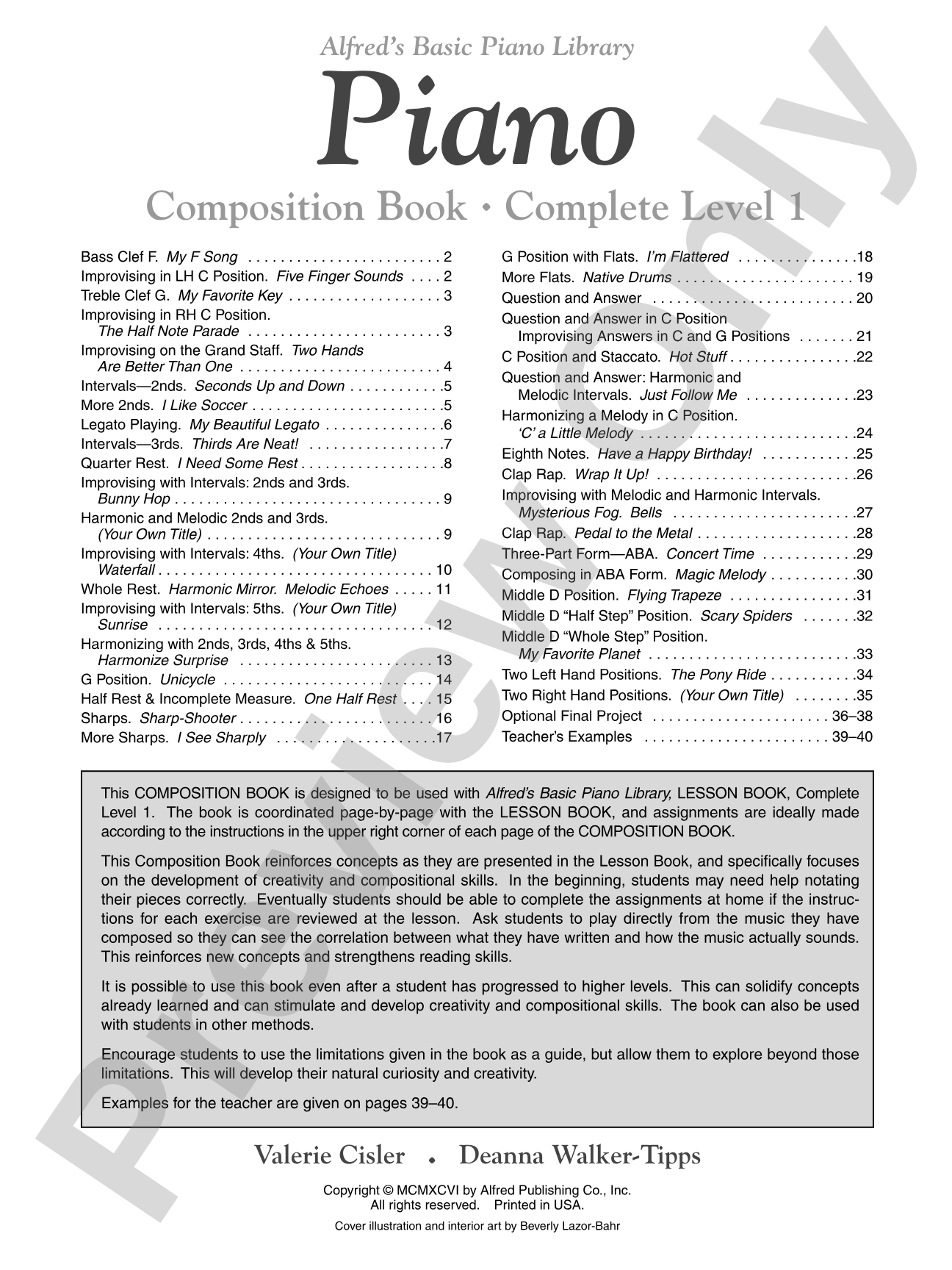
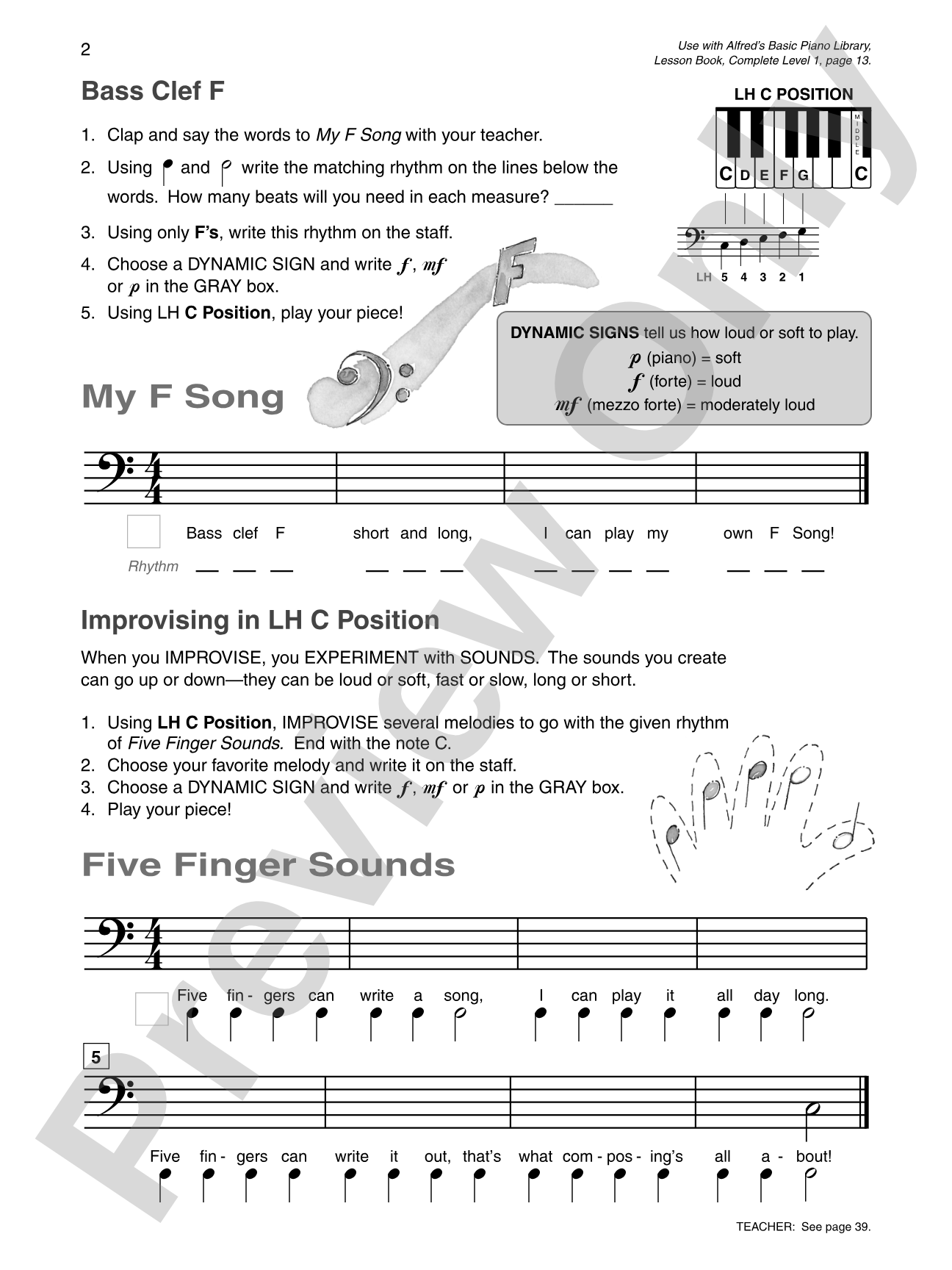
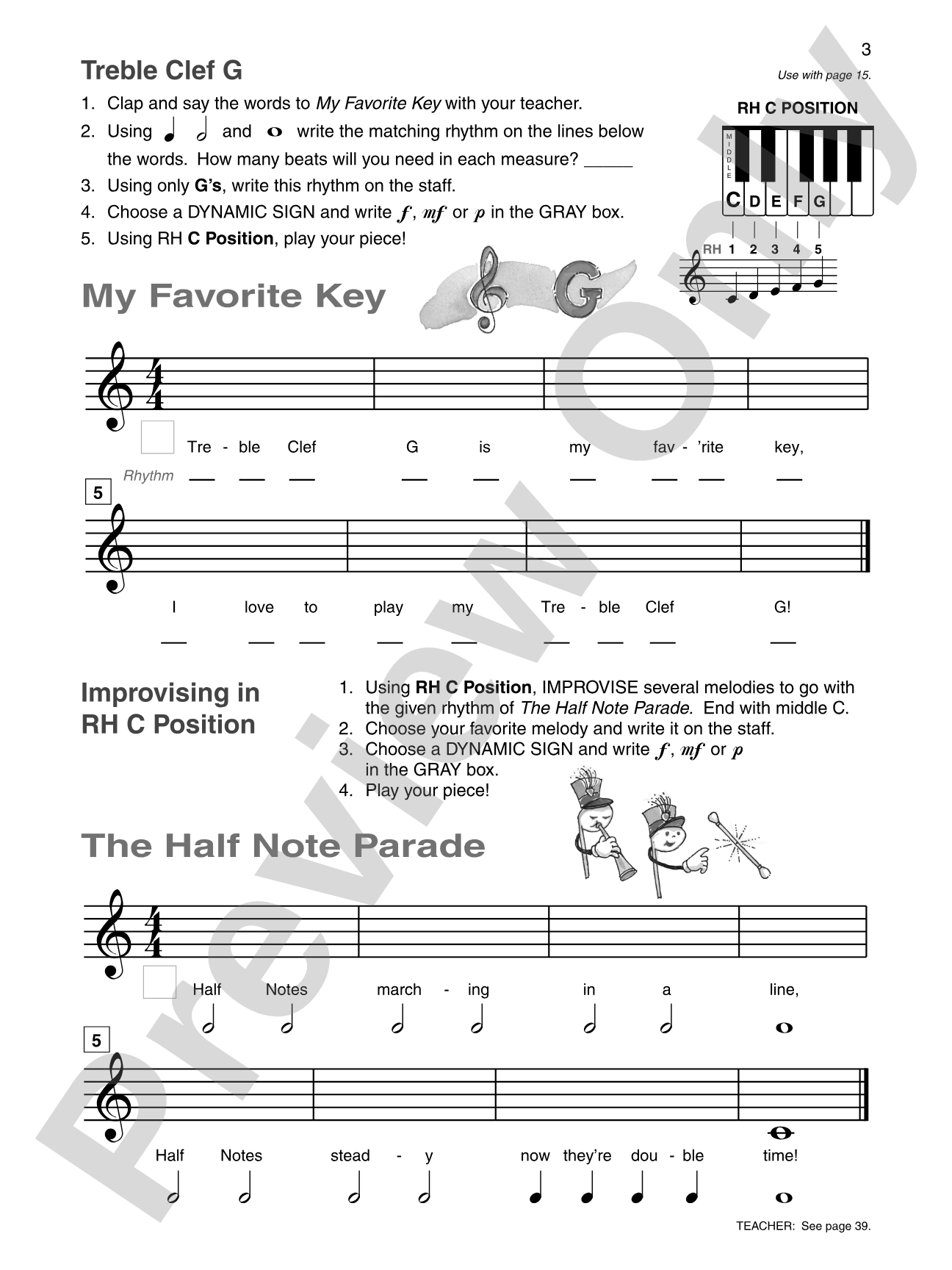
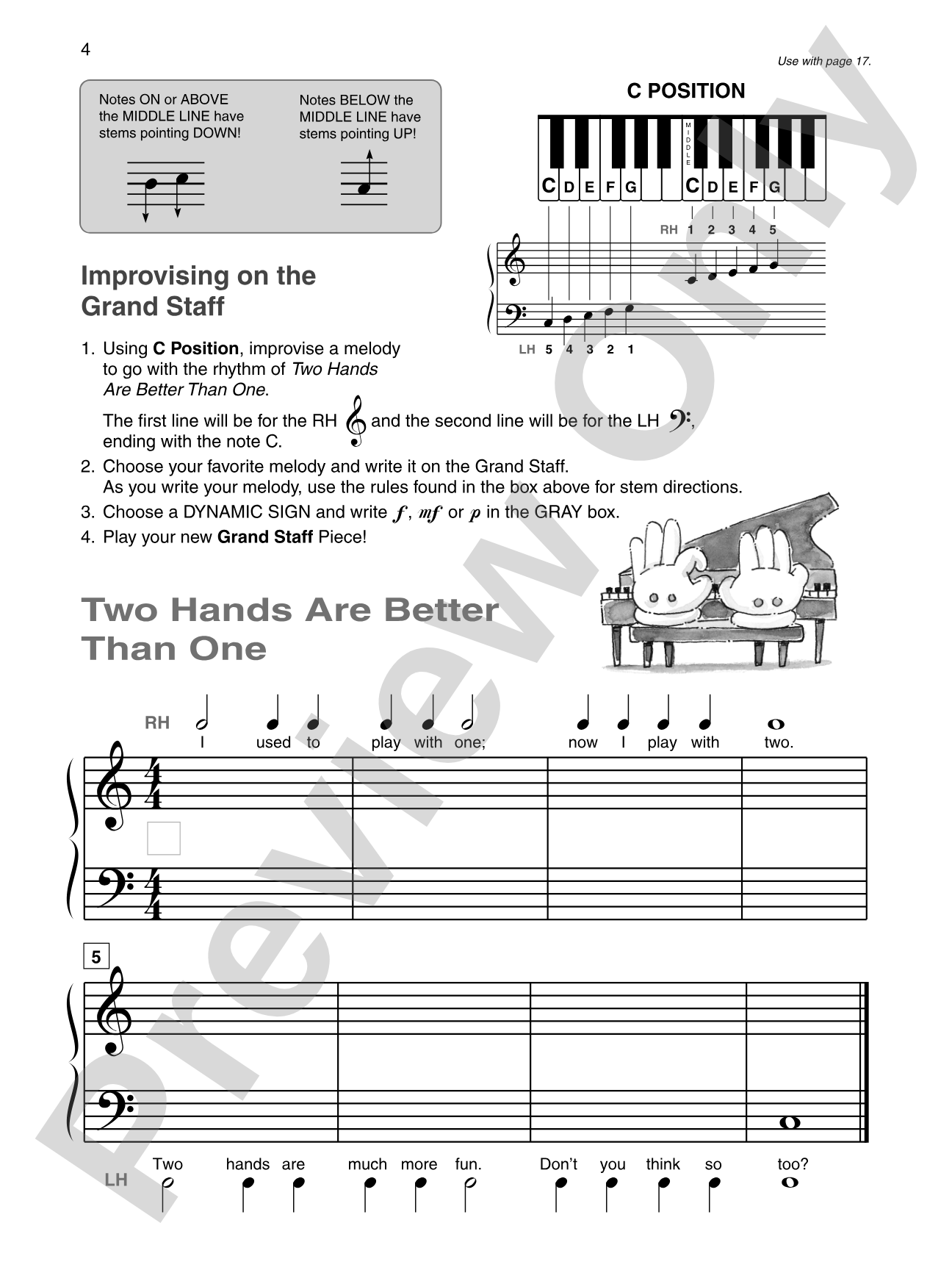
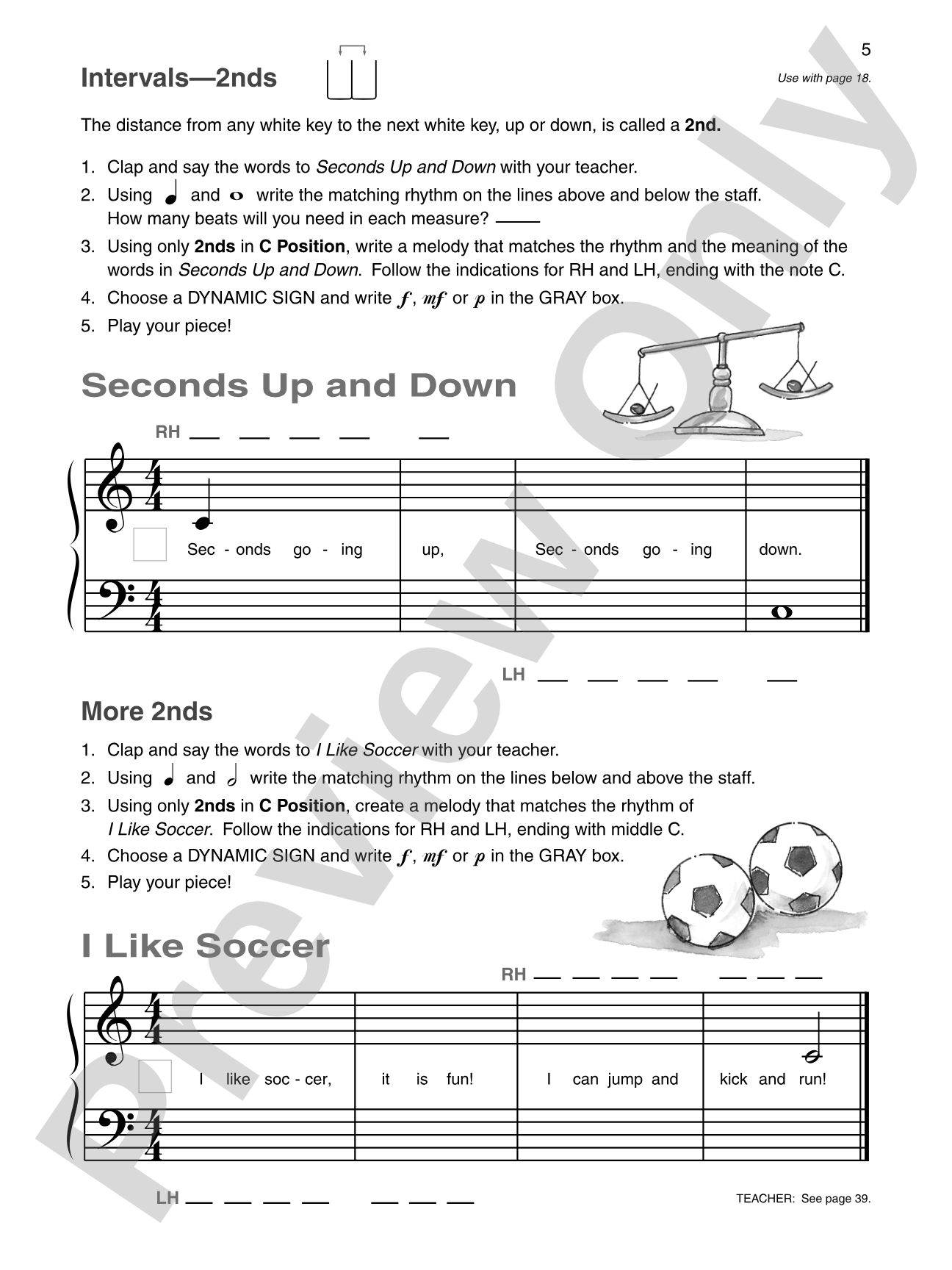
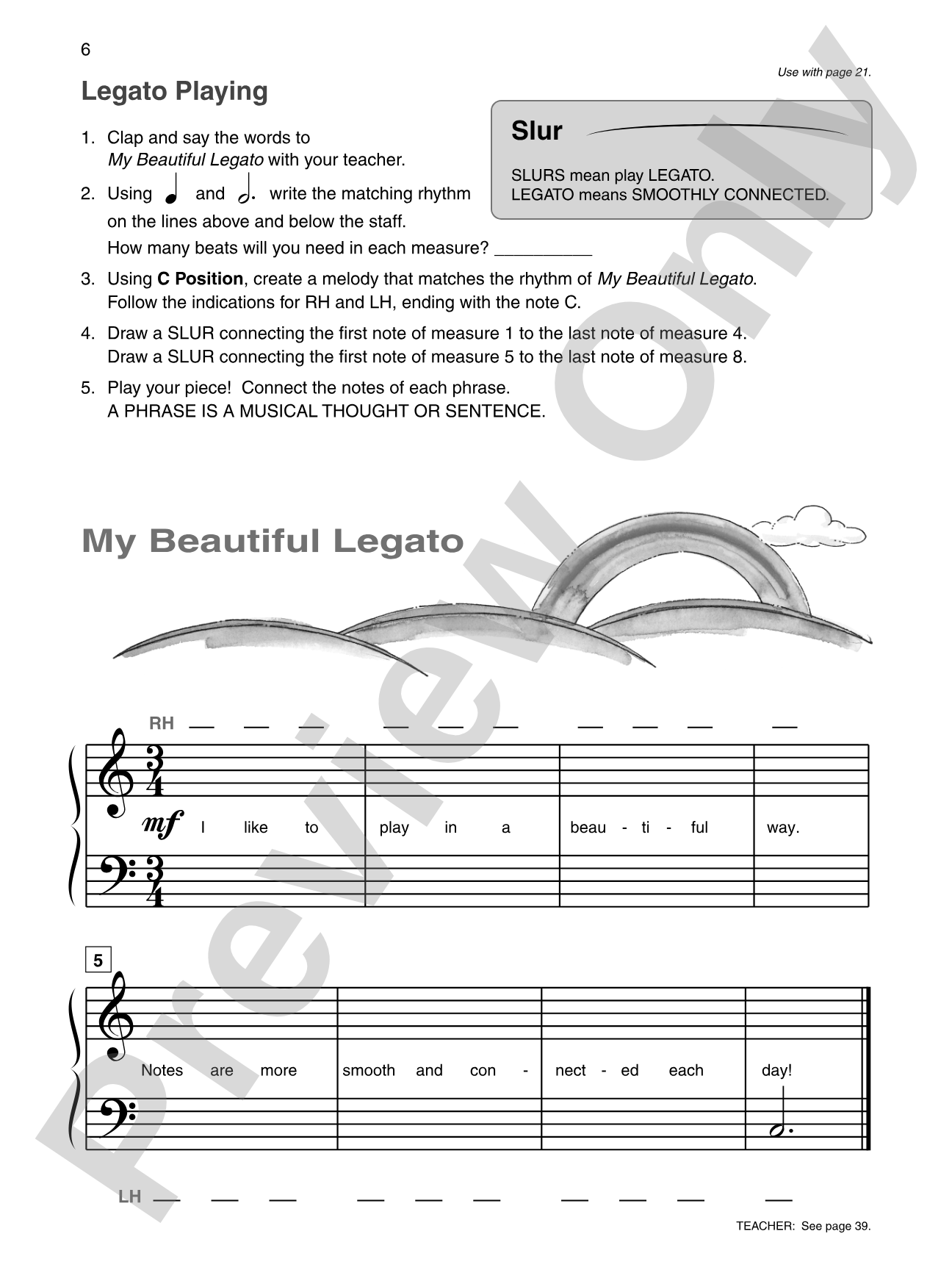
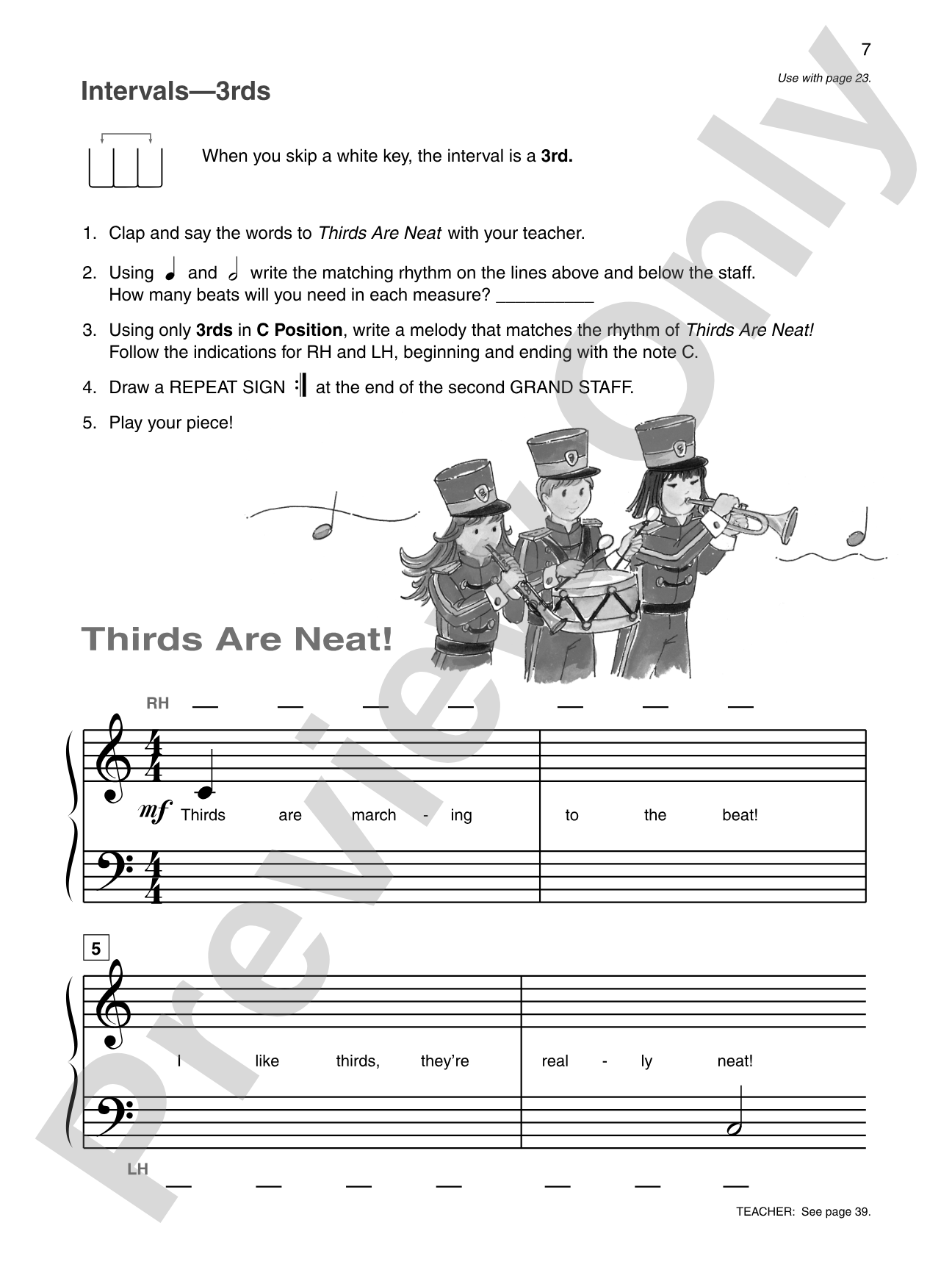
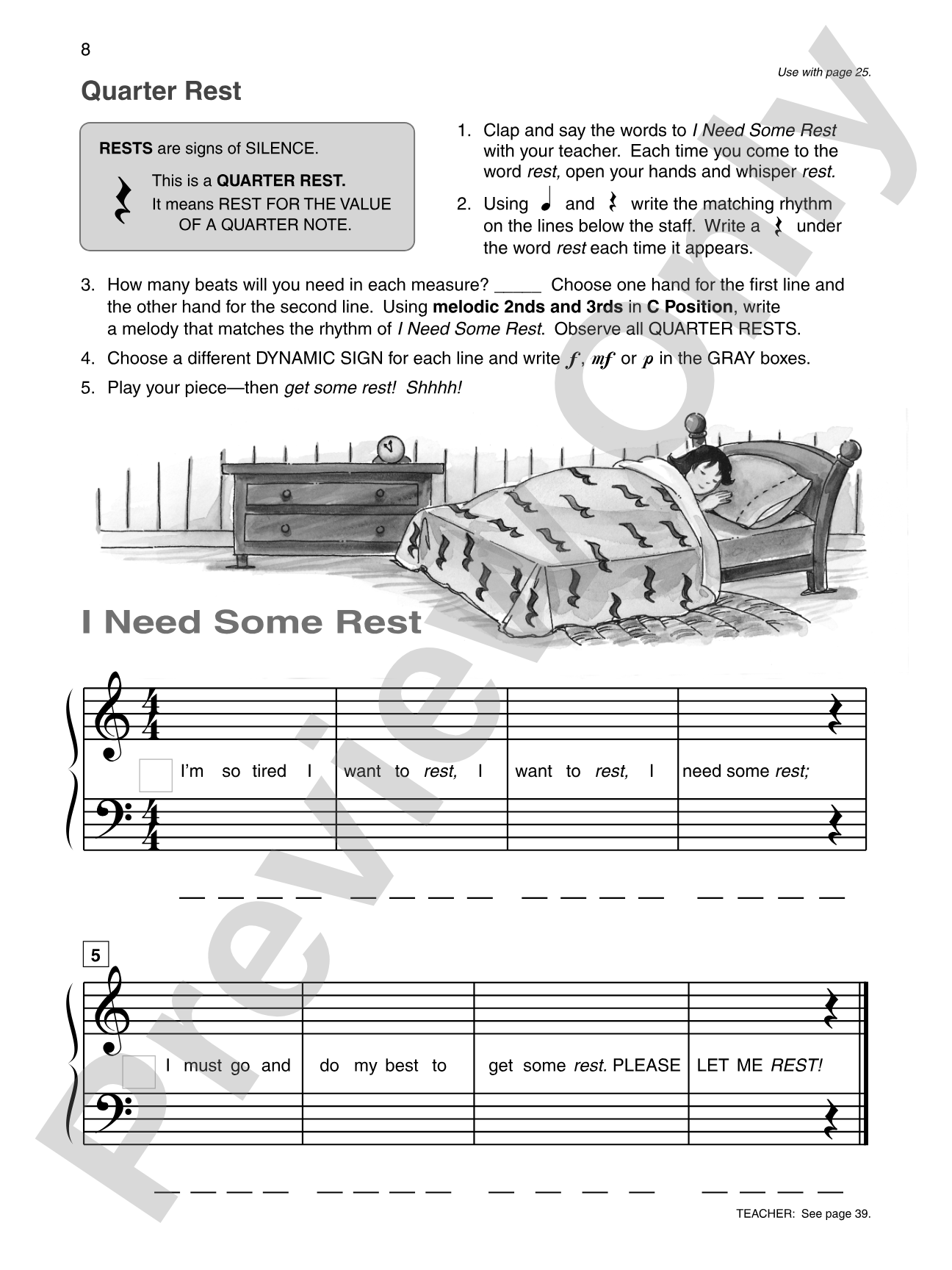
The Composition Book encourages the development of creativity and compositional skills, while reinforcing important musical concepts including music reading and notation. Although these books are correlated page-by-page with the Lesson Books, they can be used with any piano method.
Discover MakeMusic Cloud: thousands of interactive titles your students can play along with today.
This book strips away the intimidation factor of composition by embedding it directly into the learning sequence students already know. Rather than treating creativity as a separate unit, Cisler and Walker-Tipps weave compositional thinking into the same concepts students are mastering in their lesson books, making it feel like a natural extension of their musical growth rather than an optional enrichment activity.
What to expect
Fresh and approachable. These compositions invite students to experiment with small musical ideas—melodies, rhythms, and simple harmonies they've just learned to read and play. There's room to explore without the pressure of performing complex literature.
Who it's for
Piano students working through Alfred's Basic Piano Library at levels 1A and 1B who are ready to move beyond playing existing pieces. This book works equally well with students using other methods, since the compositional exercises reinforce fundamental music reading and notation without requiring a specific curriculum.
How to get the most out of it
Start with guided composition exercises before asking students to compose independently. The page-by-page correlation with Lesson Books means students have already encountered the musical elements they'll use.
Play student compositions aloud, even the short ones. Hearing their own work performed validates the creative process and builds confidence for longer pieces.
Encourage students to notate their ideas even if they sound simple. The act of writing down what they hear develops their understanding of how notation represents sound.
How to use it
Assign one or two pages per week alongside the corresponding lesson book pages to deepen understanding of each new concept. The cumulative nature of the exercises means students build compositional vocabulary gradually, making it ideal for studio teachers or classroom settings where creativity reinforcement supports technical progress.
Skills your students will build
Notating melodies with correct pitch and rhythm
Understanding music notation conventions for clefs, time signatures, and note values
Creating short melodies within a given harmonic or rhythmic framework
Connecting aural understanding to written representation
Building confidence in making creative musical choices
You May Also Like
Scan to Complete Your Purchase
Use your phone's camera to scan the code below
You'll log in on your phone and the order will be added to your account