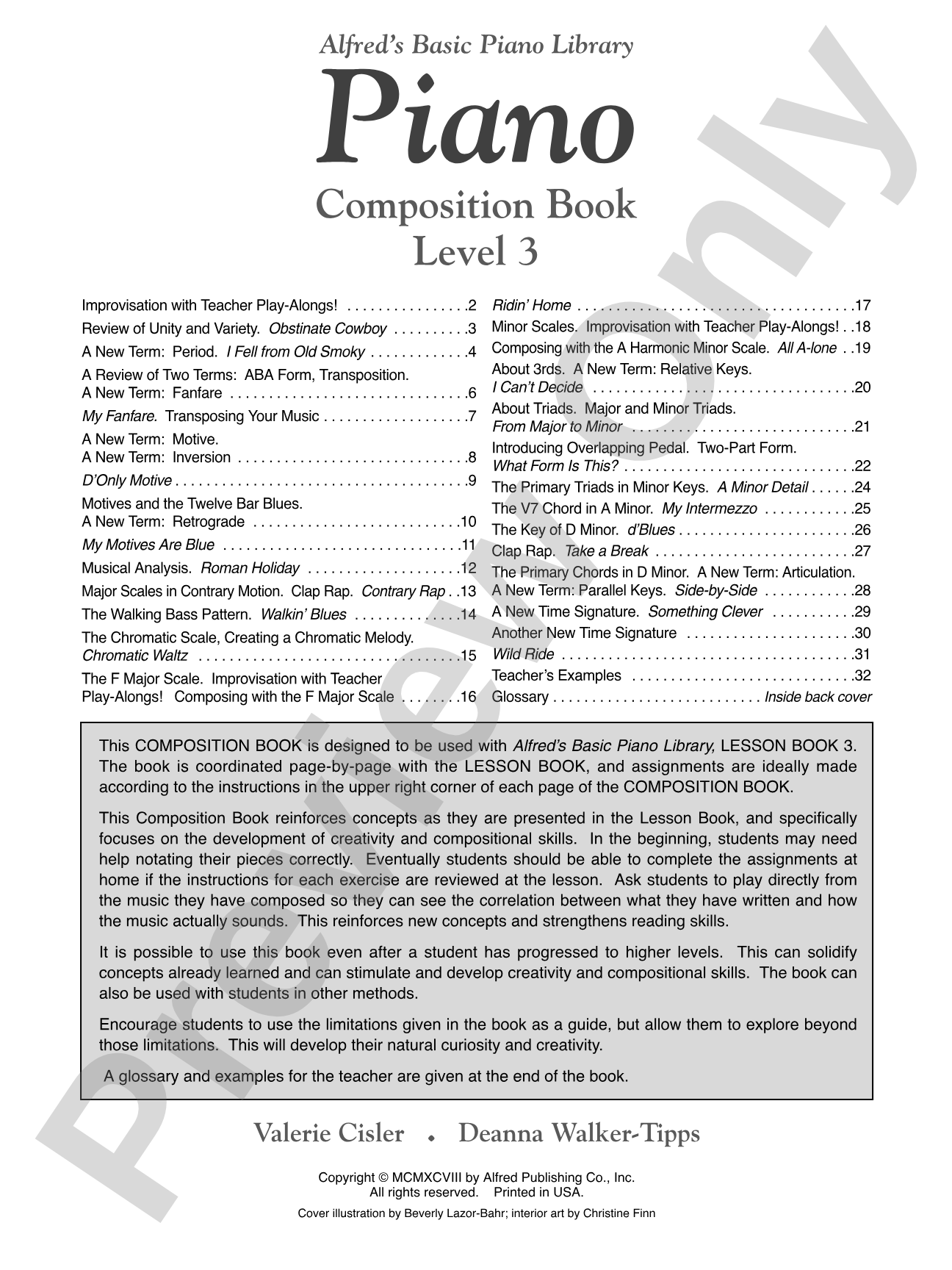
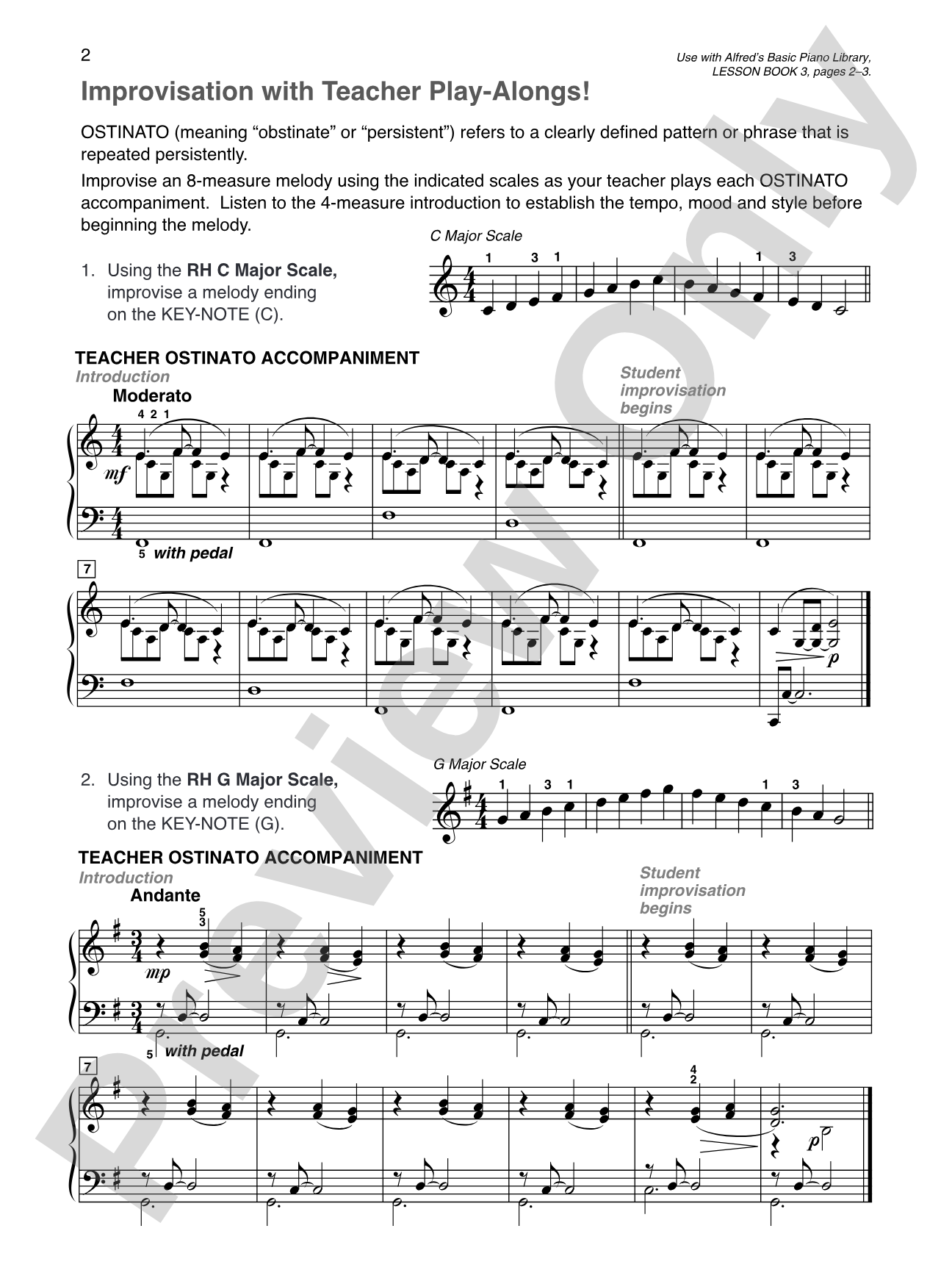
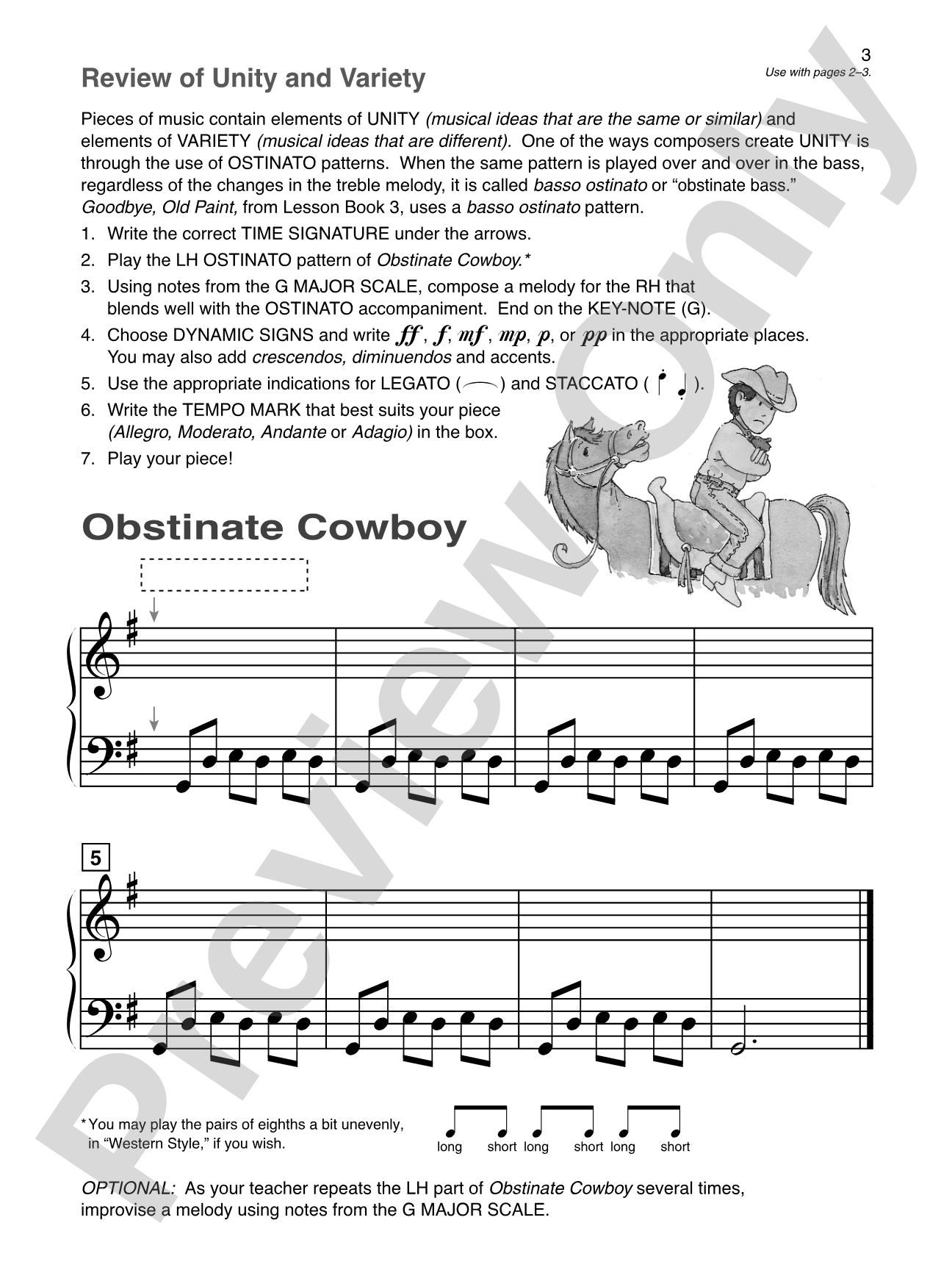
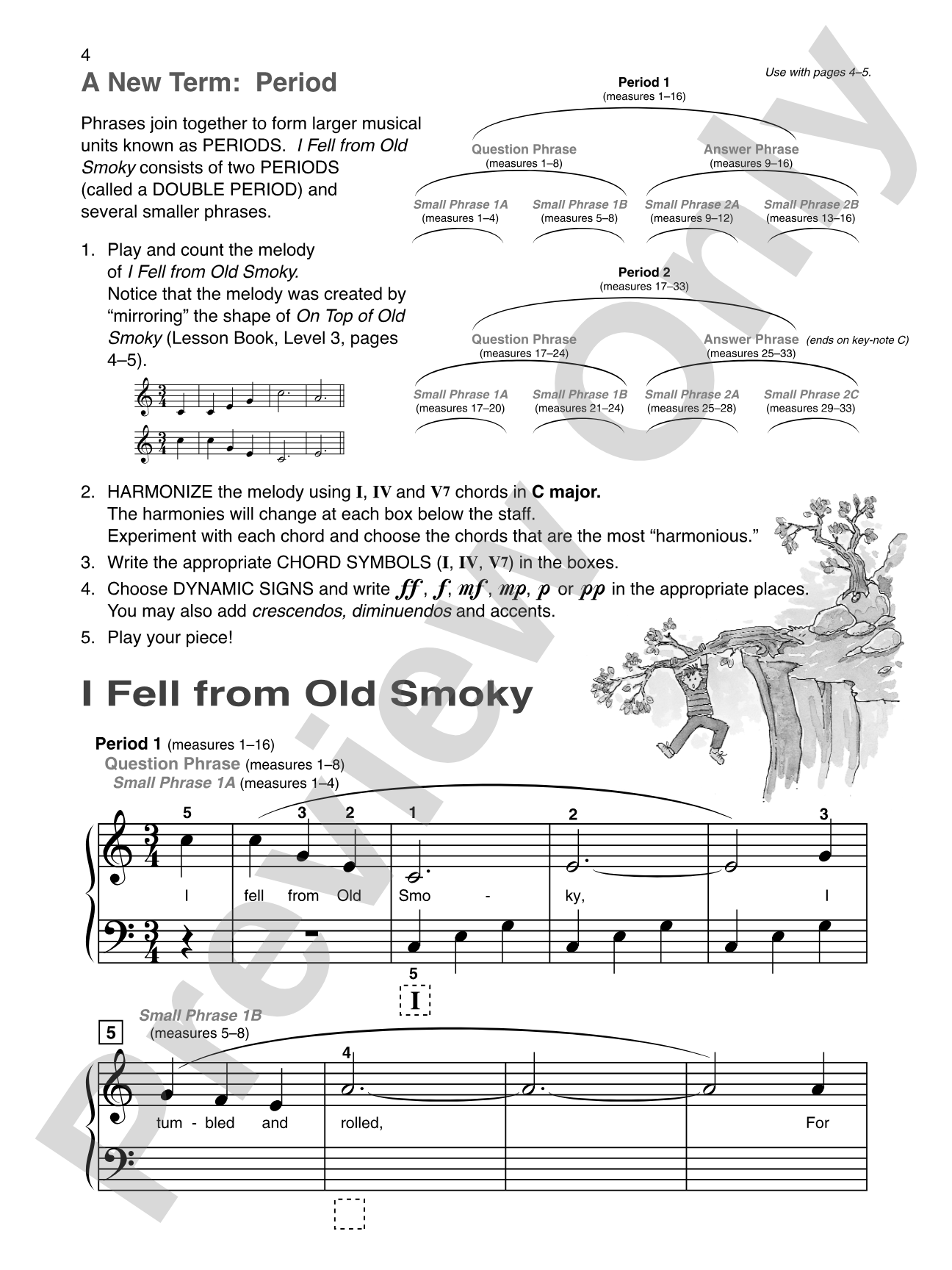
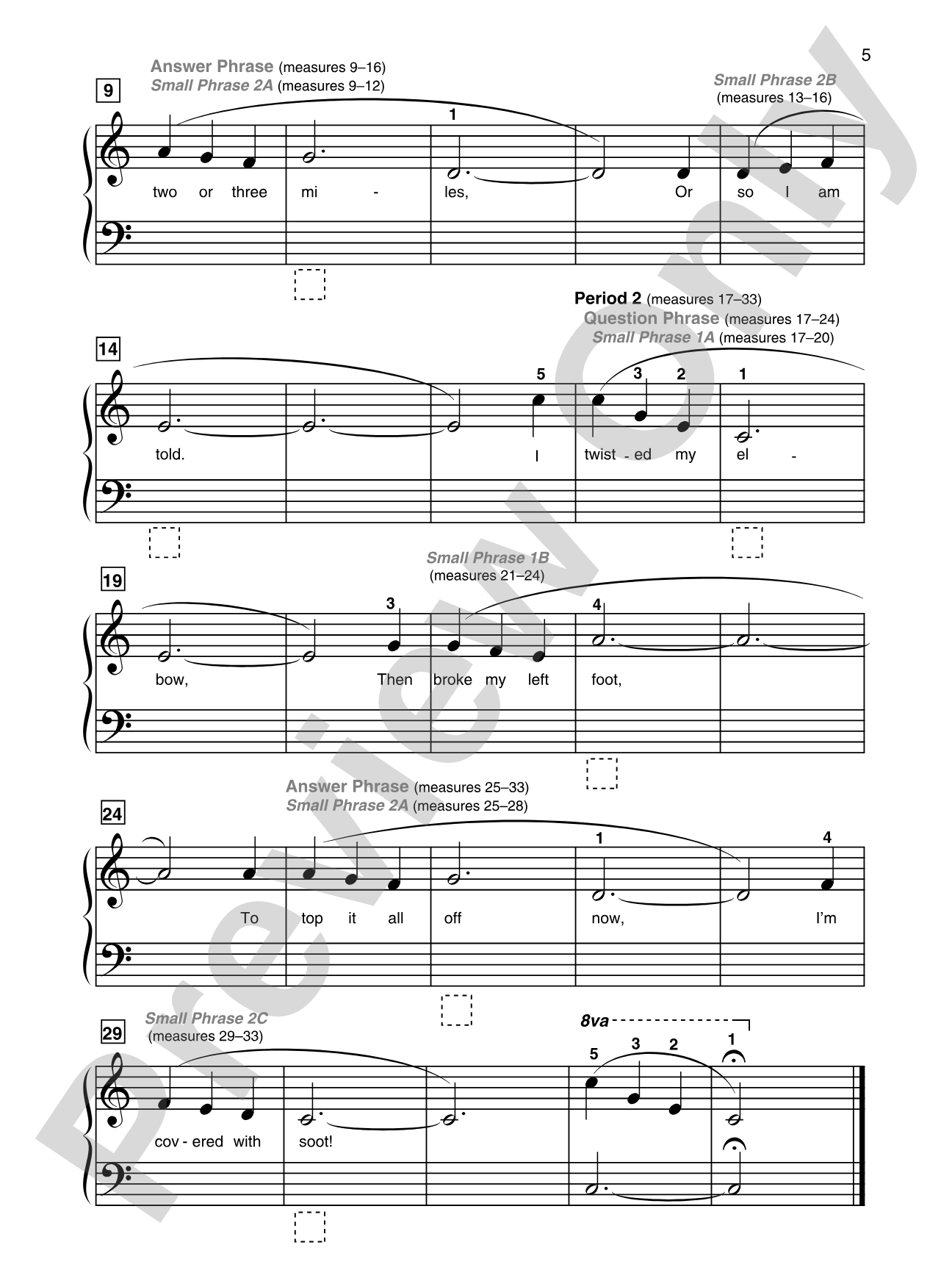
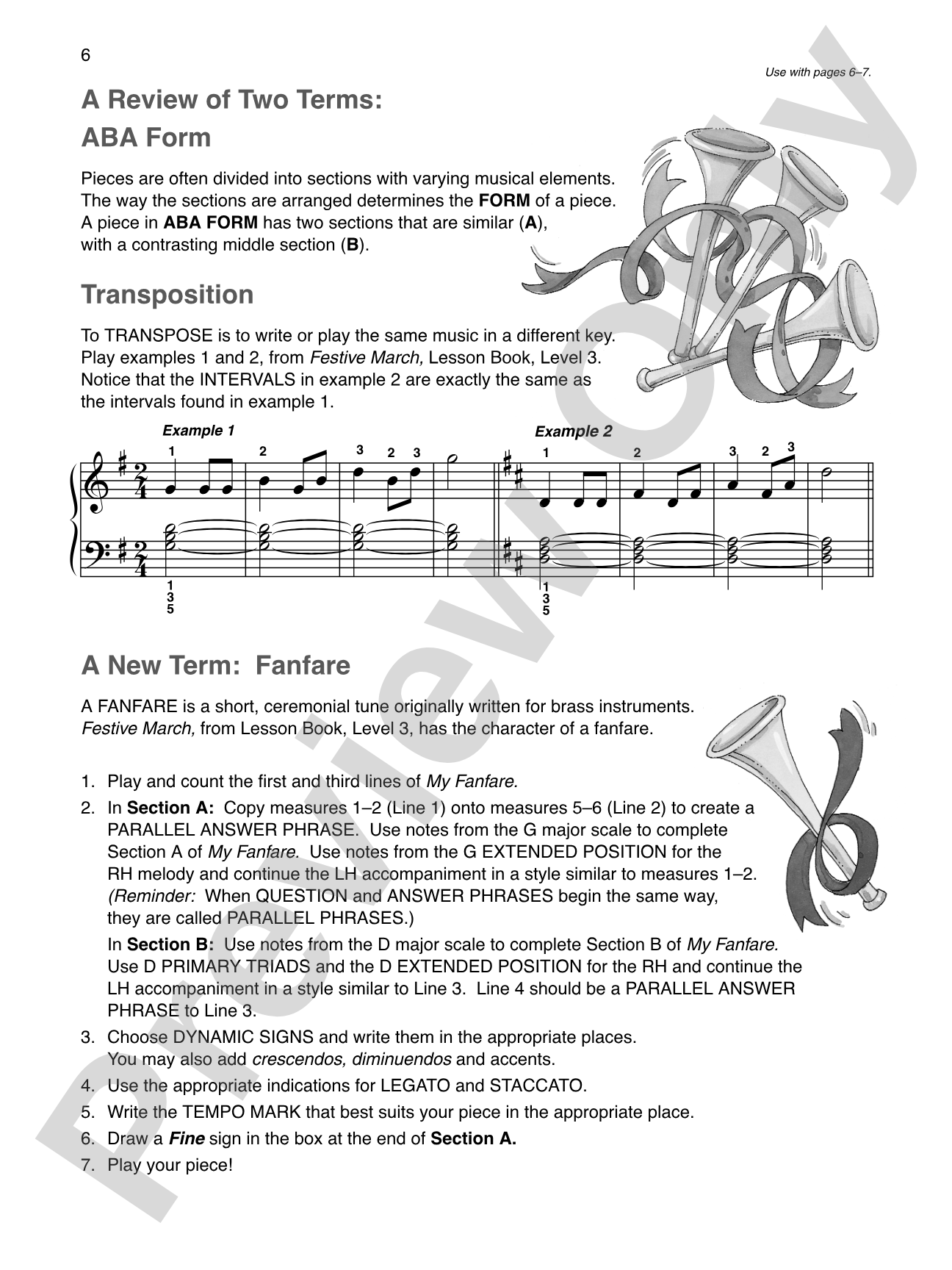
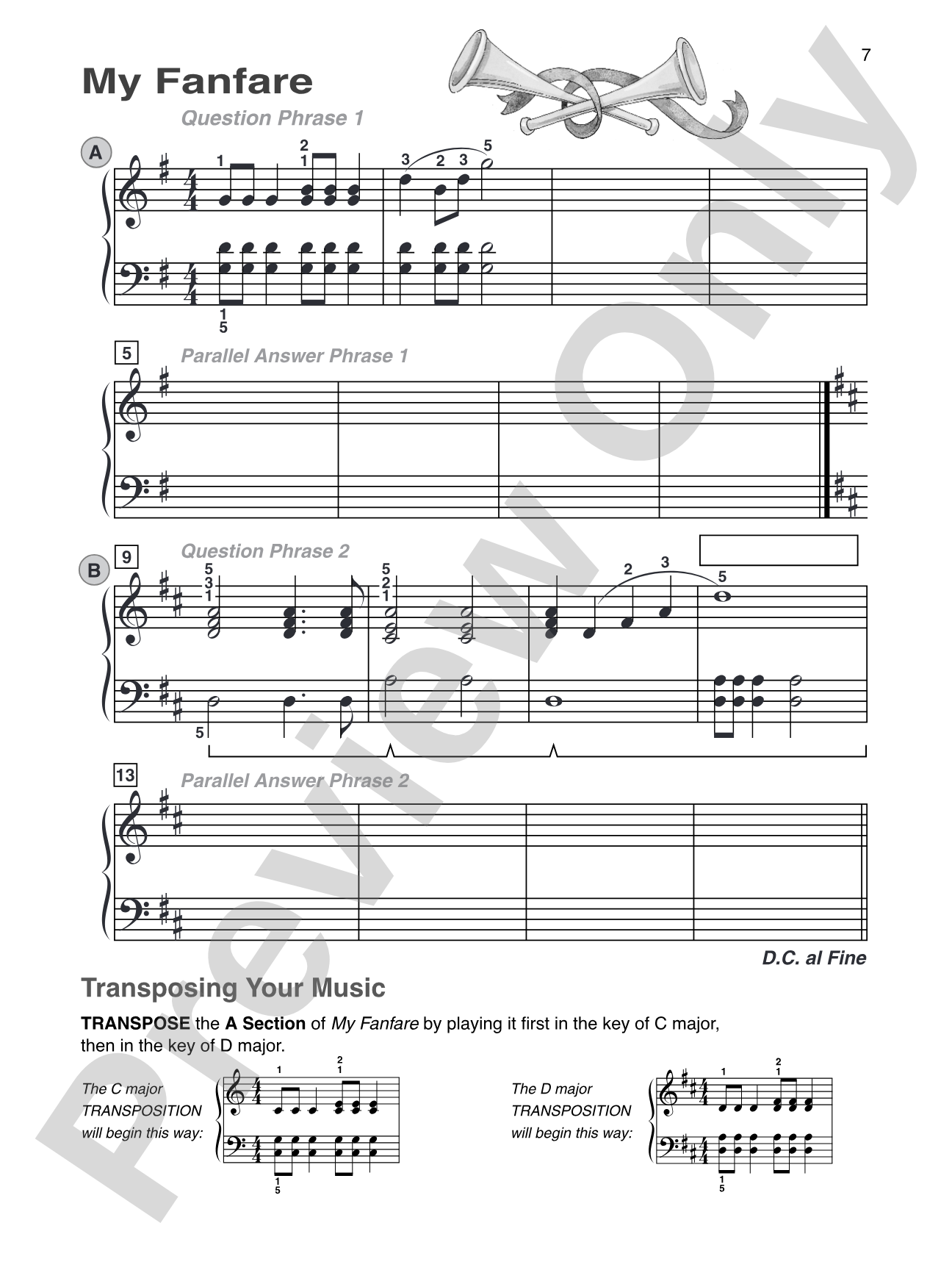
The Composition Book encourages the development of creativity and compositional skills, while reinforcing important musical concepts including music reading and notation. Although these books are correlated page-by-page with the Lesson Books, they can be used with any piano method.
Discover MakeMusic Cloud: thousands of interactive titles your students can play along with today.
Composition books at Level 3 often feel disconnected from what students are actually reading in their lesson books, but this one stays locked in step. Students aren't just completing worksheets; they're applying the exact concepts they're learning to make real musical choices, which means the compositional work lands with genuine purpose instead of feeling like busy work.
What to expect
Accessible invitation into musical creation. Students encounter familiar building blocks (the same intervals, rhythms, and concepts from their lessons) arranged into open-ended activities where their choices matter.
Who it's for
Beginning pianists working through Level 3 of Alfred's Basic Piano Library who need structured opportunities to compose rather than simply replicate. Teachers seeking a composition resource that reinforces reading and notation skills without requiring outside materials.
How to get the most out of it
Let students hear their completed compositions played back, even if you're performing them yourself at a slower tempo. The act of hearing their own notation come to life shifts something in their understanding of what notation actually does.
Encourage students to perform their work for classmates or family. A Level 3 composer needs an audience to understand that composition is communication, not just an exercise.
Revisit earlier compositions periodically. Students often spot what they'd do differently now, which builds critical listening skills and reinforces how much they've grown.
How to use it
Use this alongside regular lesson book instruction to transform passive learning into active creation. A few minutes each week spent composing solidifies musicianship faster than additional drilling of the same concepts, and gives reluctant students a reason to care about notation.
Skills your students will build
Reading staff notation and translating it into sound
Reinforcing interval recognition through melodic composition
Notating original rhythmic and melodic ideas accurately
Understanding music notation as a communication tool
Building confidence in musical decision-making
You May Also Like
Scan to Complete Your Purchase
Use your phone's camera to scan the code below
You'll log in on your phone and the order will be added to your account