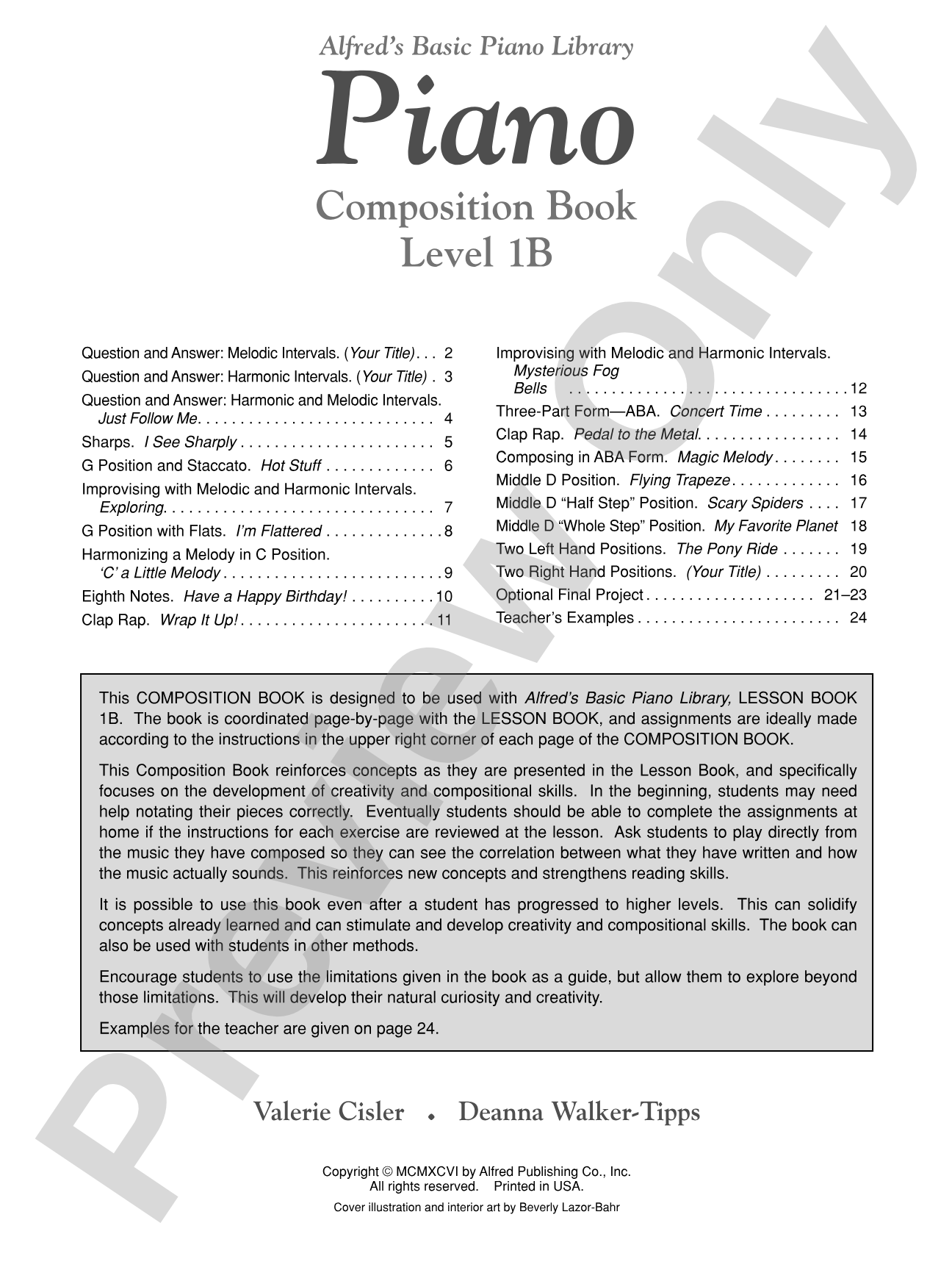
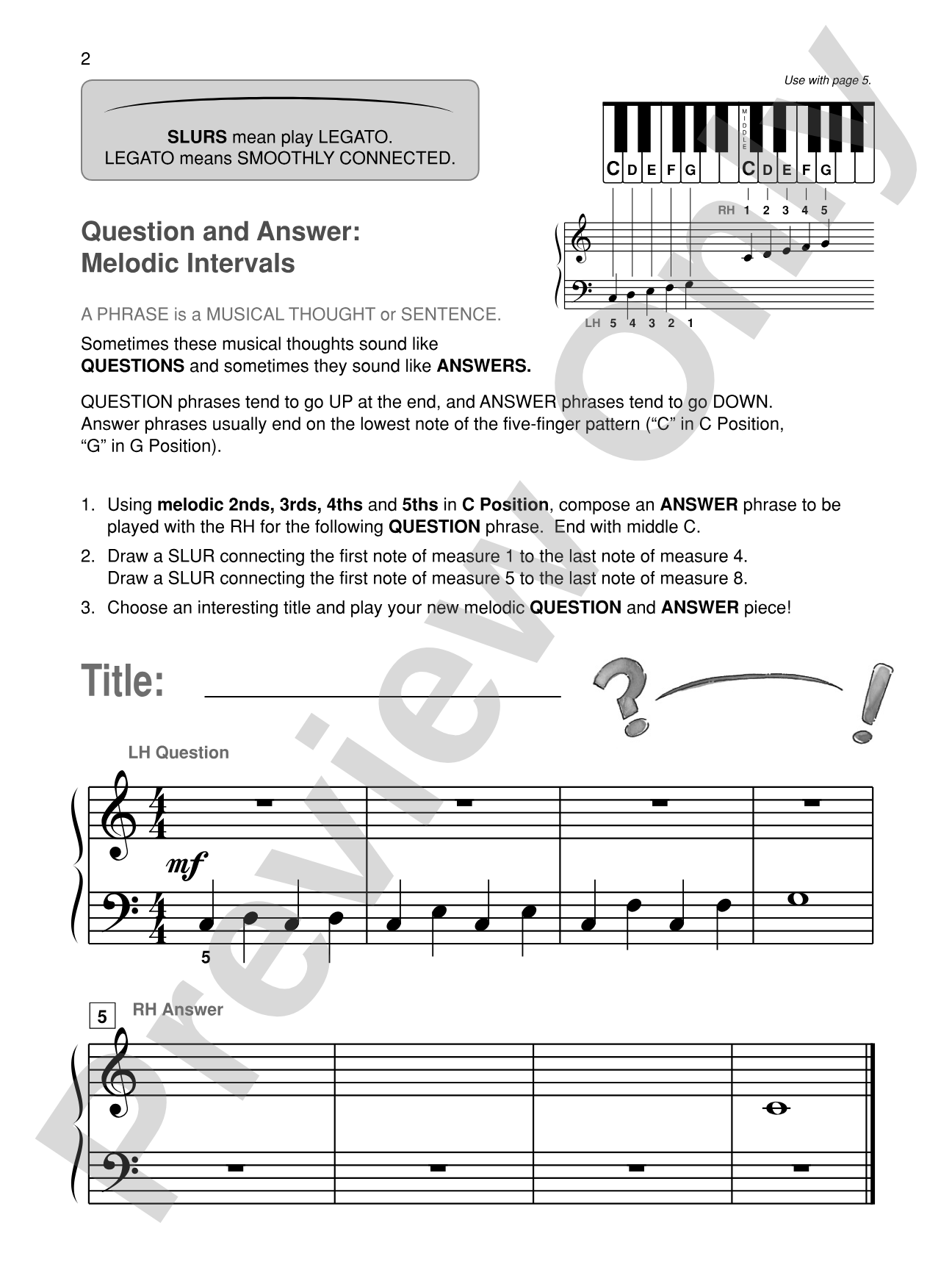
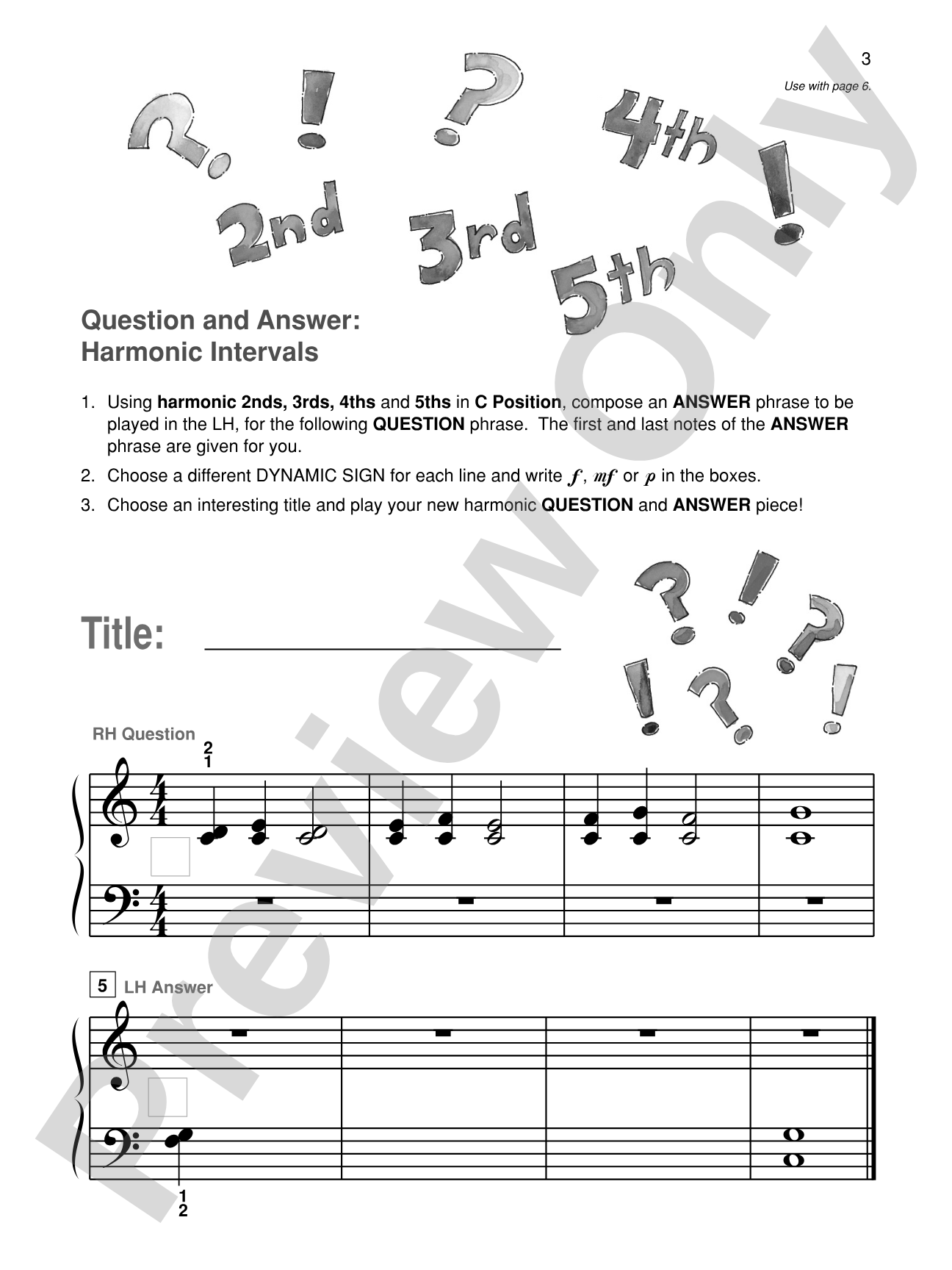
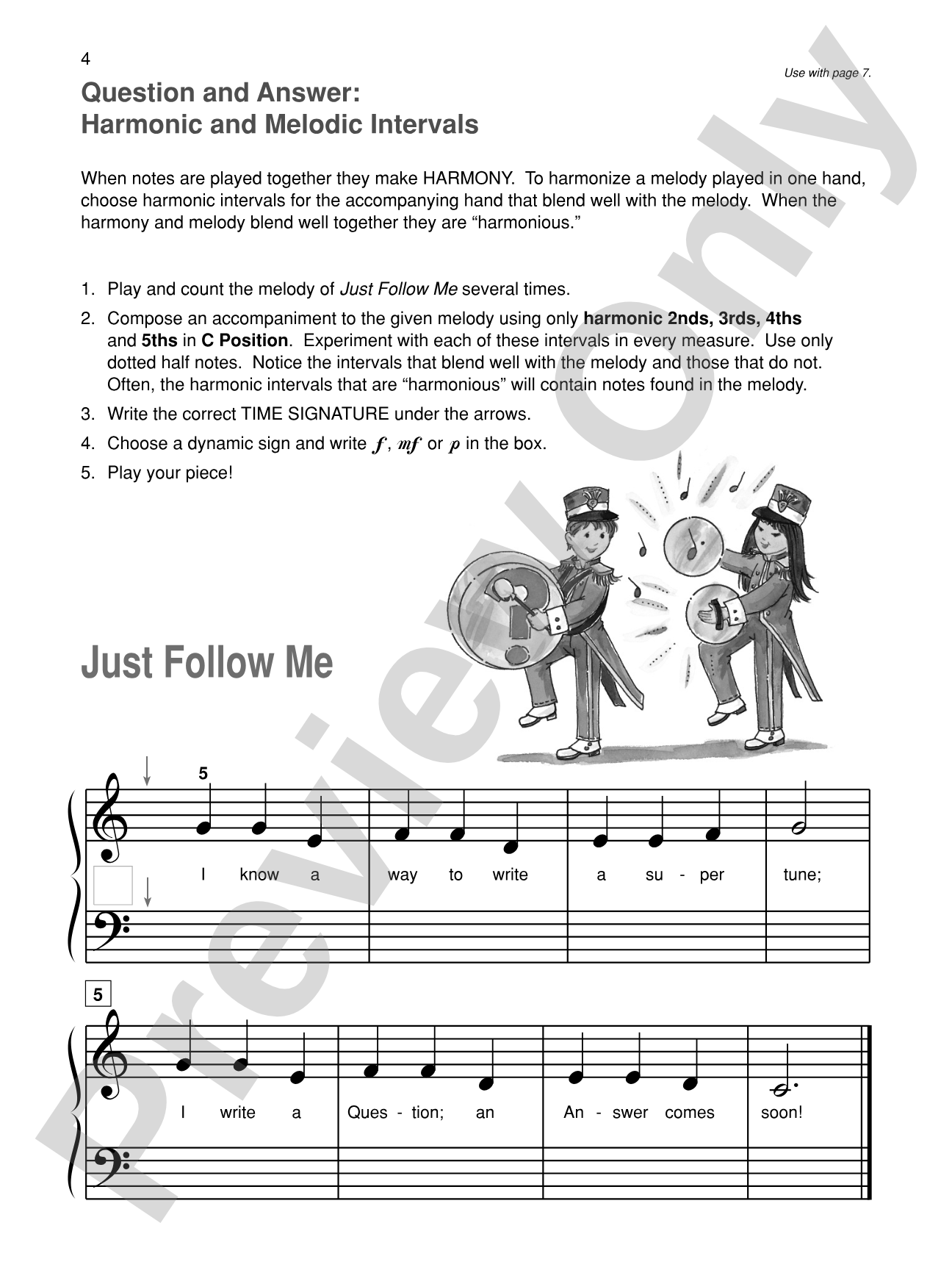
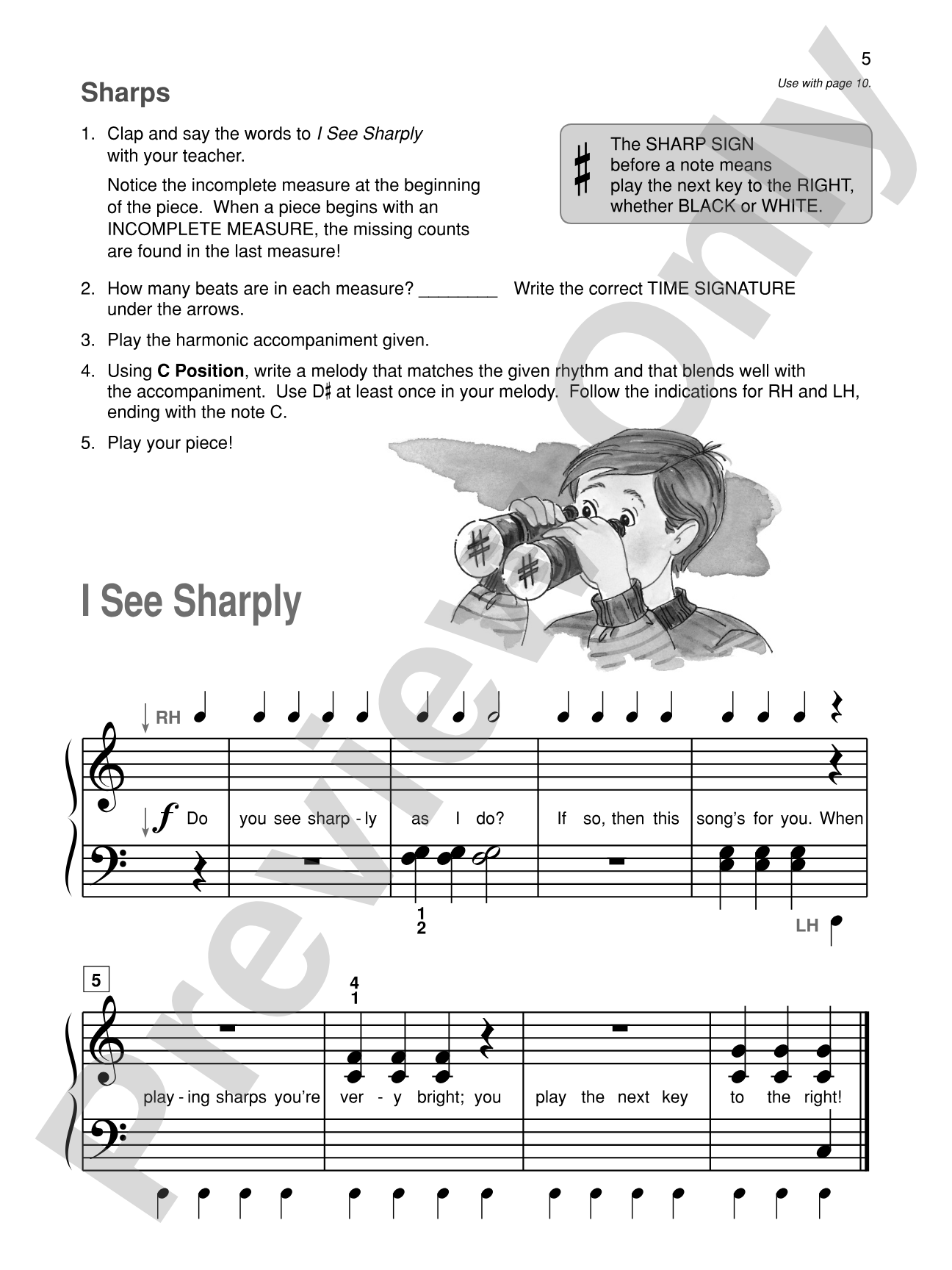
The Composition Book encourages the development of creativity and compositional skills, while reinforcing important musical concepts including music reading and notation. Although these books are correlated page-by-page with the Lesson Books, they can be used with any piano method.
Discover MakeMusic Cloud: thousands of interactive titles your students can play along with today.
Composition books at this level rarely strike the balance between scaffolding and genuine creative choice that this one does. Students aren't just filling in blanks; they're making real decisions about melody, rhythm, and notation that connect directly to what they're learning in their lesson books. The reinforcement is invisible to them because they're too busy being composers.
What to expect
Playful and empowering. Students encounter familiar rhythmic and melodic patterns they've been practicing, but suddenly they're in control. There's permission to try things, to make choices on the staff, and to see that notation is a tool for capturing their own musical ideas, not just a set of rules.
Who it's for
Early elementary piano students working through the 1B level of Alfred's Basic Piano Library who are ready to move beyond pure technique and start thinking like musicians. Teachers seeking structured compositional activities that naturally complement lesson-book material without requiring separate planning.
How to get the most out of it
Assign one activity at a time rather than expecting students to complete a full page in one week. Let each task breathe so the compositional thinking is focused.
Play back student compositions aloud whenever possible. Hearing their own work is transformative and shows them that what they've written on paper actually sounds like music.
Encourage students to experiment with adding dynamics and articulation after they've solidified their melodic choices. This layering deepens their understanding of notation.
How to use it
Weave assignments from this book into weekly lesson routines so composition becomes as normal as scale practice. A student who completes a short melodic composition in January might perform it as part of a casual recital in spring, giving tangible weight to their work. Alternatively, collect finished pieces and bind them into a class portfolio that demonstrates how individual students grow as thinkers across a full year of study.
Skills your students will build
Creating original melodies within specified rhythmic and harmonic frameworks
Understanding music notation as a means of recording personal musical ideas
Reinforcing interval recognition through compositional choices
Developing ear-to-paper connection by hearing and notating short musical phrases
Practicing proper stem and note placement on the staff with purpose
Building confidence in musical decision-making and creative risk-taking
You May Also Like
Scan to Complete Your Purchase
Use your phone's camera to scan the code below
You'll log in on your phone and the order will be added to your account