Alfred's Basic Piano Library: Audio for Ear Training Book, Level 3 Cover Image

Alfred's Basic Piano Library: Audio for Ear Training Book, Level 3: Digital Audio Download

$10.95 USD
Sale price  $10.95 USD Regular price 
Skip to product information
Alfred's Basic Piano Library: Audio for Ear Training Book, Level 3 Cover Image

Alfred's Basic Piano Library: Audio for Ear Training Book, Level 3: Digital Audio Download

By Gayle Kowalchyk and E. L. Lancaster

Level: 3

Item: 00-AA-0000449

$10.95
Digital Download
Description

Alfred's Basic Piano Library: Audio for Ear Training Book, Level 3: Digital Audio Download isn't in MakeMusic Cloud just yet...but it could be. Let us know you'd like to see it, and you'll help shape what comes next. In the meantime, start a free trial and dive into thousands of interactive titles your students can play along with today.

Sample Pages

No sample pages found.

Sample Audio
1 01 Tuning Note (A 440) --:--
2 02 Review --:--
3 03 Review --:--

01 Tuning Note (A 440)

0:00
0:00
Sample Video
Additional Details
Series: Alfred's Basic Piano Library
Publisher: Alfred Music
SKU: 00-AA-0000449

More about this title

About the Composer: Gayle Kowalchyk
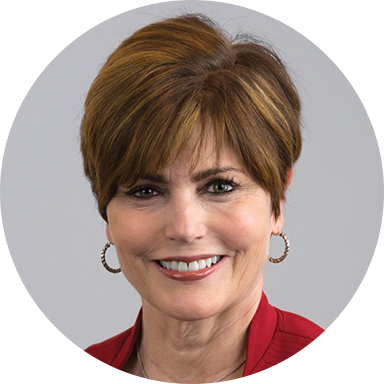
Gayle Kowalchyk

Gayle Kowalchyk holds a doctorate in piano pedagogy from Teachers College, Columbia University, and maintains an active teaching career at California State University, Northridge, where she instructs class piano, applied piano, and piano pedagogy. Her academic preparation spans three institutions: Ohio University (piano performance, 1977), Northwestern University (piano performance and pedagogy, 1979), and Columbia (Ed.D., 1989). She previously directed piano preparatory programs and coordinated class piano instruction at Eastern Illinois University.

Kowalchyk has shaped piano pedagogy at multiple universities across the country, from Oklahoma Baptist University to the University of Oklahoma, and spent summers teaching at the prestigious National Music Camp at Interlochen. She regularly presents clinics and pedagogical sessions at national conferences including MTNA and MENC, with particular expertise in group piano instruction. Working alongside her husband, E. L. Lancaster, she has authored over 300 educational piano publications, including the Alfred's Premier Piano Course and Music for Little Mozarts series. She currently serves as a clinician for Alfred Music.

Why we love this

A digital ear training resource crafted by someone who has spent decades teaching piano pedagogy at university level means the exercises are sequenced with real student development in mind. The audio reinforces what students are reading in the corresponding workbook, creating a closed loop where visual notation and listening skills strengthen each other. This bridges a genuine gap in Level 3 instruction where many students need help transferring written symbols into actual sound recognition.

What to expect

The exercises progress logically from simple to moderately complex, building student confidence as intervals, rhythmic patterns, and melodic phrases become increasingly recognizable. Each audio segment feels like a patient teacher repeating examples at the precise pace students need to internalize the concept.

Who it's for

Piano students working through Level 3 of Alfred's Basic Piano Library who benefit from systematic ear training guided by professional audio. Teachers seeking a reliable, structured supplement to develop listening skills alongside reading comprehension will find this especially useful.

How to get the most out of it

  • Play the audio examples multiple times before asking students to respond. Familiarity builds confidence and isolates the listening task from memory burden.
  • Have students sing or hum the patterns they hear before writing answers. The kinesthetic connection between ear and voice deepens interval and melodic awareness.
  • Pause between examples to allow processing time. Rushing through diminishes the training effect and frustrates students who need moments to consolidate what they heard.

How to use it

Use these recordings during weekly lesson time to dedicate 10 to 15 minutes specifically to ear training without competing demands. They work equally well as independent practice assignments students complete between lessons, allowing home practice to deepen what started in the studio.

Skills your students will build

  • Interval recognition (major and minor seconds, thirds, fourths, fifths)
  • Melodic pattern memory and recall
  • Rhythmic dictation with mixed meters
  • Harmonic listening (major and minor tonic triads)
  • Single note and multi-note discrimination
  • Connecting aural patterns to written notation

You May Also Like