Alfred's Basic Group Piano Course, Book 2  Cover Image

Alfred's Basic Group Piano Course, Book 2: Digital Audio Download

$16.99 USD
Sale price  $16.99 USD Regular price 
Skip to product information
Alfred's Basic Group Piano Course, Book 2  Cover Image

Alfred's Basic Group Piano Course, Book 2: Digital Audio Download

By Willard A. Palmer, Morton Manus, and Amanda Vick Lethco

Level: 2

Item: 00-AA-0000300

$16.99
Digital Download
Description

Alfred's Basic Group Piano Course, Book 2: Digital Audio Download isn't in MakeMusic Cloud just yet...but it could be. Let us know you'd like to see it, and you'll help shape what comes next. In the meantime, start a free trial and dive into thousands of interactive titles your students can play along with today.

Sample Pages

No sample pages found.

Sample Audio
1 CD 1 - Track 01 --:--
2 CD 1 - Track 02 --:--
3 CD 1 - Track 03 --:--

CD 1 - Track 01

0:00
0:00
Sample Video
Additional Details
Series: Alfred's Basic Piano Library
Publisher: Alfred Music
SKU: 00-AA-0000300

More about this title

About the Composer: Willard A. Palmer
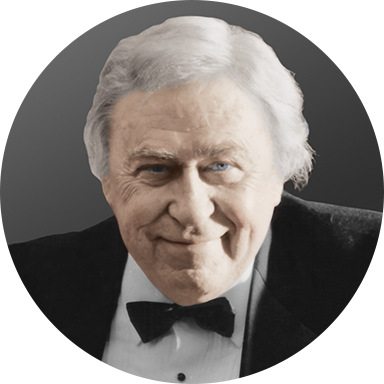
Willard A. Palmer

Dr. Willard A. Palmer stands as a foundational figure in keyboard pedagogy, having composed over 789 published works spanning piano methods, accordion repertoire, guitar instruction, choral music, and solo pieces translated across German, Japanese, French, Dutch, and Spanish. His musical foundation began early—a child prodigy who performed piano on radio at age 13—and deepened through study with Mae Vardeman, whose emphasis on technique paired with improvisation shaped his teaching philosophy. Palmer's scholarly work earned him international recognition as an expert in Baroque ornamentation, leading to his research-driven Alfred Masterworks series and honorary doctorates in both Humanities (1971) and Music (1983).

Beyond composition, Palmer shaped music education through decades of college teaching, establishing the first successful accordion courses at the University of Houston while maintaining his role as choir director at Memorial Lutheran Church in Houston. His combination of performer's instinct, rigorous musicological training from the Conservatory of Leipzig, and practical classroom experience created methods that balance technical rigor with genuine musical enjoyment—a philosophy evident in every Alfred's Basic Piano Course release.

Why we love this

Book 2 maintains the methodical scaffolding that makes Alfred's Basic Group Piano work in ensemble settings while introducing students to richer harmonic vocabulary and more expressive musical gestures. The digital audio component transforms solo practice into a supported learning experience, allowing young pianists to hear correct interpretations and maintain ensemble awareness even outside the group lesson. Palmer's decades teaching piano fundamentals shine through in repertoire that feels genuinely musical rather than merely technical.

What to expect

Book 2 opens up the piano with greater harmonic movement and longer melodic lines that feel more substantial than beginning repertoire. Students experience genuine musical satisfaction as they handle accompaniment patterns with growing independence while exploring pieces that engage both hands in genuinely collaborative ways.

Who it's for

This digital audio download supports piano teachers running group lessons at the intermediate level and individual students working through Book 2 at home between lessons. Young pianists who benefit from hearing correct interpretations, pacing, and musical phrasing will find the audio invaluable for bridging the gap between lesson and practice.

How to get the most out of it

  • Listen to the digital audio first before attempting a piece, paying attention to tempo, phrasing, and how melody sits against accompaniment patterns you'll eventually play.
  • Work hands separately through any passage where the left hand introduces a new pattern or accompaniment figure; the audio reinforces what you're aiming for, but physical security comes from isolation.
  • Practice pieces at a slower tempo than the recording, then gradually increase speed only when both hands coordinate confidently; the audio sets a target, not a race.
  • Mark dynamics and articulation marks in your score as you listen; hearing where the recording shapes phrases helps you understand musicality beyond note names.

How to use it

Use the audio files during group lessons to demonstrate pieces before students work them independently, establishing a unified interpretation that strengthens ensemble cohesion when the group plays together. For students practicing at home, the recording functions as a patient practice partner, allowing them to self-correct tempo and phrasing without waiting for the next lesson.

Skills your students will build

  • Playing broken chord accompaniment patterns in the left hand while maintaining melodic independence in the right hand
  • Reading and executing dynamic markings and articulation (staccato, legato) that shape musical expression
  • Coordinating hands at moderate tempos with increased rhythmic complexity
  • Recognizing and playing in multiple keys beyond C major
  • Understanding phrase structure and musical phrasing through listening and imitation

You May Also Like