Alfred's Basic Graded Piano Course, Theory Book 1 Cover Image

Alfred's Basic Graded Piano Course, Theory Book 1: Piano Book

$5.99 USD
Sale price  $5.99 USD Regular price 
Skip to product information
Alfred's Basic Graded Piano Course, Theory Book 1 Cover Image

Alfred's Basic Graded Piano Course, Theory Book 1: Piano Book

Elementary

By Willard A. Palmer, Morton Manus, and Amanda Vick Lethco

Item: 00-20184UK

$5.99
Shipped

One moment…

Description
This Alfred's Basic Graded Piano Course was written in response to many requests from teachers for an Alfred course that will enable students to pass the graded exams that are so much a part of the learning experience throughout the world. The Lesson Book introduces sight-reading and technique as well as preparation for the exam pieces. The correlated Theory Book prepares students for the theory exam at the same time. By including some exam pieces from previous practical syllabuses and also a mock theory paper from the theory exam in the correlated theory books, you, as a teacher, can judge perfectly the appropriate time to enter your pupil for the graded exam. This will make passing a formality but, more importantly, give your pupil the confidence to achieve the merits and distinctions that inspire and reward their hard work.

Alfred's Basic Graded Piano Course, Theory Book 1: Piano Book isn't in MakeMusic Cloud just yet...but it could be. Let us know you'd like to see it, and you'll help shape what comes next. In the meantime, start a free trial and dive into thousands of interactive titles your students can play along with today.

Sample Pages

Sample Audio
No sample audio found.
Sample Video
Additional Details
Series: Alfred's Basic Graded Piano Course
Publisher: Alfred Music
Page Count: 44
ISBN10: 1-4706-1309-3
ISBN13: 978-1-4706-1309-9
UPC: 9781470613099
SKU: 00-20184UK

More about this title

About the Composer: Willard A. Palmer
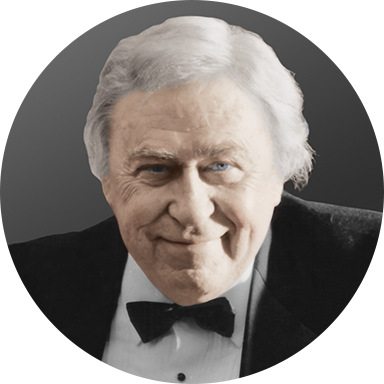
Willard A. Palmer

Willard A. Palmer was a prolific composer and pedagogue whose output exceeded 789 published works spanning accordion, piano, organ, guitar, and choral music. His compositions have been translated into German, Japanese, French, Dutch, and Spanish, establishing his influence across multiple continents and musical traditions. A child prodigy who performed piano on radio at age 13, Palmer studied under Mae Vardeman, whose emphasis on technical foundation and improvisational freedom shaped his approach to music-making.

Palmer's academic career included founding the first college accordion program at the University of Houston, where he taught for 18 years, and serving as director of the Riemenschneider Bach Institute. His scholarly expertise in Baroque ornamentation informed the Alfred Masterworks series and earned him international recognition as an authority on historical performance practice. He received a Doctor of Humanities degree in 1971 and a Doctor of Music degree in 1983 in recognition of his musicological research and contributions to music education.

Why we love this

This theory book aligns directly with graded exam requirements, eliminating guesswork about what to teach and when. The inclusion of actual exam pieces and a mock theory paper lets you track readiness objectively, turning exam entry from a gamble into a confident decision rooted in demonstrated mastery.

What to expect

Purposeful and transparent. The theory unfolds in small, digestible units with a clear connection to the music students are already playing, making abstract concepts feel less like busywork and more like tools for understanding what their hands are doing.

Who it's for

This theory book serves students preparing for graded piano exams who need systematic preparation aligned with practical repertoire. It works equally well for teachers who want a structured, transparent curriculum that connects theory study to the actual pieces students are learning.

How to get the most out of it

  • Work through theory concepts in tandem with the corresponding lesson material in the Lesson Book; the coordinated progression ensures students encounter new harmonic or rhythmic ideas in context before isolating them for study.
  • Use the mock theory paper as a diagnostic tool mid-year to identify gaps before formal exam preparation begins, rather than as a final assessment.
  • Encourage students to write out their own examples for each concept covered, reinforcing understanding beyond recognition and rote memorization.

How to use it

Integrate this into your teaching routine as a weekly complement to lesson work, using it to build theory fluency alongside repertoire. The exam pieces included give you natural benchmarks to assess when a student is ready to attempt formal grading.

Skills your students will build

  • Reading and identifying basic staff notation and clef symbols
  • Understanding interval identification and spelling in treble and bass clefs
  • Recognizing major and minor scales and their construction
  • Identifying harmonic progressions and chord functions
  • Analyzing phrase structure and form in short pieces
  • Applying music terminology and notation conventions
  • Developing test-taking strategies for timed written exams

You May Also Like