

Alfred's Basic Chord Approach to Electronic Keyboards: Lesson Book 3: Electronic Keyboard Book
$9.99 USD
Sale price
$9.99 USD
Regular price
Skip to product information


Alfred's Basic Chord Approach to Electronic Keyboards: Lesson Book 3: Electronic Keyboard Book
A Beginning Method for All Instruments with Automatic Rhythms & Chords
By Willard A. Palmer, Thomas Palmer, and Morton Manus
Level: 3
Item: 00-3111
$9.99
One moment…
Description
Book 3 deals primarily with extended positions of the right hand, the introduction of the A minor and D minor keys and the development of technical skills such as the crossing under of the thumb. Triplets are introduced as well as 'fingered' A minor and D minor chords and much more.


Alfred's Basic Chord Approach to Electronic Keyboards: Lesson Book 3: Electronic Keyboard Book isn't in MakeMusic Cloud just yet...but it could be. Let us know you'd like to see it, and you'll help shape what comes next. In the meantime, start a free trial and dive into thousands of interactive titles your students can play along with today.
Request This Title
Tell us you want it.
Start Your Free Trial
Explore everything that's ready to play right now.
Sample Pages
No sample pages found.
Sample Audio
No sample audio found.
Sample Video
No sample videos found.
Additional Details
More about this title
About the Authors
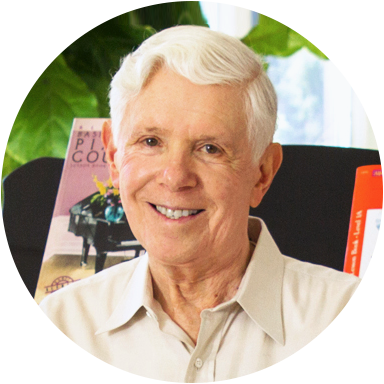
Morton Manus served as president of Alfred Music Publishing Co., Inc. throughout a transformative period spanning 1952 to 2016. He inherited the company from his father Sam, who had founded Manus Music in 1922 during New York's Tin Pan Alley era and later merged it with Alfred & Company in 1930. Morty joined the family business in the late 1940s shortly after earning a business degree from City College of New York.
Under Manus's leadership, Alfred Music evolved from a popular sheet music publisher into a comprehensive music education company. As both a clarinetist and pianist, he championed the development of instructional series beginning with accordion materials, then expanding to guitar, piano, and recorder methods. The company's growth prompted a major relocation in 1975, moving headquarters to Los Angeles while establishing a distribution center in upstate New York. By 2005, Alfred Music had grown substantially enough to acquire Warner Bros. Publications and secure rights to the EMI Catalogue Partnership.
Manus's sons Ron and Steve continued building the family legacy, joining the company in 1988 and 1992 respectively. Together they expanded Alfred Music's reach across multiple continents, opening offices in Australia, Germany, Singapore, and the UK while maintaining focus on world-class instructional and performance music materials.
Under Manus's leadership, Alfred Music evolved from a popular sheet music publisher into a comprehensive music education company. As both a clarinetist and pianist, he championed the development of instructional series beginning with accordion materials, then expanding to guitar, piano, and recorder methods. The company's growth prompted a major relocation in 1975, moving headquarters to Los Angeles while establishing a distribution center in upstate New York. By 2005, Alfred Music had grown substantially enough to acquire Warner Bros. Publications and secure rights to the EMI Catalogue Partnership.
Manus's sons Ron and Steve continued building the family legacy, joining the company in 1988 and 1992 respectively. Together they expanded Alfred Music's reach across multiple continents, opening offices in Australia, Germany, Singapore, and the UK while maintaining focus on world-class instructional and performance music materials.
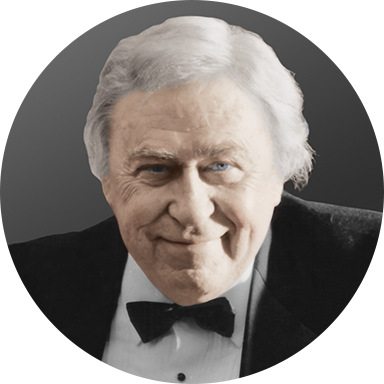
Dr. Willard Palmer stands as an internationally recognized musician, educator, and scholar whose prolific output shaped multiple musical disciplines. Over his career, he created 789 published compositions spanning accordion methods, piano pedagogies, a Hammond Chord Organ method, guitar instruction materials, numerous solo pieces, and substantial choral repertoire. His works have reached global audiences through translations into German, Japanese, French, Dutch, and Spanish.
Palmer's scholarly contributions earned him widespread acclaim and institutional honors. His expertise in Baroque music ornamentation became foundational to the prestigious Alfred Masterworks publication series. He received a Doctor of Humanities degree in 1971 and a Doctor of Music degree in 1983 in recognition of his musicological research and innovations in music education. For 18 years, he taught groundbreaking college accordion courses at the University of Houston while conducting the choir at Memorial Lutheran Church in Houston, Texas.
Palmer's musical journey began remarkably early; he performed piano on radio broadcasts at age 13 after studying with Mae Vardeman, whose instruction in proper technique fostered his improvisational skills. He furthered his education at Whitworth College and Millsaps College, where he continued performing accordion and piano in campus and radio ensembles. A two-year scholarship enabled him to study at the Conservatory of Leipzig in Germany. He later completed post-graduate work at the University of Houston and directed the Riemenschneider Bach Institute while maintaining memberships in the American Federation of Musicians, the American Accordionists' Association, and the American Society of Composers, Authors and Publishers.
Palmer's scholarly contributions earned him widespread acclaim and institutional honors. His expertise in Baroque music ornamentation became foundational to the prestigious Alfred Masterworks publication series. He received a Doctor of Humanities degree in 1971 and a Doctor of Music degree in 1983 in recognition of his musicological research and innovations in music education. For 18 years, he taught groundbreaking college accordion courses at the University of Houston while conducting the choir at Memorial Lutheran Church in Houston, Texas.
Palmer's musical journey began remarkably early; he performed piano on radio broadcasts at age 13 after studying with Mae Vardeman, whose instruction in proper technique fostered his improvisational skills. He furthered his education at Whitworth College and Millsaps College, where he continued performing accordion and piano in campus and radio ensembles. A two-year scholarship enabled him to study at the Conservatory of Leipzig in Germany. He later completed post-graduate work at the University of Houston and directed the Riemenschneider Bach Institute while maintaining memberships in the American Federation of Musicians, the American Accordionists' Association, and the American Society of Composers, Authors and Publishers.