

Alfred's Basic Chord Approach to Electronic Keyboards: Lesson Book 1: Electronic Keyboard Book
$9.99 USD
Sale price
$9.99 USD
Regular price
Skip to product information


Alfred's Basic Chord Approach to Electronic Keyboards: Lesson Book 1: Electronic Keyboard Book
A Beginning Method for All Instruments with Automatic Rhythms & Chords
By Willard A. Palmer, Thomas Palmer, and Morton Manus
Level: 1
Item: 00-3097
$9.99
One moment…
Description
This method uses the great capabilities of the electronic keyboard to teach keyboard musicianship. Book 1 teaches 2nds, 3rds, 4ths and 5ths in C and G positions; 4/4 and 3/4 time signatures; whole, half, and quarter notes; rests; basic note reading; musical terms; 'single-fingered' chords and 'fingered' G and D7 chords.


Alfred's Basic Chord Approach to Electronic Keyboards: Lesson Book 1: Electronic Keyboard Book isn't in MakeMusic Cloud just yet...but it could be. Let us know you'd like to see it, and you'll help shape what comes next. In the meantime, start a free trial and dive into thousands of interactive titles your students can play along with today.
Request This Title
Tell us you want it.
Start Your Free Trial
Explore everything that's ready to play right now.
Sample Audio
No sample audio found.
Sample Video
No sample videos found.
Additional Details
More about this title
About the Authors
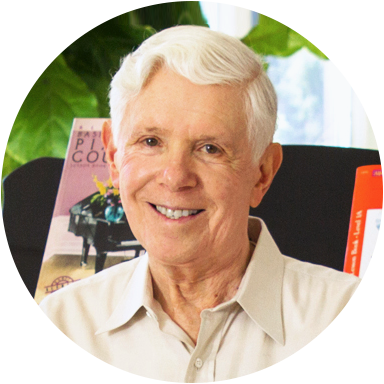
Morton Manus served as president of Alfred Music Publishing Co., Inc. from 1952 to 2016. He joined the family business in the late 1940s after earning a business degree from City College of New York. A accomplished clarinetist and pianist, Manus transformed Alfred Music from a traditional sheet music publisher into a comprehensive music education company.
During his tenure, Manus pioneered the development of instructional materials across multiple instruments, including accordion, guitar, piano, and recorder. Under his leadership, Alfred Music expanded dramatically throughout the 1950s and beyond, necessitating a major relocation of headquarters to Los Angeles in 1975 and the establishment of a distribution center in upstate New York. The company also grew its international presence with offices in Australia, Germany, Singapore, and the UK.
Manus's sons, Ron and Steve, carried forward the family legacy by joining the company in 1988 and 1992 respectively. Together they continued expanding Alfred Music's educational methods and performance catalogs while steering major acquisitions, including Warner Bros. Publications in 2005, which brought the EMI Catalogue Partnership into the company's portfolio.
During his tenure, Manus pioneered the development of instructional materials across multiple instruments, including accordion, guitar, piano, and recorder. Under his leadership, Alfred Music expanded dramatically throughout the 1950s and beyond, necessitating a major relocation of headquarters to Los Angeles in 1975 and the establishment of a distribution center in upstate New York. The company also grew its international presence with offices in Australia, Germany, Singapore, and the UK.
Manus's sons, Ron and Steve, carried forward the family legacy by joining the company in 1988 and 1992 respectively. Together they continued expanding Alfred Music's educational methods and performance catalogs while steering major acquisitions, including Warner Bros. Publications in 2005, which brought the EMI Catalogue Partnership into the company's portfolio.
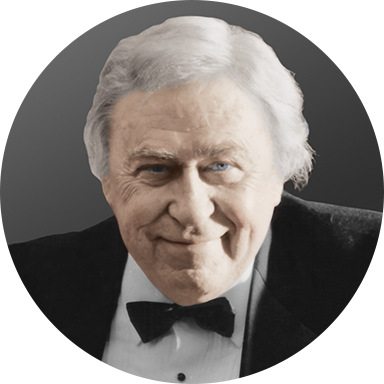
Dr. Willard Palmer stands as a globally recognized musician, educator, and scholar who created an extraordinary catalog of 789 published compositions. His works span accordion methods, piano and guitar instruction books, Hammond organ instruction, solo pieces, and choral compositions, many translated into German, Japanese, French, Dutch, and Spanish. For many years, he served as choir director at Memorial Lutheran Church in Houston, Texas.
Palmer's musical journey began as a child prodigy, performing piano on radio broadcasts at age 13. Under the mentorship of pianist Mae Vardeman, he developed strong piano technique and improvisational skills that would shape his entire career. He pursued higher education at Whitworth College in Brookhaven, Mississippi and Millsaps College in Jackson, Mississippi, where he performed accordion and piano on local radio and in campus ensembles. Following his Bachelor's degree from Millsaps, a two-year scholarship enabled him to study at the Conservatory of Leipzig in Germany. He later completed postgraduate studies at the University of Houston and joined their faculty, where he taught the first successful college-level accordion courses for 18 years.
Palmer's scholarly reputation grew through meticulous research into Classical and Baroque music and pedagogical approaches. Recognized internationally as an expert in Baroque music ornamentation, his expertise became the foundation for the acclaimed Alfred Masterworks publication series. His contributions to musicological research earned him a Doctor of Humanities degree in 1971 and a Doctor of Music degree in 1983. He served as director of the Riemenschneider Bach Institute and held membership in the American Federation of Musicians Local #65, the American Accordionists' Association, and the American Society of Composers, Authors and Publishers.
Palmer's musical journey began as a child prodigy, performing piano on radio broadcasts at age 13. Under the mentorship of pianist Mae Vardeman, he developed strong piano technique and improvisational skills that would shape his entire career. He pursued higher education at Whitworth College in Brookhaven, Mississippi and Millsaps College in Jackson, Mississippi, where he performed accordion and piano on local radio and in campus ensembles. Following his Bachelor's degree from Millsaps, a two-year scholarship enabled him to study at the Conservatory of Leipzig in Germany. He later completed postgraduate studies at the University of Houston and joined their faculty, where he taught the first successful college-level accordion courses for 18 years.
Palmer's scholarly reputation grew through meticulous research into Classical and Baroque music and pedagogical approaches. Recognized internationally as an expert in Baroque music ornamentation, his expertise became the foundation for the acclaimed Alfred Masterworks publication series. His contributions to musicological research earned him a Doctor of Humanities degree in 1971 and a Doctor of Music degree in 1983. He served as director of the Riemenschneider Bach Institute and held membership in the American Federation of Musicians Local #65, the American Accordionists' Association, and the American Society of Composers, Authors and Publishers.