
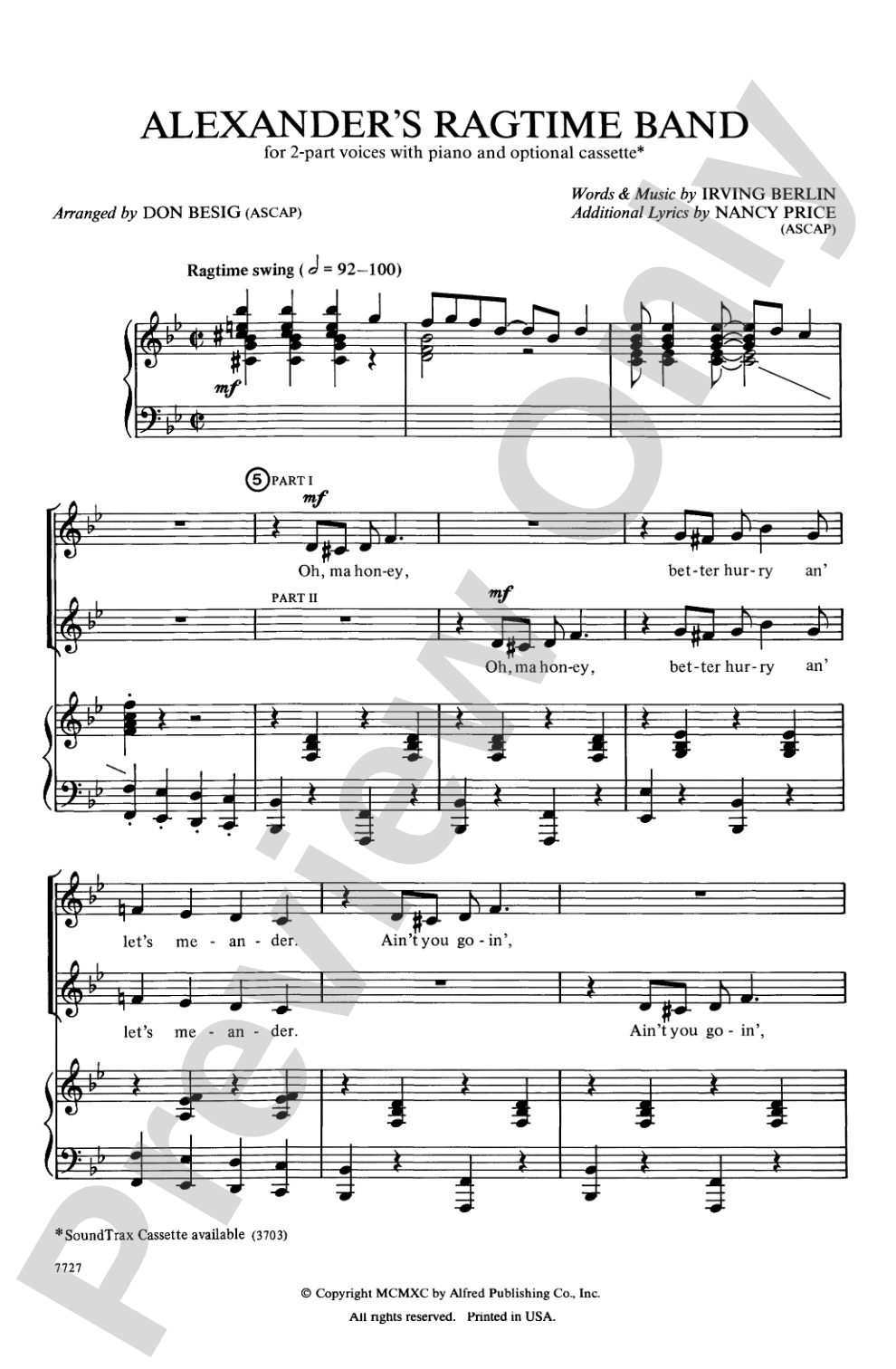
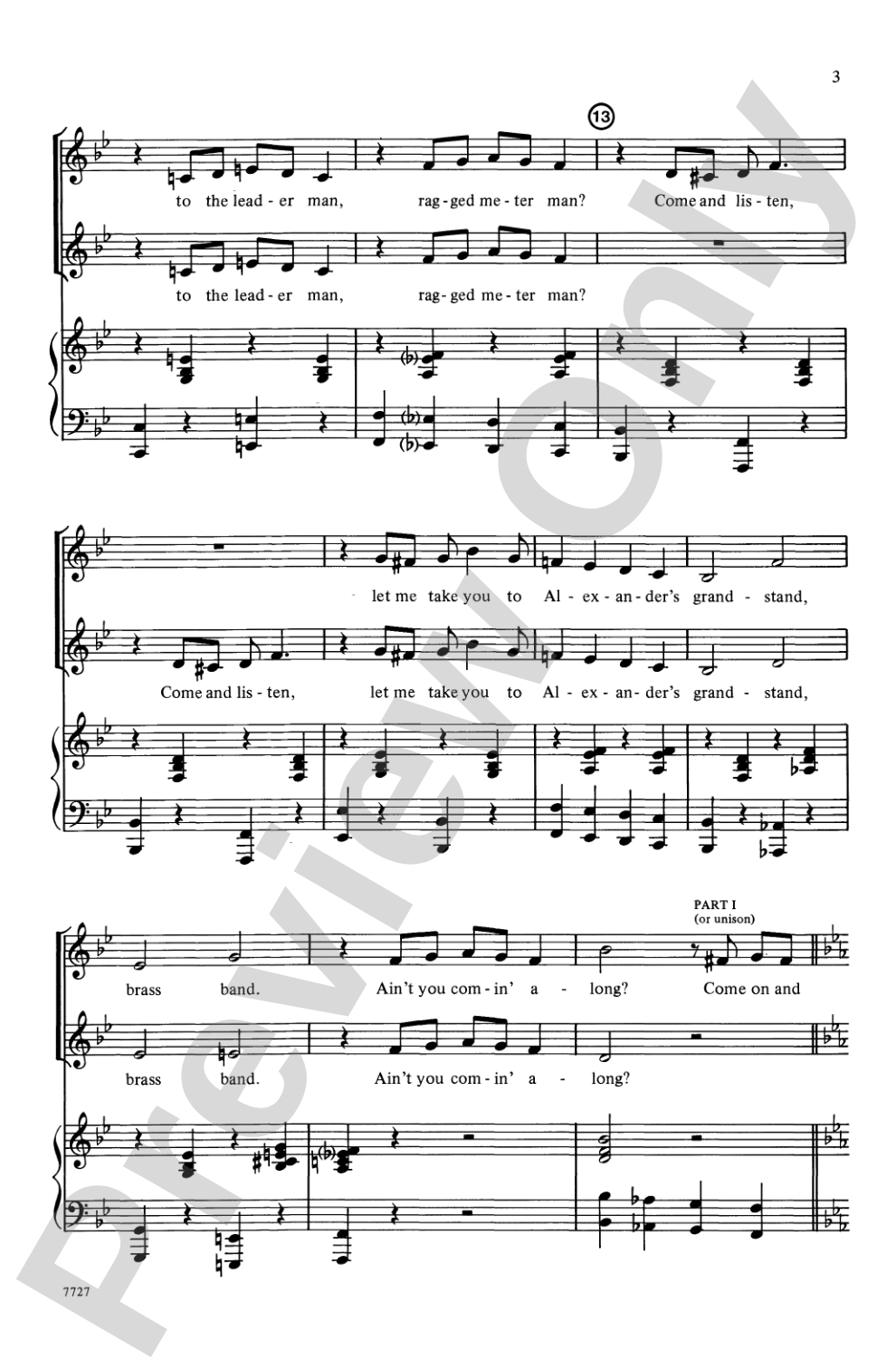
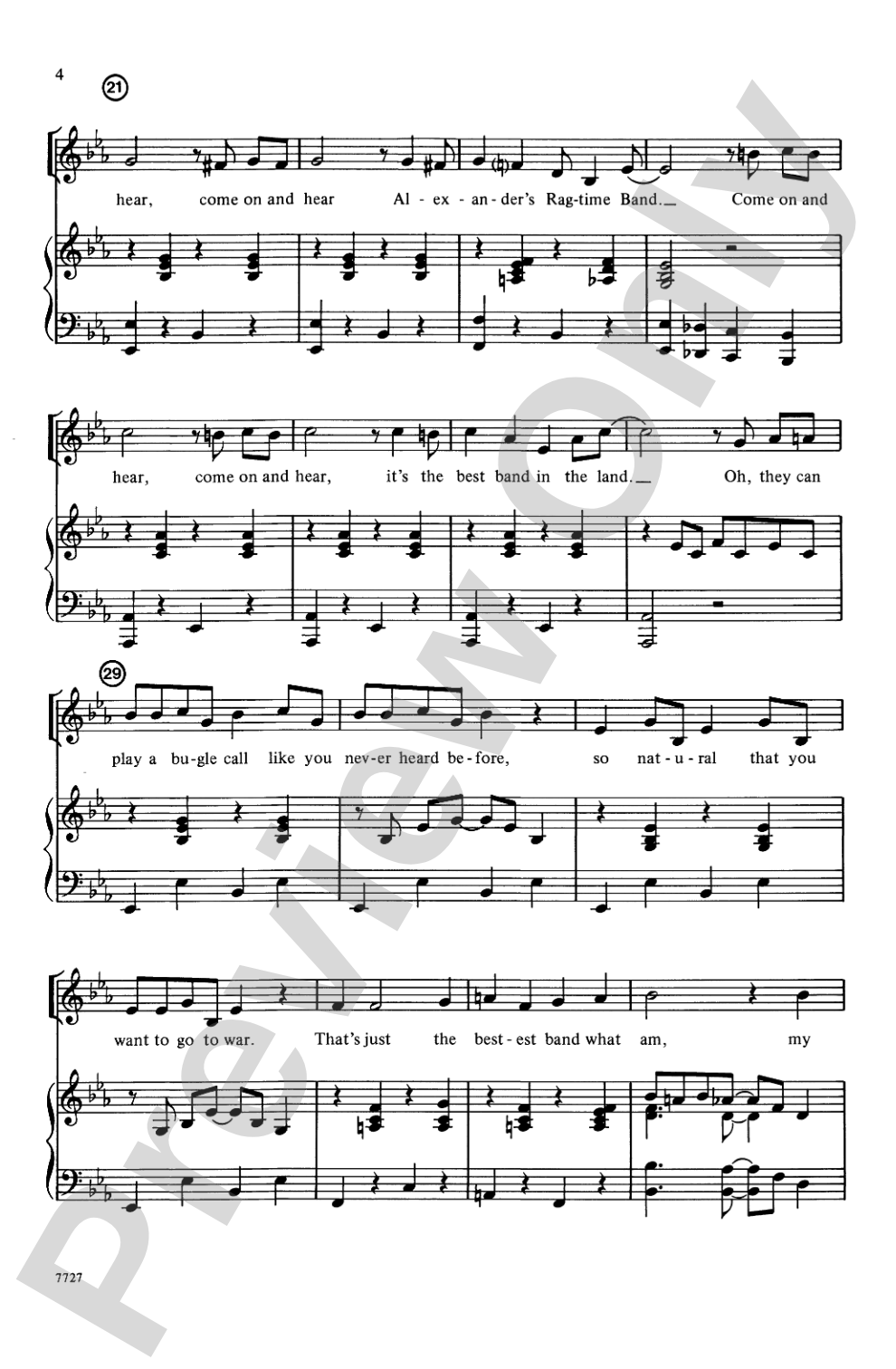

Alexander's Ragtime Band: 2-Part Choral Octavo
Music by Irving Berlin / arr. Don Besig and Nancy Price
Item: 00-PO-0003486
$2.05
Minimum order quantity: 20 copies
One moment…
Description
What a combination! Irving Berlin's classic song with a new partner-melody by Don Besig and Nancy Price. A real winner for 2-part choirs. The optional SoundTrax CD adds a true ragtime sound.


Alexander's Ragtime Band: 2-Part Choral Octavo isn't in MakeMusic Cloud just yet...but it could be. Let us know you'd like to see it, and you'll help shape what comes next. In the meantime, start a free trial and dive into thousands of interactive titles your students can play along with today.
Request This Title
Tell us you want it.
Start Your Free Trial
Explore everything that's ready to play right now.
Sample Audio
1
Audio File
--:--
0:00
0:00
Sample Video
No sample videos found.
Additional Details
Series:
Alfred Choral Designs
Publisher:
Alfred Music
Page Count:
12
SKU:
00-PO-0003486
More about this title
About the Composer: Irving Berlin
Irving Berlin (1888-1989) composed some of the most enduring popular songs in American music history. Born in Russia and arriving in New York as a child, Berlin taught himself piano and became a foundational figure in American musical theater and songwriting, creating standards that remain central to the repertoire across genres and performance contexts.
Berlin's gift for memorable melody and accessible harmonic language made his work instantly singable and commercially successful during his lifetime. His songs appear regularly in educational settings because they combine historical significance with straightforward musical construction, making them ideal for choirs and ensembles developing musicianship and confidence.
Why we love this
This arrangement brings fresh energy to one of Berlin's most recognizable melodies by adding a complementary partner-melody from Besig and Price. The 2-part voicing keeps the focus on the tune while allowing each voice line to feel melodically independent rather than simply supportive, and the optional ragtime accompaniment recording captures the infectious energy of the original without requiring a pianist to master syncopated rhythms.
What to expect
The arrangement captures the infectious bounce and optimism of early 20th-century popular song; there's a lightness and forward motion that feels celebratory rather than weighty. The interplay between the two melodies creates a conversational quality, as if the two voice lines are having a friendly musical dialogue.
Who it's for
This octavo works well for mixed-age 2-part choirs, youth ensembles, community choirs, and developing intermediate choirs building confidence with melodic independence. The straightforward harmonic language and familiar tune make it accessible without feeling elementary, while the added partner-melody provides enough musical substance to hold singers' interest.
How to get the most out of it
- Let the ragtime feel breathe naturally rather than forcing precision over groove; the charm of the style depends on the right balance between rhythmic snap and relaxed swing.
- Rehearse the two melodic lines separately until each voice can phrase independently, then gradually add the other part so singers recognize where their line is the main focus and where it supports.
- If using the accompaniment recording, balance the vocal parts so the secondary melody doesn't disappear beneath the primary tune; this is a partnership, not a hierarchy.
- Consider how movement or staging can highlight the partner-song concept; even simple blocking that visually separates the two voice lines can clarify the musical relationship for an audience.
How to use it
Program this as an opener or closer to bring immediate energy and audience familiarity to a concert; many listeners will recognize the tune instantly, making it an effective way to establish a warm connection early in the program. It pairs naturally with other American standards or nostalgia-themed repertoire and works especially well on pops, patriotic, or end-of-year concert programs.
Skills your students will build
- Singing two independent melodic lines with equal confidence and projection
- Identifying and maintaining a clear secondary melody while another voice carries the primary tune
- Responding to stylistic cues from ragtime accompaniment (rhythmic precision, swing, phrasing)
- Balancing blend when melodies move at different rhythmic speeds or emphasis points