
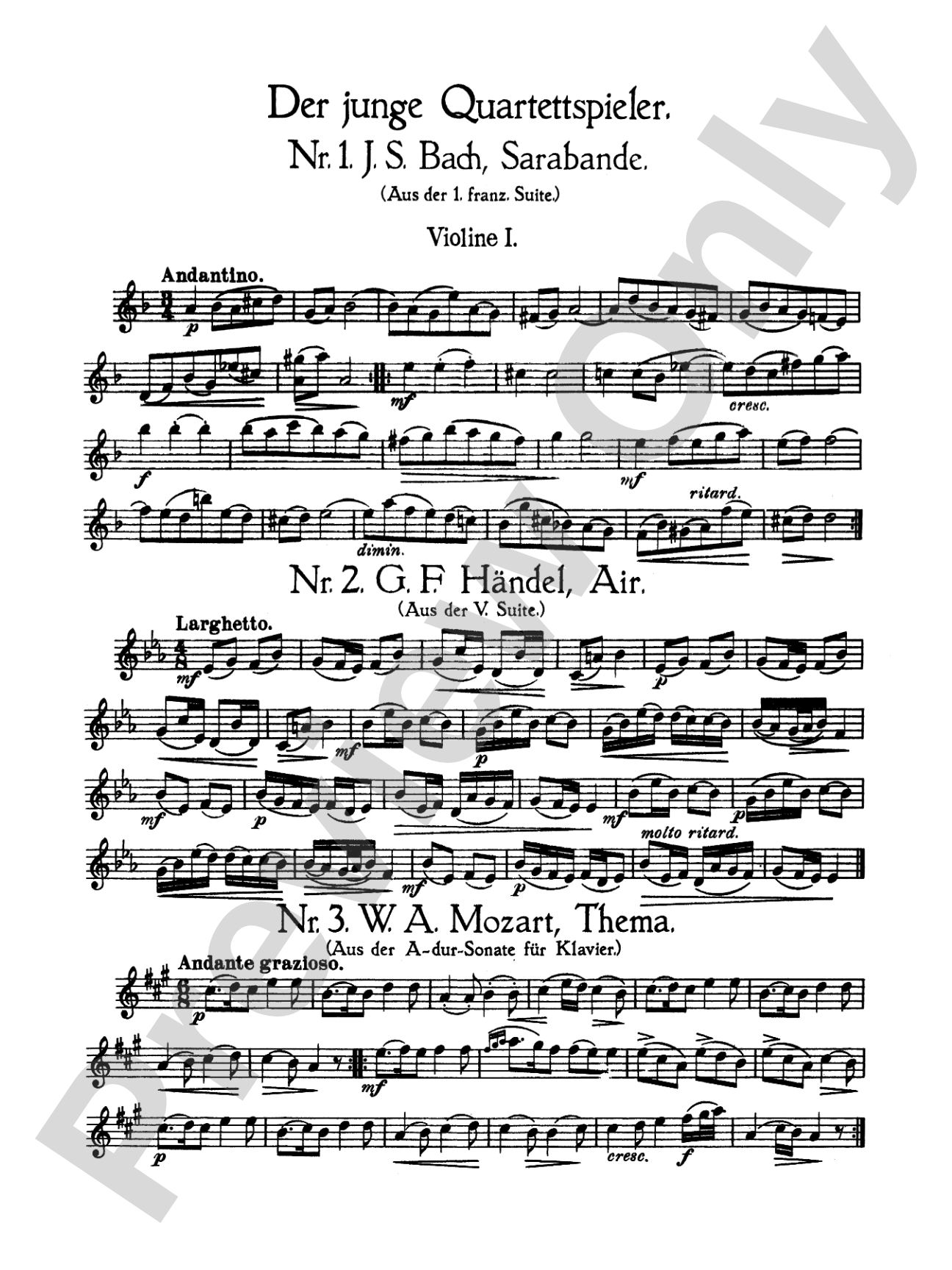
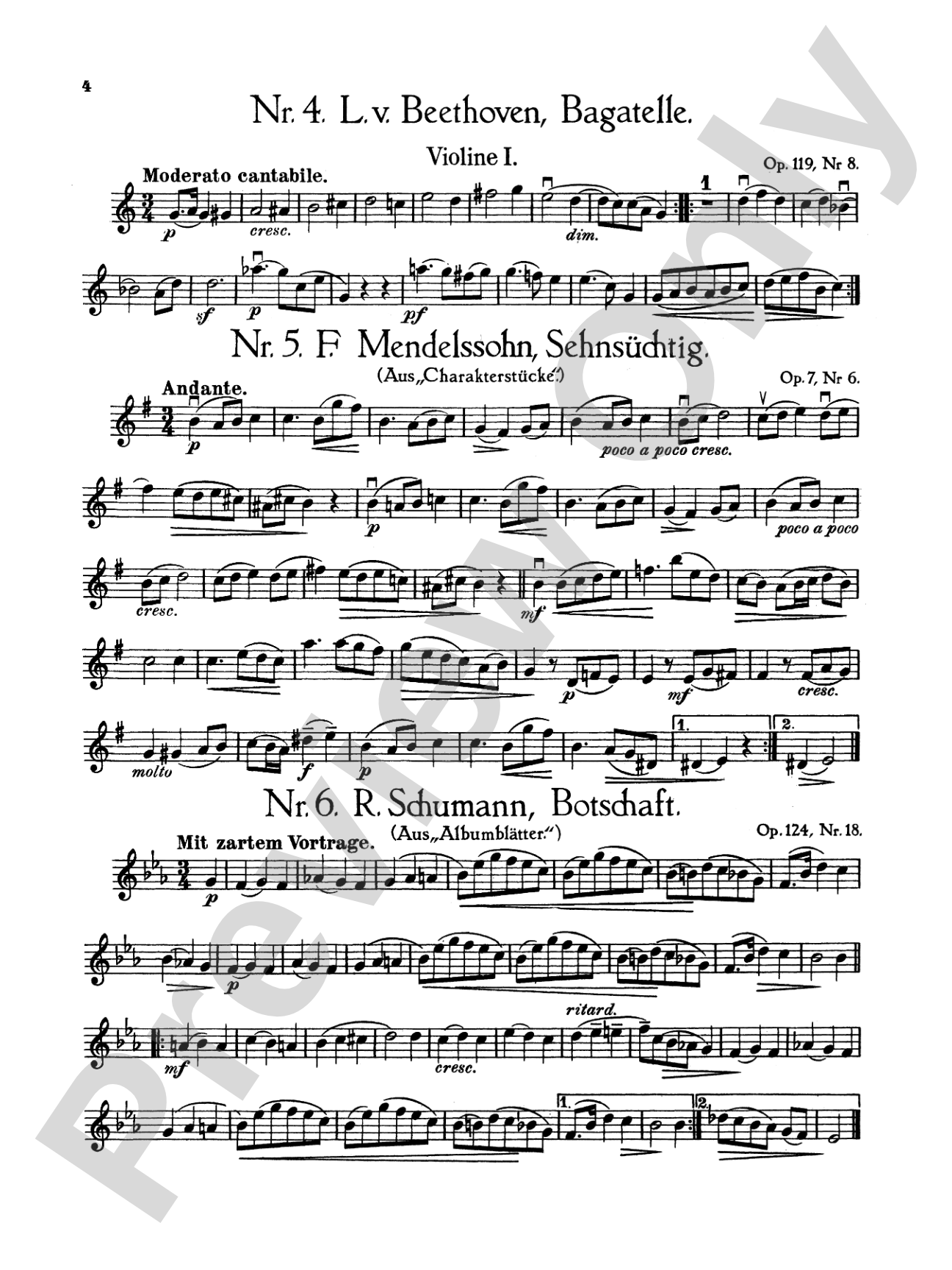
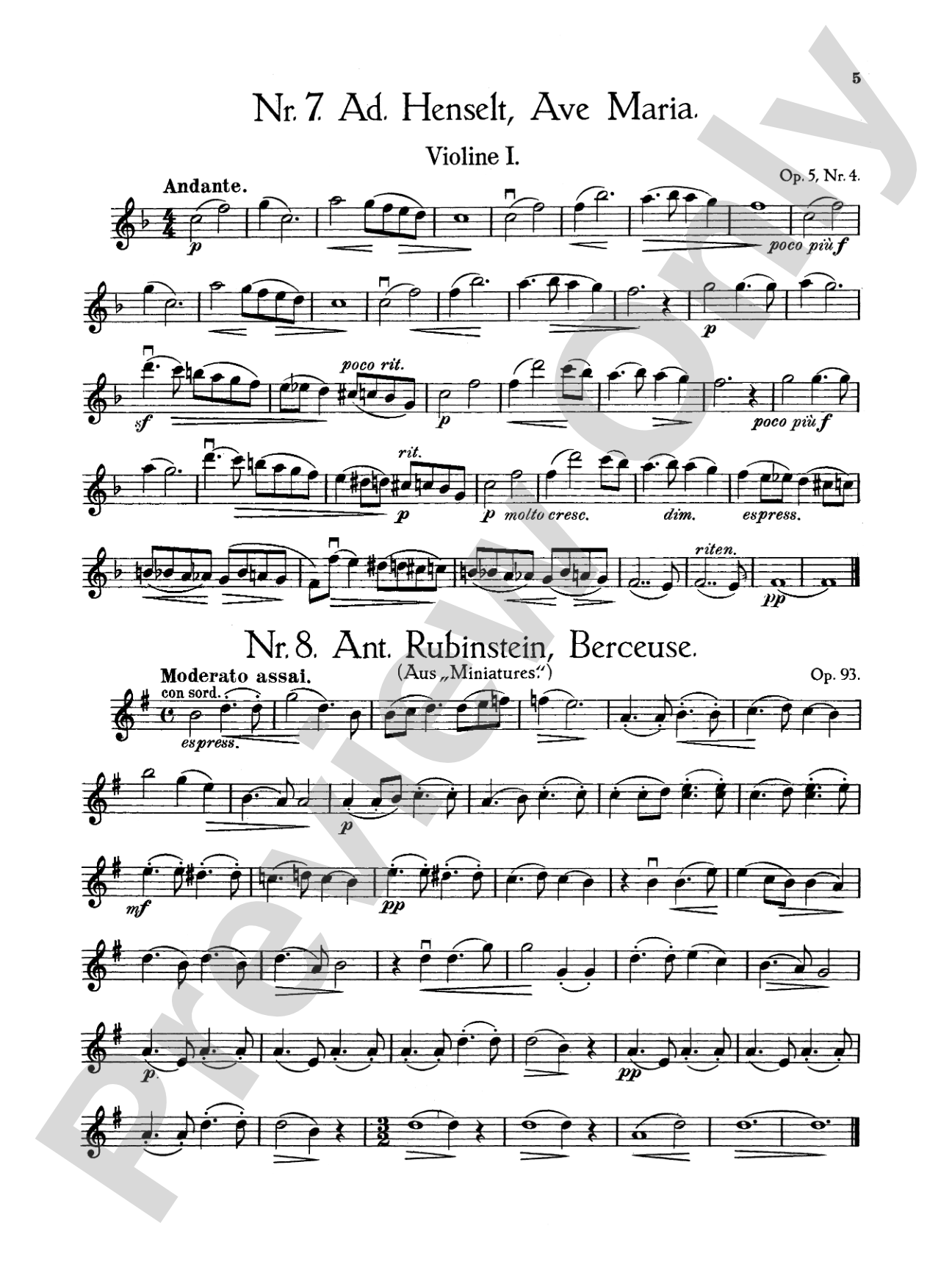
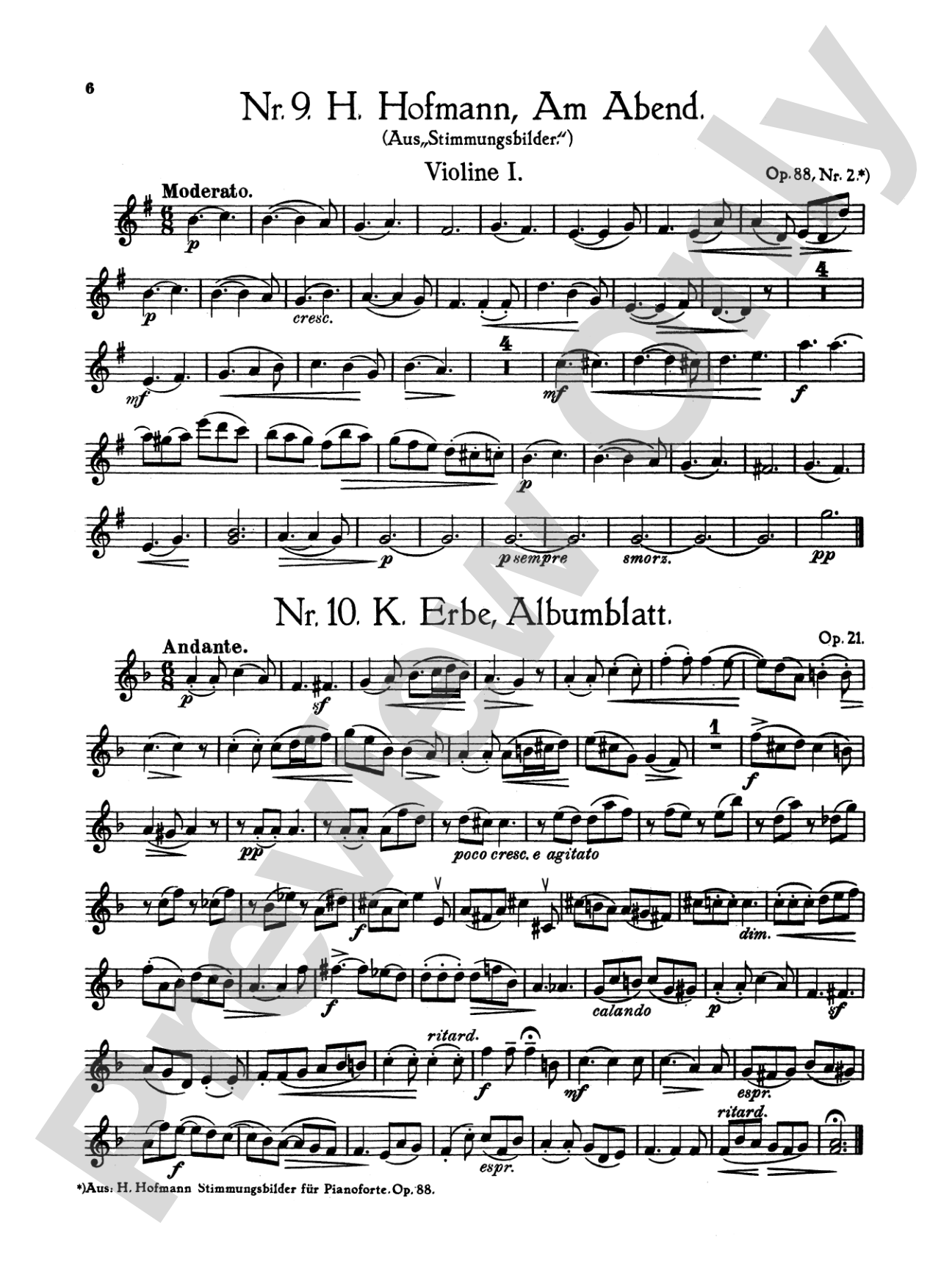

Album of Easy String Quartets, Volume III (Pieces by Bach, Haydn, Mozart, Beethoven, Schumann, Mendelssohn, and others): String Quartet Book
Item: 00-PK-0002576

$17.99
Pickup currently not available
Buy Extra Parts (Digital PDF Download)
Parts Added to Cart!
Related Items
Album of Easy String Quartets, Volume III (Pieces by Bach, Haydn, Mozart, Beethoven, Schumann, Mendelssohn, and others): String Quartet Book |
$17.95
|
View |
Description
Expertly arranged String Quartets from the Kalmus Edition series.


Don't just read it, hear it, play along with it, and watch your students grow with it. In MakeMusic Cloud, Album of Easy String Quartets, Volume III (Pieces by Bach, Haydn, Mozart, Beethoven, Schumann, Mendelssohn, and others): String Quartet Book comes alive with professional accompaniment, adjustable tempo, and built-in practice tools that turn solo practice into real progress.
Open in the Player
Jump straight in and assign it today.
Start Your Free Trial
Open this title and explore the full library in minutes.
Sample Audio
No sample audio found.
Sample Video
No sample videos found.
Additional Details
Series:
Kalmus Edition
Publisher:
Alfred Music
Page Count:
16
SKU:
00-PK-0002576
More about this title
About the Composer: J. S. Bach
Johann Sebastian Bach (1685-1750) stands as one of history's most prolific and technically innovative composers. His mastery of counterpoint, harmonic language, and structural form influenced centuries of composers who followed, making his works essential study for musicians across all levels and instruments.
Bach composed relatively few works explicitly designated as quartets, yet his structural principles and voice-leading techniques form the foundation of quartet writing. His inventions, suites, and transcribed works have been arranged countless times to serve string players developing ensemble skills and musical maturity.
Why we love this
This collection draws from the Kalmus Edition's reputation for clarity and practical accessibility without sacrificing musical substance. Arrangers have thoughtfully adapted Bach's intricate voice-leading so that intermediate quartets can experience the architectural rigor and contrapuntal elegance that define his legacy, creating an entry point to music that typically sits beyond early quartet repertoire.
What to expect
Architectural and orderly, yet alive with melodic invention. The music unfolds with the precision of a master craftsman; each voice follows its logical trajectory while contributing to a seamless harmonic whole. There is elegance in the restraint and intelligence in every gesture.
Who it's for
Intermediate to advancing string quartets looking to deepen their ensemble experience with music of substance and structural clarity. Quartet programs seeking repertoire suitable for festival and competition contexts will find these arrangements accessible yet musically demanding.
How to get the most out of it
- Honor the independence of each line; Bach's writing rewards listeners who can hear all four voices distinctly rather than treating the music as melody plus accompaniment.
- Shape phrases across the bar line and follow the harmonic rhythm rather than counting mechanically. The syntax of Baroque phrasing often transcends regular metrical groupings.
- Balance articulation across the ensemble so that thematic material reads clearly wherever it appears. Use light, crisp bowstrokes in faster passages to maintain texture and definition.
- Listen carefully to intonation at unisons and octaves, particularly when the same material passes between instruments. Bach's voice-leading often creates moments of striking transparency.
How to use it
These pieces work well on festival programs or studio recitals where you want to showcase your ensemble's ability to balance voices and navigate contrapuntal textures. They also serve as valuable study material during rehearsal weeks when you're preparing more demanding contemporary or Romantic quartets; Bach's clarity of line will sharpen your collective listening.
Skills your students will build
- Voice independence and balance in contrapuntal writing
- Intonation precision in unison and octave passages
- Baroque phrasing and articulation conventions
- Harmonic listening and voice-leading awareness
- Ensemble synchronization without sacrificing individual line clarity