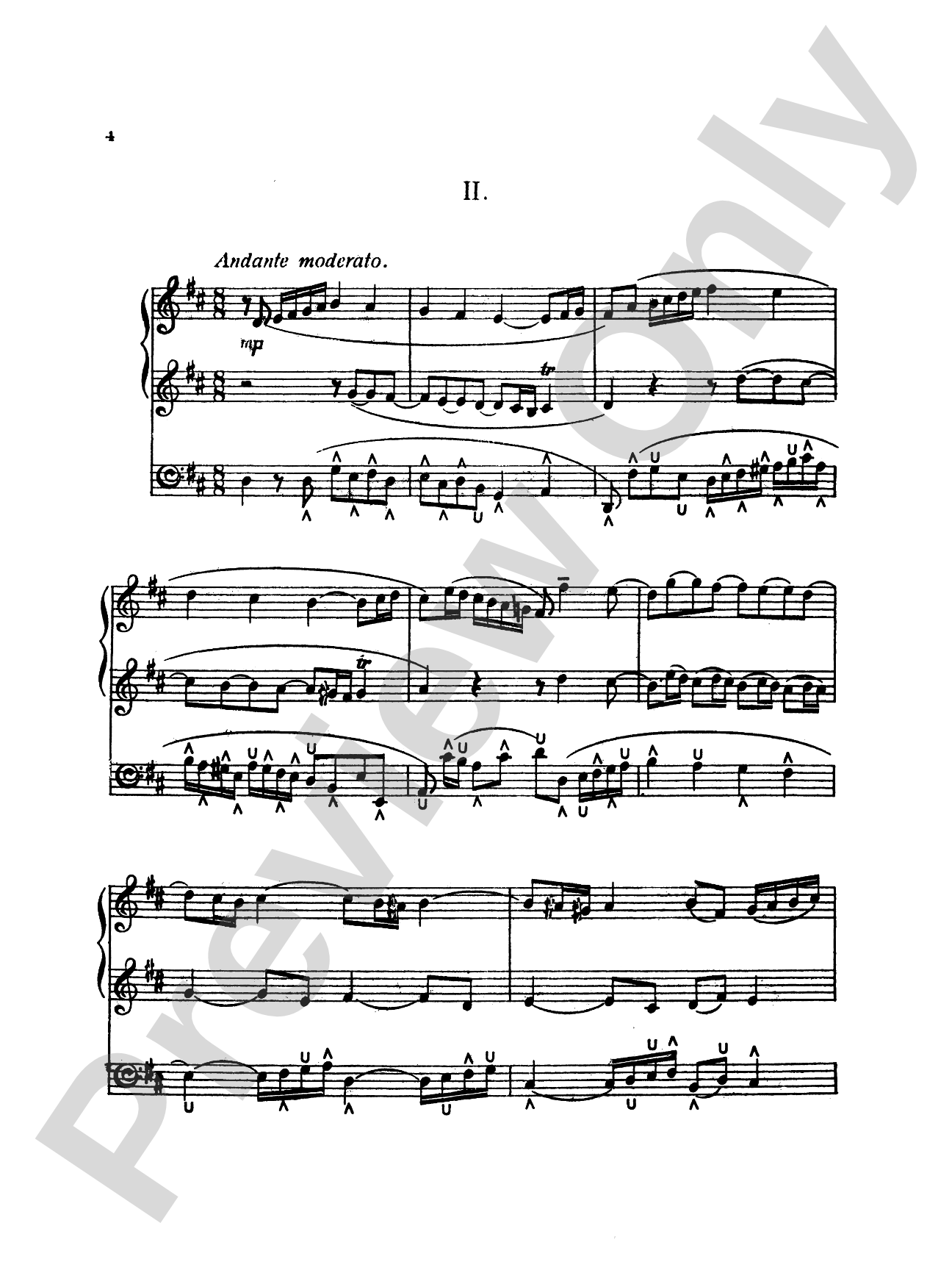
Albrechtsberger: Six Trios for Organ Sheet Music Preview

Albrechtsberger: Six Trios for Organ

By Johann Georg Albrechtsberger

Item: 00-PC-0006996

Digital Download
$0.99
Description
A collection of trios, for Organ, composed by Johann Georg Albrechtsberger.

Don't just read it, hear it, play along with it, and watch your students grow with it. In MakeMusic Cloud, Albrechtsberger: Six Trios for Organ comes alive with professional accompaniment, adjustable tempo, and built-in practice tools that turn solo practice into real progress.

Sample Audio
No sample audio found.
Sample Video
Additional Details
Series: Kalmus Edition
Publisher: Alfred Music
Page Count: 20
SKU: 00-PC-0006996

More about this title

About the Composer: Johann Georg Albrechtsberger

Johann Georg Albrechtsberger (1736-1809) was an Austrian composer and organist whose mastery of counterpoint and organ writing made him one of the most respected musicians of the Classical era. Beethoven studied composition with him, and his influence on Vienna's musical life extended through his roles as court composer and cathedral organist. Though overshadowed by his contemporaries Mozart and Haydn, Albrechtsberger left a substantial legacy of sacred and instrumental music that showcases sophisticated harmonic writing and brilliant command of fugal form.

Why we love this

Albrechtsberger's trios sit at the intersection of virtuosity and accessibility, offering organists genuine contrapuntal substance without the demands of a full concerto. These pieces reward careful practice with real musical payoff, making them ideal for advanced students ready to engage with genuine Classical craftsmanship. The organ trio format itself creates an elegant chamber-music quality that translates beautifully in recital or liturgical settings.

What to expect

Elegant and intellectually engaging, these trios unfold with the conversational clarity of chamber music, each voice contributing equally to an interlocking dialogue. The writing radiates the refinement of Vienna's Classical world, balancing formal rigor with genuine melodic grace and moments of genuine expressive warmth. There's an understated confidence in the harmonic language that rewards close listening.

Who it's for

Advanced organists and serious students with strong pedal technique and facility with Baroque and Classical counterpoint. This collection works well for recitalists building a program of lesser-known Classical repertoire and for advanced church musicians seeking substantial standalone pieces for worship or recital contexts.

How to get the most out of it

  • Establish independence between the manuals and pedal early. These trios require clear voice separation, so practice each hand and foot part separately before combining them, paying close attention to how each line breathes independently.
  • Attend to registration choices thoughtfully. The piece itself won't dictate them; your registration should enhance harmonic clarity and allow each melodic line to emerge without muddying the texture.
  • Shape phrases by voice, not by hand. Since melodic material passes between hands and feet, follow the musical line rather than physical convenience to maintain phrasing coherence.
  • Balance tempo stability with rhythmic freedom in decorated passages. Classical organ writing benefits from precision, but ornaments and running figures should never sound metronomic.

How to use it

These trios work beautifully as standalone recital pieces or grouped together as a suite within a larger program of organ literature. They fit naturally alongside sonatas by Haydn or other organists of the era, or as a contrasting section in a concert that moves from Baroque to early Romantic keyboard writing.

Skills your students will build

  • Independent voice leading across three staves with constant hand and foot coordination
  • Pedal independence and agility in scalar and arpeggiated patterns
  • Clarity in executing Classical-era counterpoint and imitative writing on the organ
  • Registration decision-making and tonal balance in multi-manual playing
  • Stylistic understanding of Classical-era organ composition and its relationship to chamber music

You May Also Like