
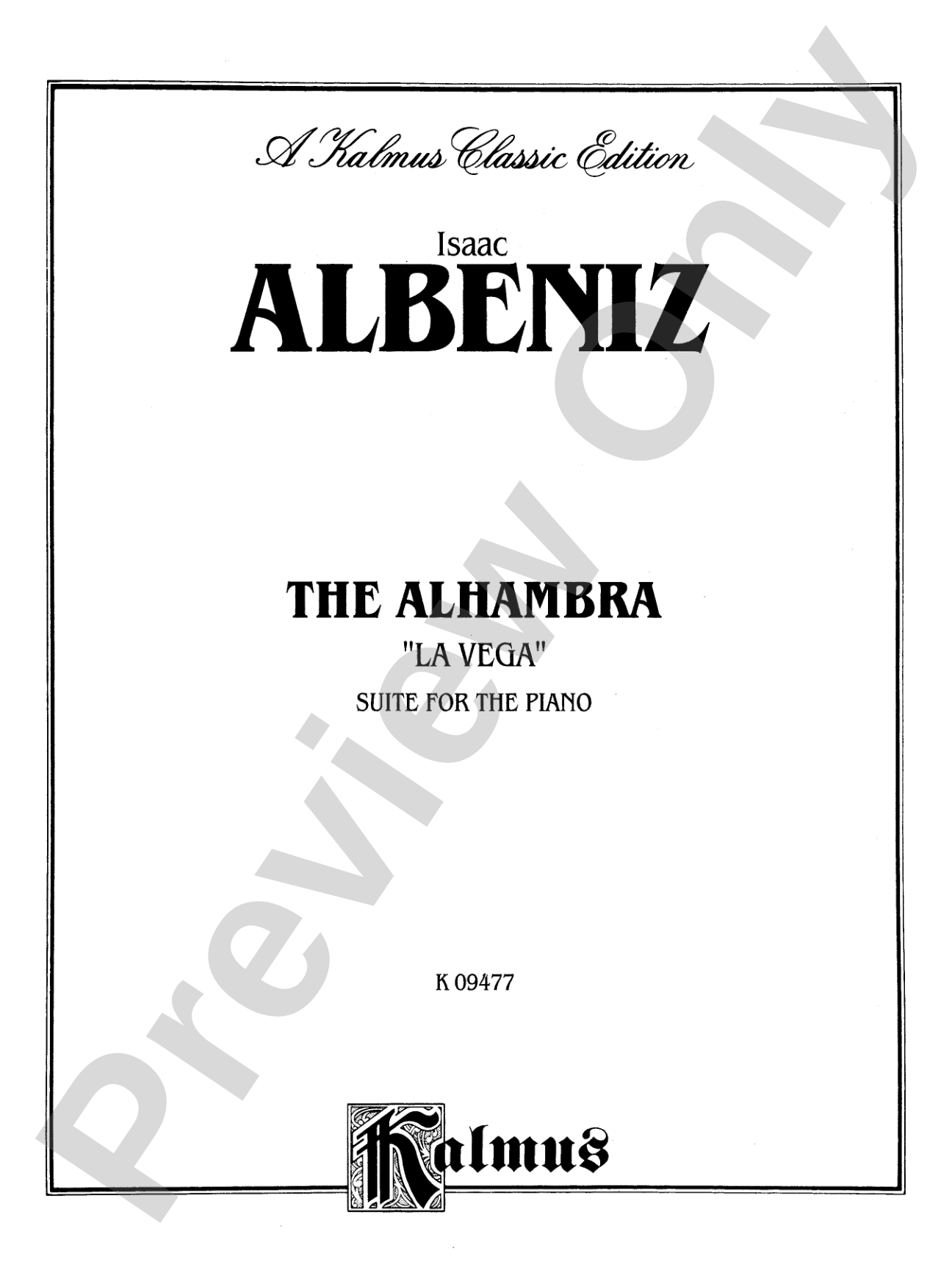

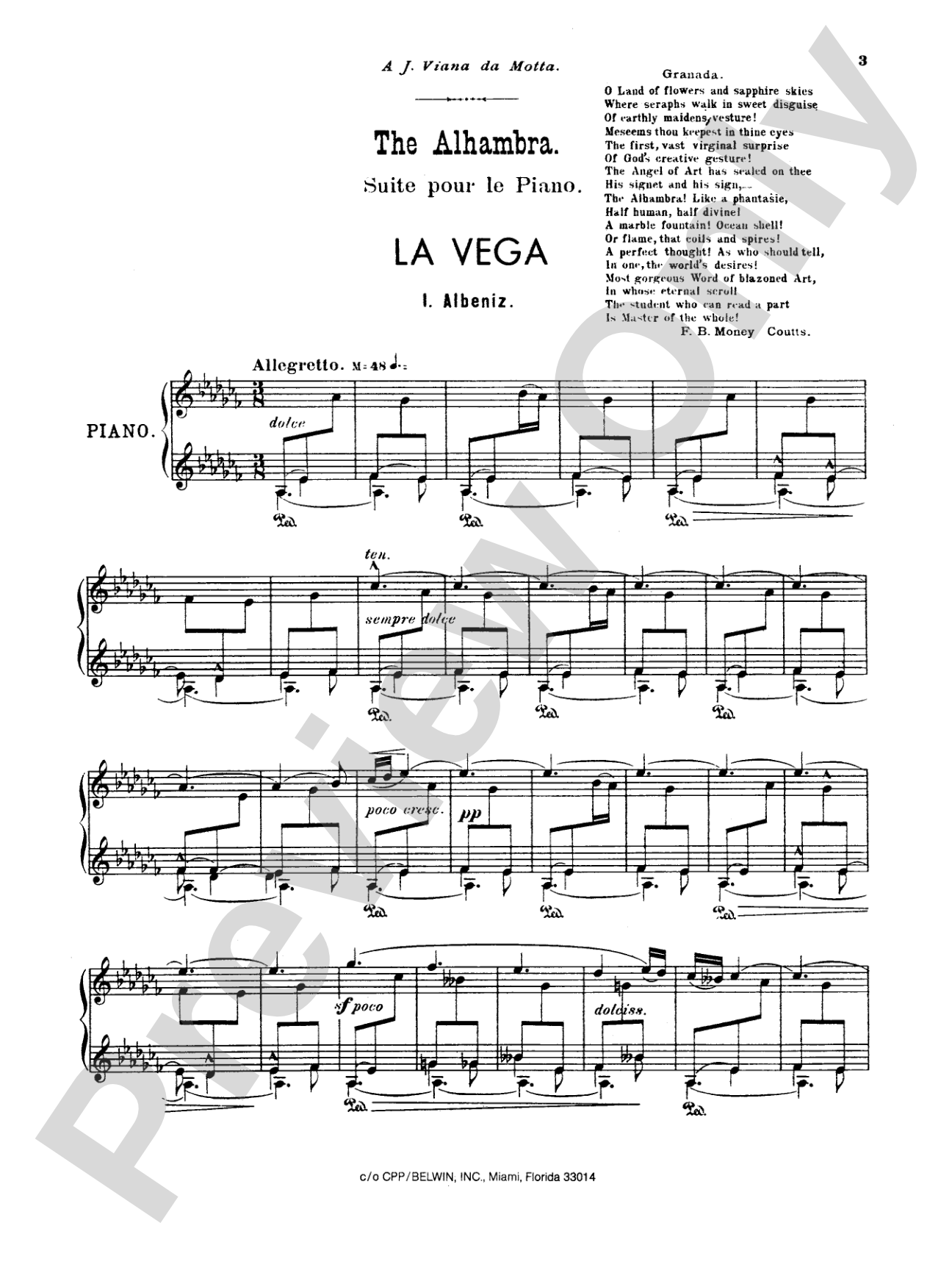
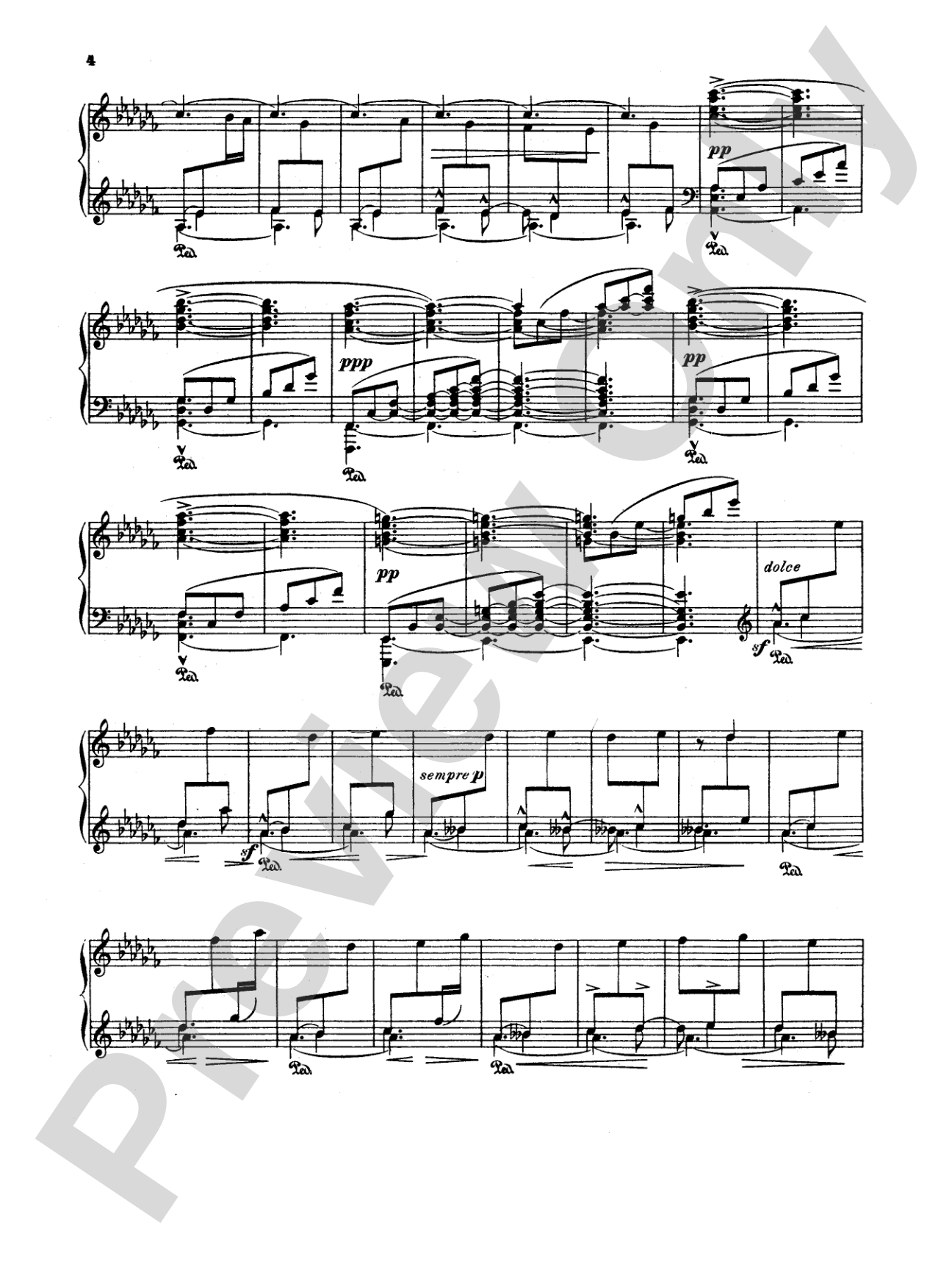
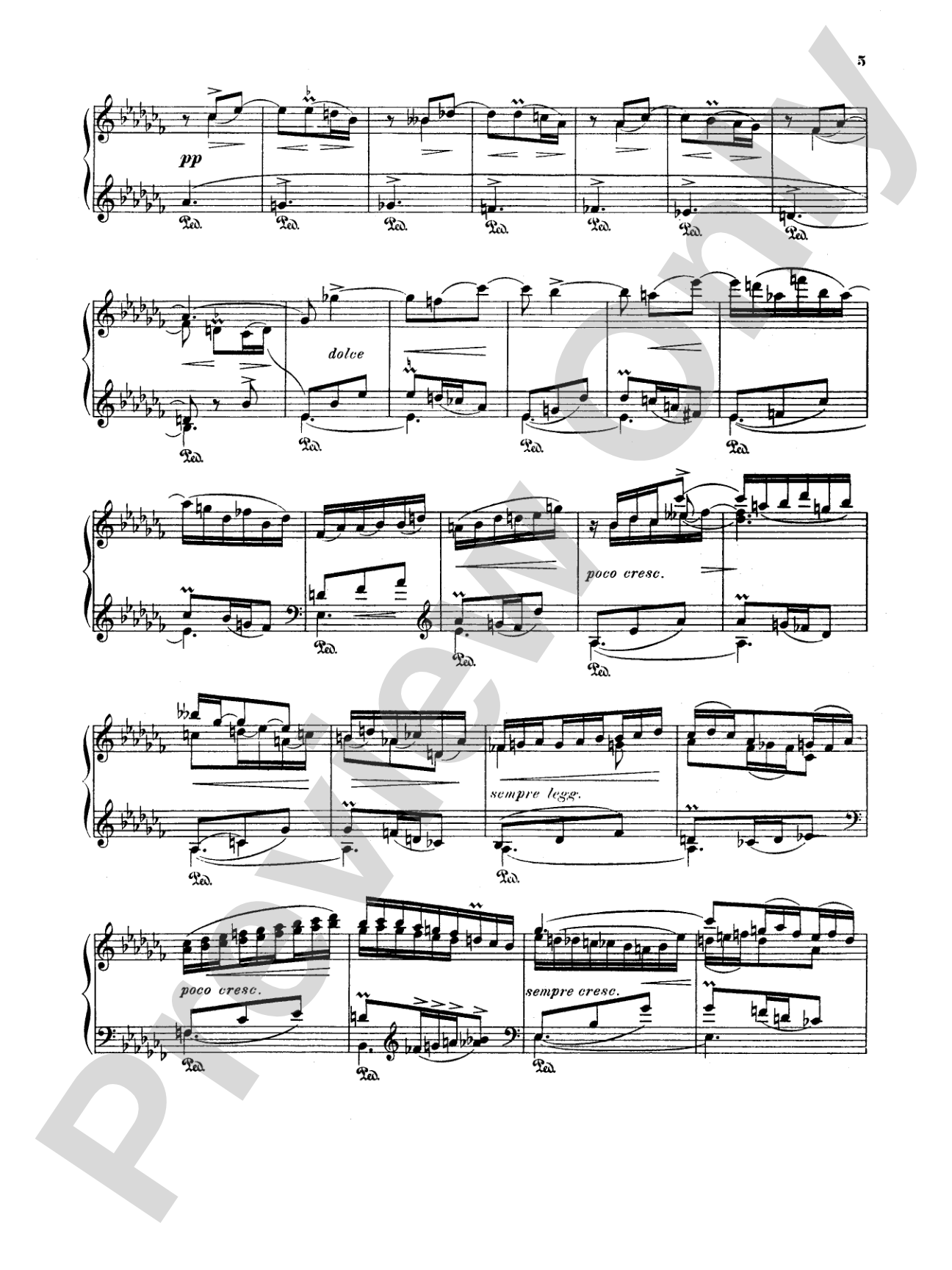

Albéniz: The Alhambra
By Isaac Albéniz
Level: Intermediate / Advanced
Item: 00-PC-0012639
$6.95
Pickup currently not available
Description
Expertly arranged piano solo from our Kalmus Edition.


Don't just read it, hear it, play along with it, and watch your students grow with it. In MakeMusic Cloud, Albéniz: The Alhambra comes alive with professional accompaniment, adjustable tempo, and built-in practice tools that turn solo practice into real progress.
Open in the Player
Jump straight in and assign it today.
Start Your Free Trial
Open this title and explore the full library in minutes.
Sample Audio
No sample audio found.
Sample Video
No sample videos found.
Additional Details
Series:
Kalmus Edition
Publisher:
Alfred Music
Page Count:
24
SKU:
00-PC-0012639
More about this title
About the Composer: Isaac Albéniz
Isaac Albéniz (1860-1909) was a Spanish pianist and composer whose works became foundational to the modern guitar and piano repertoires. Though trained in the European concert tradition, he spent much of his career in Paris and London, where he synthesized Spanish folk idioms, Moorish influences, and impressionistic harmony into a distinctly personal voice. His compositional legacy rests largely on his keyboard works, particularly the suite "Iberia," which remains a cornerstone of advanced piano literature.
Albéniz's music shaped how subsequent composers approached Spanish nationalism in classical forms. His harmonic language and rhythmic vitality influenced not only pianists but generations of guitarists who adapted his keyboard works for the instrument. For music teachers, his output offers a bridge between Romantic virtuosity and early modern composition, providing students access to genuinely sophisticated music rooted in cultural specificity rather than abstract gesture.
Why we love this
Albéniz's "The Alhambra" sits at that rare intersection where technical brilliance serves genuine musical storytelling. The piece demands advanced pianistic facility but rewards the effort with writing that feels intrinsically Spanish without relying on surface exoticism. Programming this gives your advanced students material that concert audiences recognize and respect, and the harmonic language opens doors to discussing impressionism and early 20th-century colorism.
What to expect
Evocative and sensory, with the grandeur of the Alhambra palace translated into shimmering harmonic washes and rhythmically buoyant passages that suggest both dance and architectural splendor. The piece unfolds with a dreamlike intensity, moving between delicate, almost impressionistic textures and moments of passionate declaration. You hear both the guitar traditions Albéniz absorbed and the concert-hall ambitions that defined his artistic voice.
Who it's for
Advanced intermediate and advanced pianists ready to tackle Romantic virtuosity with harmonic sophistication. This work suits students who have mastered standard Chopin or Liszt fare and are prepared to engage with music that marries technical display with cultural depth. It also appeals to pianists exploring Spanish or Latin-influenced repertoire in depth.
How to get the most out of it
- Bring out the quasi-improvisational quality of the opening by allowing slight rhythmic flexibility in the right-hand figurations; this is not rubato, but rather letting the hand shape the phrase naturally as it would unfold vocally.
- Attend closely to pedal changes, as the piece layers harmonic colors that require precise clarity rather than blurred resonance; a lighter touch with the sustain pedal often serves the Spanish guitar idiom better than a heavy hand.
- Frame the climactic passages with controlled power rather than raw force; Albéniz builds intensity through accumulation and harmonic momentum, not through brute dynamic contrast.
- Balance the decorative right-hand passages against a singing left-hand line, which often carries the emotional weight and should anchor the texture even when accompanied by elaborate figuration above.
How to use it
Situate this as a solo showpiece within a recital devoted to Spanish or Latin keyboard music, or pair it with other works that explore cultural nationalism and impressionistic harmony. It also stands effectively as the centerpiece of a program exploring the piano repertoire of the Romantic era's later decades, when composers were increasingly interested in local color and atmospheric effect. Consider programming it where audiences expect substantial virtuosity; the 24-page length and intellectual substance merit a dedicated slot.
Skills your students will build
- Harmonic analysis of non-functional harmony and impressionistic voice-leading
- Rhythmic independence between hands, with decorative figuration over metric stability
- Pedal technique for color and clarity rather than blur
- Stylistic awareness of Spanish music and cultural influences on European composition
- Stamina and control in extended passages requiring technical precision and musical shape
- Right-hand finger dexterity and evenness in rapid scalar and arpeggiatic passages