Albéniz: Suite Española Sheet Music Preview

Albéniz: Suite Española

By Isaac Albéniz

Item: 00-PC-0004215

Digital Download
$0.99
Description
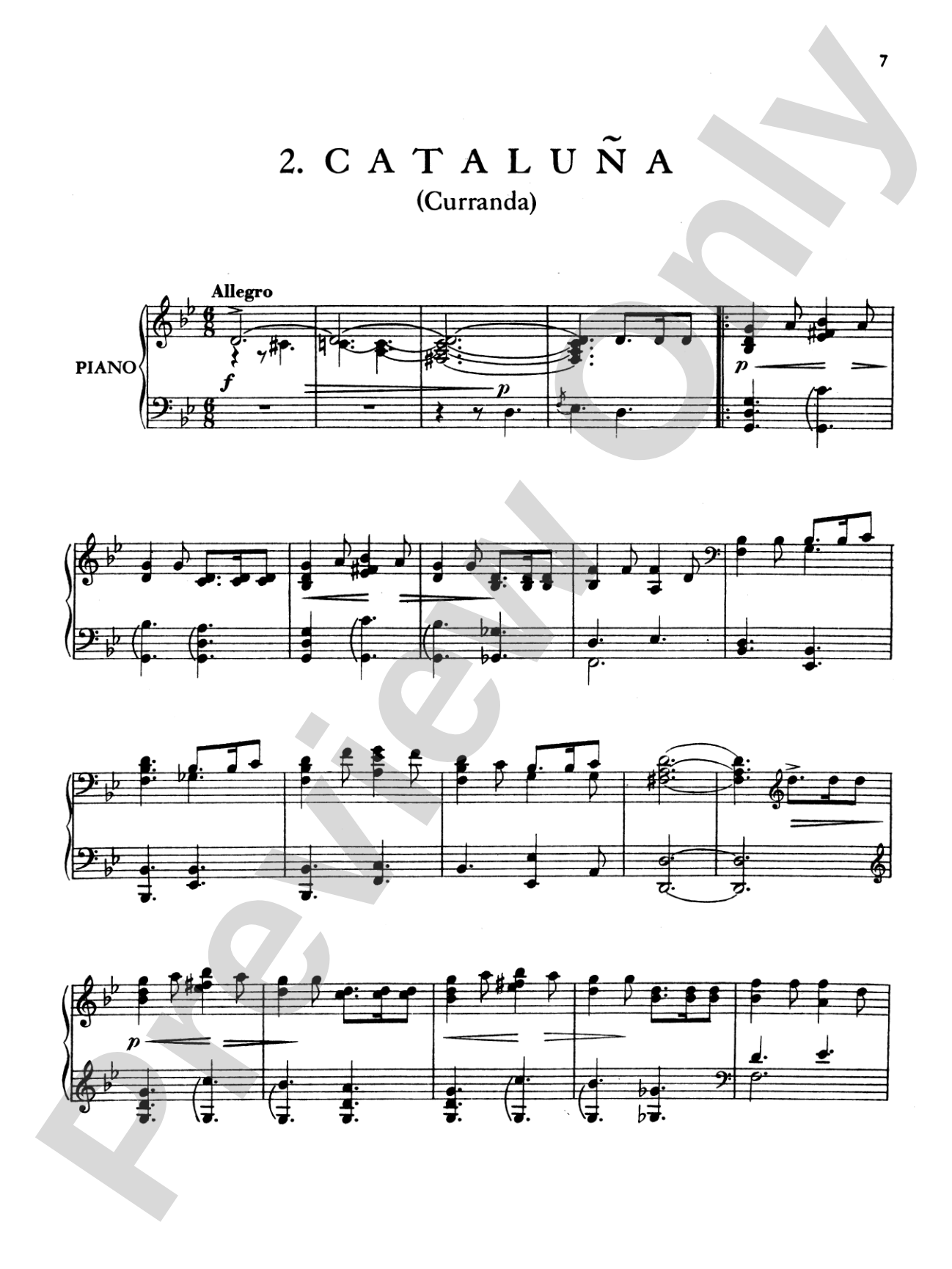
Titles: No. 1, Granada * No. 2, Cataluña * No. 3, Sevilla * No. 4, Cadiz * No. 5, Asturias * No. 6, Aragon * No. 7, Castilla * No. 8, Cuba.

Don't just read it, hear it, play along with it, and watch your students grow with it. In MakeMusic Cloud, Albéniz: Suite Española comes alive with professional accompaniment, adjustable tempo, and built-in practice tools that turn solo practice into real progress.

Sample Audio
No sample audio found.
Sample Video
Additional Details
Series: Kalmus Edition
Publisher: Alfred Music
Page Count: 52
SKU: 00-PC-0004215

More about this title

About the Composer: Isaac Albéniz

Isaac Albéniz (1860-1909) was a Spanish pianist and composer whose keyboard works defined the nationalist movement in Spanish classical music. Trained as a virtuoso performer, he channeled his understanding of Spanish folk idioms, rhythmic traditions, and guitar textures into compositions that transformed piano repertoire. His synthesis of technical brilliance with authentic Spanish musical character made him a bridge between Romantic virtuosity and impressionistic harmonic innovation.

Why we love this

Suite Española stands as one of the most performed and beloved collections in the Spanish piano literature, and for good reason. Each movement captures the distinct regional character and musical heritage of its namesake region, giving pianists access to a unified cycle that spans geography, style, and technical demands. The suite rewards both advancing pianists seeking substantial romantic-era repertoire and concert artists looking for audience favorites with genuine artistic depth.

What to expect

Suite Española immerses the performer and listener in the soul of Spain, from Granada's sultry, guitar-inflected melancholy to Aragon's infectious rhythmic drive. The music breathes with regional pride and nationalist fervor, layering folk melodies with sophisticated harmonic language that feels both rooted in tradition and forward-looking. Each movement opens a window onto a different Spanish landscape and temperament, unified by Albéniz's unmistakable voice and his gift for evoking color and atmosphere at the keyboard.

Who it's for

This collection serves advanced amateur pianists and conservatory students seeking substantial romantic-era repertoire that combines technical challenges with strong musical character. Teachers preparing students for recitals, competitions, or degree requirements will find Suite Española an essential touchstone in Spanish piano literature, offering eight distinct learning opportunities within a single, cohesive artistic statement.

How to get the most out of it

  • Explore the rhythmic vocabulary of each region rather than playing all eight movements with identical phrasing; Granada's Moorish langour differs fundamentally from Asturias' folk vigor and Cuba's syncopated energy.
  • Balance the guitarist's sensibility in Albéniz's textures by letting the bass line sing as a secondary melodic voice, particularly in pieces like Asturias where the left hand carries substantial thematic material.
  • Attend to the harmonic color and pedal resonance; Albéniz's impressionistic voicings require thoughtful sustain pedal work to achieve the shimmering, atmospheric quality the writing demands.
  • Plan strategic breaks between movements; the psychological and physical shifts between contrasting regional characters benefit from intentional pacing rather than continuous performance.

How to use it

Program individual movements from Suite Española as standalone recital pieces, or commit to performing the complete suite as an evening's centerpiece for an advanced student or faculty recital. The collection also pairs naturally with other Spanish nationalist works or serves as a repertoire anchor in a program exploring regional musical traditions; its eight distinct movements allow flexible programming without losing artistic coherence.

Skills your students will build

  • Pedal control in impressionistic harmonic textures
  • Regional rhythmic styles including habanera, jota, and Cuban dance rhythms
  • Left-hand independence and melodic singing in accompanimental figures
  • Tonal color and dynamic shading across the full keyboard range
  • Performance stamina and artistic pacing across a multi-movement cycle
  • Interpretation of nationalist and programmatic musical character

You May Also Like