
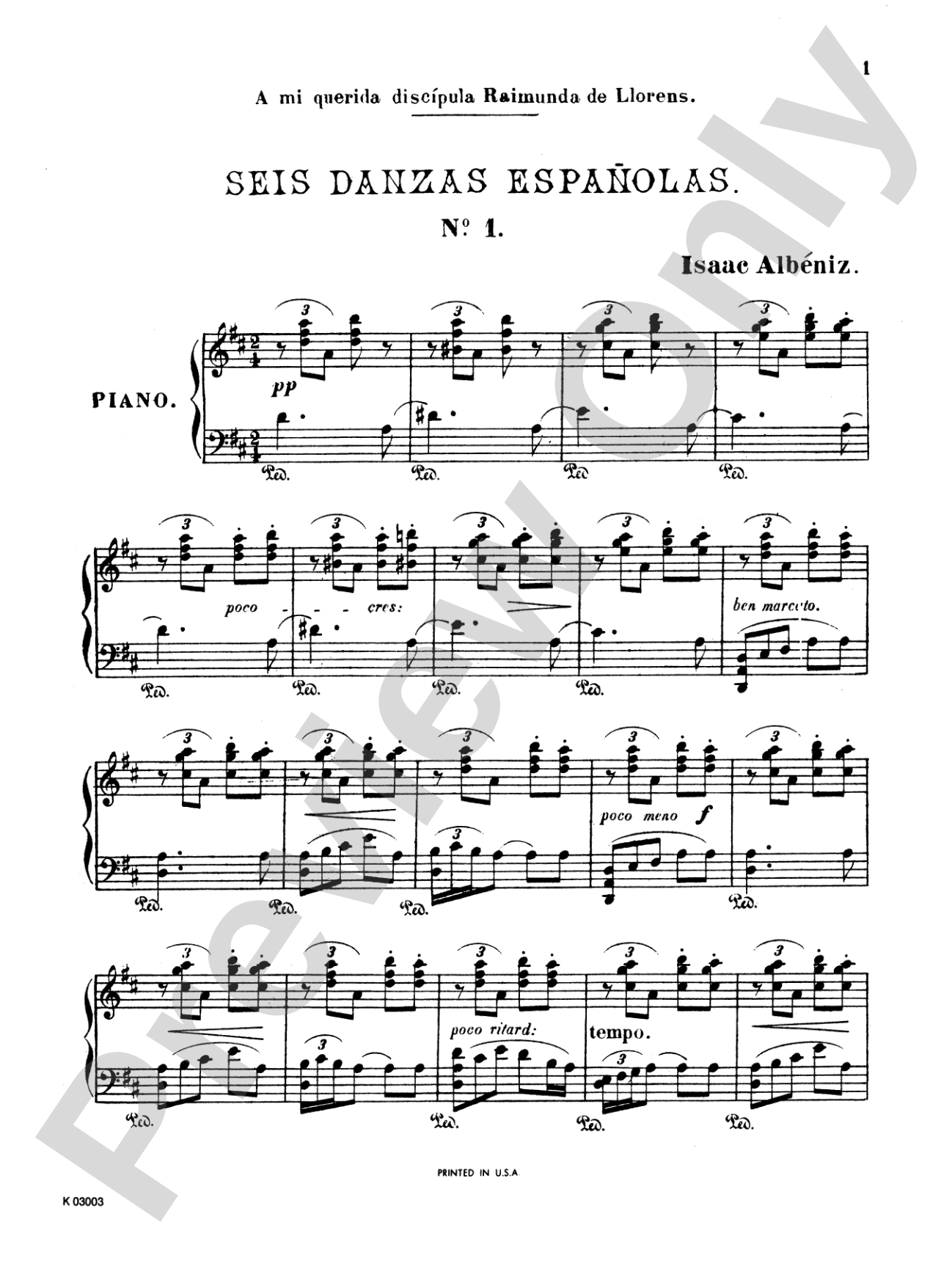
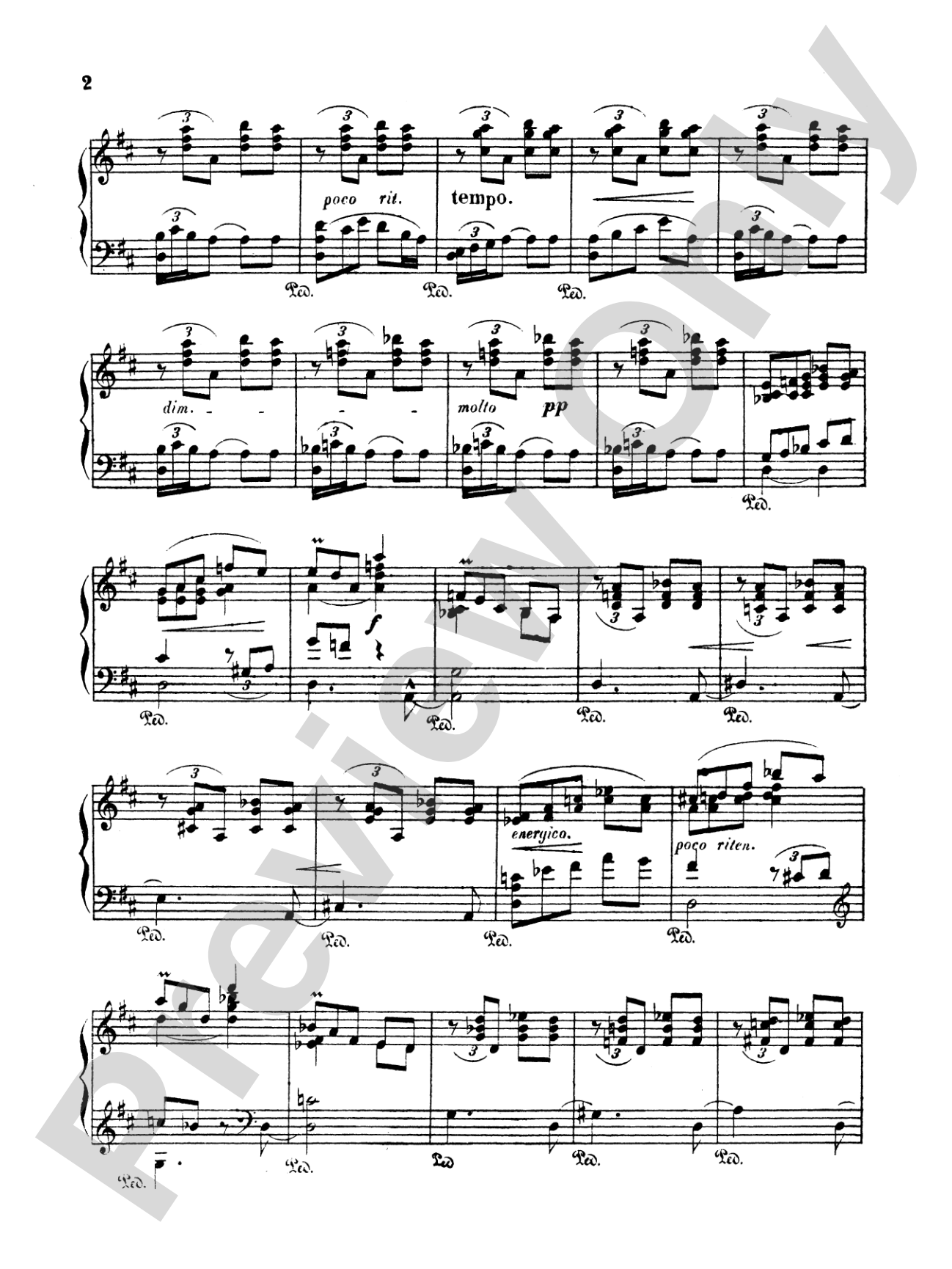
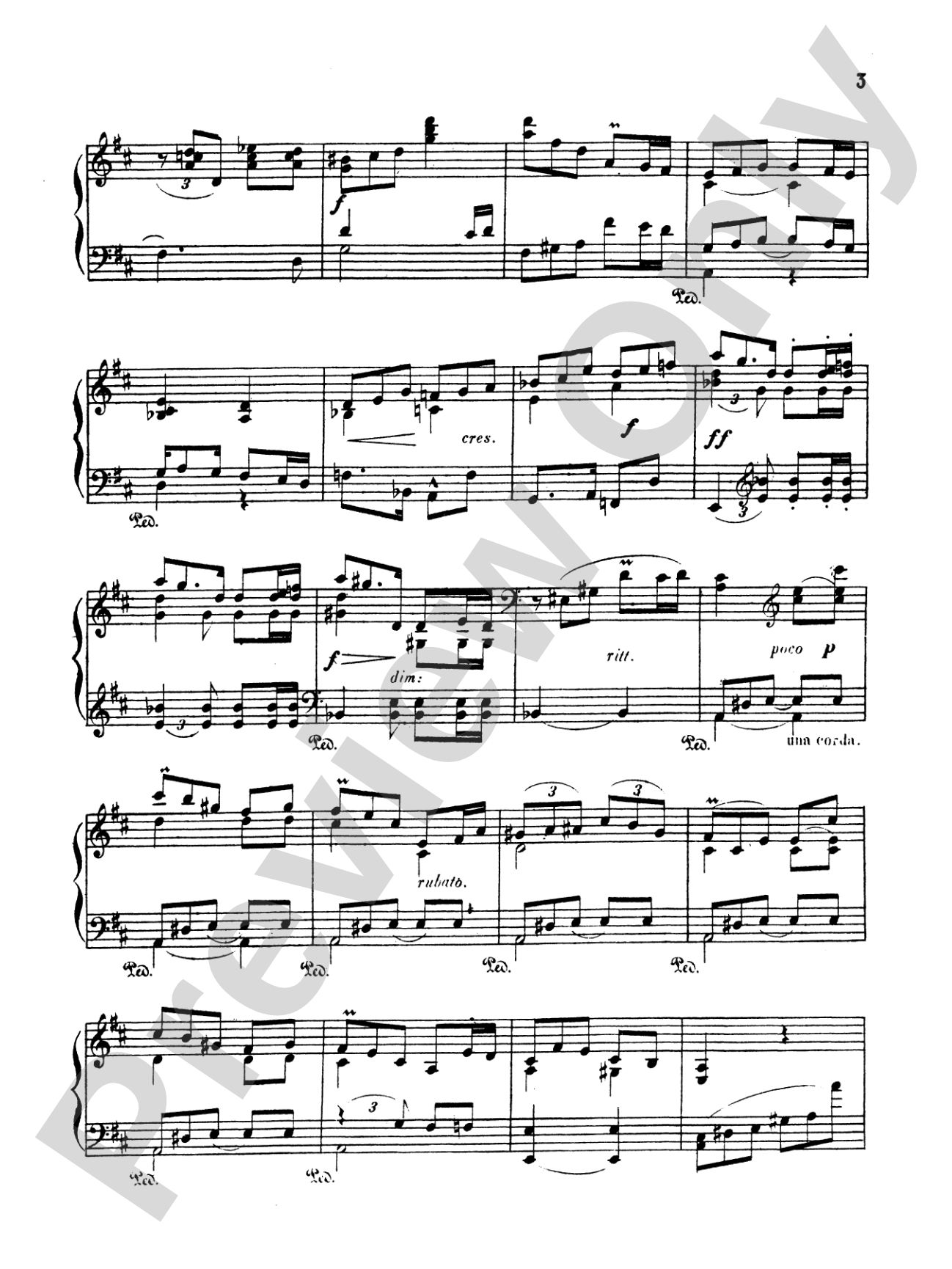
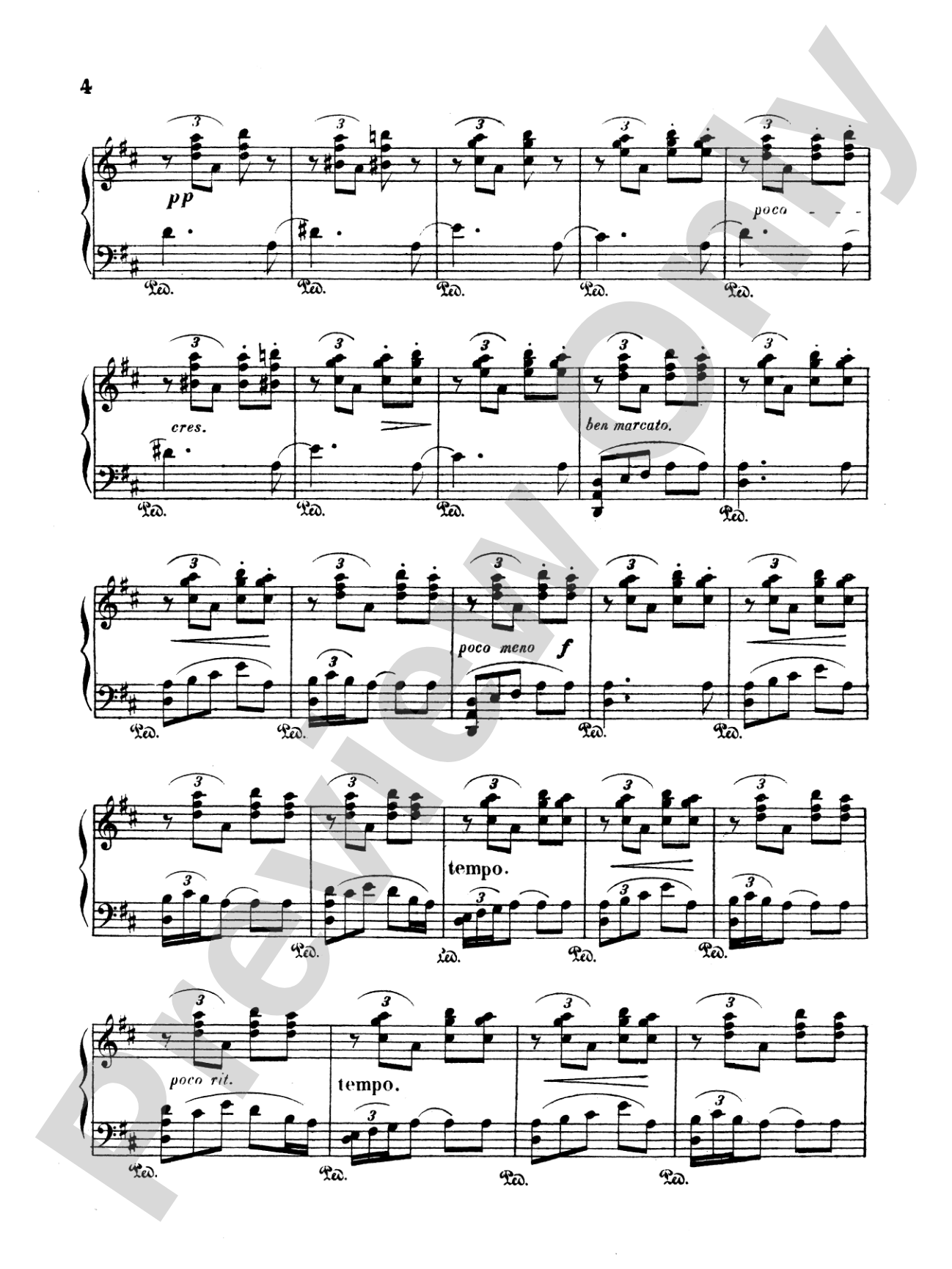
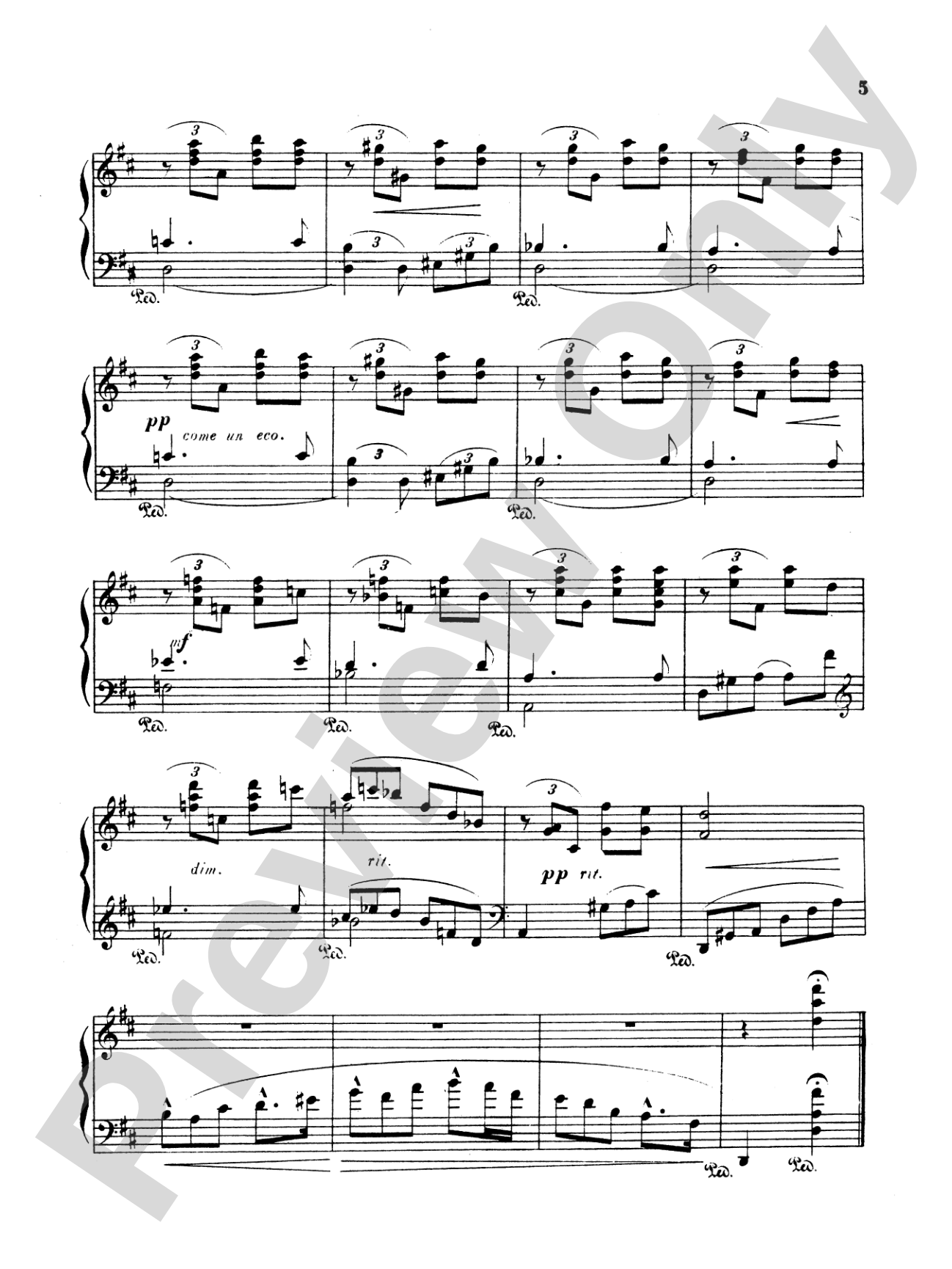

Albéniz: Six Spanish Dances: Piano Book
By Isaac Albéniz
Item: 00-PK-0002828

$8.99
Pickup currently not available
Buy Extra Parts (Digital PDF Download)
| Product | Price | Quantity |
|---|---|---|
| Albéniz: Six Spanish Dances | $0.99 | |
| Albéniz: Six Spanish Dances | $0.99 | |
| Albéniz: Six Spanish Dances | $0.99 | |
| Albéniz: Six Spanish Dances | $0.99 | |
| Albéniz: Six Spanish Dances | $0.99 | |
| Albéniz: Six Spanish Dances | $0.99 |
Parts Added to Cart!
Related Items
Six Spanish Dances: Piano Book |
$8.99
|
View |
Description
A collection of piano solos composed by Isaac Albéniz.


Don't just read it, hear it, play along with it, and watch your students grow with it. In MakeMusic Cloud, Albéniz: Six Spanish Dances: Piano Book comes alive with professional accompaniment, adjustable tempo, and built-in practice tools that turn solo practice into real progress.
Open in the Player
Jump straight in and assign it today.
Start Your Free Trial
Open this title and explore the full library in minutes.
Sample Audio
No sample audio found.
Sample Video
No sample videos found.
Additional Details
Series:
Kalmus Edition
Publisher:
Alfred Music
Page Count:
36
SKU:
00-PK-0002828
More about this title
About the Composer: Isaac Albéniz
Isaac Albéniz (1860, 1909) was a Spanish composer and pianist whose music became synonymous with the sound of Iberia itself. Though classically trained and fluent in multiple European traditions, he devoted himself to capturing the rhythms, harmonies, and spirit of Spanish folk music within a sophisticated compositional framework. His work bridged nationalism and cosmopolitanism, making Spanish music intelligible to concert audiences across Europe while remaining rooted in authentic regional character.
For piano students and teachers, Albéniz represents a crucial figure in expanding the instrument's expressive palette. His works demand technical facility alongside musical sensitivity, and they opened doors for generations of composers interested in writing music that felt both populist and artistically serious. His influence on twentieth-century Spanish and Latin American music was profound.
Why we love this
These six dances showcase the Spanish flavor that made Albéniz essential listening for pianists. The collection moves between lyrical passages and brilliant passagework, offering students substantial repertoire that develops both musical maturity and pianistic command without requiring the full technical demands of his largest works.
What to expect
These dances evoke the warmth and vivacity of Spanish folk tradition filtered through Romantic harmonic language. Rhythmic vitality alternates with lyrical introspection, and Albéniz's piano writing captures both the brilliance of concert virtuosity and the intimate colors of regional music.
Who it's for
Pianists at Grade 5, 6 level (ABRSM) or intermediate college students will find these pieces both accessible and rewarding. Teachers seeking to introduce students to Spanish nationalism and Romantic keyboard writing will find excellent material here. This collection also serves recitalists building thematic programs around European national traditions.
How to get the most out of it
- Shape the ornamental passages with clarity and purpose; these decorations carry melodic weight, not mere embellishment.
- Allow the harmonic language to breathe, particularly in the slower sections where Albéniz's chromatic voice leading creates subtle forward motion.
- Balance the Spanish rhythmic character (especially the rhythmic figures suggesting guitar or folk idioms) with the Romantic expressive depth of the harmonic language.
- Pedal judiciously to color the impressionistic harmonies while maintaining clarity in passages with rapid figuration.
How to use it
Program individual dances within a recital exploring nationalist composers, or use the collection to frame a Spanish music concert alongside guitar transcriptions or orchestral works by Spanish contemporaries. The variety across the six dances allows flexible programming depending on your concert length and thematic interests.
Skills your students will build
- Pedal control and resonance in Romantic keyboard textures
- Shaping long melodic lines with phrasal direction
- Reading and interpreting Spanish folk idioms notated in classical form
- Rhythmic precision in accompanying figures (particularly syncopated patterns)
- Harmonic understanding of major, minor interplay and chromatic movement in tonality