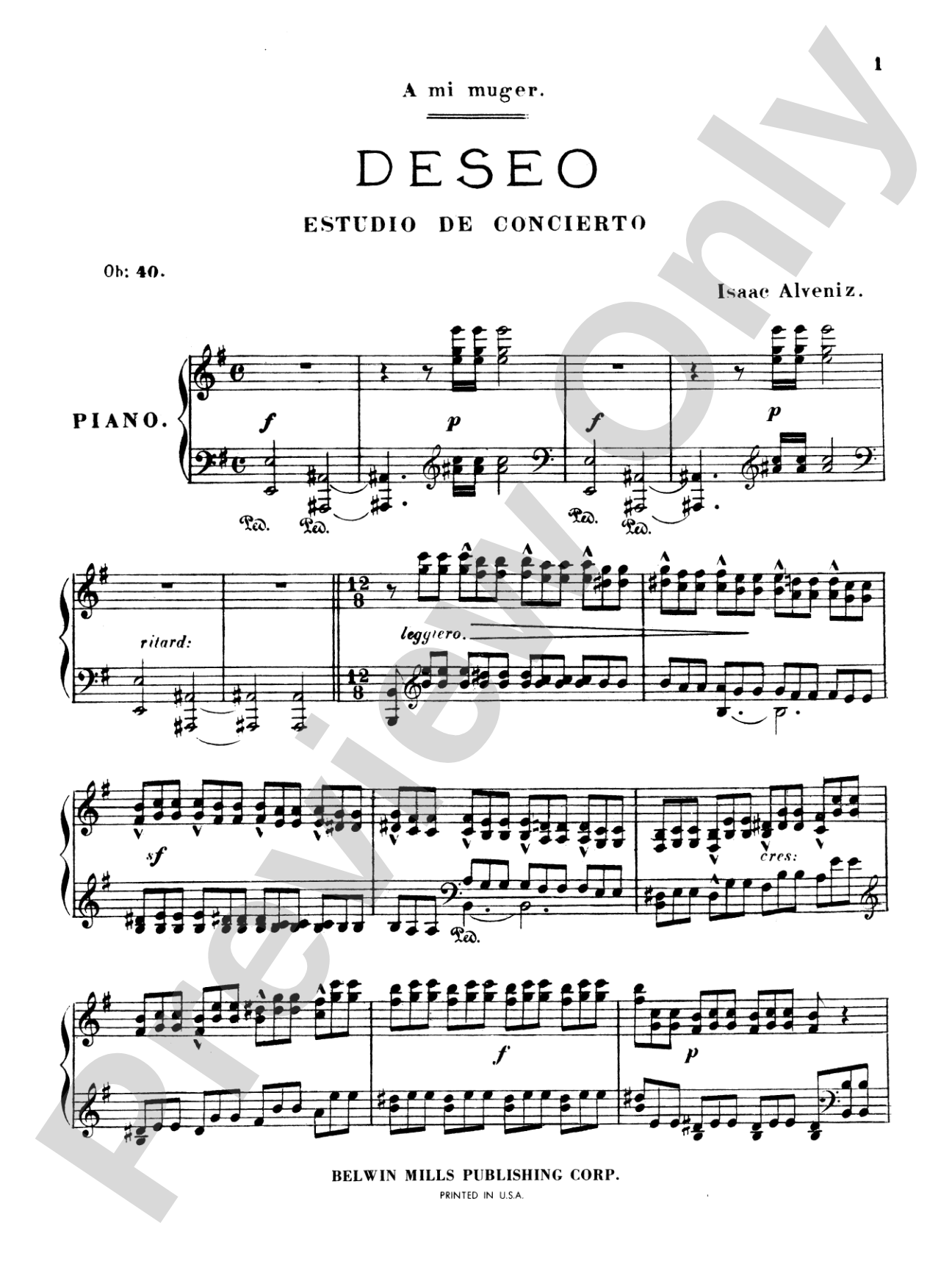
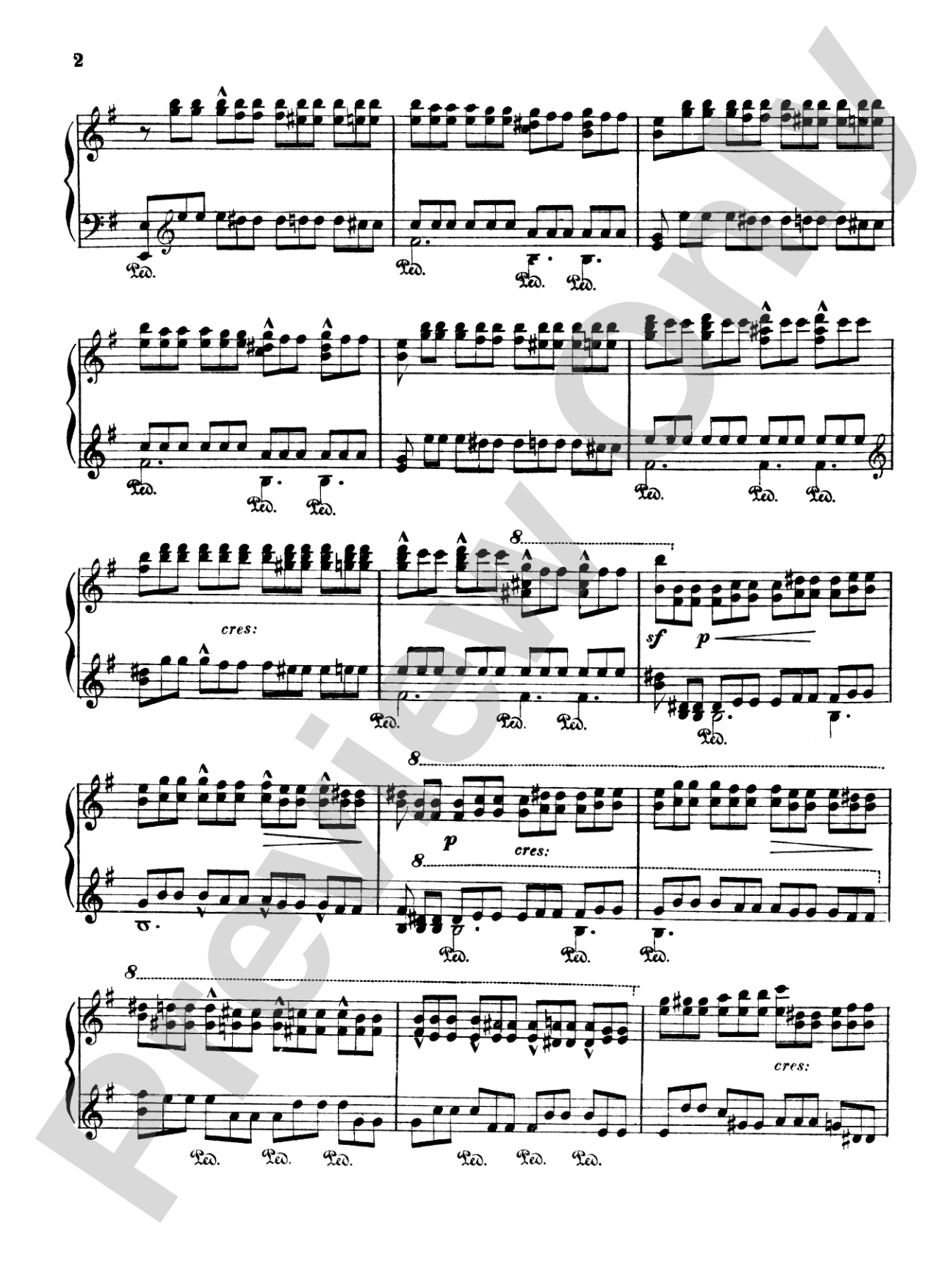
Albéniz: Deseo (Estudio de Concierto) Sheet Music Preview

Albéniz: Deseo (Estudio de Concierto)

By Isaac Albéniz

Level: Intermediate / Advanced

Item: 00-PC-0012655

Digital Download
$5.99
Description
Expertly arranged piano solo from our Kalmus Edition.

Don't just read it, hear it, play along with it, and watch your students grow with it. In MakeMusic Cloud, Albéniz: Deseo (Estudio de Concierto) comes alive with professional accompaniment, adjustable tempo, and built-in practice tools that turn solo practice into real progress.

Sample Audio
No sample audio found.
Sample Video
Additional Details
Series: Kalmus Edition
Publisher: Alfred Music
Page Count: 20
SKU: 00-PC-0012655

More about this title

About the Composer: Isaac Albéniz

Isaac Albéniz (1860-1909) stands as one of Spain's most influential composers, bringing nationalist fervor and virtuosic ambition to the piano repertoire during the Romantic era. His works draw deeply from Spanish musical traditions, folk idioms, and flamenco rhythms, yet are cast in sophisticated European forms that demand both technical command and interpretive maturity from performers.

Albéniz spent much of his career in Paris and London, where he absorbed cosmopolitan influences while remaining fiercely committed to Spanish character. His legacy rests primarily on his piano compositions, which remain central to the intermediate and advanced repertoire taught worldwide. Teachers value his music for its accessibility to advancing pianists while its artistic depth sustains lifelong study.

Why we love this

Deseo burns with passionate expression without sacrificing structural clarity, making it an ideal recital piece for pianists ready to command a hall. The writing sits comfortably under the hands while demanding genuine musicality and control of tone; this balance is rare at the intermediate-advanced level. Programming this piece signals artistic ambition and gives students a work that feels substantial and rewarding without years of additional study.

What to expect

Deseo carries the yearning of its title throughout, a restless passion that never quite resolves into contentment. The music combines the warmth of Spanish idiom with the harmonic sophistication of the late nineteenth century, creating an expressive landscape that feels both intimate and grand.

Who it's for

This piece speaks to pianists at the intermediate-advanced level who are building interpretive independence and seeking repertoire with genuine emotional stakes. It works equally well for the advancing student seeking a substantial recital piece and the accomplished amateur pianist wanting to deepen their connection to Spanish Romantic literature.

How to get the most out of it

  • Shape the melodic lines with consistent phrase direction rather than allowing rubato to fragment the music; Albéniz's Spanish voice needs architectural coherence even at slower tempos.
  • Attend carefully to the harmonic rhythm underneath the melody, as the accompaniment figures contain the emotional weight and harmonic interest that grounds the passionate character.
  • Balance the need for lyrical flexibility in the top voice against maintaining a steady rhythmic foundation; the two elements work together to create the work's yearning quality.
  • Differentiate between sections through color and dynamic shaping, allowing the recurring motifs to grow in intensity as they reappear rather than stating them identically each time.

How to use it

This solo anchors a recital program focused on Spanish composers or works from the Romantic era, and it pairs naturally with other character pieces by Albéniz or his contemporaries. Its moderate length (20 pages) makes it suitable as a closing piece before an encore or as a centerpiece in a mixed program of baroque and contemporary works.

Skills your students will build

  • Pedal control to sustain harmonic color while maintaining clarity
  • Phrasing across longer melodic arcs with varied rubato
  • Coordination of independent melodic and accompaniment voices
  • Tonal differentiation and dynamic shaping to express Romantic character
  • Interpretation of Spanish idioms and nationalist compositional voice

You May Also Like