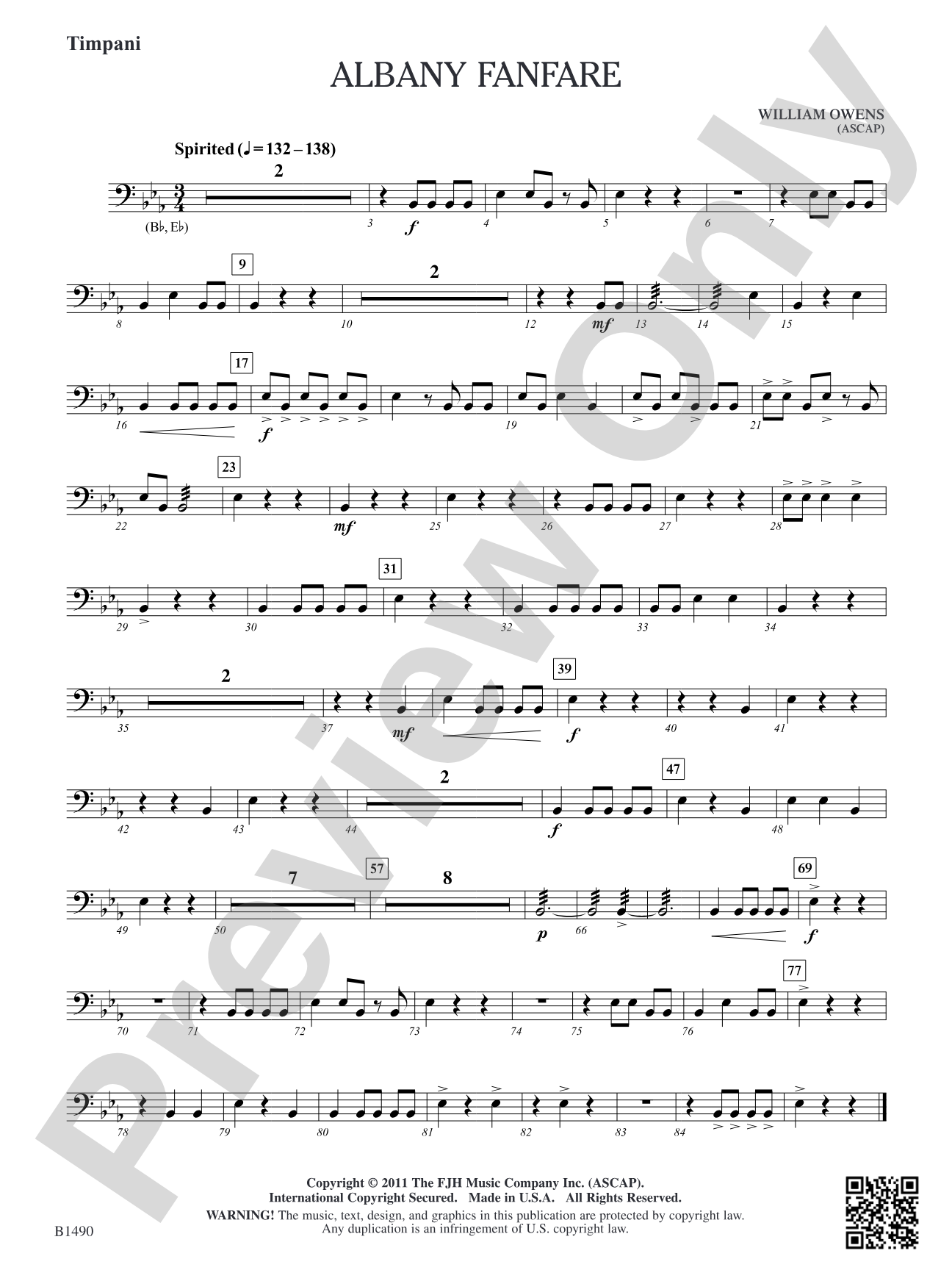
Albany Fanfare: Timpani Sheet Music Preview

Albany Fanfare: Timpani

By William Owens

Grade: 1.5

Item: 98-PC-DB1490_TMP

Digital Download
$7.00
Description
Open your next concert with this invigorating fanfare that combines powerful themes with stately lines as music bursts forth in a flurry of energy. A transient middle section incorporates harmonic shifts and texture changes as the music builds into the closing triumphant material. Captivating!

Don't just read it, hear it, play along with it, and watch your students grow with it. In MakeMusic Cloud, Albany Fanfare: Timpani comes alive with professional accompaniment, adjustable tempo, and built-in practice tools that turn solo practice into real progress.

Sample Audio
0:00
0:00
Sample Video
Additional Details
Series: FJH Developing Band
Publisher: The FJH Music Company, Inc.
SKU: 98-PC-DB1490_TMP

More about this title

About the Composer: William Owens

William Owens

William Owens brings three decades of direct teaching experience to his compositional work. A VanderCook College of Music graduate, he has established himself as one of the most prolific and respected voices writing for young ensembles, with over 300 published titles across concert band, string orchestra, and chamber settings since 1993. His music appears on state required lists and has become foundational repertoire in band programs across North America.

Owens approaches composition with the practical wisdom of a career band director. His work for developing ensembles balances musical substance with pedagogical clarity, a philosophy tested and refined over 30 years leading bands in Texas. Beyond the page, he remains active as a clinician and conductor, and holds memberships in ASCAP, TMEA, and Phi Beta Mu International. He resides in Fort Worth with his wife Georgia.

Why we love this

Owens designs openings that command attention. This fanfare uses instrumental color and rhythmic clarity to make a confident first impression without demanding virtuosity; Grade 1.5 bands will find the thematic material singable and the energy infectious. The middle section's harmonic movement and textural shifts give players something genuine to execute rather than simple repetition, which keeps rehearsals engaging and makes the payoff of that triumphant close feel earned.

What to expect

A burst of brass and energy that announces something important is about to happen. The middle section pulls back momentarily, letting harmonic color deepen the texture before the final push into triumph. It reads as a complete musical thought in miniature, compact and confident.

Who it's for

Concert bands at the developing level who need repertoire that opens strong without overshadowing the rest of the program. Directors programming festivals or adjudicated events will find this piece earns confidence from judges while remaining accessible to younger or less experienced ensembles.

How to get the most out of it

  • Shape the powerful opening themes with clear articulation and consistent air support; the fanfare's impact depends on unified ensemble tone, not individual brilliance.
  • Balance the harmonic shifts in the middle section by having players listen across sections rather than locking to a single part; this texture work is where less experienced players truly develop musical awareness.
  • Allow the final triumphant material room to breathe and swell; resist the urge to rush the closing, as the stately resolution is what makes the journey through the piece memorable.

How to use it

This works perfectly as a concert opener; it sets tone and energy without fatiguing the ensemble before the main repertoire. It also serves well in festival settings where judges expect clear, purposeful writing at the opening slot. Pair it with a lyrical selection to show range, or with another Grade 1.5 piece to demonstrate the developing band's technical facility.

Skills your students will build

  • Unified articulation and ensemble balance in fanfare-style writing
  • Reading harmonic movement and textural contrast
  • Sustaining air support through energetic, repetitive thematic material
  • Responding to clear formal structure (statement, development, restatement)
  • Dynamic control and phrasing in stately closing material

You May Also Like