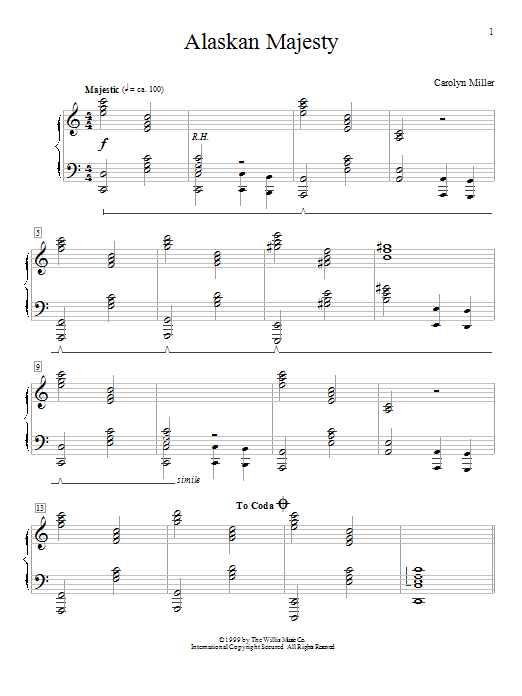
Carolyn Miller is a prolific composer whose output spans educational piano, instrumental solos, and chamber works. Her approach to pedagogy balances musicality with accessibility, creating pieces that respect young students' growing technical abilities while maintaining genuine artistic content. Miller's compositions appear regularly in method books and music education catalogs, making her one of the most frequently encountered names in early-level piano curricula.
Why we love this
Miller writes Grade 2 pieces that actually sound like music rather than exercise studies. Alaskan Majesty captures something authentic about landscape and place without resorting to gimmicky effects, giving students a real compositional voice to interpret rather than just mechanical patterns.
What to expect
Wide open spaces and quiet strength. The piece evokes scale and majesty without bombast, inviting players to imagine something larger than themselves while remaining grounded in straightforward musical language.
Who it's for
Grade 2 piano students ready to explore repertoire beyond method books. This piece works well for students who have solidified basic hand position, can read treble clef confidently, and want to experience music that suggests a world beyond the practice room.
How to get the most out of it
Shape the melodic line through subtle weight changes rather than pedal; at this level, clarity matters more than resonance.
Establish a steady tempo early and maintain it without rushing through familiar passages; young pianists tend to accelerate when movements become comfortable.
Listen for balance between hands; the accompaniment should support rather than overshadow the melody.
How to use it
Include this in a student recital alongside other landscape-inspired pieces to create a thematic program, or use it as a stepping stone in the later pages of Grade 2 study when students need fresh material that maintains their technical level while deepening interpretive thinking.
Skills your students will build
Phrasing and shaping melodies across four-bar and eight-bar structures
Maintaining rhythmic consistency while managing dynamic changes
Reading and interpreting composer's expressive markings
Balancing melody and accompaniment textures
You May Also Like
Scan to Complete Your Purchase
Use your phone's camera to scan the code below
You'll log in on your phone and the order will be added to your account