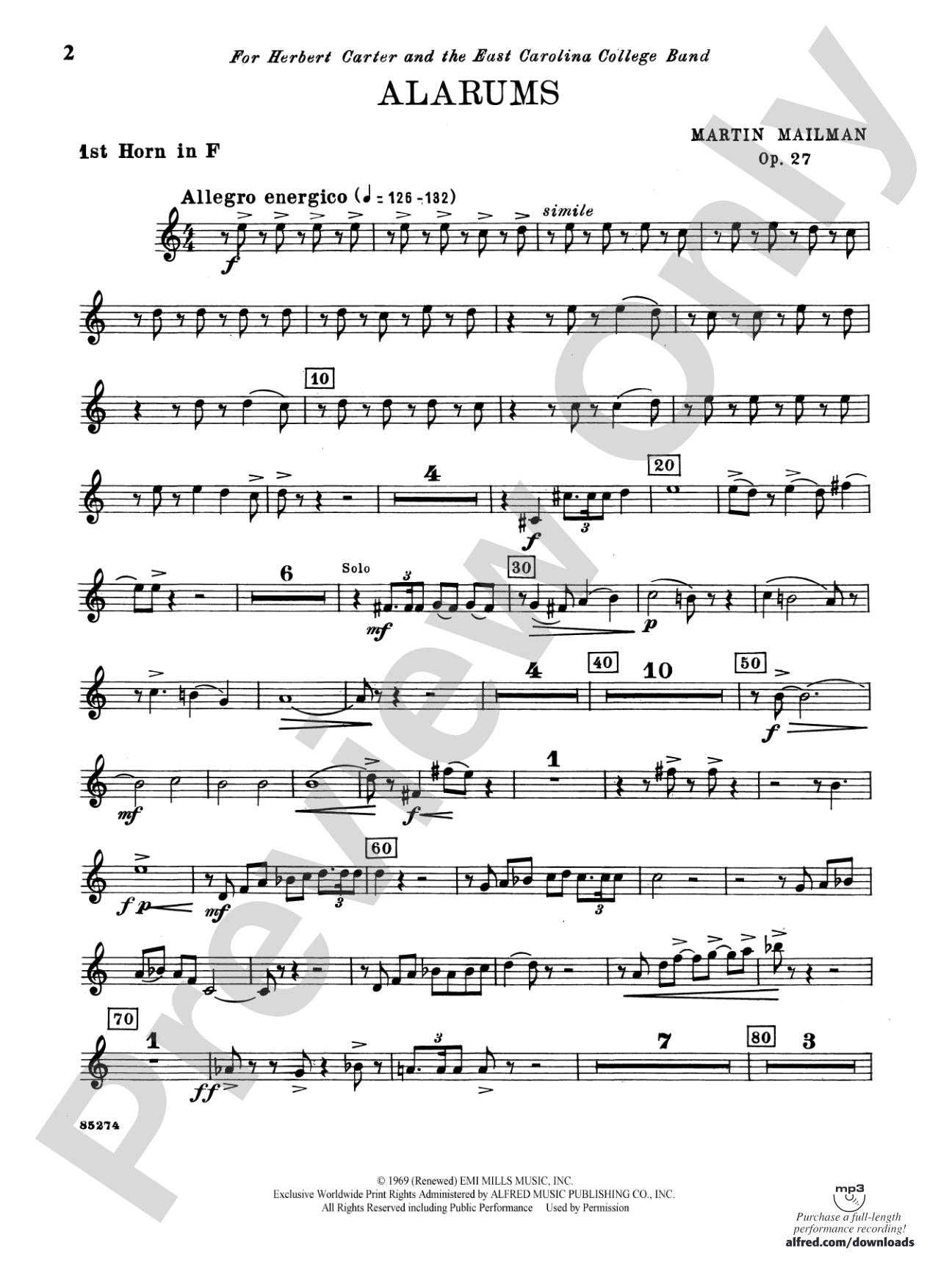
Alarums, Op. 27: 1st F Horn Sheet Music Preview

Alarums, Op. 27: 1st F Horn

By Martin Mailman

Grade: 3.5 (Medium Easy to Medium)

Item: 00-PC-0015175_H1

Digital Download
$3.00
Description
Martin Mailman (1932-2000) composed "Alarums for Band, Op. 27" in 1962 in Greenville, North Carolina. The word "alarum" means a "call to arms." The piece was originally titled "Overture for Band" and was later changed to "Alarums for Band" sometime between its completion in 1962 and publication in 1969 with John Barnes Chance, Mailman's colleague and friend, probably suggesting the change in title sometime during this period. Bold and commanding, a cherished addition to the Belwin Classic Band series.

Don't just read it, hear it, play along with it, and watch your students grow with it. In MakeMusic Cloud, Alarums, Op. 27: 1st F Horn comes alive with professional accompaniment, adjustable tempo, and built-in practice tools that turn solo practice into real progress.

Sample Audio
0:00
0:00
Sample Video
Additional Details
Series: Belwin Classic Band
Publisher: Alfred Music
Page Count: 264
SKU: 00-PC-0015175_H1

More about this title

About the Composer: Martin Mailman

Martin Mailman (1932-2000) was a prolific composer and educator who shaped American band music during the mid-to-late twentieth century. His works for concert band range from accessible teaching pieces to substantial concert works, all marked by strong melodic writing and clear orchestration. Mailman's compositions remain staples in school and community band libraries, valued for their musicality and pedagogical soundness.

Why we love this

Alarums announces itself immediately with bold, martial energy that energizes any festival or concert program. The piece sits comfortably at Grade 3.5, making it accessible to growing ensembles without sacrificing the dramatic impact that keeps students engaged and audiences captivated.

What to expect

Alarums pulses with martial confidence and stately grandeur. The writing evokes a call to attention, urgent yet ceremonial, with bold brass declarations supported by rhythmic precision in the full ensemble.

Who it's for

This work suits bands at the intermediate level who are ready for music with dramatic flair and concert presence. Directors programming festivals or spring concerts will find it effective for demonstrating their ensemble's technical control and musicality.

How to get the most out of it

  • Set a crisp tempo that allows clarity in the rhythmic figures without sacrificing the forward momentum that defines the piece's character.
  • Balance the brass against the woodwinds carefully in passages where both sections carry melodic material; the parts are written to blend, not compete.
  • Shape the dynamic arc across longer phrases rather than treating each measure as an isolated dynamic unit; let the music breathe within its commanding framework.
  • Drill section entrances in the fanfare-like passages to ensure precision; rhythmic cohesion here is essential to the piece's impact.

How to use it

Open a concert with this piece to establish energy and command audience attention immediately. It pairs well with lyrical works that follow, creating effective contrast, and stands alone as a strong festival or contest selection.

Skills your students will build

  • Executing crisp articulation in rhythmic passages
  • Balancing multiple melodic lines across sections
  • Responding to dramatic dynamic and tempo shifts
  • Maintaining precision in fanfare-style ensemble figures
  • Shaping longer musical phrases with architecture and intent

You May Also Like