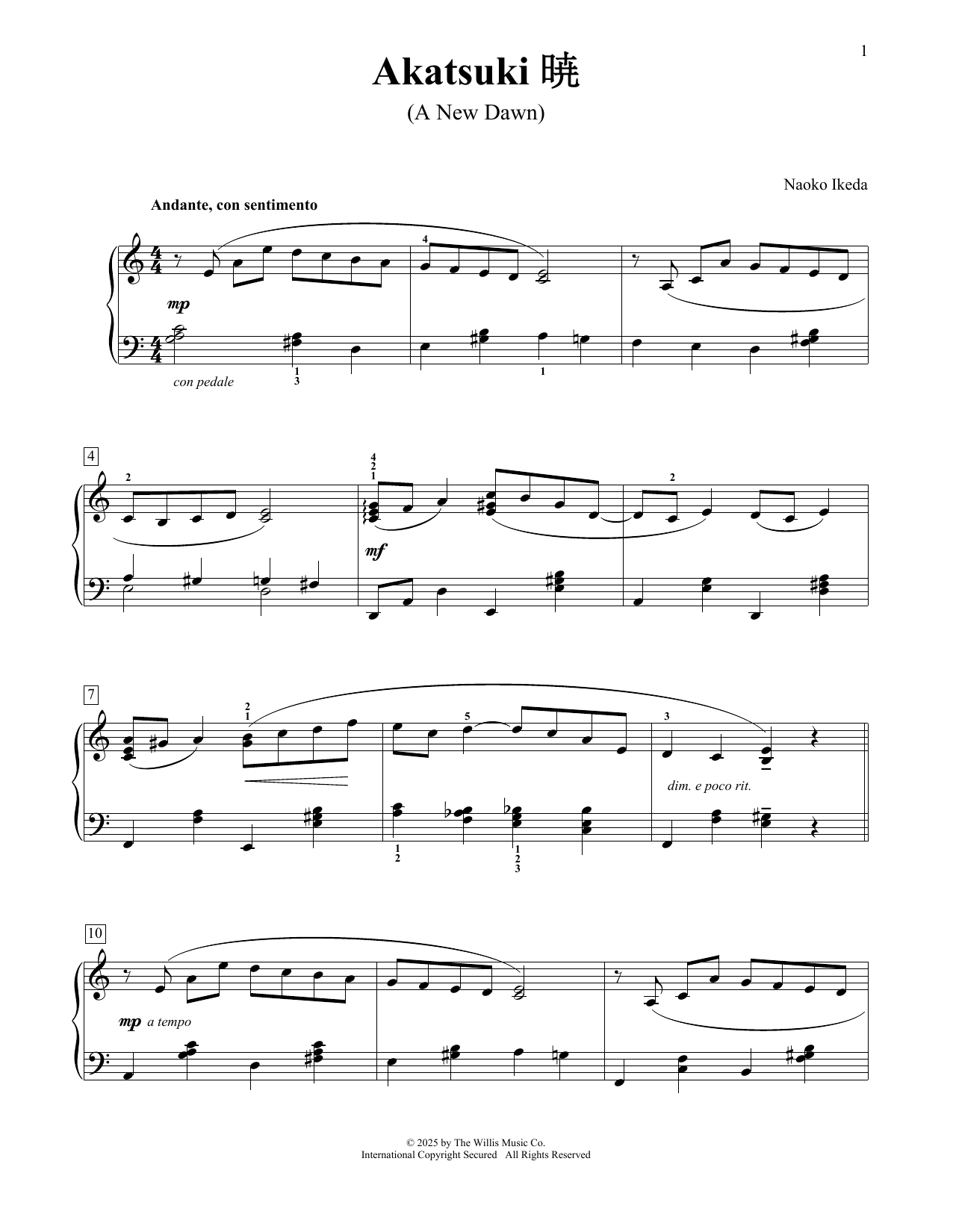
Ikeda crafts a piece that sounds far more sophisticated than its educational scope suggests, giving students the rare experience of performing something that doesn't feel simplified. The two-page format respects rehearsal realities while delivering genuine musical satisfaction, making it an ideal choice when you want substantive repertoire that still fits early-to-intermediate pianists.
What to expect
Soft light breaking across a horizon. The piece unfolds with quiet intention, building internal complexity rather than demanding virtuosic display. There's an introspective quality that asks the performer to inhabit the music rather than simply execute it.
Who it's for
Early-to-intermediate pianists ready to explore pieces with genuine harmonic and textural depth. This works equally well in private lessons, group piano classes, or as a recital selection for students who need material that challenges their musicianship without overwhelming their technical foundation.
How to get the most out of it
Establish the foundational harmonic progression first by playing it several times slowly, then layer melodic voices on top to ensure independence between hands.
Identify the emotional center of the piece; bring those moments forward slightly in the mix so the dawn imagery translates aurally.
Practice hands separately at performance tempo before combining, paying close attention to any rhythmic shifts that signal structural changes.
How to use it
Pair this in a recital with other miniatures that explore subtle, impressionistic textures; it works beautifully as a closing piece that leaves listeners in a reflective state. Alternatively, use it in a lesson sequence focused on understanding harmonic color and how composers evoke imagery through structure rather than literal program notes.
Skills your students will build
Voice leading between hands in a three or four-part texture
Sensitivity to dynamic shape and harmonic movement
Reading and sustaining layered musical ideas simultaneously
Interpreting programmatic intent through compositional choices
You May Also Like
Scan to Complete Your Purchase
Use your phone's camera to scan the code below
You'll log in on your phone and the order will be added to your account