
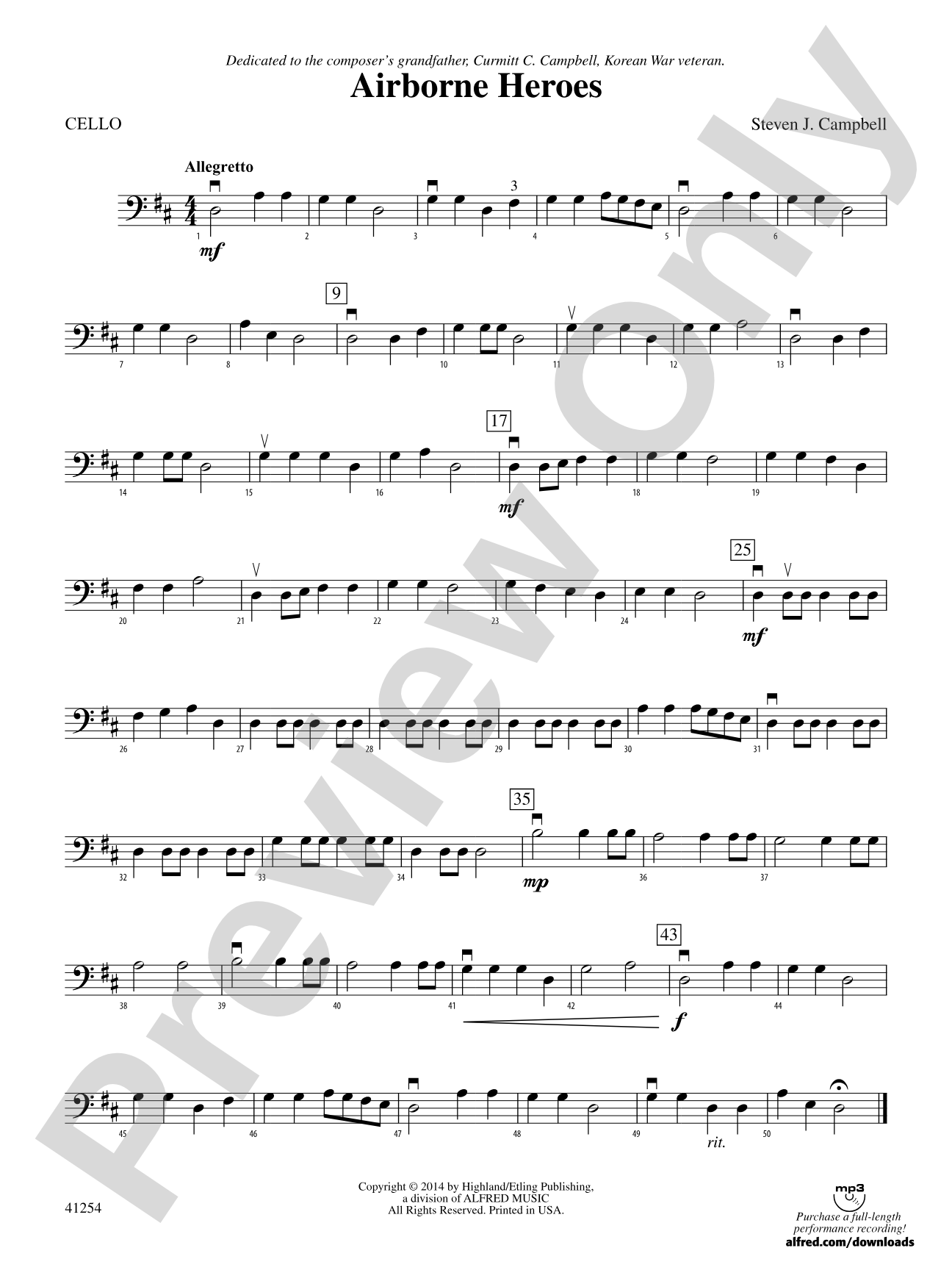

Airborne Heroes: Cello
By Steven J. Campbell
Grade: 1
Item: 00-PC-0016371_VC1
$5.99
Pickup currently not available
Description
Written in memory of the composer's grandfather, a Korean War Veteran, this piece is perfect to program as a tribute to all service men and women. The heroic melodies and harmonies, set in D Major, are shared throughout the ensemble, making it fun for all sections! The violins and cellos stay completely on the D and A strings, while the violas and basses use the G and D strings. This is a wonderful first selection to expose any young ensemble to independent parts among sections and the roles of melody and harmony, all while reinforcing the importance of using the 4th finger. The cello and bass parts have been doubled to create a strong, confident foundation while the viola and violin parts usually share similar rhythms while harmonizing. Fundamental dynamics and bowings will make this piece not only fun to play, but also a success among performers and audiences alike! (1:50) This title is available in MakeMusic Cloud.


Don't just read it, hear it, play along with it, and watch your students grow with it. In MakeMusic Cloud, Airborne Heroes: Cello comes alive with professional accompaniment, adjustable tempo, and built-in practice tools that turn solo practice into real progress.
Open in the Player
Jump straight in and assign it today.
Start Your Free Trial
Open this title and explore the full library in minutes.
Sample Audio
1
Audio File
--:--
0:00
0:00
Sample Video
No sample videos found.
Additional Details
Series:
Highland/Etling String Orchestra
Publisher:
Alfred Music
Page Count:
62
SKU:
00-PC-0016371_VC1
More about this title
Why we love this
Campbell writes with young orchestras in mind, and this piece proves it. The independent parts challenge students without overwhelming them, while the heroic character keeps everyone engaged from first rehearsal through performance. Programming a piece that honors service members while building foundational orchestral skills is rare; this does both without sacrificing musicality.
What to expect
Noble and assured, with a warm D Major sonority that feels both accessible and dignified. The piece carries genuine emotion in its heroic melodies without requiring advanced technical displays, allowing the ensemble to focus on musical storytelling and ensemble unity.
Who it's for
String orchestras at the earliest stages of learning independent parts and developing awareness of melody versus harmony. This piece introduces students to the concept of sectional roles while keeping the technical demands manageable, making it ideal for beginning groups or younger players transitioning from unison playing.
How to get the most out of it
- Balance the shared melodic material across sections by having each group identify when they carry the tune versus when they provide harmonic support. This awareness prevents any section from overshadowing the others.
- Mark the 4th finger passages in rehearsal to ensure intonation is consistent and secure before adding dynamics. Students unfamiliar with 4th finger work benefit from isolated practice on these intervals.
- Shape the heroic phrases with purposeful crescendos and decrescendos, using the fundamental dynamic markings as guideposts rather than absolute endpoints. Encourage the ensemble to listen for the cello and bass foundation and match their emotional arc.
- Give the doubled cello and bass parts special attention in early rehearsals; a confident low foundation will anchor the entire sound and give younger players confidence in their own parts.
How to use it
Pair this with your spring or summer patriotic concert programming, or feature it during a Veterans Day or 4th of July celebration. Its modest length (1:50) makes it an effective opener that sets an honorable tone while allowing time for more complex works later in the program.
Skills your students will build
- Playing independent parts while maintaining awareness of harmonic function
- Extended 4th finger technique on D, A, and G strings
- Distinction between melodic and harmonic roles within the ensemble
- Reading and executing fundamental dynamic markings with musical intent
- Responding to sectional cues and coordinating unified phrasing across the orchestra