
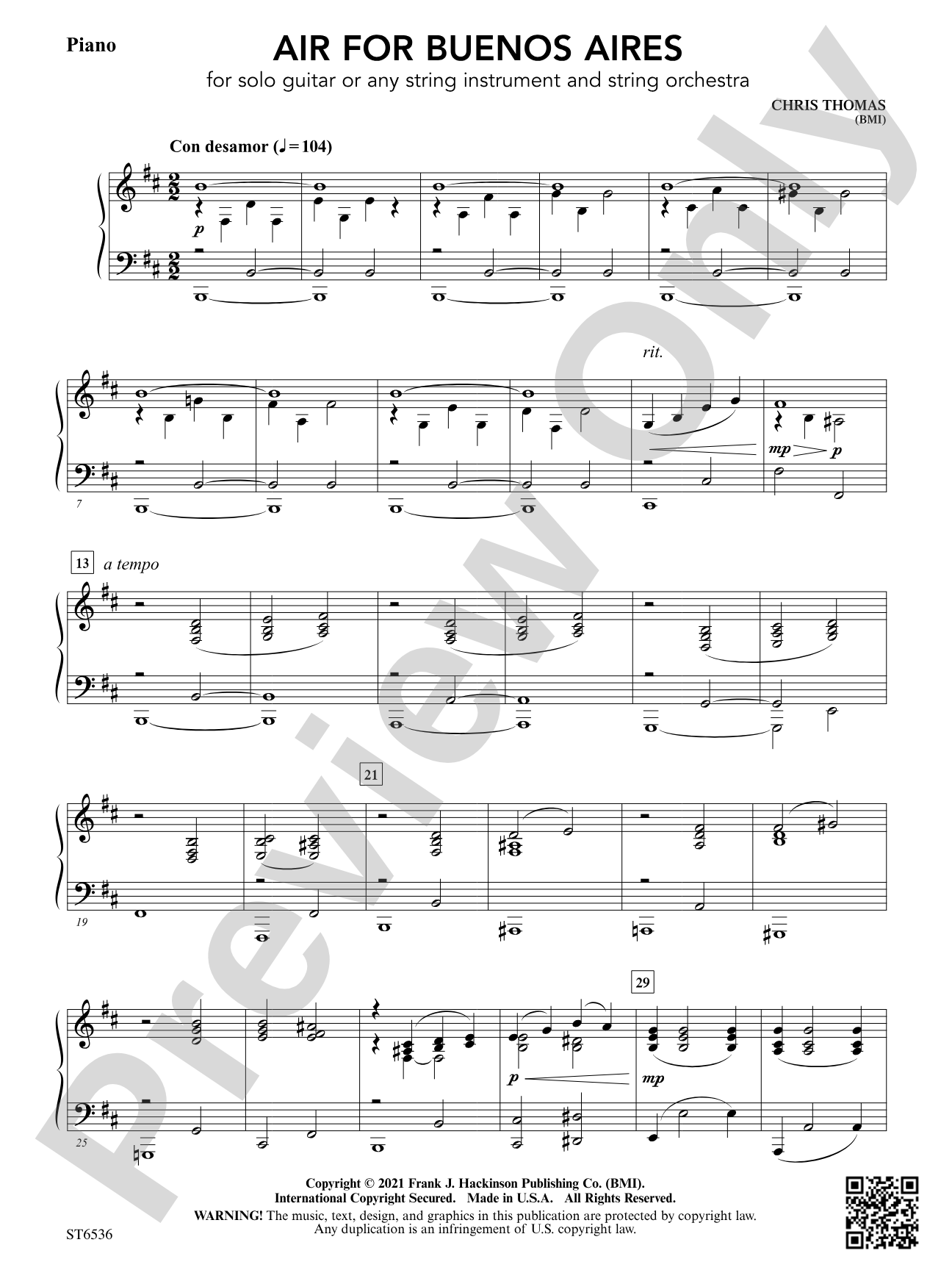

Air for Buenos Aires: Piano
By Chris Thomas
Grade: 3
Item: 98-PC-DST6536_K
$7.00
Pickup currently not available
Description
Feature a guitar soloist or any member of the orchestra (or even a combination of players!). Inspired by the Tango-influenced music of Astor Piazzola, this work paints a portrait of a sleepy, late night in Brazil as a lone tango dancer walks the streets. Every member of the orchestra has the solo printed on the back of their section part, giving directors incredible flexibility with choosing a soloist or combination of soloists. A powerful and beautiful work.


Don't just read it, hear it, play along with it, and watch your students grow with it. In MakeMusic Cloud, Air for Buenos Aires: Piano comes alive with professional accompaniment, adjustable tempo, and built-in practice tools that turn solo practice into real progress.
Open in the Player
Jump straight in and assign it today.
Start Your Free Trial
Open this title and explore the full library in minutes.
Sample Audio
1
Audio File
--:--
0:00
0:00
Sample Video
Additional Details
Series:
FJH String Orchestra
Publisher:
The FJH Music Company, Inc.
SKU:
98-PC-DST6536_K
More about this title
About the Composer: Chris Thomas

Chris Thomas composes across film, television, theme parks, and concert stages. His accolades include a Hollywood Music in Media Award, two American Prize placements (2nd place), a Global Music Award, and the Gold Medal at the Park City Film Music Festival. His orchestrations and original scores have supported Emmy-nominated films and concert hall premieres at venues including Carnegie Hall, the Sydney Opera House, and the Hollywood Bowl.
Thomas has created music for major studios including Sony, ABC, FOX, CBS, and HBO, and his work inhabits theme parks worldwide from Evermore Adventure Park to Knott's Berry Farm. His Symphony No. 1 (the Malheur Symphony) was the focus of his 2019 TED Talk, showcasing his ability to translate visual and emotional narratives into orchestral language. Learn more at www.christhomasmusic.com.
Why we love this
Thomas captures Piazzola's harmonic language and tango's rhythmic pulse without demanding virtuosity from your string section. The built-in flexibility for choosing a soloist or combination of soloists means you can spotlight a standout player one week and shift the focus entirely the next; few pieces at Grade 3 offer this kind of pedagogical adaptability alongside genuine musical sophistication. The result feels both intimate and orchestral, making it equally effective at festival competitions and in-house recitals.
What to expect
A solitary walk through lamplit streets at midnight, the landscape of Buenos Aires distilled into a tango that breathes rather than rushes. The orchestration wraps around the solo voice like shadow and city light, intimate yet resonant. Piazzola's harmonic world blooms underneath: elegant, slightly melancholic, unforgettable.
Who it's for
String orchestras seeking a Grade 3 work that bridges cultural sophistication with ensemble flexibility. Directors who want to feature emerging soloists without resetting the entire piece; this title invites you to highlight different voices from concert to concert. Ensembles preparing for festival competition or seeking concert-hall repertoire with genuine dramatic weight.
How to get the most out of it
- Settle on your soloist configuration early in rehearsals so your orchestra can lock onto the balance they need. Whether you feature a guitarist, a concertmaster, or a rotating ensemble of soloists, consistency in early preparation allows the accompanying voices to find their proper dynamic architecture.
- Emphasize the pulse underneath the solo line. Tango rhythms depend on a steady, almost hypnotic foundation; if your violas and cellos lose the thread, the whole piece drifts from its late-night intensity.
- Shape the solo line with rubato and warmth, but anchor it to the ensemble's forward motion. This piece walks a line between strict meter and conversational phrasing; trust that your soloists can breathe naturally while the orchestra holds the ground beneath them.
How to use it
Program this as a centerpiece showcase piece that allows you to highlight individual talent while keeping the ensemble engaged and essential. Position it early enough in your season that rehearsal flexibility for soloist changes doesn't compete with other complex repertoire. It pairs naturally with other Latin-influenced or tango-based works, or stands alone as a concert highlight that audiences remember long after the final note.
Skills your students will build
- Playing with rubato and freedom within a stable ensemble pulse
- Accompanying a solo line with sensitivity and subordinate dynamic control
- Interpreting tango rhythms and Piazzola-influenced harmonic language
- Shifting ensemble roles and balance as the soloist configuration changes
- Responding to a featured voice while maintaining rhythmic cohesion