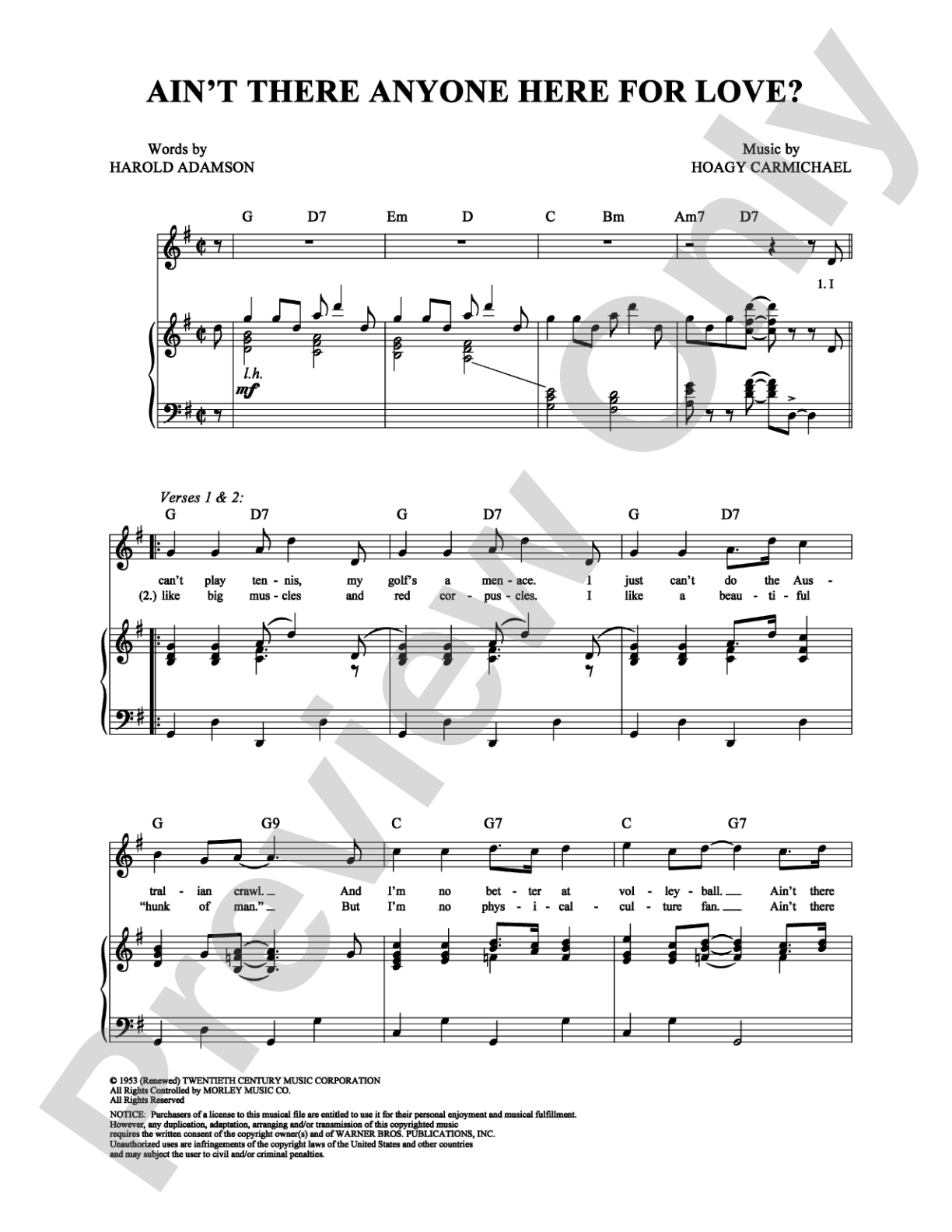
Ain't There Anyone Here for Love?: Piano/Vocal/Chords Digital Sheet Music

Ain't There Anyone Here for Love?: Piano/Vocal/Chords Digital Sheet Music

Hoagy Carmichael

Item: 00-PS-0006501

Digital Download
$2.95
Description

Ain't There Anyone Here for Love?: Piano/Vocal/Chords Digital Sheet Music isn't in MakeMusic Cloud just yet...but it could be. Let us know you'd like to see it, and you'll help shape what comes next. In the meantime, start a free trial and dive into thousands of interactive titles your students can play along with today.

Sample Audio
No sample audio found.
Sample Video
Additional Details
SKU: 00-PS-0006501

More about this title

Why we love this

This is a vocal standard with real rhythmic and harmonic substance—the kind of song that teaches singers how to navigate syncopation and unexpected chord changes while staying musical. Piano/Vocal/Chords format gives you flexibility to arrange it however your rehearsal space and ensemble require, from intimate recital to fuller accompaniment.

What to expect

A song that asks a playful but sincere question, with a rhythm and harmonic language that feels conversational and slightly behind the beat. The melody sits naturally in the voice while the chords underneath provide enough color and movement to keep accompaniment interesting.

Who it's for

Vocalists preparing a jazz or popular standards recital, singers in musical theater contexts looking to expand their repertoire, and pianists accompanying in private studio or ensemble settings. This works equally well for intermediate to advanced singers seeking material with genuine harmonic interest.

How to get the most out of it

  • Pay attention to the syncopation in the melody; lock it against the chord changes rather than fighting them. Let the accompaniment anchor you.
  • The phrasing should feel conversational and relaxed, not stiff. Use the chord symbols to understand harmonic movement and find natural breathing spots.
  • If using a pianist, make sure they understand the groove implied by the chords; their interpretation of swing, latin, or straight-eighths will shape how the melody sits.
  • Mark any tricky intervals or wide leaps in the melody during preparation so you're not sight-reading them in performance.

How to use it

Pair this with other jazz or popular standards from the same era to create a themed recital or showcase set. It also fits well in musical theater contexts or as a stand-alone audition piece that demonstrates rhythmic flexibility and harmonic awareness.

Skills your students will build

  • Reading syncopated melody lines against written chord symbols
  • Understanding jazz and popular music harmony (seventh chords, chromatic movement)
  • Maintaining phrase integrity through rhythmic displacement
  • Interpreting chord symbols to inform phrasing and accompaniment style

You May Also Like