
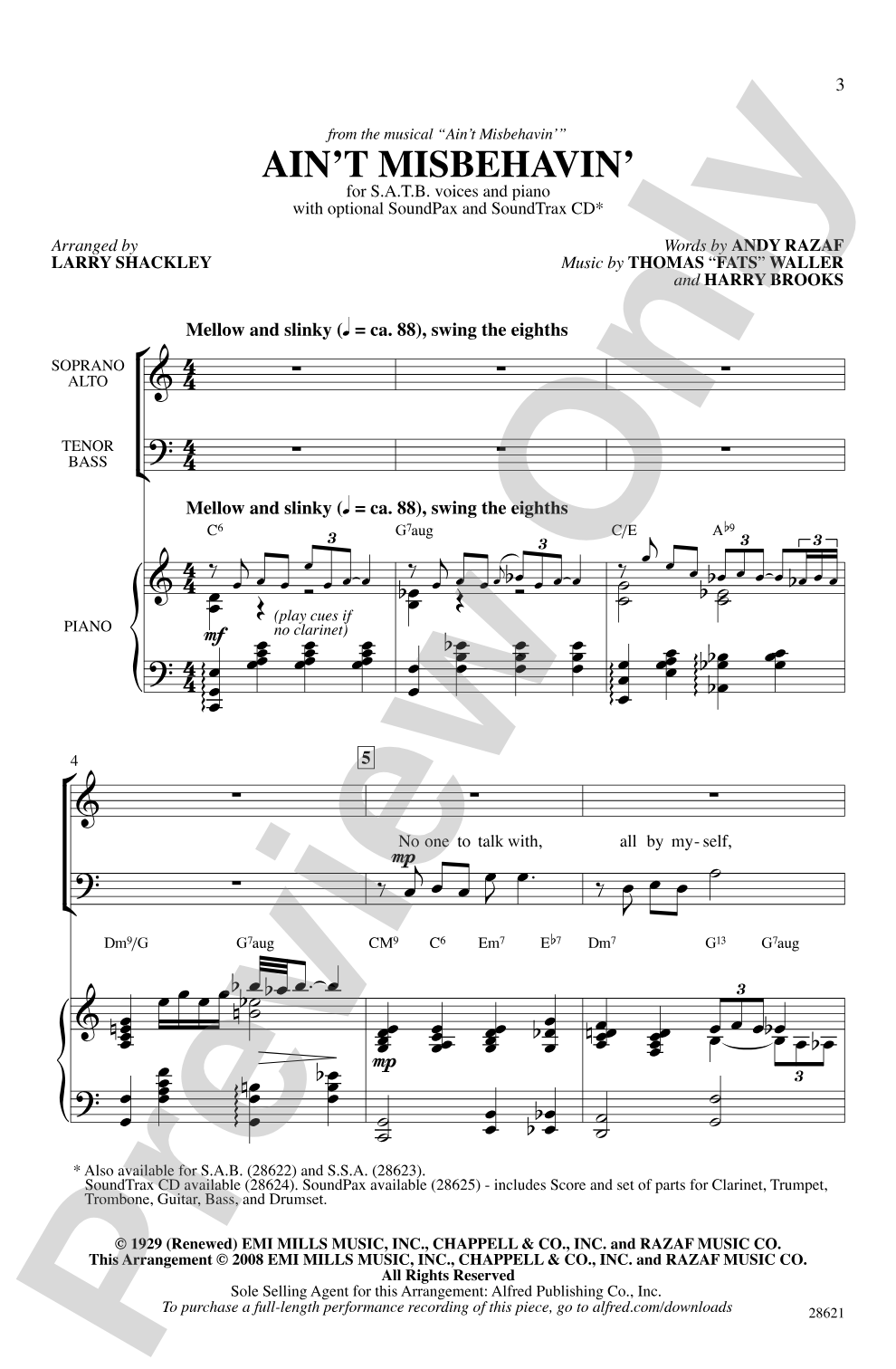
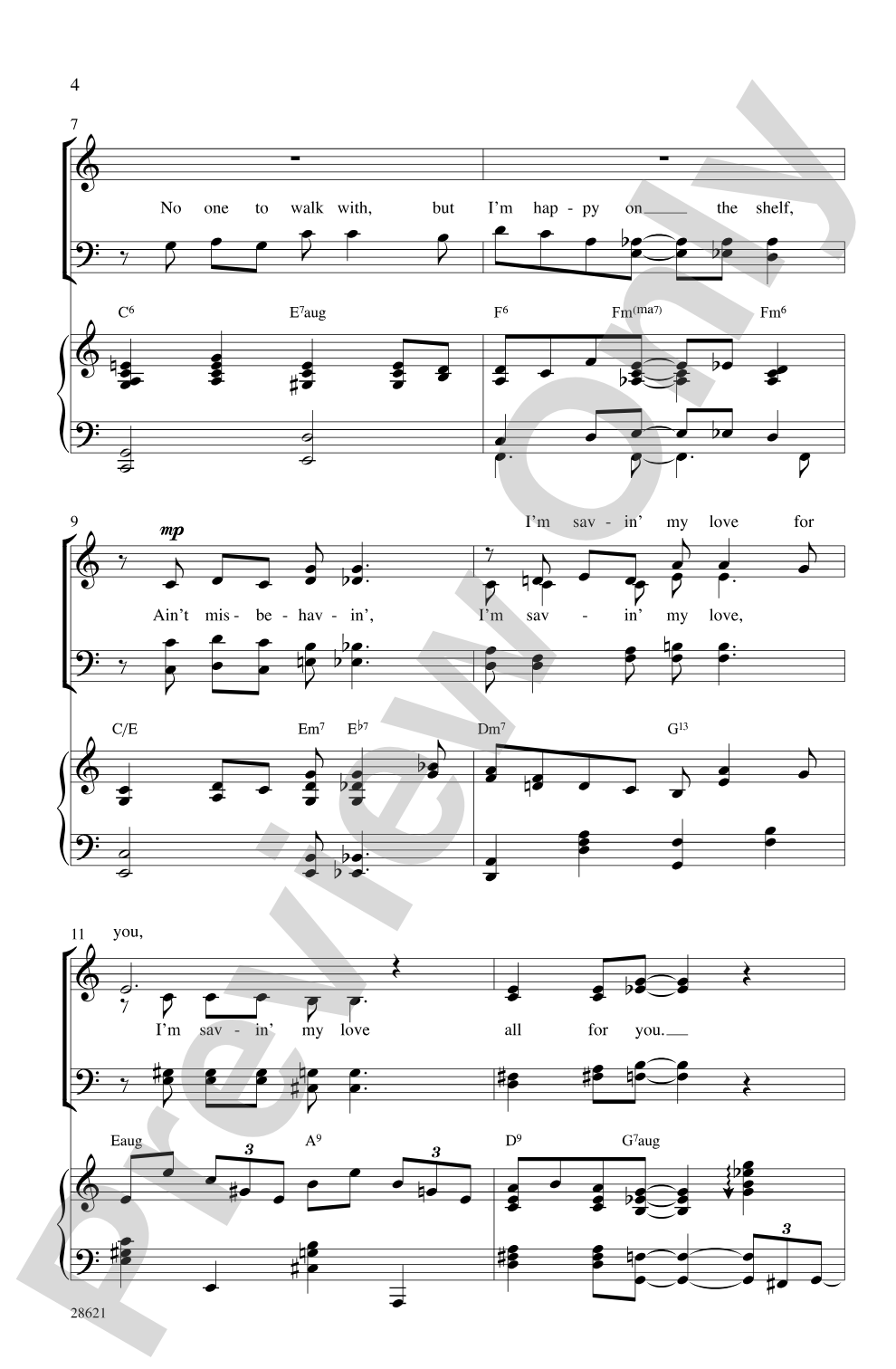

Ain't Misbehavin' (from the musical Ain't Misbehavin'): SATB Choral Octavo
From the Musical Ain't Misbehavin'
Words by Andy Razaf, music by Thomas "Fats" Waller and Harry Brooks / arr. Larry Shackley
Item: 00-PO-0002297
$2.10
Minimum order quantity: 20 copies
Pickup currently not available
Related Items
Ain't Misbehavin': SATB Choral Octavo |
$2.10
|
View |
Description
Here's a jammin' and jivin', red hot, razzmatazz setting of the title song from the musical Ain't Misbehavin', just perfect for show, jazz, or concert choirs.


Ain't Misbehavin' (from the musical Ain't Misbehavin'): SATB Choral Octavo isn't in MakeMusic Cloud just yet...but it could be. Let us know you'd like to see it, and you'll help shape what comes next. In the meantime, start a free trial and dive into thousands of interactive titles your students can play along with today.
Request This Title
Tell us you want it.
Start Your Free Trial
Explore everything that's ready to play right now.
Sample Audio
1
Audio File
--:--
0:00
0:00
Sample Video
No sample videos found.
Additional Details
Series:
Alfred Pop Choral Series
Publisher:
Alfred Music
Page Count:
12
SKU:
00-PO-0002297
More about this title
About the Composer: Thomas "Fats" Waller
Thomas "Fats" Waller (1904-1943) was a jazz pianist, organist, composer, and entertainer who shaped American popular music across multiple decades. Born in New York, Waller developed a virtuosic stride piano technique and a magnetic stage presence that made him one of the most recorded artists of the 1930s. He composed or co-composed hundreds of songs, many of which became standards; his work blended swing, blues, and ragga influences into melodies and lyrics that balanced sophistication with infectious humor.
Waller's collaboration with lyricist Harry Brooks produced "Ain't Misbehavin'," which became the centerpiece of the 1978 Broadway revue that celebrates his legacy. The song exemplifies his gift for combining witty, conversational lyrics with memorable melodies that work equally well in intimate jazz settings or full theatrical productions.
Why we love this
Larry Shackley's arrangement captures the swagger and rhythmic vitality of the original while making it accessible to SATB choirs. The setting swings hard without requiring a jazz-trained ensemble, and the 12-page score gives singers authentic material that feels contemporary rather than nostalgic. Programming this alongside more traditional repertoire signals that your choir owns the full spectrum of American song.
What to expect
The song radiates joy and cheek, with a melody that bounces and a lyric that winks at the listener. The harmonic language feels sophisticated but never precious, anchored in blues-inflected chords that give the piece soul and warmth. Singing it generates infectious energy and the kind of camaraderie that comes from nailing something fun together.
Who it's for
This octavo suits show choirs, jazz ensembles, and concert choirs looking to add a contemporary American standard to their repertoire. It works equally well for intermediate to advanced high school choirs or community and college ensembles. Any group comfortable with rhythmic flexibility and a conversational singing style will find this rewarding.
How to get the most out of it
- Anchor the rhythm section (piano and bass, if available) to the groove before layering voices. This piece depends on a secure pulse that lets the harmonies sit naturally rather than sound stiff.
- Treat the syncopation and swing feel as essential to the style, not optional. Ask singers to listen to recordings of Fats Waller or the Broadway revival to internalize the conversational, almost spoken quality that lifts certain phrases.
- Balance clarity in the text with the fluidity of jazz phrasing. Even though this is a choral octavo, the lyrics drive the song, so articulation should serve the storytelling rather than overshadow it.
- Let the recorded accompaniment guide early rehearsals, but pull it away before performance so your singers own the space and interact with each other instead of following a track.
How to use it
Pair this with other Waller standards or Broadway material to build a set that celebrates American song tradition and contemporary jazz influence. It lands especially well in a concert focused on swing, comedy, or theater, and can serve as an audience-facing finale that leaves the hall smiling. The piece also works beautifully as a opener to signal the mood and energy of your entire program.
Skills your students will build
- Singing swing rhythms and understanding syncopation in a jazz context
- Stylistic flexibility: moving between legit choral tone and a more relaxed, rhythmically conversational approach
- Harmonic listening within seventh chords and blues-based progressions
- Text interpretation and lyrical clarity when words land on syncopated or off-beat figures