
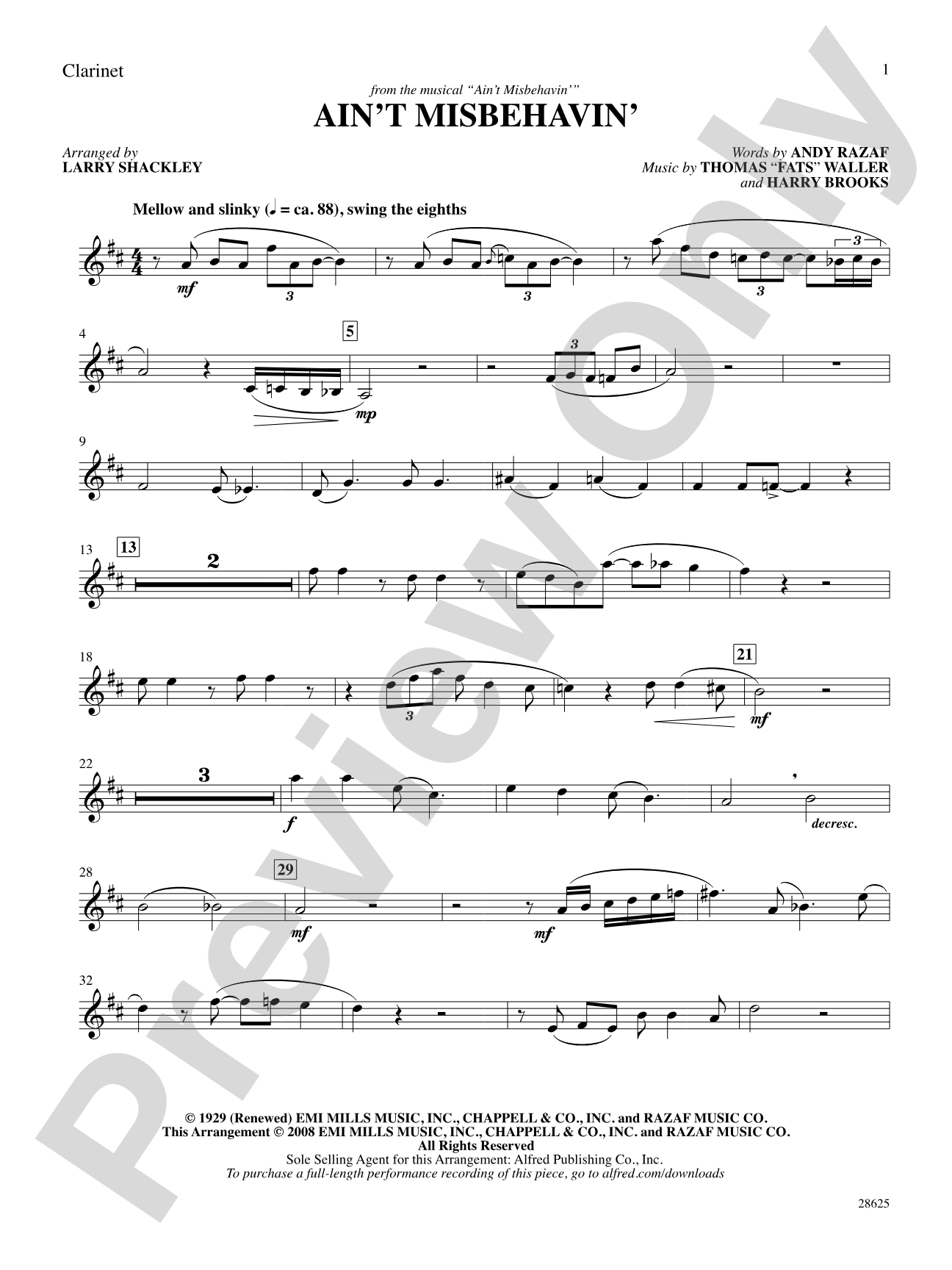

Ain't Misbehavin' (from the musical Ain't Misbehavin'): 1st B-flat Clarinet: Choral SoundPax
From the Musical Ain't Misbehavin'
Words by Andy Razaf, music by Thomas "Fats" Waller and Harry Brooks / arr. Larry Shackley
Item: 00-PC-0001341_C1
$4.00
Pickup currently not available
Description
Here's a jammin' and jivin', red hot, razzmatazz setting of the title song from the musical Ain't Misbehavin', just perfect for show, jazz, or concert choirs. Includes parts for clarinet, trumpet, trombone, and rhythm.


Don't just read it, hear it, play along with it, and watch your students grow with it. In MakeMusic Cloud, Ain't Misbehavin' (from the musical Ain't Misbehavin'): 1st B-flat Clarinet: Choral SoundPax comes alive with professional accompaniment, adjustable tempo, and built-in practice tools that turn solo practice into real progress.
Open in the Player
Jump straight in and assign it today.
Start Your Free Trial
Open this title and explore the full library in minutes.
Sample Audio
1
Audio File
--:--
0:00
0:00
Sample Video
No sample videos found.
Additional Details
Series:
Alfred Pop Choral Series
Publisher:
Alfred Music
Page Count:
24
SKU:
00-PC-0001341_C1
Instrumentation:
SoundPax
More about this title
About the Composer: Thomas "Fats" Waller
Thomas "Fats" Waller (1904-1943) was a pianist, organist, and composer who became one of the defining voices of swing-era jazz and stride piano. His prolific output included hundreds of compositions, many written in collaboration with lyricist Andy Razaf, and he brought infectious energy and melodic sophistication to every project he touched. In the theater, Waller's gift for crafting memorable, singable melodies made him a natural fit for Broadway; "Ain't Misbehavin'" remains his most enduring stage legacy, a song that captures his trademark blend of sophistication and pure joy.
As a performer and bandleader, Waller influenced generations of musicians through his recordings and radio broadcasts. His approach to rhythm, harmony, and improvisation set standards that jazz educators still reference today. For choral directors, his work offers a direct line to authentic swing vocabulary and the art of making complex jazz language feel effortless and fun for singers.
Why we love this
Larry Shackley's arrangement captures the spirit of the original without burying your singers in unnecessary technical complexity. The inclusion of clarinet, trumpet, and trombone parts gives you real jazz color without requiring a full big band, and the recorded accompaniment lets you run rehearsals efficiently while still building ensemble listening skills. This is the kind of standard that audiences recognize immediately, which means your choir gets to perform a real crowd-pleaser rather than settling for a novelty.
What to expect
Raucous and joyful, with the kind of rhythmic lift that comes from real swing phrasing. The piece hums with the confidence of 1930s jazz culture, where exuberance and musical sophistication weren't separate things. Your singers will feel the momentum in their bodies as much as in the melody.
Who it's for
Show choirs, jazz ensembles, and concert choirs looking for material that swings genuinely without demanding specialized vocal jazz training. Directors working with high school or college groups who want a piece that feels current and energetic while still connecting to classic American songwriting.
How to get the most out of it
- Balance the vocals and horns as equal partners, not background texture. The arrangement works best when the ensemble voices and the instrumental soloists are in genuine conversation.
- Lock the rhythm section into a steady swing feel before drilling the vocal line. If your bassist and drummer aren't locked, everything else will feel rushed or dragging.
- Let the syncopation breathe. This isn't a march; the rhythmic figures should have space and pocket rather than precision-based attacks.
- Use the recorded accompaniment strategically: for sectional rehearsals, absolutely. For full ensemble run-throughs closer to performance, consider pulling back so your singers develop independence and learn to listen to each other rather than the track.
How to use it
Program this as a closer or mid-set energizer on a concert of jazz and pop standards. It pairs naturally with other swing-era material and works equally well as a standalone feature or as part of a medley. The piece also serves as a teaching tool for understanding authentic jazz harmony and rhythm in a song your students likely already know.
Skills your students will build
- Swing rhythm and syncopation in sung contexts
- Jazz chord substitutions and harmonic listening
- Blend and balance with instrumental soloists
- Rhythmic independence from the accompaniment track
- Phrasing that honors jazz articulation without sacrificing clarity