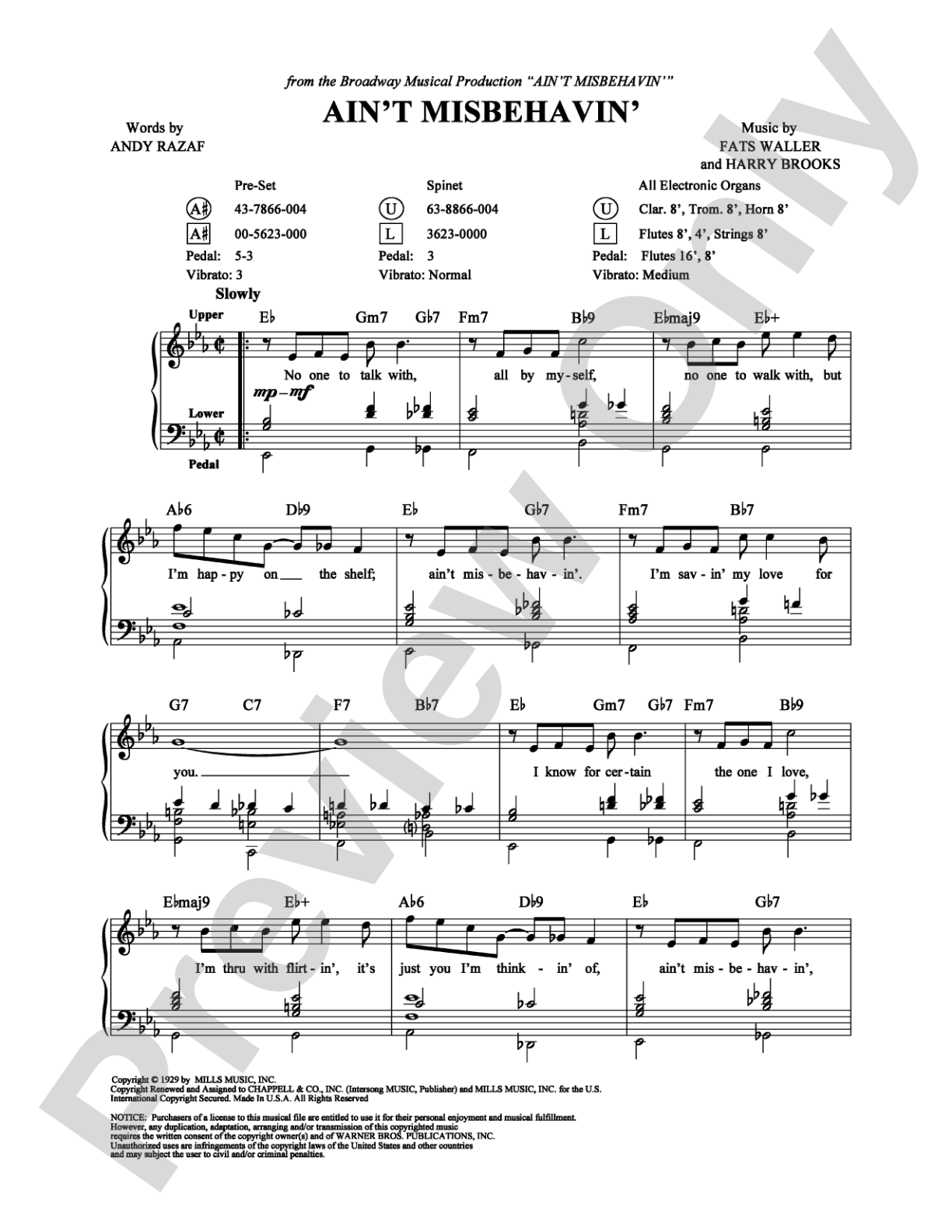
Ain't Misbehavin': Organ Digital Sheet Music

Ain't Misbehavin': Organ Digital Sheet Music

Harry Brooks, Louis Armstrong, Fats Waller

Item: 00-PS-0007503

Digital Download
$3.99
Description

Ain't Misbehavin': Organ Digital Sheet Music isn't in MakeMusic Cloud just yet...but it could be. Let us know you'd like to see it, and you'll help shape what comes next. In the meantime, start a free trial and dive into thousands of interactive titles your students can play along with today.

Sample Audio
No sample audio found.
Sample Video
Additional Details
SKU: 00-PS-0007503

More about this title

About the Artist: Louis Armstrong

Louis Armstrong (1901-1971) revolutionized jazz trumpet and vocal performance, becoming one of the most influential musicians of the 20th century. His distinctive gravelly voice, improvisational genius, and warm stage presence made him an ambassador for jazz worldwide. Armstrong's recorded catalog spans from hot jazz ensembles to pop standards, and his interpretations of American songbook material remain touchstones for understanding how to phrase and swing.

Why we love this

This is a masterclass in swing phrasing and rhythmic freedom wrapped in an accessible standard. Organists gain insight into how Armstrong's trumpet lines and vocal delivery translate to keyboard texture, revealing how to voice chords with sophistication while maintaining the relaxed, conversational energy that defines great jazz.

What to expect

Spirited and good-natured, with an infectious groove that sits between relaxation and jubilation. The tune captures the charm of 1920s-30s New York jazz clubs: conversational, witty, and never overly earnest, inviting the listener into a musical wink.

Who it's for

Organists studying jazz repertoire and seeking to deepen their understanding of swing era phrasing and interpretation. This arrangement works well for skilled amateurs and students preparing for jazz recitals or exploring improvisation on familiar standards.

How to get the most out of it

  • Let the swing feel breathe; resist the urge to lock into a rigid tempo. Armstrong's interpretation bends time intentionally, and the best organ versions honor that elasticity.
  • Explore the interplay between solo and accompaniment. Listen closely to how the original balances melody, harmony, and supporting figures, then find your own voice within that conversation.
  • Voice the chords with warmth and color rather than mechanical precision. The organ's tonal range invites rich harmonic textures that complement the playfulness of this tune.

How to use it

Program this as a solo recital feature or as part of a jazz standards set during an informal concert or community event. It works equally well as a bridge piece between classical and jazz segments, or as an encore that leaves audiences smiling.

Skills your students will build

  • Swing rhythm and syncopation
  • Chord voicing and reharmonization
  • Jazz phrasing and articulation
  • Improvisation over standard changes
  • Listening and stylistic interpretation

You May Also Like