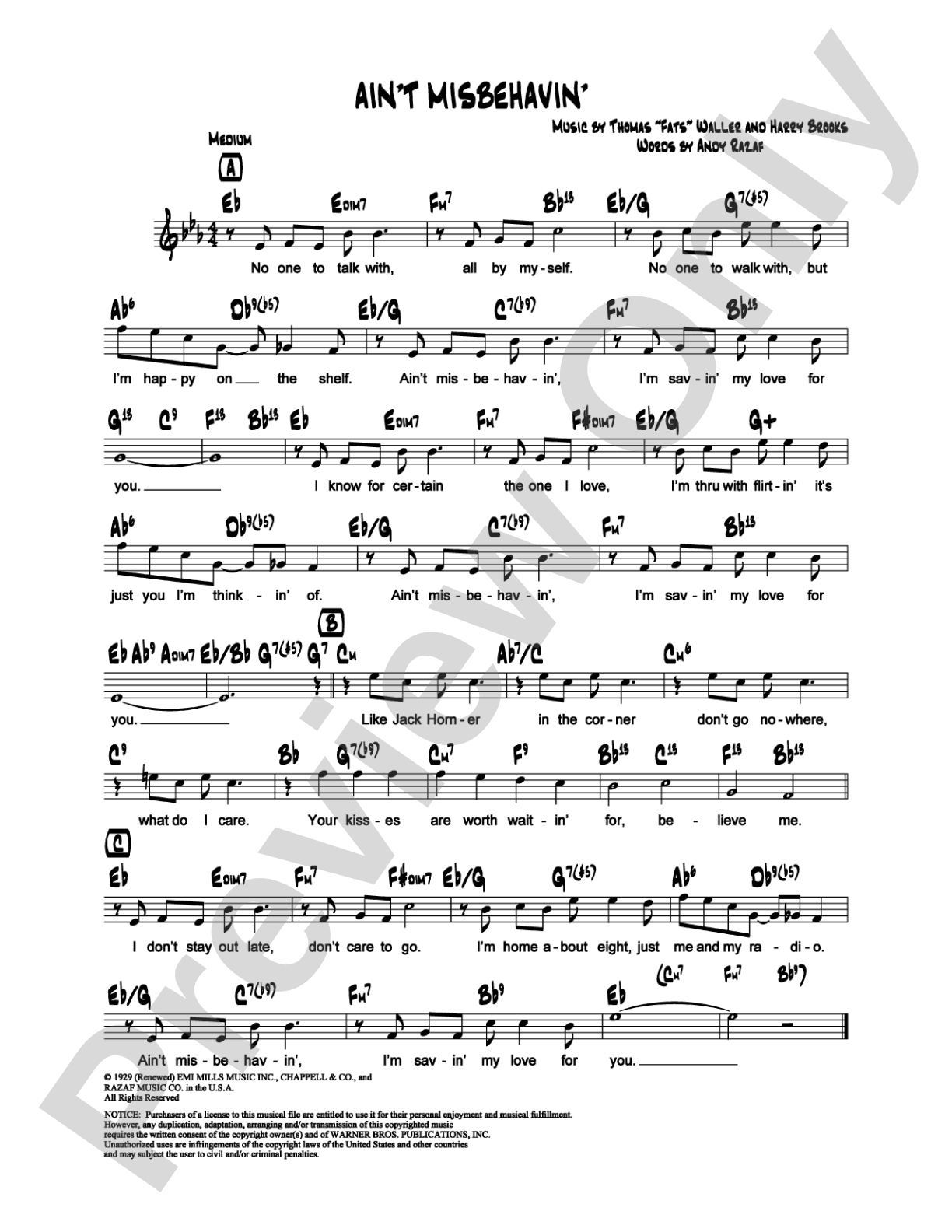
Ain't Misbehavin': Lead Sheet Digital Sheet Music

Ain't Misbehavin': Lead Sheet Digital Sheet Music

Harry Brooks, Louis Armstrong, Fats Waller

Item: 00-PS-0000846

Digital Download
$1.99
Description

Ain't Misbehavin': Lead Sheet Digital Sheet Music isn't in MakeMusic Cloud just yet...but it could be. Let us know you'd like to see it, and you'll help shape what comes next. In the meantime, start a free trial and dive into thousands of interactive titles your students can play along with today.

Sample Audio
No sample audio found.
Sample Video
Additional Details
SKU: 00-PS-0000846

More about this title

About the Artist: Louis Armstrong

Louis Armstrong (1901-1971) fundamentally transformed jazz and American music. His revolutionary approach to improvisation, rhythmic phrasing, and vocal expression set the standard for generations of musicians across all genres. Armstrong's technical mastery of the trumpet combined with his infectious personality made him one of the most influential and beloved artists in music history.

Fats Waller (1904-1943) was a virtuoso pianist, organist, and songwriter whose compositions bridged jazz, stride piano, and popular song. His wit, harmonic sophistication, and prolific output shaped the sound of jazz and standards repertoire. "Ain't Misbehavin'" stands as one of his enduring masterpieces, recorded memorably by Armstrong in 1929.

Why we love this

This lead sheet captures one of the most recorded standards in jazz repertoire, giving students direct access to the harmonic and melodic framework that launched countless interpretations. Armstrong's definitive 1929 recording remains the touchstone for understanding how a master jazz artist approaches phrasing, timing, and storytelling within a formal song structure. Programming this alongside recordings lets students analyze the relationship between the page and the performance.

What to expect

A swinging, good-natured affirmation with just enough harmonic spice to keep the ear engaged. The song moves with casual confidence, its melody sitting naturally over changes that feel both familiar and inviting, encouraging the player to find their own voice within a timeless framework.

Who it's for

Intermediate to advanced jazz students learning to read and interpret lead sheets, as well as ensemble musicians preparing arrangements for combo, big band, or vocal settings. It works equally well for pianists studying stride technique, vocalists developing jazz interpretation, and any instrumentalist deepening their understanding of standards repertoire.

How to get the most out of it

  • Study Armstrong's original recording to internalize the rhythmic liberties and phrasing choices that make the melody swing; the lead sheet shows what's written, but the recording reveals how it lives in time.
  • Pay attention to the harmonic rhythm and use it as a guide for comping and improvisation rather than playing directly on the beat; stride pianist voicings and jazz guitar comp patterns will suggest the groove.
  • Let the lyrical content inform your interpretation; this song is conversational and intimate, so avoid over-blowing the melody or playing with excessive speed.
  • Explore how Waller's harmonic sophistication supports storytelling; certain chord changes land on key words, so use them as guideposts for phrasing.

How to use it

Pair this lead sheet with Armstrong's 1929 recording in a unit on standards interpretation, asking students to transcribe solo passages and create their own arrangements. It also serves as an excellent entry point for exploring how the same composition sounds across different instrumental voices and eras, from big band to modern jazz combos.

Skills your students will build

  • Reading and interpreting lead sheet notation
  • Understanding chord changes and harmonic progression in jazz standards
  • Developing swing phrasing and rhythmic interpretation
  • Creating solo arrangements and countermelodies
  • Analyzing the relationship between recorded performance and written notation

You May Also Like